

Fast, Safe Help After Property Damage in Colorado
When water, fire, sewage, or mold damages your property, protect people first, stop the source if it is safe, and call a 24/7 restoration team immediately. Emergency restoration services Colorado should include rapid water removal, structural drying, fire and smoke cleanup, sewage sanitation, mold containment, and help documenting the loss for insurance.
In Grand and Routt Counties, fast action can limit damage to floors, walls, belongings, and indoor air. A qualified team should have clear response times, IICRC-certified technicians, commercial drying equipment, and a practical process for working with your insurer. This guide shares five no-nonsense checks to help you choose before a small loss becomes a major rebuild.
I am Cole Nudel, a disaster restoration professional with hands-on experience helping Colorado property owners navigate water, fire, mold, and other emergency losses. Through my work in emergency restoration services Colorado, I have seen how prompt mitigation, clear communication, and proper documentation can make recovery far less overwhelming. For a broader look at how restoration fits into property recovery, the water damage restoration process is a useful reference.
1. Verify 24/7 Dispatch and Response Times for Emergency Restoration Services Colorado
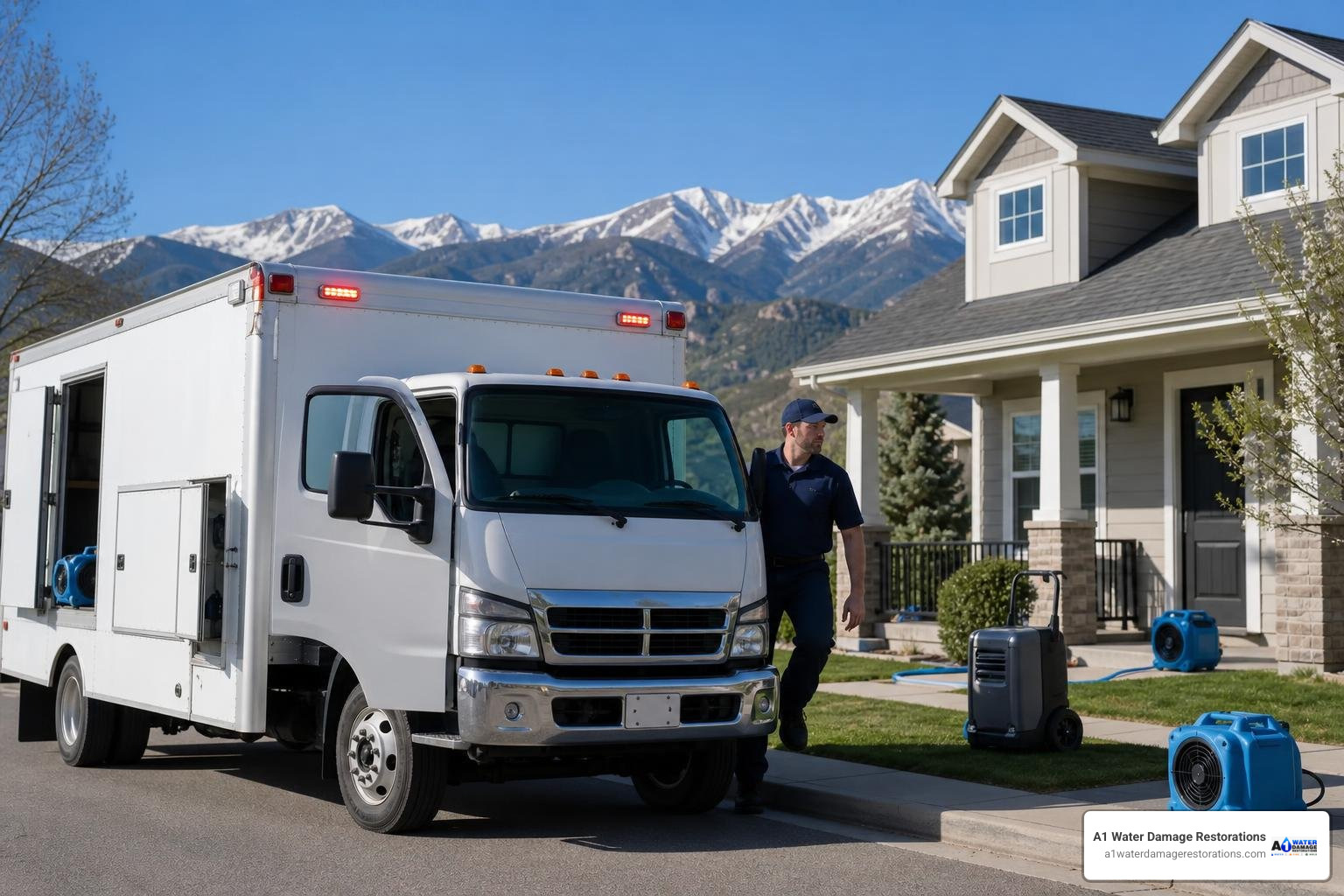
When water pours through a ceiling or smoke settles into drywall, waiting until regular business hours is never an option. Disasters rarely consult a calendar. Water travels along structural pathways, soaking subfloors, weakening framing, and creating the perfect environment for mold in as little as 24 to 48 hours. When you face an urgent situation, connecting with reliable 24-hour disaster recovery teams ensures that damage mitigation begins before secondary issues take hold.
A credible restoration provider operates a genuine round-the-clock dispatch system. This means your midnight emergency call connects directly to experienced dispatchers who immediately mobilize a field crew rather than routing you to a passive answering service.
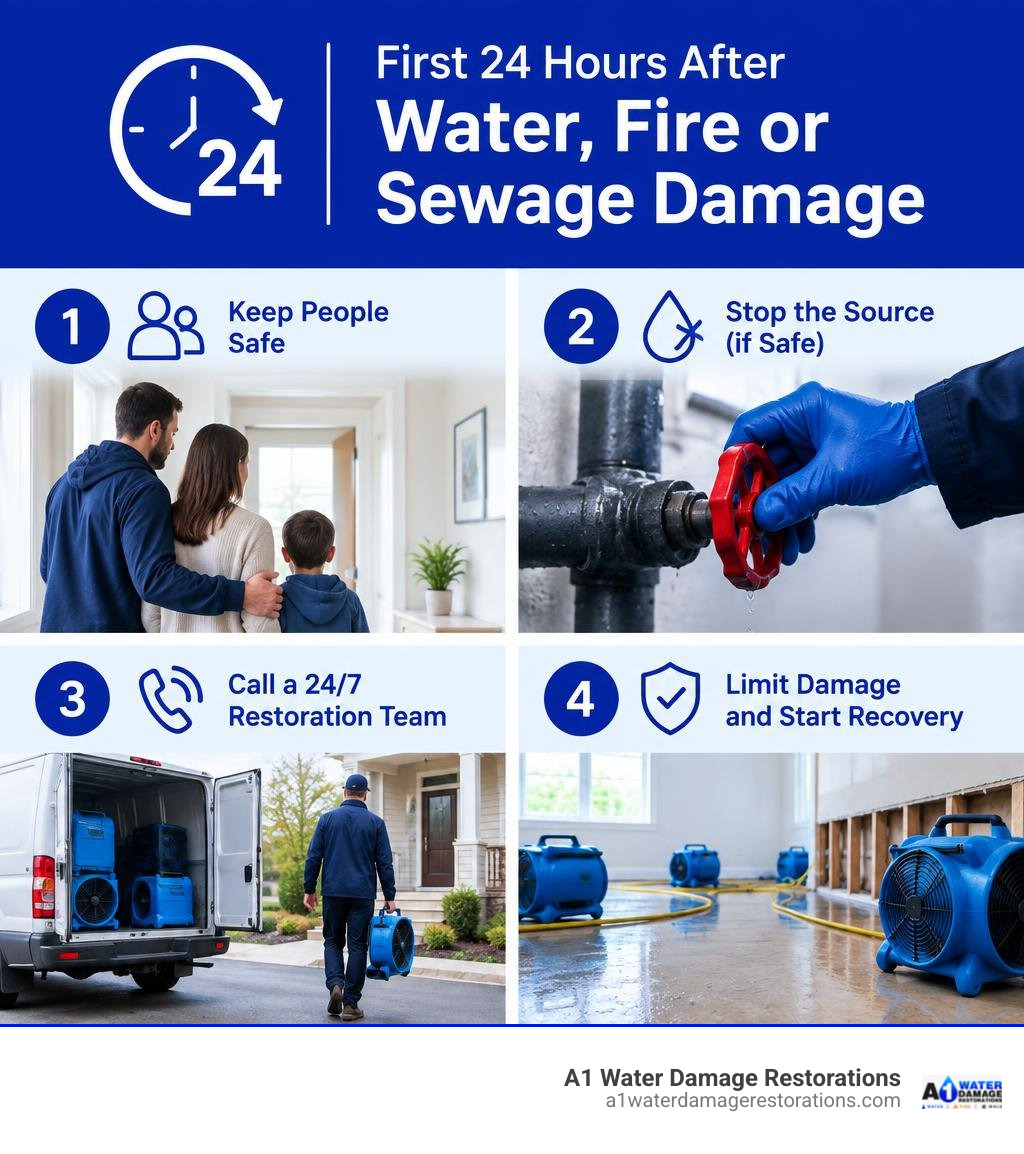
Immediate Action Steps After Disaster Strikes
Taking fast, organized steps in the initial minutes of an incident safeguards occupants and reduces the total scope of destruction. Having a solid homeowner disaster action plan helps you stay focused during high-stress situations.
- Ensure Occupant Safety: Evacuate immediately if there is active fire, structural compromise, or electrical hazards.
- Shut Down Main Utilities: If safe to access, shut off your home’s main water valve or flip circuit breakers to eliminate electrocution risks.
- Avoid Contaminated Zones: Never walk through standing sewage or dark, murky water without personal protective gear.
- Call for Professional Dispatch: Contact your emergency restoration team immediately to mobilize extraction and containment units.
- Document Visible Damage: Take preliminary photos and videos of affected areas from safe vantage points.
Rapid 30-Minute Response in Mountain and Metro Regions
Across high-altitude corridors and surrounding communities, transit logistics demand dedicated staging. Partnering with vetted emergency restoration providers who commit to rapid arrival—often aiming for an on-site target within 30 minutes in key service areas—makes a measurable difference in salvageable property. Rapid containment halts moisture migration during sudden winter pipe freezes or spring runoff events before structural materials suffer permanent warping.
2. Check for IICRC Certification Across Water, Fire, and Mold Remediation
Not all cleanup efforts meet professional standards. The Institute of Inspection, Cleaning and Restoration Certification (IICRC) establishes the scientific benchmark for the industry. Restoring a home requires far more than shop vacuums and consumer fans; it requires precise psychrometric drying principles, thermal mapping, and soot encapsulation. Reviewing the complete list of property restoration services confirms that your selected team possesses formal credentials across all disaster categories.
Step-by-Step Water Extraction and Structural Drying
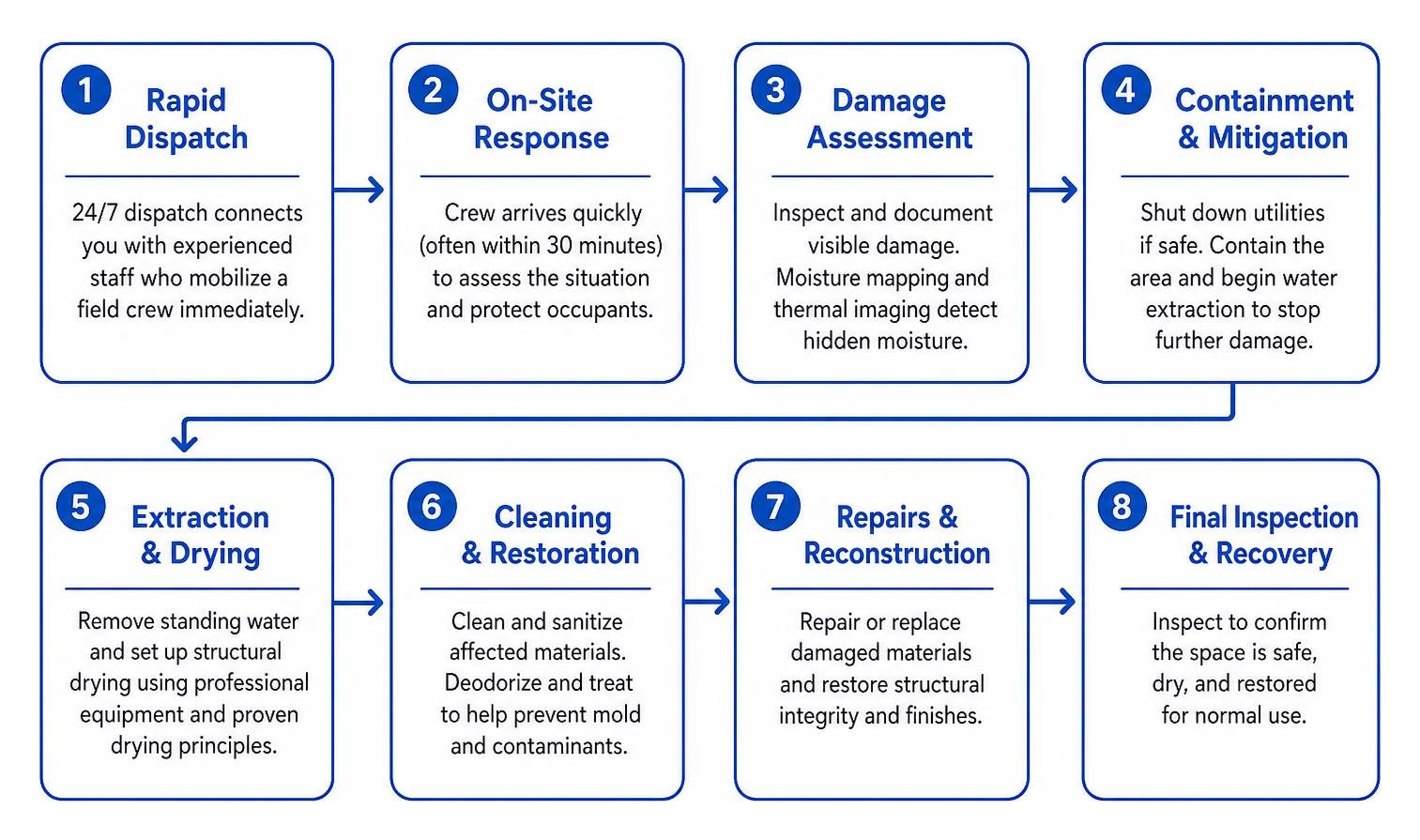
Effective drying follows a rigorous physical process designed to protect framing and hidden wall cavities. Following proven Denver area restoration protocols involves structured phases:
- Moisture Mapping & Thermal Imaging: Non-invasive infrared cameras detect hidden moisture pockets behind baseboards, tile, and cabinetry.
- Commercial Water Extraction: High-powered, truck-mounted extraction units remove standing water rapidly, extracting hundreds of gallons in minutes.
- Controlled Evaporation: Industrial air movers create high-velocity airflow across wet surfaces to draw bound moisture out of structural materials.
- Low-Grain Dehumidification: Commercial LGR (Low-Grain Refrigerant) and desiccant dehumidifiers capture airborne moisture, pulling humidity down to safe equilibrium levels.
- Continuous Monitoring: Daily psychrometric logging verifies that studs, subflooring, and sheetrock return to dry standard baseline targets.
How Emergency Restoration Services Colorado Manage Fire and Smoke Odors
Fire damage leaves behind complex chemical residues. Soot particles are acidic and quickly etch glass, corrode metals, and permanently discolor porous surfaces. Working with certified local restoration specialists guarantees that odors are eliminated at the molecular level rather than temporarily masked by perfumes.
Technicians deploy thermal foggers to replicate the heat-driven penetration of smoke, neutralizing trapped odors inside framing. Hydroxyl generators and ozone treatments safely break down volatile organic compounds (VOCs). Simultaneously, contents are cleaned, packed, and restored in specialized facilities using ultrasonic wash systems and soot-encapsulation sealants.
3. Require Comprehensive Protocols for Water Contamination and Mold

Water damage falls into three distinct safety categories, ranging from clean supply line leaks (Category 1) to grossly contaminated blackwater (Category 3), which includes raw sewage backups and outdoor floodwaters. Category 3 water introduces bacteria, viruses, and parasites into living spaces, demanding hospital-grade decontamination.
Safe Water Contamination and Mold Containment by Emergency Restoration Services Colorado
When sewage or prolonged moisture causes microbial growth, containment is the first line of defense. In specialized regions requiring strict environmental controls, such as during Boulder area property restoration, crews construct negative air chambers using heavy-duty poly sheeting.
HEPA-filtered air scrubbers continuously exhaust air outside, preventing microscopic mold spores and pathogens from circulating into clean living areas. Once standing wastewater is extracted, technicians remove porous materials that cannot be sanitized, apply EPA-registered antimicrobials, and run structural drying systems until moisture levels stabilize.
Identifying and Safely Managing Additional Property Hazards
Older residential structures frequently conceal regulated hazardous building materials, such as asbestos insulation, vinyl floor tiles, or acoustic popcorn ceilings. Disturbing these materials during aggressive demolition can release dangerous airborne fibers. Certified restoration crews immediately identify suspect materials, halt destructive work, isolate the zone, and conduct certified testing to guarantee safe, code-compliant containment and abatement before resuming reconstruction.
4. Ensure Seamless Insurance Claims Navigation and Transparent Billing
Filing a property insurance claim after a disaster can feel overwhelming. A professional restoration partner coordinates directly with your insurance adjuster to accelerate approvals, maintain transparent billing, and prevent out-of-pocket delays.
Preparing Essential Documentation for Adjusters
Insurance carriers require detailed proof of loss before releasing payments. A reputable restoration team gathers and organizes critical loss data:
- Detailed Scope of Work: Line-item estimates built using industry-standard pricing platforms (such as Xactimate).
- High-Resolution Photo Inventory: Comprehensive before, during, and after photographs of damaged structural elements and personal property.
- Daily Moisture Logs: Scientific drying records demonstrating initial saturation, daily drying progress, and final dry standards.
- Contents Manifest: Itemized catalogs of non-salvageable personal belongings, including model numbers, age, and estimated replacement values.
Managing Direct-to-Carrier Billing and Inquiries
Navigating insurance paperwork shouldn’t add stress to an already difficult situation. When you work with an experienced team, billing questions and estimates are submitted directly to your carrier. This direct coordination ensures that scope disagreements are resolved quickly between your adjuster and our project managers, leaving you with clear expectations regarding your deductible and coverage limits.
Frequently Asked Questions About Emergency Restoration Services
What should I do immediately after fire, water, or contaminated-water damage occurs?
Prioritize personal safety above all else. Evacuate if there is structural instability, gas leaks, or electrical hazards. If it is safe to do so, turn off your main water shutoff valve and power mains. Contact our 24/7 dispatch line immediately, and take initial photographs of the damage from a secure distance without walking through standing sewage or soggy ceilings.
How quickly can restoration crews reach properties in Grand County?
Our rapid-response emergency crews aim to be on-site within 30 minutes of receiving an emergency call in our core service areas. Fast response is essential to extract water, establish thermal drying, and prevent permanent structural degradation.
What steps are taken if mold or another property hazard is uncovered during cleanup?
If mold, mildew, or suspect hazardous building materials like asbestos are discovered, crews immediately stop demolition in that zone. We erect physical containment barriers with negative air pressure machines, perform specialized testing where required, and follow strict safety protocols to remediate the hazard safely before drying and reconstruction proceed.
Conclusion
Recovering from property damage requires immediate action, proven expertise, and compassionate care. As a family-owned restoration partner, A1 Water Damage Restorations delivers 24/7 IICRC-certified water extraction, fire recovery, sewage decontamination, and mold remediation across our Denver Metro service areas—including Denver, Boulder, Broomfield, Westminster, Arvada, Golden, Wheatridge, Littleton, Greenwood Village, and Cherry Creek.
We take pride in providing personal, in-house service that guides you through mitigation, documentation, and structural drying from day one. When disaster strikes your property, trust our team to make your home safe, dry, and fully restored. Explore our full-service emergency restoration solutions to secure fast, dependable assistance today.