

Black Mold on a Ceiling: What to Do First
If you find dark mold on your ceiling, look for the moisture source before cleaning it. Small spots on a dry, intact painted surface can often be cleaned with detergent and water while wearing gloves, eye protection, and an N95 mask. If the ceiling is wet or soft, the mold keeps returning, or the affected area is larger than about 10 square feet, leave it undisturbed and call a professional. Do not paint over active mold.
A black mold ceiling often points to condensation, a roof or plumbing leak, or a cold spot caused by poor insulation. Its color cannot tell you what species it is. Any visible mold deserves attention, especially if someone in the home has asthma or allergies.
I’m Cole Nudel, a disaster restoration professional with A1 Water Damage Restorations in the Denver area. I help property owners understand water damage and the next steps for a black mold ceiling, starting with the moisture problem behind it.
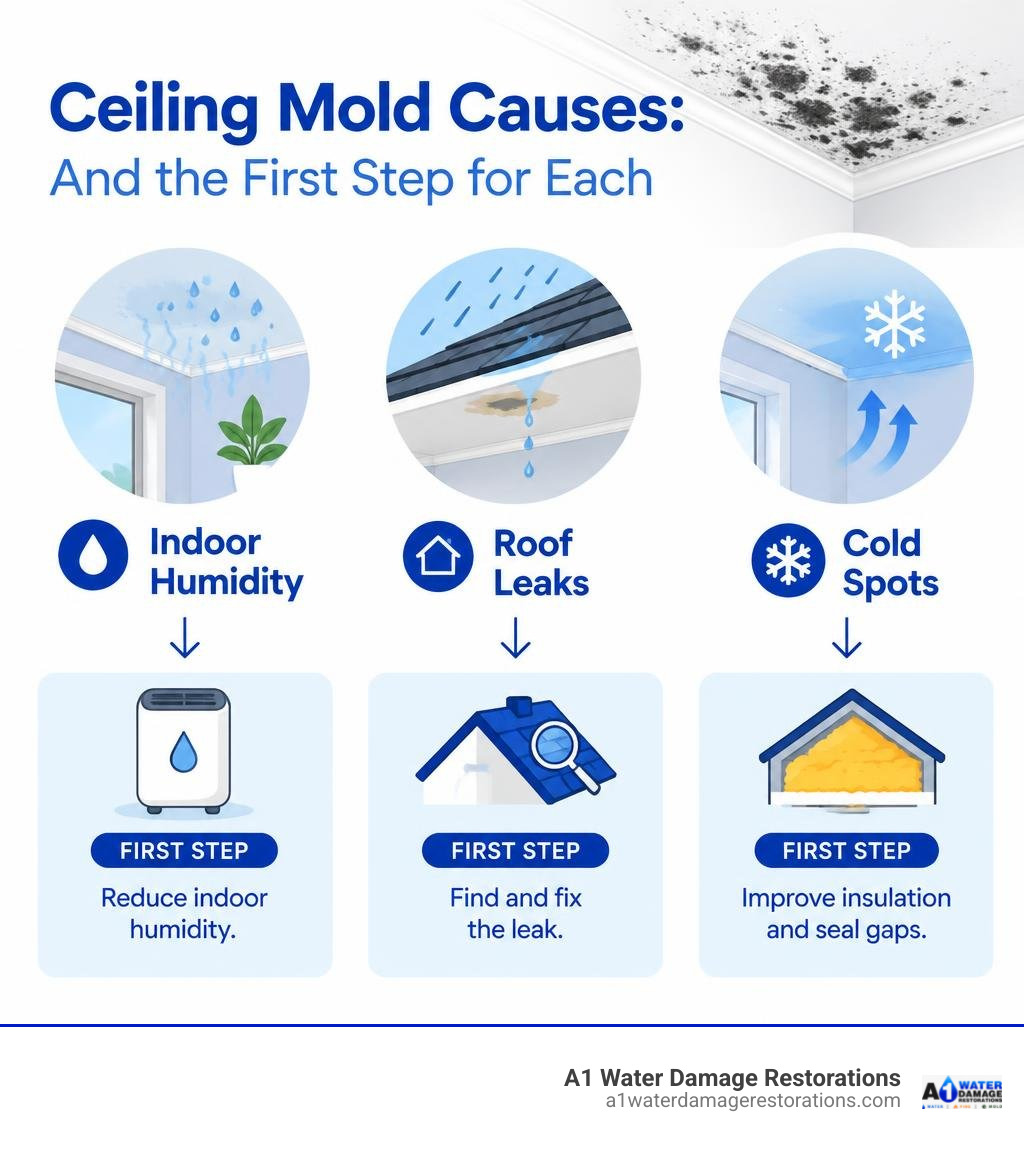
Identifying the Underlying Causes of a Black Mold Ceiling
Finding dark clusters above your head can be unsettling. Millions of households struggle with persistent indoor dampness, which creates the ideal breeding ground for microbial growth. When warm, moisture-laden air meets a cool overhead surface, physics takes over: the air cools to its dew point, releasing liquid water that saturates drywall and ceiling paint.
A black mold ceiling develops when fungi find the three ingredients they need to thrive: ambient spore presence (which is natural in any indoor air), an organic food source (such as the paper backing of drywall, wood framing, or ceiling dust), and persistent moisture. To solve the problem permanently, we must pinpoint where the water is coming from. Learning how to properly identify water damage on a ceiling is your first major step toward recovery.
| Symptom Feature | Condensation & High Humidity | Plumbing or Roof Leak |
|---|---|---|
| Growth Pattern | Widespread speckling, fine dots, or broad surface dusting | Concentrated clusters, circular rings, or localized patches |
| Ceiling Staining | Surface discoloration without deep yellow/brown rings | Distinct brownish/yellow “tidemarks” or water rings |
| Texture of Drywall | Solid and firm, paint intact or slightly peeling | Soft, spongy, sagging, or visibly crumbly |
| Environmental Timing | Worse in winter, high shower use, or cooking times | Constant or directly tied to rainfall/plumbing fixtures |
| Typical Location | Cold exterior corners, uninsulated edges, bathroom centers | Directly beneath pipes, roof valleys, or HVAC lines |
Condensation, Cold Bridging, and Thermal Gaps
When warm, humid indoor air rises, it naturally migrates to the highest points of a room. If the ceiling above is poorly insulated, the surface temperature drops significantly. This phenomenon—known as thermal bridging or cold bridging—occurs when an architectural component creates a direct pathway for heat to escape, leaving a cold spot indoors.
Corners where the ceiling meets exterior walls are classic cold bridges. In areas like Denver, Boulder, and Littleton, freezing outdoor temperatures drop exterior drywall below the indoor dew point. As water droplets form continuously on these cold patches, fungal colonies bloom, often creating dark patterns along outer joists and wall seams.
Roof Leaks, Plumbing Failures, and HVAC Issues
Active water intrusions operate differently than ambient condensation. A flashing failure on your roof, an overflowing upstairs tub, or a slow pinhole pipe leak delivers continuous liquid water directly into the sub-ceiling cavity. Understanding what that dark stain on your ceiling tile really means can prevent catastrophic structural failure.
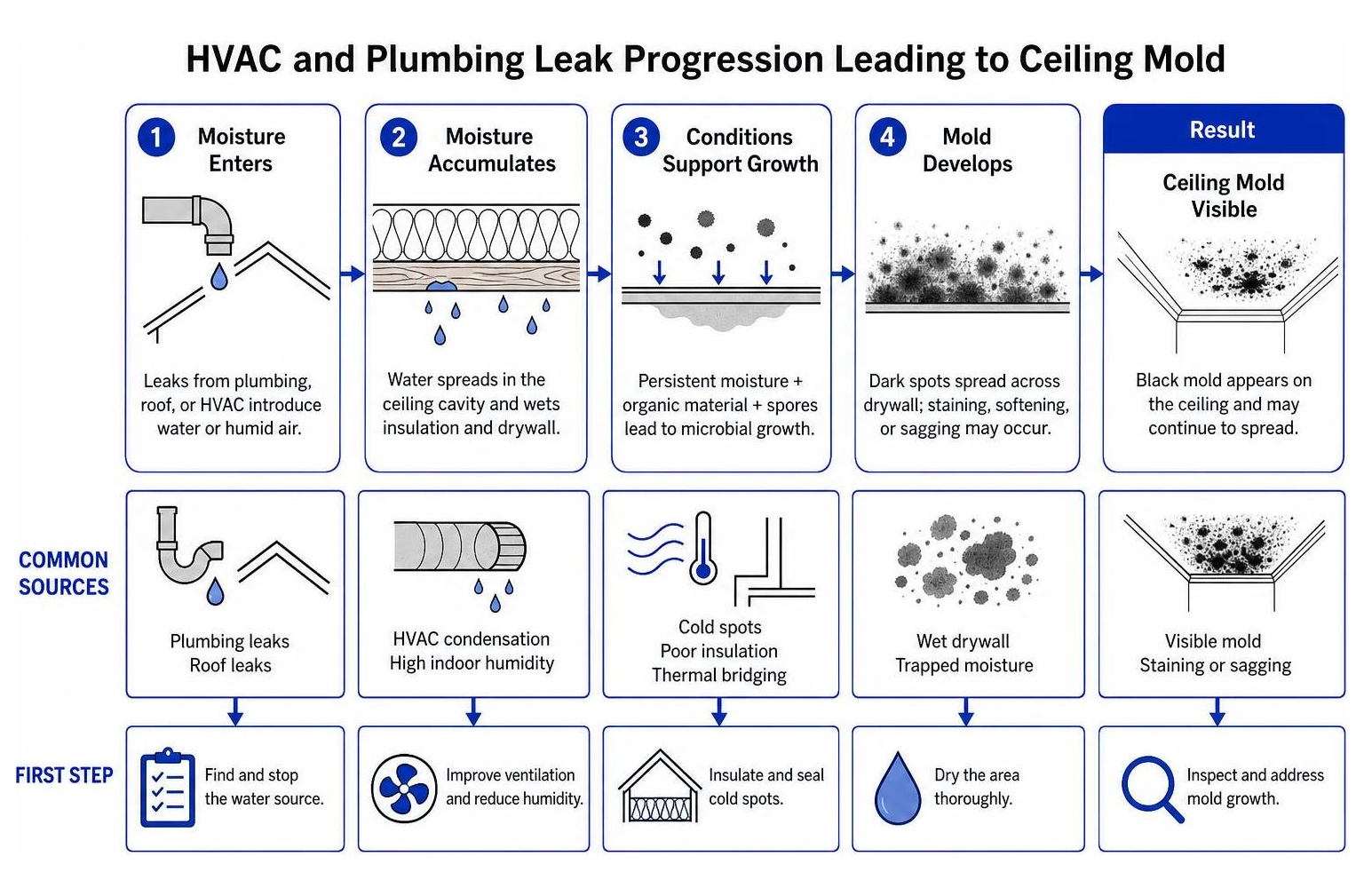
HVAC equipment is another major contributor. In unconditioned attics across Arvada, Westminster, and Broomfield, poorly insulated supply ducts and register boots sweat during summer cooling cycles. The resulting moisture drips onto the surrounding drywall, promoting localized black mold around air vents.
Health Risks, Species Identification, and When to Worry
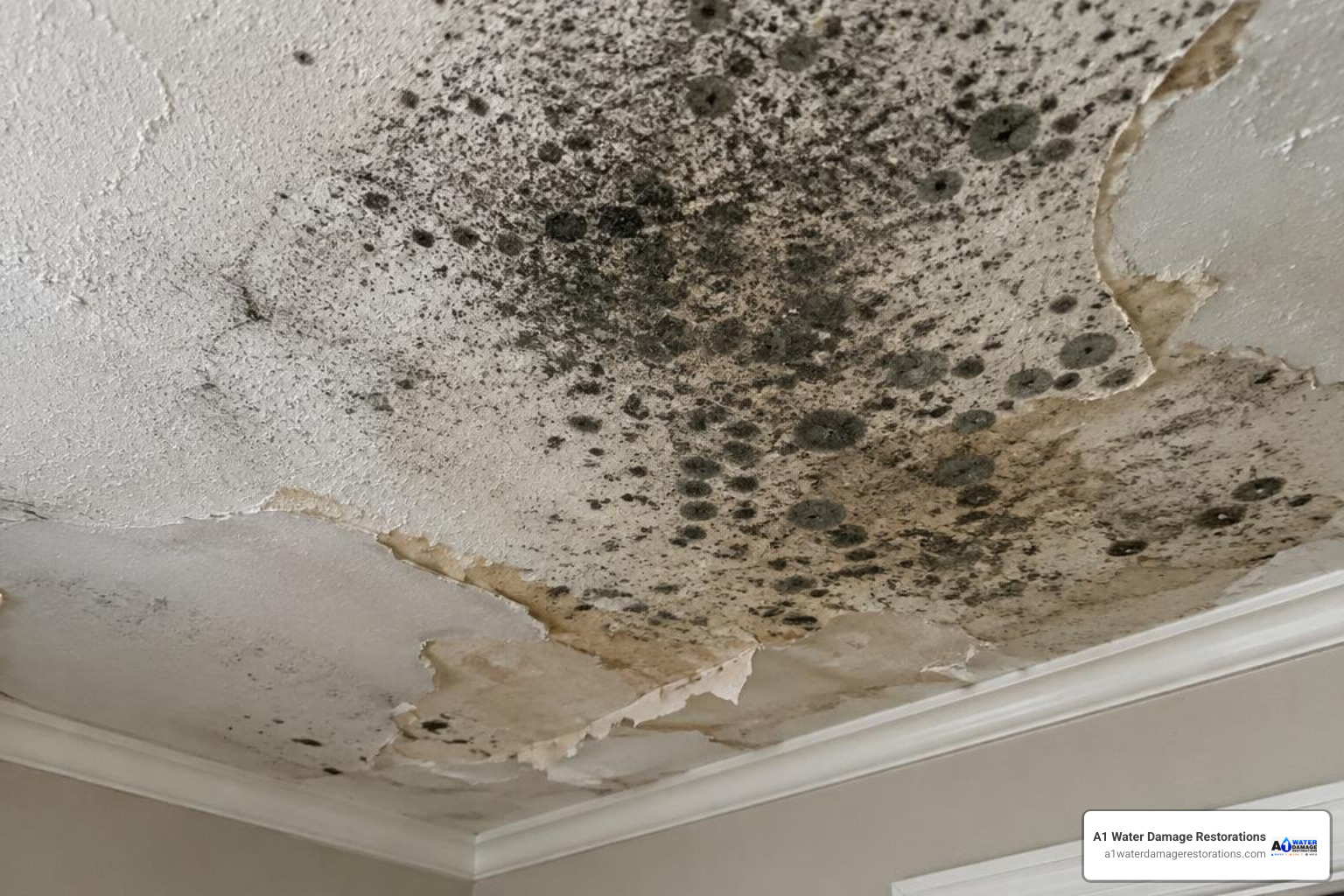
Many homeowners immediately dread the term “toxic black mold,” assuming any dark growth is Stachybotrys chartarum. While Stachybotrys does produce mycotoxins and requires saturated cellulose to grow, several other common species—such as Cladosporium, Aspergillus, and Alternaria—appear dark green or black overhead.
According to guidance on public health facts on household mold, all indoor mold growth should be addressed with equal care regardless of the specific fungal species.
Is a Black Mold Ceiling Dangerous to Your Health?
Inhaling airborne mold spores, microbial volatile organic compounds (mVOCs), and associated allergens causes physical reactions. While sensitivity varies, typical symptoms include:
- Upper Respiratory Issues: Persistent sneezing, nasal congestion, sinus headaches, and throat irritation.
- Asthma Flare-Ups: Increased wheezing, chest tightness, and shortness of breath in individuals with pre-existing conditions.
- Skin and Eye Irritation: Red, itchy, watery eyes and worsening eczema or hives.
- Systemic Fatigue: Prolonged exposure in damp indoor environments is often linked to chronic low-grade lethargy and headaches.
Vulnerable groups—such as infants, elderly adults, and immunocompromised individuals—face heightened risks of severe lower respiratory infections when living in damp spaces.
Special Hazard Warning: Textured and Asbestos-Containing Ceilings
If your property was built before 1990 and features acoustic “popcorn” texture or decorative plaster, there is a strong possibility the substrate contains asbestos. Disturbing an asbestos ceiling while attempting to scrub or scrape mold releases microscopic, carcinogenic fibers into your breathing zone.
If you suspect asbestos, refrain from touching or sanding the material until a certified professional conducts safe sampling.
Step-by-Step Remediation: How to Remove Mold Safely
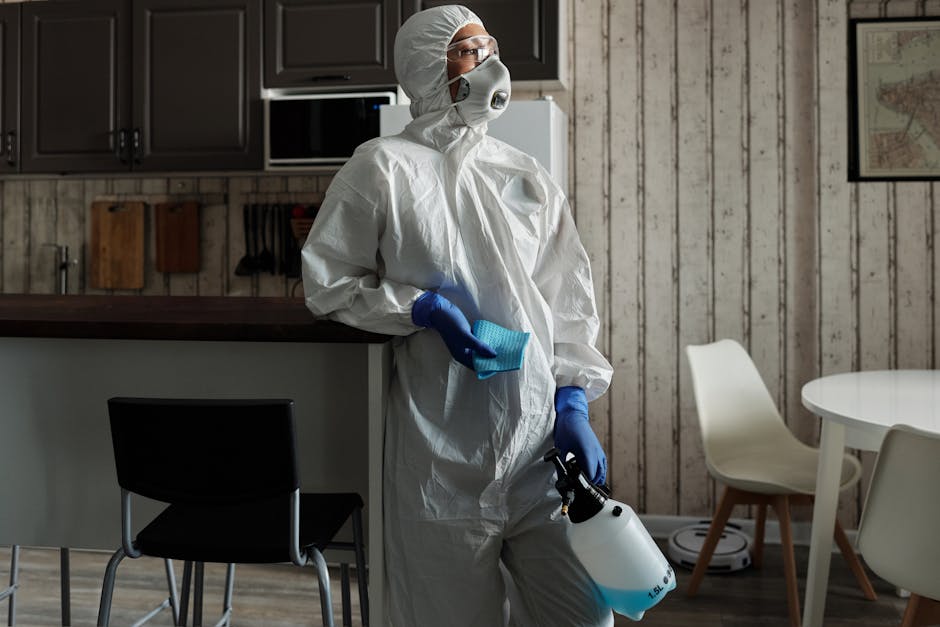
Remediation must be approached methodically to avoid spreading spores to other areas of the home. Before doing anything, identify whether you are dealing with a manageable surface issue or a deeper structural failure by learning how to clean mold in a house safely and effectively.
Safe DIY Methods to Clean a Black Mold Ceiling
If the affected patch is under 10 square feet (roughly 3 feet by 3 feet) and the drywall is firm, intact, and free of underlying leaks, you can perform surface remediation:
- Safety Equipment: Put on an N95 respirator, safety goggles, and non-porous rubber or nitrile gloves.
- Containment: Turn off your HVAC system and seal the immediate doorway with plastic sheeting to contain dislodged spores.
- Cleaning Agent: Avoid straight chlorine bleach on porous drywall; bleach contains mostly water that soaks deep into the substrate while the chlorine evaporates on the surface. Instead, use undiluted distilled white vinegar (5% to 8% acetic acid) or a 3% hydrogen peroxide solution.
- Application & Dwell Time: Lightly mist the solution onto the affected ceiling. Allow it to sit undisturbed for at least 15 to 20 minutes to penetrate the fungal structures.
- Gentle Scrubbing: Wipe the area using a disposable microfiber cloth or soft sponge. Never dry-brush or vigorously scour dry mold, as this releases millions of spores into the air.
- Thorough Drying: Rinse with a damp cloth wrung out with clean water, then dry the ceiling thoroughly using dedicated air circulators or dehumidifiers.
Why You Should Never Simply Paint Over Active Mold
Painting over active ceiling mold without proper biocidal cleaning is a recipe for failure. Standard latex paint is water-based and provides organic nutrients that living fungi consume from the inside out. Within weeks, the hyphae (fungal root networks) push through the fresh paint layer, causing bubbling, blistering, and dark stains to reappear.
If you are dealing with porous drywall that has absorbed deep contamination, review our practical guide on getting rid of mold on drywall before applying any finishing coats.
When to Call Professional Remediation Specialists
DIY methods reach their limit when water damage penetrates the ceiling structure. Call in an IICRC-certified team if you notice any of the following:
- The mold covers more than 10 square feet.
- The drywall feels soft, spongy, or shows signs of structural sagging.
- The contamination stems from a sewage backup, roof failure, or prolonged hidden pipe leak.
- Occupants experience recurring allergic or respiratory symptoms inside the home.
Certified professionals establish negative-air containment, utilize HEPA air scrubbers, and safely remove contaminated materials without cross-contaminating your living space. For complex scenarios, consulting a comprehensive guide to mold remediation or learning the proper process for fixing a water damaged ceiling after a leak ensures your property is restored safely.
Long-Term Prevention Strategies for a Mold-Free Ceiling
Remediation only works if you fix the environmental factors that allowed spores to germinate in the first place. Pairing prompt remediation with know-how on how to repair ceiling water damage provides a permanent shield against future growth.
Improving Mechanical Ventilation and Airflow
High indoor humidity is the number one driver of bathroom and kitchen ceiling mold. Upgrade your moisture control systems using these proven tactics:
- Size Exhaust Fans Correctly: Ensure bathroom fans deliver adequate airflow. A standard bathroom requires an exhaust rate of roughly 1 CFM (cubic foot per minute) per square foot of floor area, running at a minimum of 50 CFM.
- Extend Run Times: Keep exhaust fans running during every shower and for at least 20 to 30 minutes afterward. Installing an automated humidistat switch handles this effortlessly.
- Clear Duct Runs: Verify that exhaust fans vent entirely outside the home—never into an unconditioned attic space or soffit—and inspect ducts semi-annually for blockages or crushed lines.
- Maintain Target Indoor Humidity: Use a digital hygrometer to monitor indoor humidity, keeping relative humidity levels between 30% and 50% year-round.
Upgrading Ceiling Insulation and Moisture Barriers
Eliminating cold spots prevents condensation from forming on overhead surfaces during cold Colorado winters.
- Attic Insulation Depth: Ensure attic insulation meets modern thermal standards across Golden, Wheat Ridge, and Greenwood Village (typically R-49 to R-60, or roughly 16 to 20 inches of blown cellulose or fiberglass).
- Insulate Register Boots: Wrap metal HVAC boots and exposed ductwork in unconditioned attics with foil-faced insulation (minimum R-6 or R-8) to stop condensation drip.
- Use Moisture-Resistant Coatings: When repainting, prime clean, dry surfaces with an antimicrobial, stain-blocking primer, followed by two coats of high-grade, moisture-resistant semi-gloss or satin bathroom paint containing active mildewcides.
Frequently Asked Questions About Ceiling Mold
Can black mold on a ceiling spread to other rooms?
Yes. Mold reproduces by releasing microscopic airborne spores. If left unmanaged, natural indoor air currents, drafts, and forced-air HVAC systems carry these spores into adjacent rooms. Once spores land on damp surfaces—such as chilly bedroom window corners, exterior walls, or basements—new colonies quickly establish.
What is the best paint to stop mold from returning to my ceiling?
The most effective option is a dedicated, moisture-resistant acrylic paint infused with EPA-registered mildewcides, applied over a quality stain-blocking primer. Sheens with lower porosity—such as eggshell, satin, or semi-gloss—shed moisture much better than flat or matte builder-grade paints. However, paint alone cannot stop mold if underlying moisture or heavy condensation continues unchecked.
How quickly does black mold grow on a damp ceiling?
Under optimal conditions—relative humidity above 70%, warm ambient temperatures, and an organic food source like drywall cellulose—mold spores germinate within 24 to 48 hours of initial water contact. Visible colonies often begin forming on ceiling plasterboard within 3 to 7 days if active moisture is not dried completely.
Conclusion
Discovering mold on your ceiling is a warning sign that unwanted moisture is affecting your indoor environment. Whether caused by cold bridging, elevated bathroom humidity, or a hidden plumbing leak, addressing the underlying water source is the only way to stop growth for good.
At A1 Water Damage Restorations, we provide 24/7 IICRC-certified mold remediation and water damage restoration across Denver, Cherry Creek, Greenwood Village, and surrounding communities. As a family-owned business, we deliver comprehensive, in-house solutions with a personal touch to protect your home’s structural integrity and your family’s health.
If you are dealing with persistent moisture stains, extensive contamination, or need guidance on cleaning mold off ceilings, contact our experienced restoration team today for swift, professional assistance.