

Why Fast Commercial Mold Removal Protects Your Business
Commercial mold removal should start by stopping the moisture source, isolating the affected area, and bringing in a qualified remediation team when growth is widespread, involves HVAC equipment, or exceeds about 10 square feet. A reliable provider should assess hidden moisture, set up containment and HEPA air filtration, remove contaminated materials where needed, dry the structure, and document the work for insurers and property records.
Mold can begin developing within 24 to 48 hours when a commercial space stays wet. In an office, warehouse, restaurant, or multi-tenant building, a small leak can become a larger problem when air systems, porous materials, or multiple rooms are involved. Delays can mean more damage, greater cleanup costs, interrupted operations, and tougher questions from tenants, employees, insurers, or inspectors.
This guide explains how to choose a commercial mold remediation company that can protect occupants, limit disruption, and provide the reports you need after the work is complete.
I am Cole Nudel, a disaster restoration professional with A1 Water Damage Restorations in the Denver area. My work in property-damage recovery helps business and property owners navigate commercial mold removal, moisture damage, and the documentation needed to move forward with confidence.
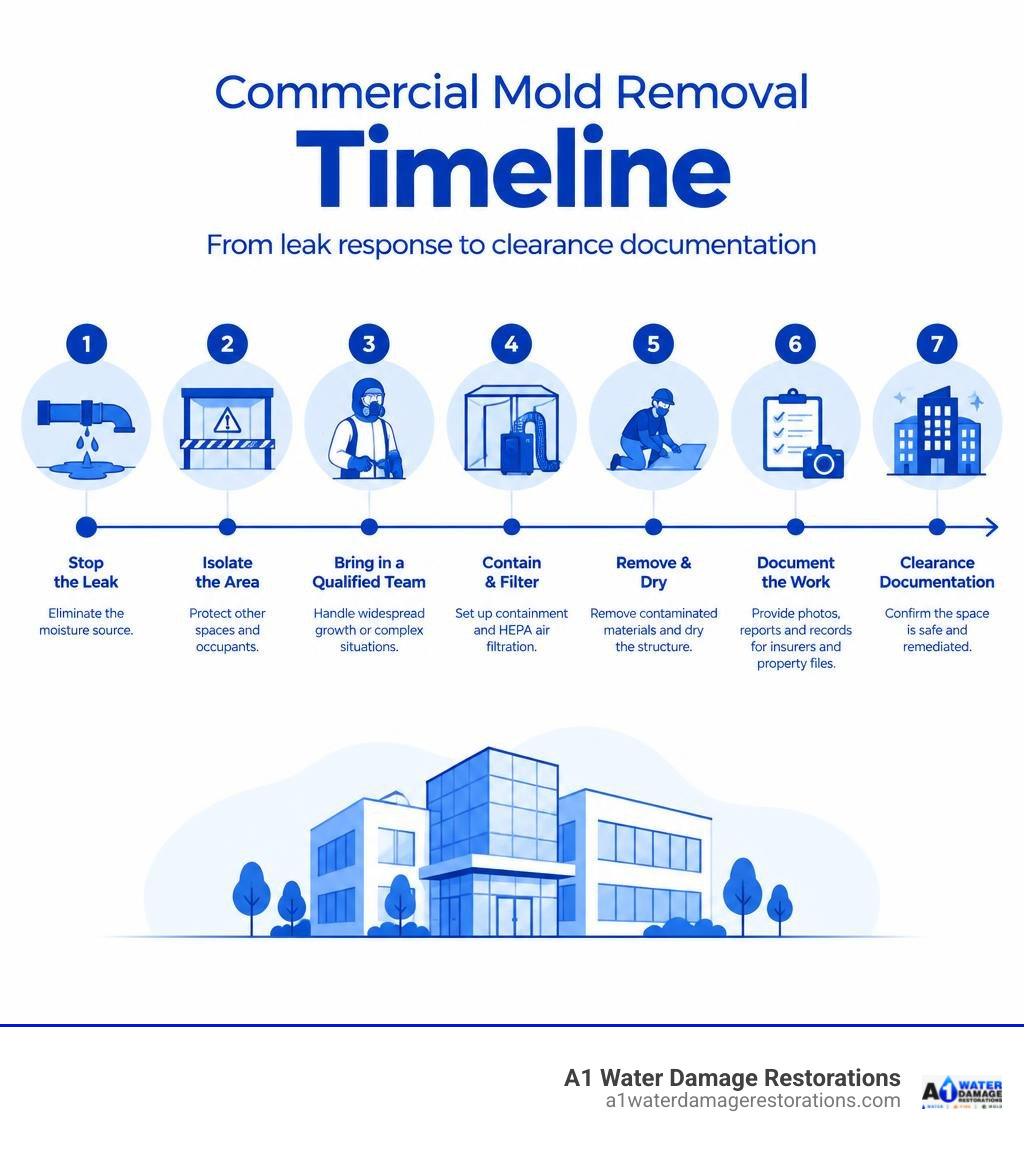
Understanding Commercial Mold Removal: Scope, Risks, and Timelines
When mold appears in a home, the scope is usually confined to a single bathroom, basement corner, or crawl space. In contrast, commercial properties present a completely different set of structural, operational, and legal complexities. Commercial facilities feature interconnected mechanical systems, higher occupancy loads, strict health codes, and intricate lease agreements that dictate maintenance responsibilities.
The primary risk in any commercial setting is rapid airborne cross-contamination. Shared central heating, ventilation, and air conditioning (HVAC) systems can distribute microscopic spores throughout an entire multi-story office or retail complex in a matter of hours. When spores travel through ductwork, what started as an isolated leak in a fourth-floor utility closet can easily contaminate multiple tenant suites downstream.
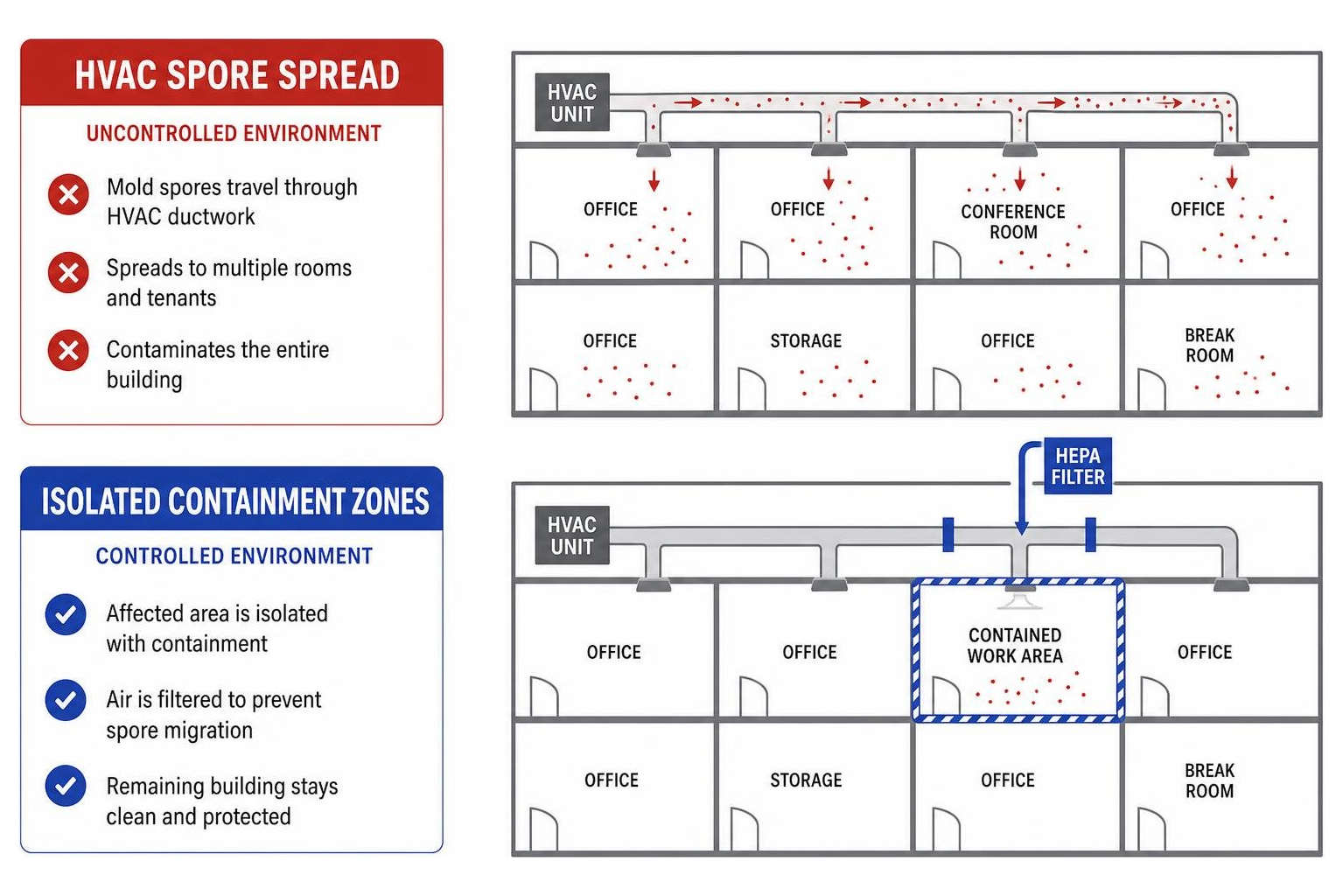
Furthermore, commercial properties are subject to rigorous public health oversight. Whether you manage a school in Broomfield, an office park in Greenwood Village, or a retail hub in Cherry Creek, local standards demand swift intervention to ensure occupant health and structural integrity. Understanding these expectations is critical, and facility managers should consult public health guidelines on mold exposure to align their response protocols with local environmental safety recommendations.
Commercial Building Vulnerabilities and Common Causes
Commercial buildings are complex environments with numerous hidden pathways where water can collect. Unlike residential structures, commercial facilities often run large chilled-water loops, extensive flat roof systems, and massive concrete slabs that can harbor moisture if unmonitored.
The most common commercial vulnerabilities include:
- HVAC Condensation & Poor Drainage: Clogged condensate pans, uninsulated chilled-water piping, and poorly calibrated building management systems can cause relative humidity to spike above 60%, feeding microbial growth inside air handlers and duct plenums.
- Plumbing Failures: High-pressure supply lines, commercial kitchen grease traps, and multi-story restroom stacks can leak inside wall cavities without immediate visual signs.
- Flat Roof and Envelope Breaches: Colorado’s freeze-thaw cycles often stress commercial parapets, seams, and roof membranes, allowing water to track along structural steel decking before showing up fifty feet away from the actual leak.
- Concrete Moisture Intrusion: Below-grade slabs and foundation walls in places like Denver and Golden can suffer from hydrostatic pressure and vapor transmission, trapping moisture beneath commercial vinyl or carpet tile.
- Deferred Maintenance: Postponing seasonal inspections of window caulking, roof flashing, and expansion joints inevitably invites water intrusion.
The 24-to-48-Hour Response Window and Liability Risks
Microbial spores require three things to flourish: moisture, an organic food source (such as drywall paper, ceiling tile cellulose, or wood studs), and moderate temperatures. Under normal commercial indoor conditions, active colonization begins within 24 to 48 hours of water contact.
Delaying your response carries severe business and legal risks:
- Compounding Structural Damage: Mold consumes the organic binding agents within structural materials, leading to delamination, drywall rot, and compromised structural framing.
- Business Interruption: A small, localized containment zone is easy to manage around regular office hours. A facility-wide contamination event can force unplanned closures, costing thousands of dollars per day in lost productivity.
- Tenant and Lease Disputes: Landlords who fail to mitigate active moisture promptly face rent withholding, lease terminations, and potential tort claims regarding indoor environmental quality.
- Regulatory and Code Penalties: Food service establishments, healthcare clinics, and educational facilities face immediate closure or failing inspection grades if uncontained fungal amplification is discovered.
Evaluating Remediation Scope: In-House Limits vs. Professional Standards
A frequent question from facility directors is whether on-site maintenance staff can manage mold cleanup with off-the-shelf cleaners or if a specialized contractor is required.
The Environmental Protection Agency (EPA) provides a clear rule of thumb: if the contiguous affected area is less than approximately 10 square feet (about a 3-foot by 3-foot patch), standard custodial personnel can often clean it safely—provided it is on non-porous surfaces and the underlying leak has been fully resolved.
However, attempting in-house remediation beyond that size threshold frequently leads to cross-contamination. Simply spraying bleach or consumer-grade disinfectants onto porous drywall or acoustical ceiling tiles does not address the hyphae (root structures) embedded deep inside the material. Furthermore, running standard custodial vacuums or shop vacs without true HEPA filtration exhausts millions of fine spores directly into the breathing zone, turning an isolated maintenance issue into a facility-wide air quality crisis.
When to Hire a Professional for Commercial Mold Removal vs. In-House Cleanup
To determine the safest path forward, facility managers can reference the decision criteria below:
| Decision Factor | In-House Custodial Cleanup | Professional Remediation Required |
|---|---|---|
| Affected Surface Area | Less than 10 sq. ft. (isolated patch) | Exceeds 10 sq. ft. or spans multiple rooms |
| Material Porosity | Non-porous (metal, glass, sealed tile) | Porous (drywall, insulation, ceiling tiles, carpet) |
| HVAC Involvement | No HVAC or ductwork impact | Spores detected in air handlers or supply ducts |
| Moisture Source Status | Fully resolved surface splash/condensation | Active hidden leak, pipe burst, or structural intrusion |
| Occupant Sensitivity | General unoccupied storage zones | Medical clinics, childcare, or occupied office space |
| Documentation Needs | Internal maintenance log | Third-party clearance testing, insurance claim proof |
| Engineering Controls | Basic ventilation and standard PPE | Full negative-air containment, HEPA air scrubbers |
The Multi-Phase Commercial Mold Remediation Workflow
Professional remediation is an engineering discipline guided by the IICRC S520 Standard for Professional Mold Remediation. It relies on strict physical containment, negative pressure engineering, controlled demolition, and HEPA air scrubbing.
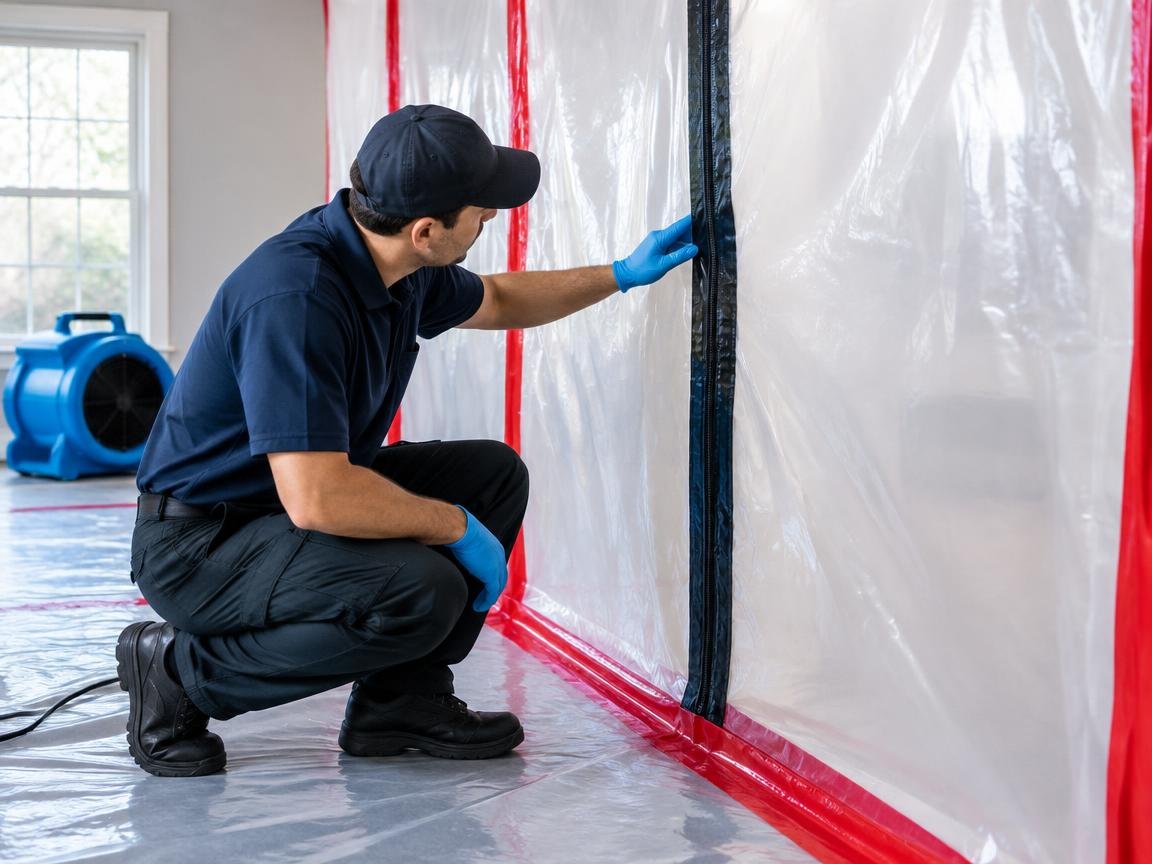
Step-by-Step Commercial Mold Removal and Remediation Process
When our team arrives on-site, we follow a rigorous multi-phase workflow designed to protect unaffected areas of your property:
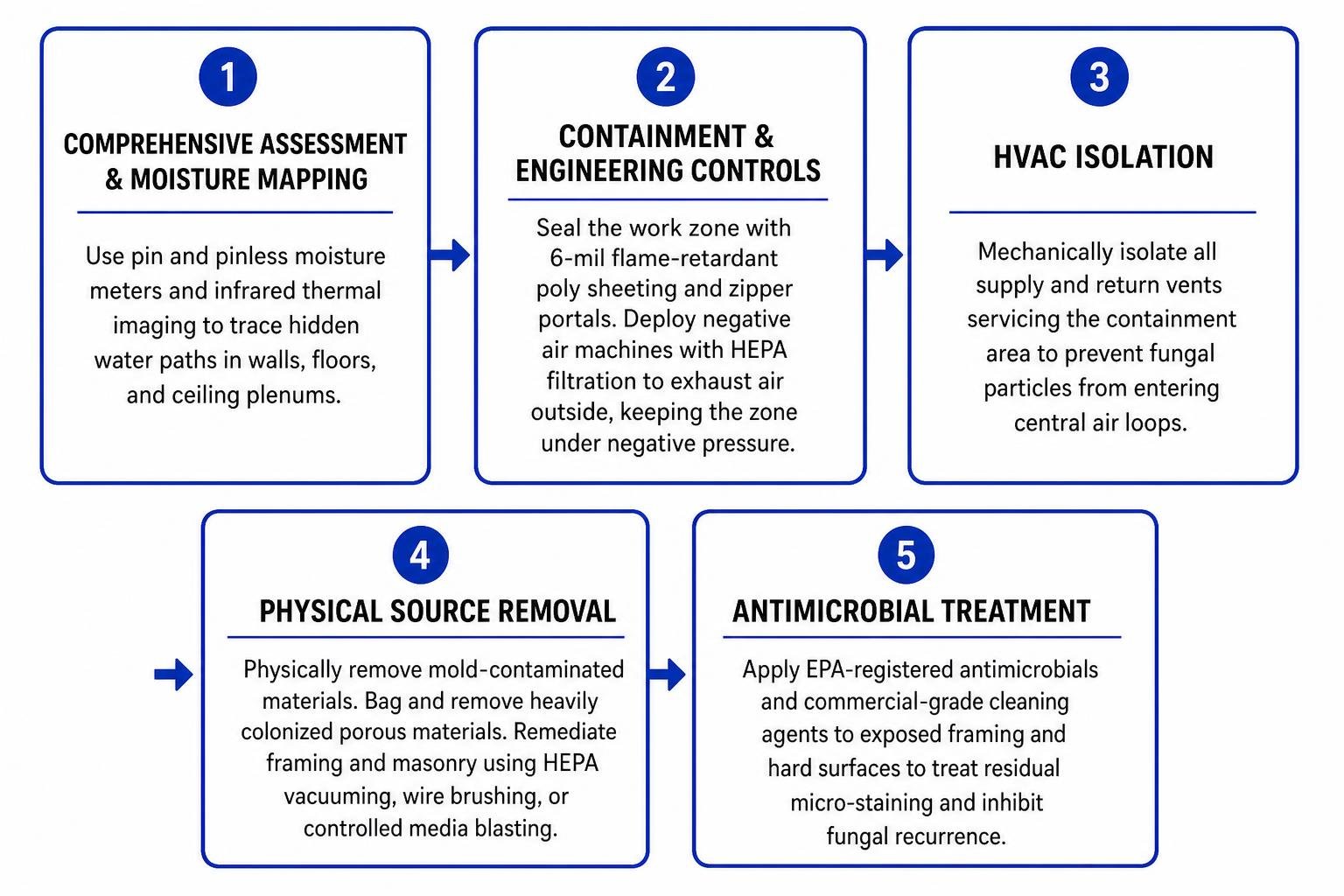
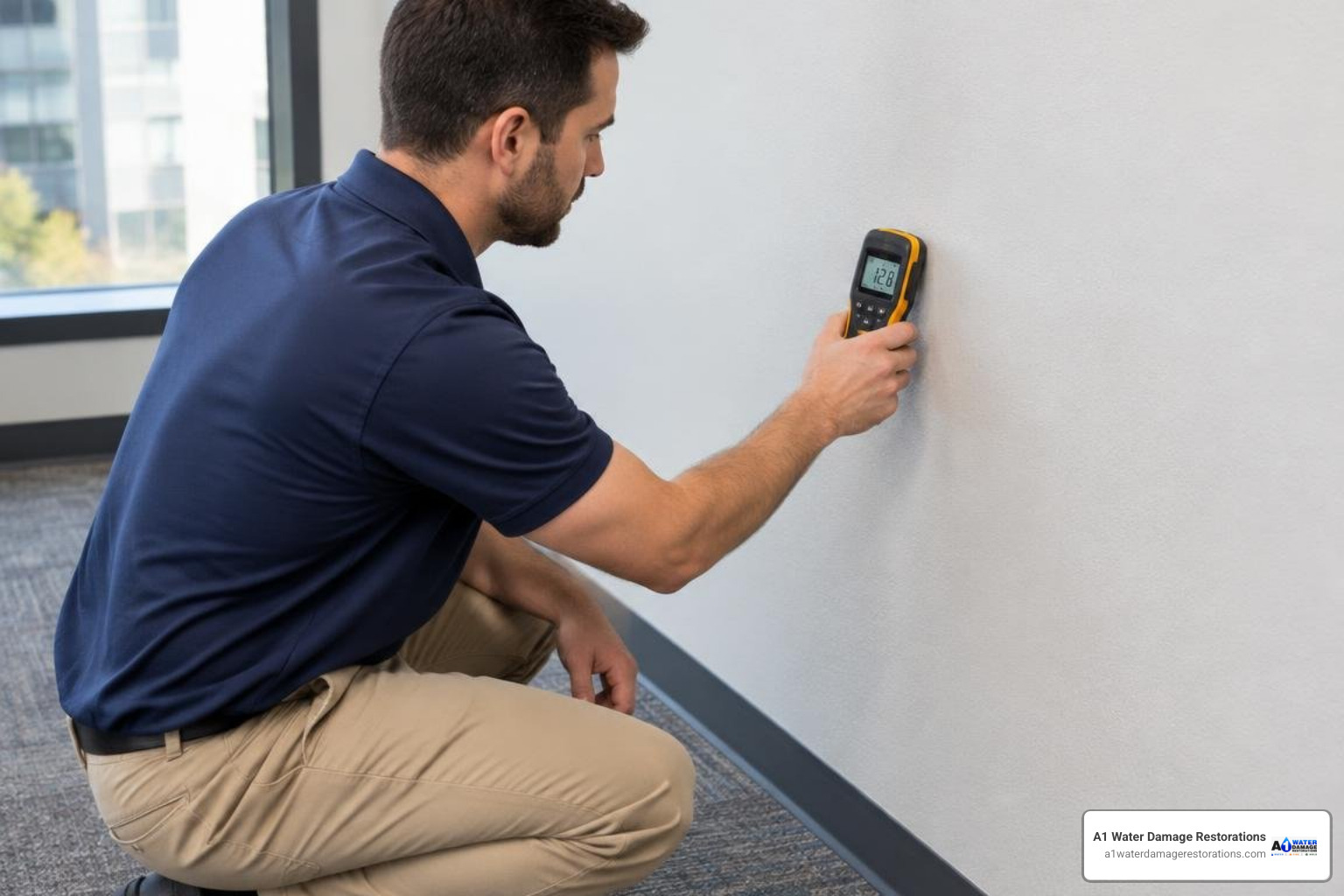
- Comprehensive Assessment & Moisture Mapping: We utilize calibrated pin and pinless moisture meters alongside infrared thermal imaging cameras to trace hidden water paths inside walls, under subfloors, and across ceiling plenums without causing unnecessary structural damage.
- Containment & Engineering Controls: Before disturbing any contaminated materials, we seal the work zone using 6-mil flame-retardant polyethylene sheeting and continuous zipper portals. We deploy industrial negative air machines equipped with multi-stage HEPA filters, ducting exhausted air outside the building envelope. This ensures that the pressure inside the containment zone remains lower than surrounding hallways, preventing any air or spores from escaping.
- HVAC Isolation: We mechanically isolate all supply and return vents servicing the containment area to prevent fungal particles from entering central air loops.
- Physical Source Removal: Mold cannot simply be sprayed away; it must be physically removed. Porous materials that exhibit heavy colonization (such as waterlogged drywall or fiberglass insulation) are bagged in sealed heavy-gauge poly bags inside containment and safely removed. Semi-porous framing lumber and masonry are remediated using HEPA vacuuming, wire brushing, or controlled media blasting.
- Antimicrobial Treatment: Exposed framing and hard surfaces receive an application of EPA-registered antimicrobials and commercial-grade cleaning agents formulated to treat residual micro-staining and inhibit fungal recurrence.
- Structural Dehumidification: If active moisture remains within the building assembly, industrial LGR (Low Grain Refrigerant) or desiccant dehumidifiers are placed inside containment to draw moisture levels down to dry standard baselines.
Post-Remediation Clearance Certificates and Quality Assurance
A remediation project is not complete until objective physical and biological metrics verify that the space is safe for normal reoccupancy.
Following physical cleanup and continuous air scrubbing, an independent, third-party indoor environmental professional (IEP) conducts a Post-Remediation Verification (PRV) inspection. This process involves:
- Visual Inspection: Ensuring all containment surfaces are dust-free and visibly cleared of microbial growth and debris.
- Moisture Verification: Confirming all structural framing and subfloors have met predetermined dry baseline levels.
- Air & Surface Sampling: Collecting bioaerosol air cassettes inside the containment zone and comparing them against outdoor baseline control samples.
Once testing demonstrates that airborne fungal concentrations inside the workspace are equal to or lower than typical outdoor ambient levels, the consultant issues a formal Post-Remediation Clearance Certificate. This legal document proves to tenants, corporate leadership, lenders, and insurance underwriters that the building has achieved Condition 1 (normal fungal ecology).
Managing Costs, Insurance Claims, and Operational Continuity
Managing a commercial property damage event requires balancing rapid remediation with budget parameters and business schedules.
Commercial remediation costs vary based on square footage, material accessibility, containment complexity, and the extent of required structural drying. Minor isolated incidents may cost a few thousand dollars, whereas complex multi-floor projects involving ductwork de-contamination and significant material replacement require larger capital allocations.
Insurance Coverage and Claims Documentation
Commercial property insurance coverage for mold remediation largely hinges on the proximate cause of the moisture. Most standard commercial property and business interruption policies cover remediation when the underlying water damage stems from a sudden and accidental peril—such as a ruptured sprinkler line, an abrupt supply pipe failure, or severe storm-driven envelope damage.
Conversely, claims are frequently denied or subject to strict monetary sub-limits if the insurer determines the damage resulted from long-term leaks, poor building maintenance, or unaddressed chronic humidity.
To support your claim and avoid adjuster disputes, we provide a complete, transparent documentation package, including:
- Initial Scope of Work: Detailed room-by-room mapping of affected assemblies.
- Time-Stamped Photographic Logs: High-resolution before, during, and after images of every containment phase.
- Daily Moisture & Psychrometric Logs: Recorded temperature, relative humidity, and structural moisture content readings demonstrating active drying progress.
- Clearance Documentation: Certified third-party laboratory reports and formal clearance certificates.
Maintaining Business Continuity During Remediation
One of the largest hidden costs of any property incident is operational downtime. A complete facility shutdown is rarely necessary if the remediation contractor uses advanced containment engineering.
By establishing isolated negative-pressure zones, our certified crews can complete remediation work while the rest of your building continues normal operations. For noise-sensitive environments—such as medical facilities in Denver, legal offices in Littleton, or tech hubs in Westminster—we routinely schedule high-impact tasks, demolition, and waste extraction during off-hours, overnights, or weekends.
Frequently Asked Questions About Commercial Mold Remediation
How long does commercial mold remediation usually take?
The majority of commercial mold remediation projects take between 2 to 5 days from containment setup to final clearance testing. The exact duration depends on the total square footage affected, whether active structural drying is needed, and the lab turnaround time for final post-remediation air sample analysis.
Will mold remediation require shutting down our entire business?
In most cases, no. By utilizing sealed poly barriers, negative-pressure air machines, and designated exterior access routes, remediation teams can isolate the affected footprint entirely. The remainder of your facility can generally remain open and occupied safely throughout the project.
What documentation is required for insurance and compliance purposes?
Your insurer, legal team, and local building officials will typically require:
- An initial incident and moisture-mapping report.
- Daily drying and psychrometric monitoring logs.
- Waste disposal manifests for hazardous materials (if applicable).
- Third-party laboratory air sampling analyses.
- A formal Post-Remediation Clearance Certificate verifying safe indoor environmental quality.
Conclusion
Commercial mold damage is a critical operational challenge that demands fast, methodical action. Leaving moisture unresolved for even 48 hours risks structural degradation, HVAC contamination, and significant business disruption. By establishing immediate containment, using certified engineering controls, and insisting on third-party clearance verification, facility managers can safeguard both their physical assets and the health of their occupants.
As a family-owned, 24/7 IICRC-certified restoration team serving the Denver Metro Area—including Boulder, Cherry Creek, Denver, Golden, Greenwood Village, Arvada, Westminster, Wheat Ridge, Broomfield, and Littleton—we deliver comprehensive in-house restoration with unmatched attention to detail.
If you suspect hidden moisture or microbial growth in your facility, explore our dedicated commercial restoration services to restore your property safely, swiftly, and with zero operational surprises.