

Start Denver Restoration Quickly to Limit Damage
For water, fire, or mold damage, Denver restoration should start with emergency mitigation, not repairs. First, make sure the property is safe, stop the source if possible, document visible damage for your insurer, and call a qualified restoration team for prompt assessment, drying, cleanup, and protection of affected areas.
Fast action can reduce secondary damage such as warped flooring, damaged drywall, lingering smoke odor, and mold growth. A full-service restoration process typically includes water extraction or debris removal, moisture inspection, structural drying, cleaning and sanitizing, and help documenting the loss for an insurance claim.
Denver’s changing weather, freezing temperatures, and intense storms can turn a small leak or property emergency into a larger problem. The right response protects the structure, your belongings, and your indoor air while creating a clear path toward repairs.
I am Cole Nudel, a disaster restoration professional with A1 Water Damage Restorations in the Denver area. Through my work in Denver restoration and my involvement with Referral Partners Denver, I help property owners better understand the steps needed after unexpected damage.
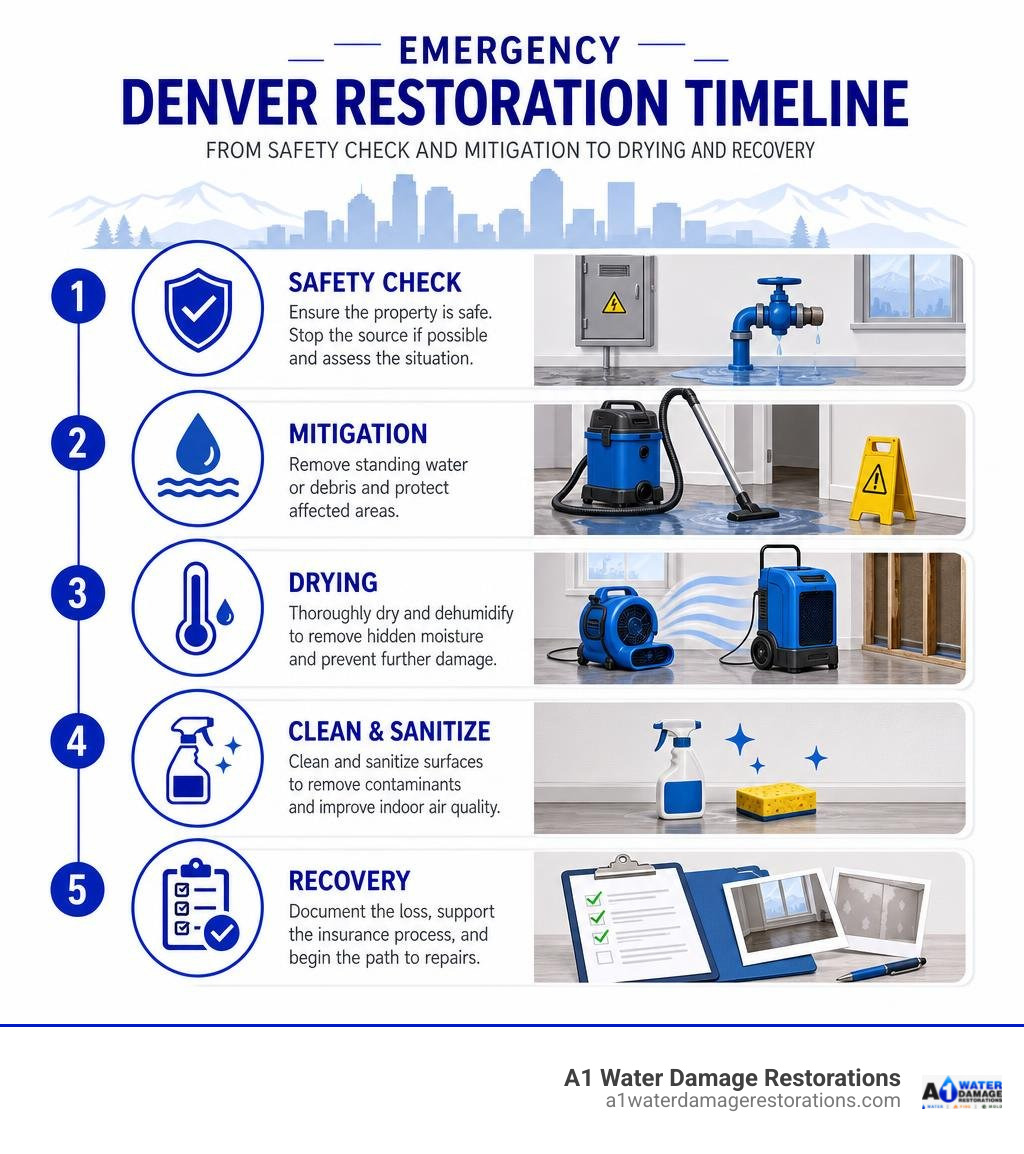
5 Core Steps in Emergency Denver Restoration for Water and Flood Damage
When water invades your living room or basement, every second counts. Whether you are dealing with a burst pipe during a sudden freeze in Littleton or flash flood run-off in Arvada, our approach follows five core technical phases to bring your home back to safety.
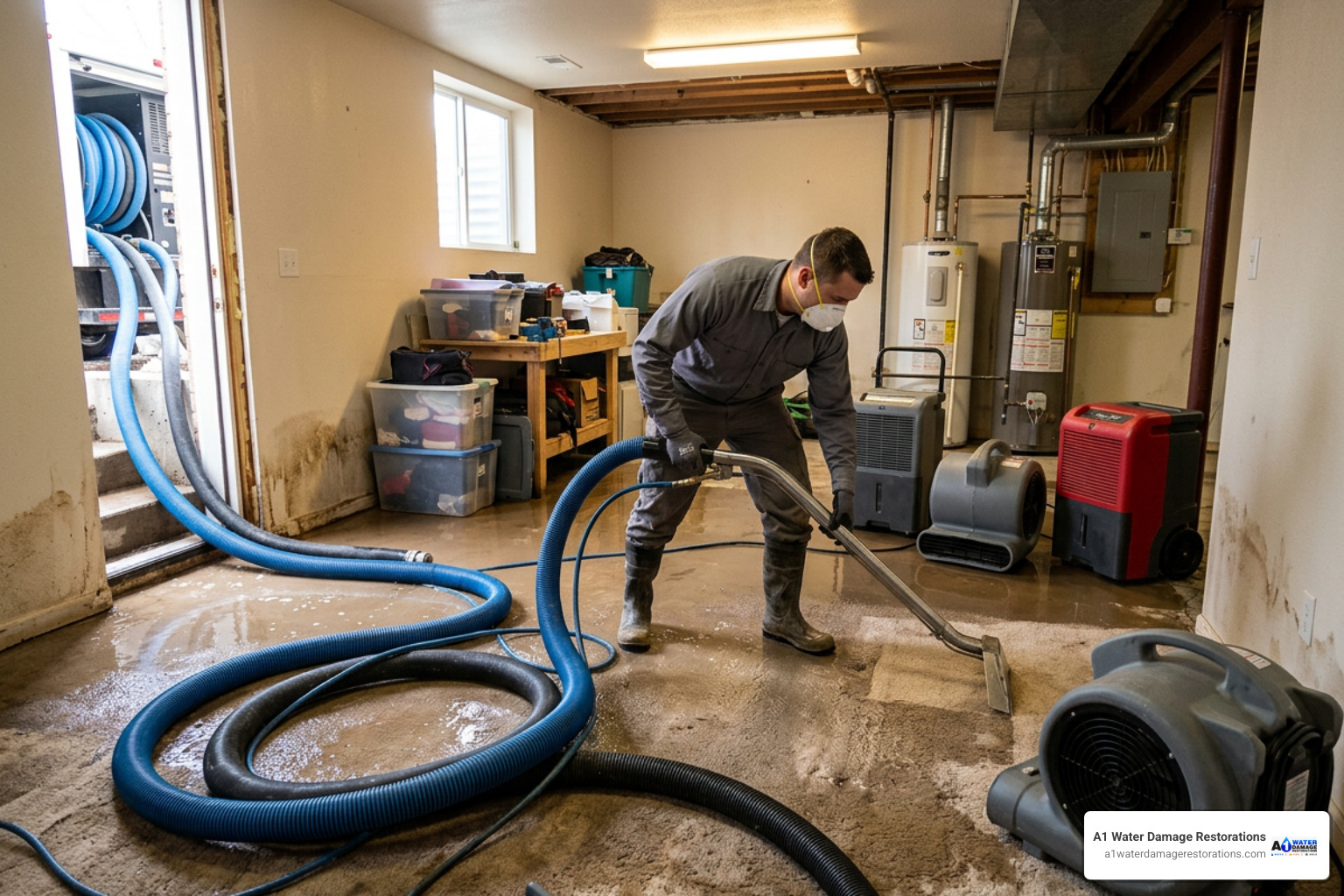
- Emergency Contact and Rapid Dispatch: Our IICRC-certified crews mobilize 24/7 across the Denver Metro area to arrive on-site, assess hazards, and halt the ongoing source of water intrusion.
- Moisture Mapping and Inspection: Technicians use specialized meters and imaging cameras to trace water pathways behind baseboards, beneath tiles, and inside wall cavities.
- Bulk Water Extraction: Removing standing water mechanically is hundreds of times faster than evaporation alone. We deploy high-capacity, truck-mounted extraction units to clear standing pools within minutes. For extensive inundation, reviewing The Ultimate Denver Flood Damage Cleanup Guide will give you a clear look at our structural recovery protocols.
- Targeted Structural Drying: Industrial low-grain refrigerant (LGR) dehumidifiers and high-velocity air movers work together to draw bound moisture out of structural framing, subfloors, and drywall.
- Sanitization and Antimicrobial Treatment: Water intrusions carry bacteria and contaminants. In cases involving drain overflows or contaminated blackwater, our team executes strict decontamination following The Ultimate Denver Sewage Flood Mitigation Guide to neutralize biohazards and ensure family safety.
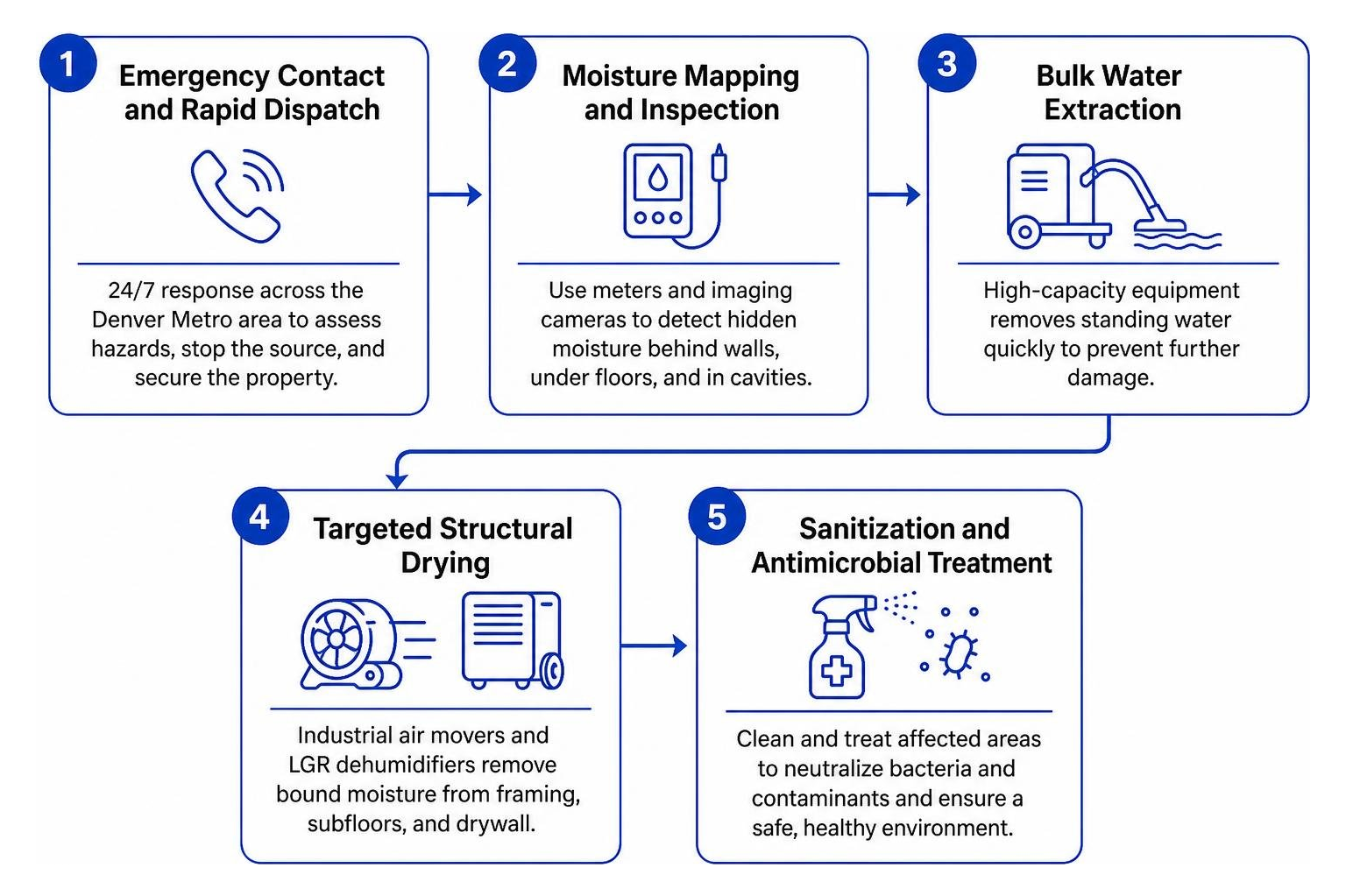
Assessing Water Ingress and Structural Risks in Denver Restoration
Water travels along the path of least resistance. In multi-story homes in Cherry Creek or ranch-style properties in Wheatridge, water from an upstairs bathroom leak can travel along joists, pooling tens of feet away before dripping through a main-floor ceiling.
To pinpoint every drop, we use non-invasive moisture meters and thermal imaging cameras. Drywall that feels dry to the touch might be saturated on its interior face, losing structural integrity and creating a breeding ground for fungi. By mapping the exact boundaries of moisture saturation across framing and subfloors, we avoid unnecessary demolition while ensuring no hidden moisture pockets remain trapped behind walls.
Comprehensive Drying and Sanitizing Techniques
Drying a property in the Mile High climate involves balancing airflow, temperature, and specific humidity. Although Denver’s outdoor air is naturally dry, indoor microclimates trapped under saturated carpet pads or behind vapor barriers hold high humidity levels that stall natural evaporation.
We place industrial air movers at precise angles to create circular vortex airflow across damp surfaces, lifting moisture into the surrounding air where our LGR dehumidifiers extract it continuously. During this process, our technicians apply EPA-registered botanical antimicrobials to inhibit mold and bacterial growth. When hardwood floors suffer water exposure, our targeted floor-mat drying systems can often draw moisture out of the planks and subfloor, salvaging expensive oak and maple floors without requiring costly teardowns. For more detailed insights into specialized extraction, explore our Water Damage in Denver Expert Cleanup and Restoration Solutions.
Mitigating Fire, Smoke, and Soot Damage in Mile High Properties
A property fire is devastating, but the damage does not stop when the firefighters leave. Water from fire hoses, acidic soot deposits, and pervasive smoke compounds can continue corroding and staining materials for days if left unaddressed.
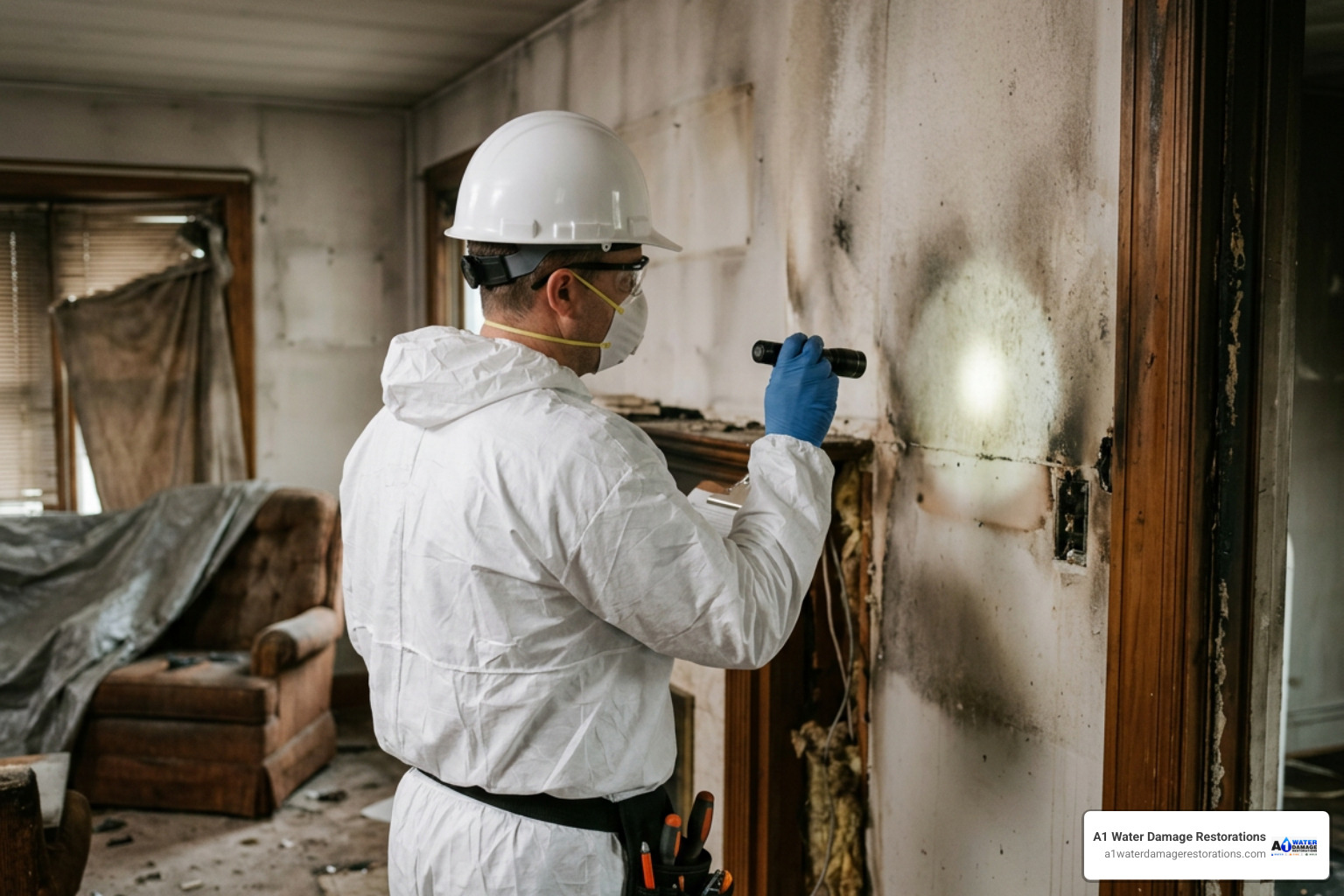
Our emergency fire restoration begins with site stabilization. We provide 24/7 emergency board-up and tarping services to secure your property in Golden, Westminster, or Broomfield from weather and unauthorized entry. Next, our technicians evaluate soot patterns. Soot can be dry, oily, or protein-based depending on the fuel source, and using the wrong cleaning agent can permanently bake soot particles into painted drywall and cabinetry. For comprehensive guidance on post-fire recovery, consult our Fire Restoration Denver Buyers Guide for 2026.
We also provide complete contents pack-out services. We carefully inventory, wrap, and transport your salvageable belongings to our secure facility for ultrasonic cleaning, deodorization, and safe storage while your property undergoes structural repair.
Smoke Odor Elimination and Air Quality Recovery
Smoke particles measure less than a single micron in size, penetrating deep into framing lumber, insulation, carpets, and air ducts. Simple surface wiping or masking sprays will never eliminate fire odors permanently.
To eliminate smoke odors at their molecular core, we deploy advanced air quality technologies:
- HEPA Air Scrubbers: Continuous filtration captures suspended soot particulates and airborne contaminants down to 0.3 microns.
- Thermal Fogging: Replicates the heat and penetration behavior of the original fire, distributing odor-neutralizing compounds deep into structural porous materials.
- Hydroxyl Generators & Ozone Treatments: These units break down volatile organic compounds (VOCs) and smoke molecules via chemical oxidation, leaving indoor air completely fresh and neutral.
- Complete HVAC Decontamination: We clean and sanitize supply vents, returns, and duct trunk lines to prevent smoke residues from recirculating through your heating and cooling system.
Comprehensive Mold Remediation and Environmental Property Care
Due to Denver’s low ambient humidity, minor leaks often dry superficially while leaving dark, damp pockets inside crawl spaces, basements, and plumbing chases. When warm indoor temperatures combine with trapped moisture, toxic mold colonies can establish within 24 to 48 hours.
When dealing with suspected mold outbreaks, safety comes first. Left unmitigated, microbial infestations weaken drywall and jeopardize respiratory health. You can learn about identifying these hazards in our guide, Don’t Let Black Mold Spoil Your Denver Home Remediation Experts You Can Trust.
Environmental responsibility extends beyond indoor walls. When mitigating large commercial or residential losses across the metro area, proper wastewater containment and safe chemical disposal protect local watersheds, aligning with regional watershed initiatives like the Cherry Creek Restoration Project to keep Colorado waterways safe and clean.
Moisture Control and Safe Containment Standards in Denver Restoration
Every mold remediation project we execute follows the strict standards outlined in the IICRC S520 Standard for Professional Mold Remediation.
Our containment protocol prevents the accidental spread of mold spores throughout your home:
- Polyethylene Containment Chambers: We build sealed, zippered plastic barriers around the affected workspace to isolate work zones from unaffected living areas.
- Negative Air Pressure Machines: Industrial air scrubbers exhaust filtered air outside, creating negative pressure inside the containment zone so spores cannot escape into adjacent rooms.
- HEPA Vacuuming and Controlled Removal: Contaminated porous materials that cannot be salvaged are bagged in airtight heavy-gauge plastic before being transported out of the home.
- Post-Remediation Clearance Testing: An independent third-party environmental testing firm performs indoor air quality tests to certify that mold spore counts have returned to normal, baseline levels before containment barriers come down.
How to Select Certified Emergency Restoration Professionals
When emergency property damage strikes, hiring the right contractor makes the difference between an efficient recovery and months of recurring structural problems. General handymen and remodeling contractors may know how to hang drywall, but they lack the calibrated extraction tools, thermal imaging instruments, and scientific psychrometric training needed to dry structures safely.
Always check credentials and ensure your contractor holds active certifications from the Institute of Inspection, Cleaning and Restoration Certification (IICRC). To help you navigate this process, we have published The Mile High Guide to Finding Certified Restoration Experts.
| Feature / Capability | Certified Full-Service Restoration Specialist | General Maintenance Contractor |
|---|---|---|
| Response Time | 24/7/365 immediate emergency dispatch | Standard business hours |
| Industry Certification | IICRC Certified (WRT, ASD, AMRT, FSRT) | Uncertified or general trade license |
| Moisture Detection | Infrared thermal cameras & penetrating meters | Visual inspections only |
| Specialized Equipment | LGR dehumidifiers, HEPA scrubbers, air movers | Standard shop fans & shop vacs |
| Insurance Claim Support | Direct insurance billing with detailed Xactimate logs | Basic handwritten invoices |
| Containment Protocols | Negative air pressure & cross-contamination controls | Minimal or no isolation containment |
Frequently Asked Questions About Property Restoration in Denver
How quickly should restoration begin after water or fire damage?
Restoration should begin within hours of the incident. In water damage scenarios, mold spores can germinate and begin colonizing drywall, carpets, and baseboards within 24 to 48 hours. With fire emergencies, acidic soot residue immediately begins etching glass, pitting metal fixtures, and causing permanent yellowing on appliances within hours. Calling a 24/7 emergency restoration team right away significantly reduces repair costs and salvage times.
Does homeowners insurance cover emergency water and fire restoration?
Most standard homeowners insurance policies cover sudden and accidental water damage (such as a ruptured supply line, frozen pipe, or water heater rupture) as well as unexpected fire and smoke damage. However, gradual damage caused by unresolved deferred maintenance or external ground flooding often requires separate, specialized flood insurance endorsements. We document moisture readings, take detailed photos, and submit standardized Xactimate line-item estimates directly to your adjuster to simplify the entire claims process.
What certifications should a Denver property restoration contractor hold?
A reliable restoration contractor must hold active certifications from the IICRC. Key credentials include:
- WRT (Water Damage Restoration Technician): Core training in water extraction, structural drying, and moisture dynamics.
- ASD (Applied Structural Drying): Advanced training in specialized commercial and residential drying techniques.
- AMRT (Applied Microbial Remediation Technician): Scientific mold containment, removal, and decontamination protocols.
- FSRT (Fire and Smoke Restoration Technician): Comprehensive soot removal, structural cleaning, and deodorization methods.
Conclusion
When property damage strikes your home or business, prompt action is the key to minimizing losses and avoiding structural decay. Whether you are facing a flooded basement in Greenwood Village, freezing pipe bursts in Boulder, or smoke damage in Denver, having an experienced, family-owned team by your side provides immediate peace of mind.
At A1 Water Damage Restorations, our IICRC-certified technicians bring years of local experience, state-of-the-art equipment, and 24/7 responsiveness to every emergency. For immediate assistance with any water, fire, or mold emergency, connect directly with our local specialists for full-service denver damage restoration and let us restore your property quickly and safely.