

How to Clean Mold on Window Sills Without Damaging Them
For a small patch of mold, put on gloves, eye protection, and an N95 mask. Dampen the spot with a cloth and mild soapy water, then wipe it gently with a soft sponge. Do not scrub it dry or soak the sill, especially if it is painted wood. Wipe away the residue, dry the area fully, and fix the condensation or leak that made it wet. If the wood feels soft, mold keeps returning, or the affected area is larger than about 10 square feet, call a professional.
I’m Cole Nudel, a disaster restoration professional with A1 Water Damage Restorations in the Denver area. I’ll help you clean mold on window sills without overlooking the moisture problem that can bring it back.
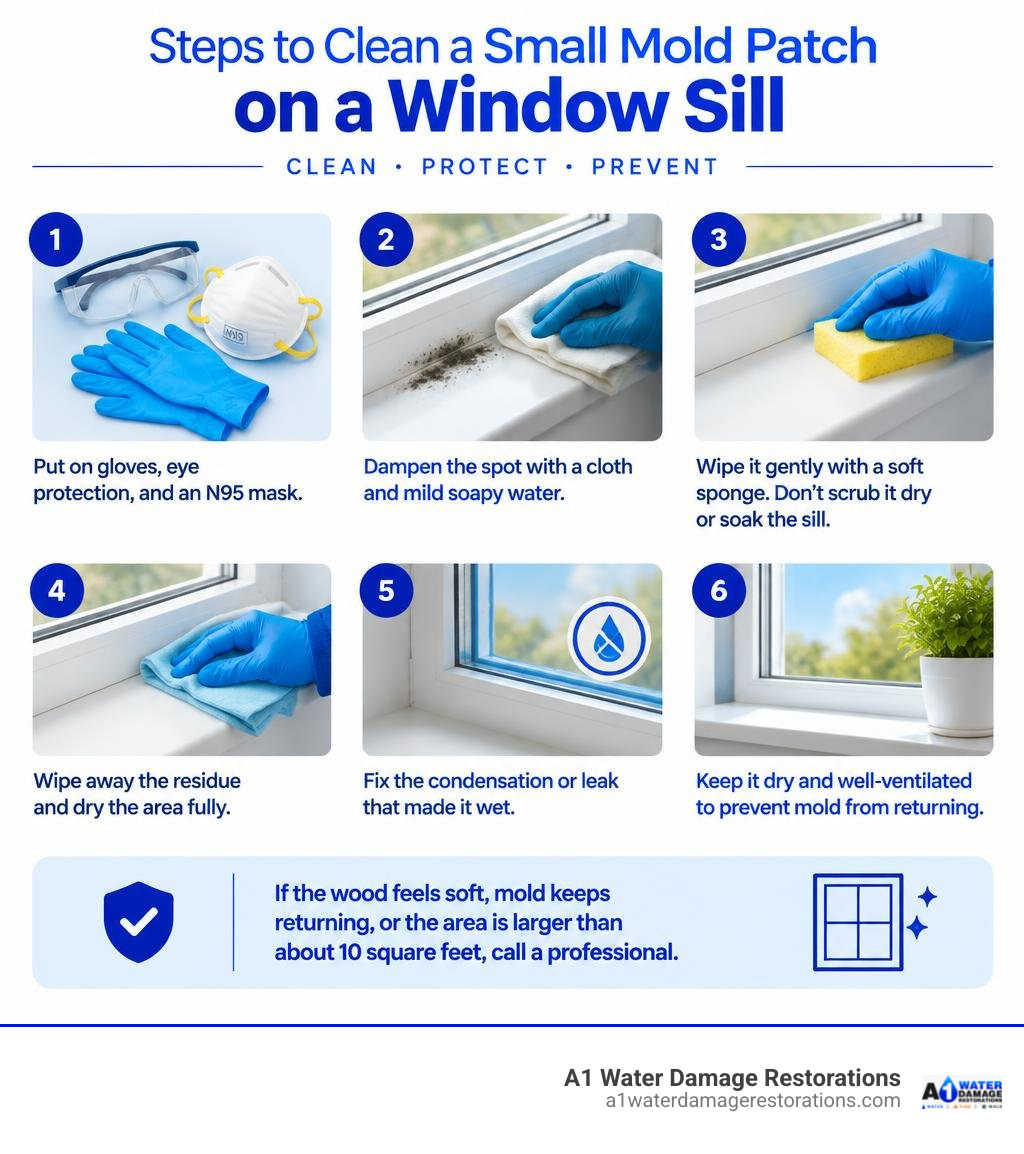
Simple clean mold on window sills glossary:
What Causes Window Sill Mold and How to Identify It
Window sills rank among the most common hot spots for microbial growth in residential homes. In fact, roughly 30% of U.S. homes experience visible window-related moisture problems. Mold spores naturally exist in the air both indoors and outdoors, but they remain harmless until they find three things: organic matter (such as wood, drywall, dust, or paint binders), moderate temperatures, and persistent moisture.
When relative humidity indoors climbs above 60%, conditions become prime for rapid fungal growth. If liquid water pools on a surface, it takes only 24 to 48 hours for dormant spores to germinate, anchor, and begin colonizing.
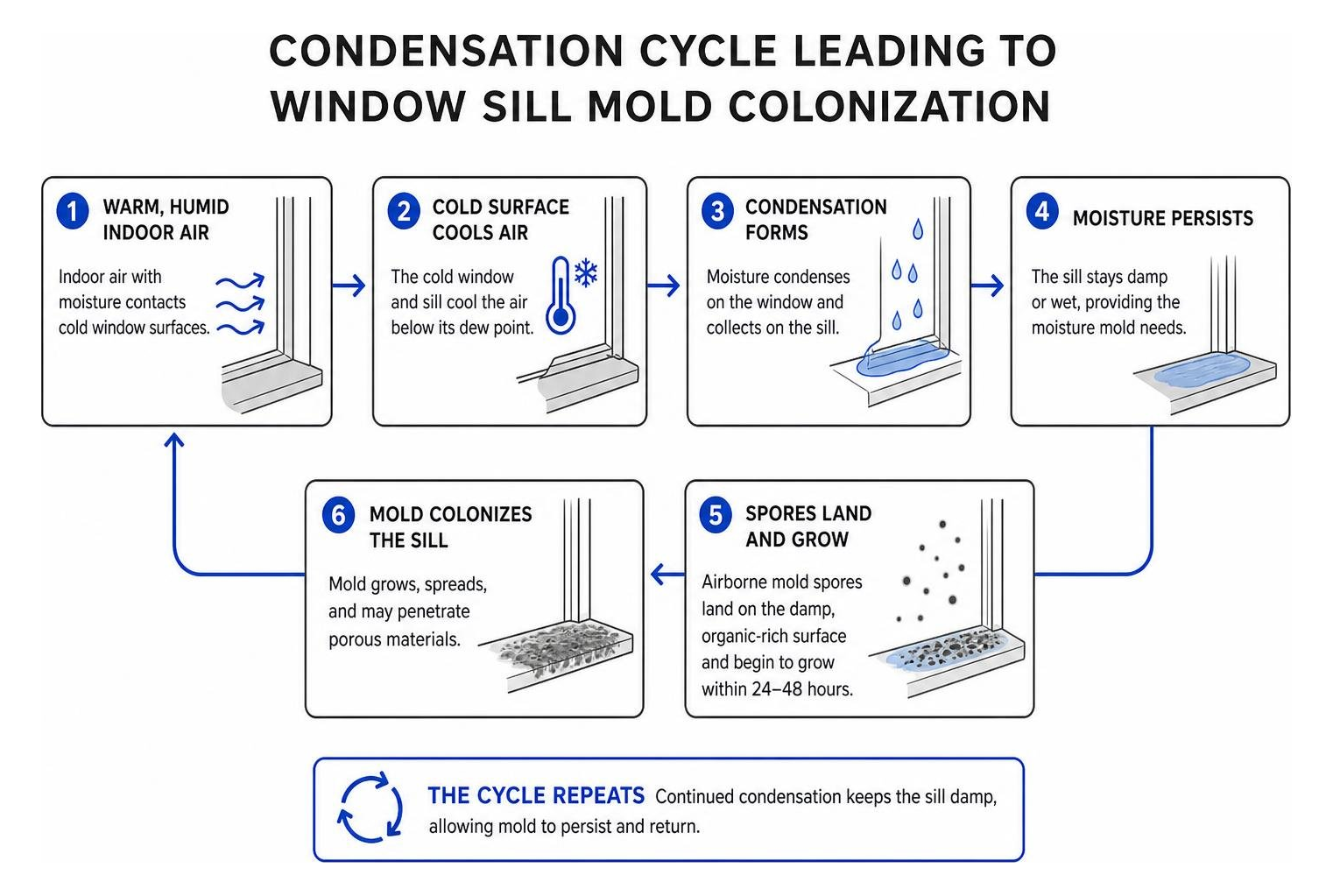
Understanding why water lands on your sill in the first place is the key to stopping the cycle permanently.
Understanding Condensation and Temperature Differences
Most window sill mold is not caused by a sudden roof disaster; it is driven by everyday thermal physics. Window panes and their framing members act as thermal bridges between heated indoor living spaces and chilly outdoor air.
Indoor air contains invisible water vapor generated by daily living. A typical family of four generates 4 to 6 gallons of water vapor daily through cooking, showering, breathing, and doing laundry. When warm, humid room air drifts against cold window glass, the air drops below its dew point. The air can no longer hold that moisture, depositing it as liquid beads of condensation that roll down the glass and collect directly on the horizontal sill.
The temperature gap depends heavily on your window construction:
- Single-pane windows: In sub-freezing weather, the interior surface of single-pane glass can easily plunge to 20–25°F. This massive temperature drop creates continuous, heavy condensation puddles.
- Double-pane insulated glass: Modern double-pane windows incorporate insulating gas (such as argon) between panes, maintaining interior glass temperatures around 30–40°F under identical cold conditions. This thermal barrier reduces condensation formation by 70% to 80%.
Active vs. Inactive Mold Growth
Before grabbing cleaning supplies, you need to determine whether the colony is active or dormant.
- Active Mold: Appears fuzzy, velvety, or slimy. It is damp to the touch (though you should never touch it with bare hands) and gives off an earthy, pungent, musty odor. Active colonies are actively metabolizing nutrients and releasing fresh airborne spores.
- Inactive (Dormant) Mold: Looks dry, powdery, or chalky, and often presents as a flat, uniform stain. Inactive mold occurs when the sill dries out, stalling active growth. However, dormant mold is not “dead” mold. As soon as winter condensation returns or relative humidity rises, the spores reactivate immediately.
Is Black Mold on Window Sills Dangerous?
Finding dark, splotchy growth on a bedroom or living room window sill often causes immediate panic. Homeowners frequently worry they are facing Stachybotrys chartarum, often sensationalized as “toxic black mold.”
In reality, Stachybotrys requires chronic, heavy water saturation on cellulose-rich materials (like water-logged drywall over weeks) and is relatively uncommon on window frames. The vast majority of dark patches on window sills are common mold species such as Cladosporium or Aspergillus niger.
While less dangerous than true toxic varieties, these molds are strong allergens. Inhaling their spores can trigger upper respiratory irritation, coughing, chronic sneezing, nasal congestion, and severe flare-ups in people with asthma or compromised immune systems. Learning effective black mold removal techniques is critical to protecting your indoor air quality and family health.
Safe Cleaning Solutions for Different Sill Materials
Every window sill material interacts differently with moisture and chemical cleaners. Using the wrong solution can strip paint, corrode metal, or cause porous wood composites to swell and disintegrate. Choosing which window mold cleaners actually kill spores depends strictly on the porosity of the underlying material.
White Vinegar vs. Bleach: Which Truly Kills Spores?
The debate between household bleach and distilled white vinegar is one of the most misunderstood topics in home cleaning:
- Distilled White Vinegar (5% Acetic Acid): Vinegar is a mild acid that penetrates porous and semi-porous surfaces. Research demonstrates that white vinegar kills approximately 82% of mold species, including their microscopic root systems (hyphae and mycelium). It is safe on painted wood, aluminum, and vinyl, and does not produce hazardous fumes.
- Chlorine Bleach (Sodium Hypochlorite): Diluted bleach (mixed at roughly 1 part bleach to 10 parts water) kills 99% of surface mold on non-porous materials like glass and smooth vinyl. However, bleach cannot penetrate porous wood. The chlorine chemical stays on the surface while the water component soaks deep into the wood grain, inadvertently feeding the surviving mold roots underneath. Additionally, bleach weakens paint bonds, strips protective finishes, and produces harsh fumes.
Safety Warning: Never mix bleach with vinegar, ammonia, or any other household cleaners. Combining these chemicals creates lethal chlorine or chloramine gas.
Alternative Cleaners: Hydrogen Peroxide and Borax
If you prefer non-vinegar alternatives, two standout options deliver excellent fungal elimination:
- 3% Hydrogen Peroxide: An effective antifungal and antibacterial agent that lifts mold from painted trim. It provides a mild lightening effect, helping to fade persistent dark stains without the harsh chemical profile of chlorine bleach. Always test on an inconspicuous corner first to ensure your paint pigment remains intact.
- Borax (Sodium Borate): A natural mineral powder with a basic pH that acts as an inherent mold inhibitor. Mixing 1 cup of borax per gallon of warm water creates a gentle cleaning agent. When wiped onto wood sills and allowed to dry without heavy rinsing, it leaves behind an invisible micro-barrier that prevents newly landing spores from germinating.
Comparing Mold Cleaning Methods by Sill Material
| Sill Material | Porosity Level | Recommended Cleaner | Dwell Time | Risk Factors / Warnings |
|---|---|---|---|---|
| Painted Wood | Semi-Porous | Distilled White Vinegar or 3% Hydrogen Peroxide | 15–30 minutes | Avoid over-saturating; bleach causes paint peeling and deep rot |
| Bare / Stained Wood | Highly Porous | Undiluted White Vinegar followed by Borax solution | 30–60 minutes | Deep hyphae growth; dry aggressively to prevent grain warping |
| Vinyl (PVC) | Non-Porous | 1:10 Diluted Bleach, Vinegar, or Mild Detergent | 10–15 minutes | Safe for most cleaners; avoid abrasive scrubbers that scratch PVC |
| Aluminum | Non-Porous | Mild Dish Soap & Warm Water or White Vinegar | 10 minutes | Avoid bleach and harsh acids to prevent surface metal oxidation |
| MDF / Composite | Highly Porous | Barely-Damp Cloth with Distilled White Vinegar | 5–10 minutes | Highly vulnerable to water; liquid pooling causes irreversible swelling |
How to Clean Mold on Window Sills Step-by-Step
Cleaning mold demands a systematic approach that prevents spores from becoming airborne and drifting into surrounding furniture or carpets. Use a dedicated “clean-to-dirty” workflow, moving methodically from the outer clean edges toward the heaviest center of contamination.
Safety Gear Needed to Clean Mold on Window Sills
Always isolate yourself from biological contaminants before disturbing any fungal patch:
- N95 Respirator Mask: A standard dust mask is insufficient; an N95 or better respirator filters out microscopic fungal spores.
- Nitrile or Neoprene Gloves: Protects skin from both fungal irritants and active cleaning solutions.
- Safety Goggles: Unvented or indirect-vent eye protection prevents airborne spores and cleaning splashes from contacting your eyes.
- Protective Clothing: Wear washable long sleeves or an apron, washing clothing in hot water immediately after cleanup.
How to Clean Mold on Window Sills Made of Painted Wood
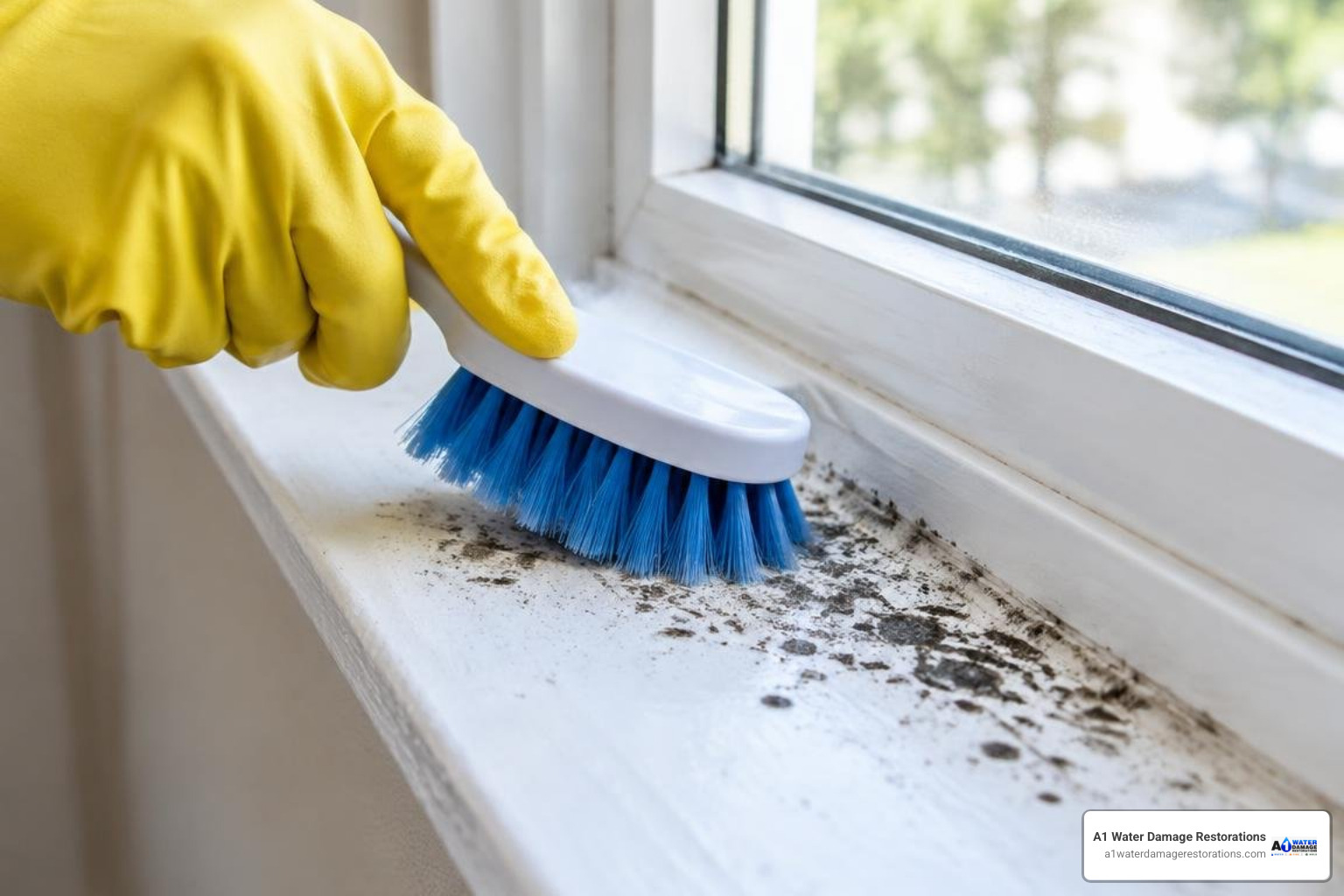
- Lightly Mist the Area: Never scrub a dry mold colony. Lightly mist the painted sill with distilled white vinegar to bind the spores to the surface and keep them from aerosolizing.
- Apply the Cleaning Solution: Spray undiluted white vinegar or dab 3% hydrogen peroxide across the affected paint. Allow it to sit for 15 to 30 minutes to break down fungal cell structures.
- Gently Scrub: Using a soft-bristled nylon brush or a non-scratch microfiber cloth, gently agitate the surface. Do not use wire brushes or rough scouring pads, which scratch paint and create microscopic valleys where future moisture collects.
- Wipe Residue: Wipe the lifted mold away with disposable paper towels or microfiber cloths, placing used towels straight into a plastic trash bag.
- Rinse and Dry Immediately: Wipe the sill with a clean cloth wrung out with fresh water, then thoroughly towel-dry the area. Place an oscillating fan or small space heater facing the sill to remove all lingering moisture within 2 hours.
- Address Staining and Paint Integrity: If the paint has cracked, flaked, or exhibits deep stains, sand the bare wood lightly once dry, apply an antimicrobial fungicidal primer (like Zinsser Mold Killing Primer), and coat with high-grade semi-gloss paint.
Cleaning Vinyl, Aluminum, and Composite Sills
- Vinyl (PVC) Sills: Spray with a 1:1 water and vinegar mix or a mild dish soap solution. Use a soft sponge to clear grime from the corners. If stubborn black dots persist on bare white vinyl, a 1:10 diluted bleach wipe will clear stains quickly. Rinse with clean water and dry.
- Aluminum Frames: Wash down with mild soapy water. Avoid caustic chemicals or abrasive steel wool that scratch the anodized protective coating and trigger metal oxidation.
- MDF (Medium-Density Fiberboard): MDF absorbs water like a sponge. Dip a cloth into a vinegar solution and wring it out until it is barely damp. Wipe the surface mold away swiftly, then dry the sill instantly with a microfiber towel and hair dryer on low heat. If the MDF has swollen or softened, the material has lost structural integrity and must be replaced.
Treating Mold in Window Tracks and Rubber Seals
Window tracks collect windblown outdoor dust, which serves as a prime food source for mold when soaked with condensation.
- Vacuum Loose Debris: Use a vacuum cleaner equipped with a HEPA filter and crevice attachment to remove dry dirt, dead insects, and loose debris from the track.
- Clear the Weep Holes: Exterior window tracks have small drainage slots (weep holes) designed to channel water outside. If clogged with dirt, standing water backs up against the sill. Clear these slots using a small wire or pipe cleaner.
- Scrub Track Corners: Dip an old soft toothbrush into white vinegar and work it into the narrow slider channels and corners. Wipe dry.
- Inspect Rubber Gaskets: Examine the black rubber weatherstripping and glazing bead seals holding the glass. If the rubber is brittle, cracked, or mold has grown beneath the seal, cleaning will not suffice—carefully scrape away degraded seals and replace them with fresh silicone.
Long-Term Condensation Control and Mold Prevention
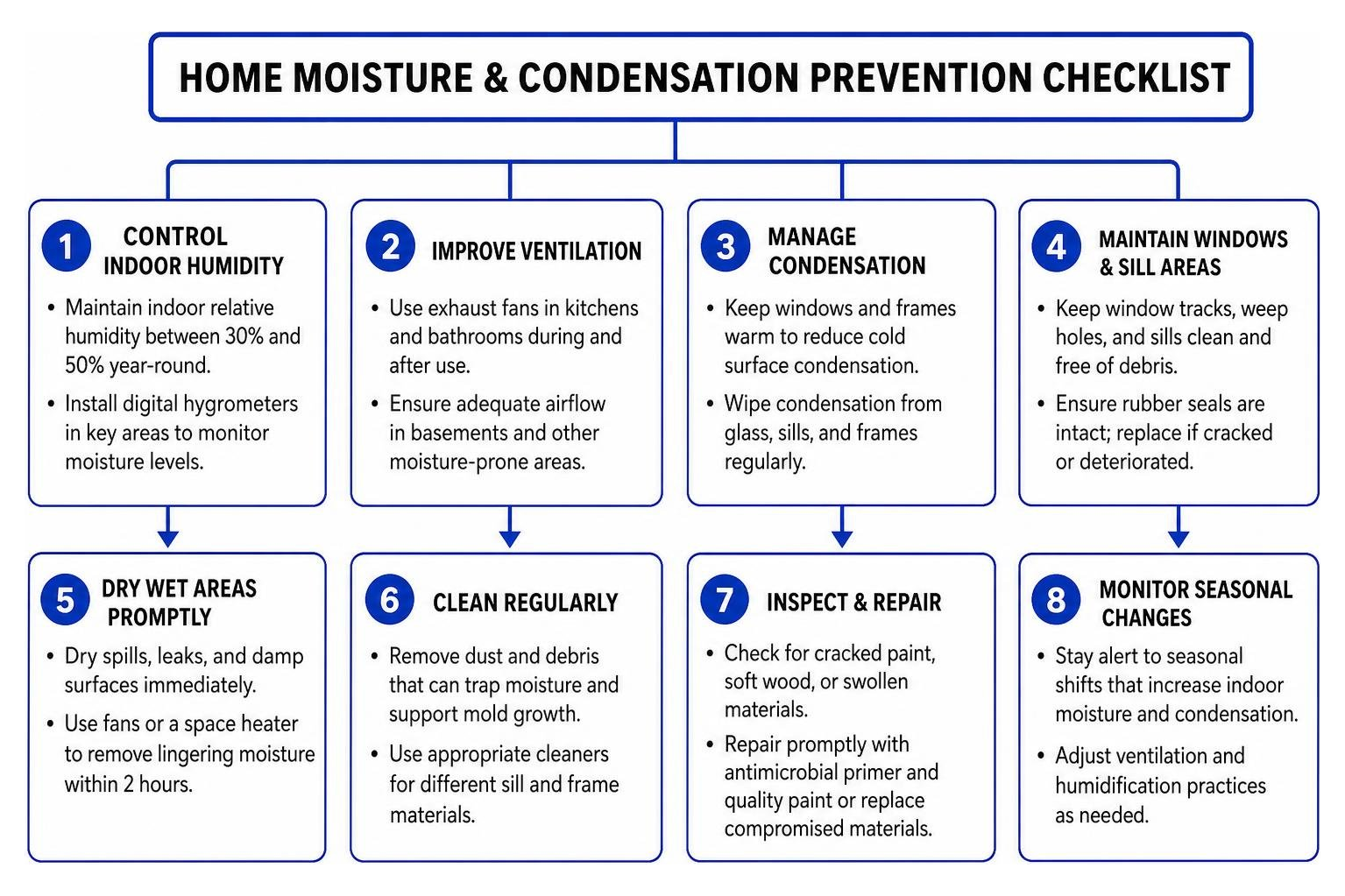
Remediating surface mold solves only half the problem; preventing condensation eliminates the root cause. Homeowners looking for broader regional maintenance strategies can consult resources like this Minnesota homeowner guide to identifying mold problems to understand how seasonal shifts impact building envelopes.
Controlling Indoor Humidity Levels
The EPA recommends maintaining indoor relative humidity between 30% and 50% year-round. Above 50%, condensation accelerates rapidly along cool glass perimeters.
- Install a Digital Hygrometer: Place inexpensive humidity monitors in bedrooms, basements, and living areas to track ambient moisture.
- Run Exhaust Fans: Operate bathroom ventilation fans during showers and for at least 20 minutes afterward. Run kitchen range hoods when boiling water or cooking.
- Deploy Dehumidifiers: In high-humidity climates or subterranean basement levels, run a dedicated room dehumidifier set to maintain 45% relative humidity.
- Increase Circulation: Keep interior doors open and leave window blinds cracked slightly at night. Closed, heavy blackout curtains trap cold, humid air directly against window glass, creating an unventilated microclimate ripe for mold.
Repairing Window Caulk and Weatherstripping
Window caulk degrades over a typical lifespan of 5 to 10 years, cracking, shrinking, and pulling away from both the frame and drywall.
- Inspect Annually: Check the perimeter joints where the window frame meets the interior sill.
- Strip Failed Caulk: Scrape away old, mold-spotted, or brittle caulk using a putty knife or caulk removal tool. Clean the gap with isopropyl alcohol.
- Apply 100% Silicone: Run a smooth bead of high-grade 100% silicone sealant containing mold-resistant biocides. This seals exterior air drafts and stops liquid condensation from draining behind the wall.
Window Upgrades and Insulating Film
If your windows suffer from heavy thermal transfer, physical insulation upgrades can halt condensation:
- Window Insulating Film Kits: Clear shrink-film applied over the interior window casing creates an insulating air pocket, reducing heat loss by 35% to 45% and keeping interior-facing surfaces above the dew point.
- Interior Storm Window Inserts: Custom acrylic or glass inserts press into existing window frames, providing double-pane thermal performance without full window replacement.
- Double-Pane Retrofits: Upgrading aging single-pane units to double- or triple-pane Low-E insulated glass units eliminates severe thermal bridging and permanently stops cold-weather condensation.
When to Call a Professional Remediation Service
While small sill spots are easy to handle yourself, certain structural conditions require certified professional intervention. The EPA recommends seeking professional mold remediation whenever visible fungal growth covers an area larger than roughly 10 square feet (about a 3-foot by 3-foot section).
If mold has begun creeping across your window trim and onto adjacent drywall, learning effective wall mould treatments can help you assess how deeply the moisture has traveled.
Signs Mold Has Spread to Drywall and Framing
Surface mold on a sill can be a symptom of hidden structural contamination. You need an IICRC-certified specialist if you observe:
- Paint Bubbling or Peeling: Drywall paint around the window casing is blistering, flaking, or soft to the touch.
- Squishy Drywall: Pressing against the wall beneath the sill feels spongy or yields under finger pressure, indicating long-term saturation.
- Persistent Musty Odor: A strong fungal smell remains in the room even after thorough surface scrubbing.
- Wall Cavity Infestation: Mold is visible migrating into baseboards or behind the drywall framing.
Failed Double-Pane Seals and Structural Wood Rot
- Compromised IGU Seals: If you see fogging, condensation droplets, or black spots sandwiched between the two panes of glass, the factory desiccant seal has failed. Cleaning the glass surface will not fix this; the insulated glass unit must be replaced.
- Structural Wood Rot: Push the tip of a flathead screwdriver gently into the wooden sill. If the metal sinks effortlessly into soft, decaying wood fibers, the core framing has rotted. Painting or treating the surface is no longer viable—the window framing requires structural carpentry replacement and specialized moisture mitigation.
Frequently Asked Questions About Window Sill Mold
Does opening windows help prevent window sill mold?
Yes, opening windows periodically helps when outdoor air is drier than indoor air. In cold winter months, cracking windows for 5 to 10 minutes creates a rapid air exchange (“shock ventilation”) that expels warm, moisture-laden indoor air and replaces it with dry outdoor air without significantly lowering the temperature of your walls and furniture.
Can I simply paint over mold on a wooden window sill?
No, never paint over active or dormant mold. Fungal hyphae will continue feeding on the organic wood fibers beneath the paint layer. Over time, the moisture trapped by the new paint will cause it to bubble, crack, and peel within weeks, accelerating internal wood rot. You must kill the mold, let the wood dry completely, apply an antimicrobial fungicidal stain-blocking primer, and then finish with topcoat paint.
Why does mold keep returning to the same window corner?
Mold recurring in one specific corner usually indicates a localized thermal bridge or structural failure. Common causes include a gap in exterior caulking that allows rainwater penetration, missing fiberglass insulation in the rough window framing pocket, or a damaged corner gasket where cold air infiltrates, dropping that specific corner below the local dew point.
Conclusion
Clearing mold from your window sills preserves your paint, protects your wood framing, and maintains healthy indoor air. By matching the right cleaning agent—such as distilled white vinegar or hydrogen peroxide—to your specific sill material, and avoiding destructive dry scrubbing or excessive moisture soaking, you can safely eliminate surface mold colonies.
However, lasting success depends entirely on controlling moisture. Keep indoor relative humidity between 30% and 50%, maintain clean window tracks, replace aging caulk, and wipe away condensation when severe cold strikes.
If you discover soft, rotting wood framing, mold spreading across interior drywall, or recurring fungal growth across multiple rooms, our team of IICRC-certified restoration professionals is ready to help. At A1 Water Damage Restorations, we provide comprehensive moisture detection, structural drying, and professional mold removal services across Denver, Boulder, Cherry Creek, Golden, Greenwood Village, Arvada, Westminster, Wheat Ridge, Broomfield, and Littleton, Colorado. Reach out to our 24/7 emergency response team today to restore your property safely and permanently.