

What to Do When You Have Sewage in Your Basement
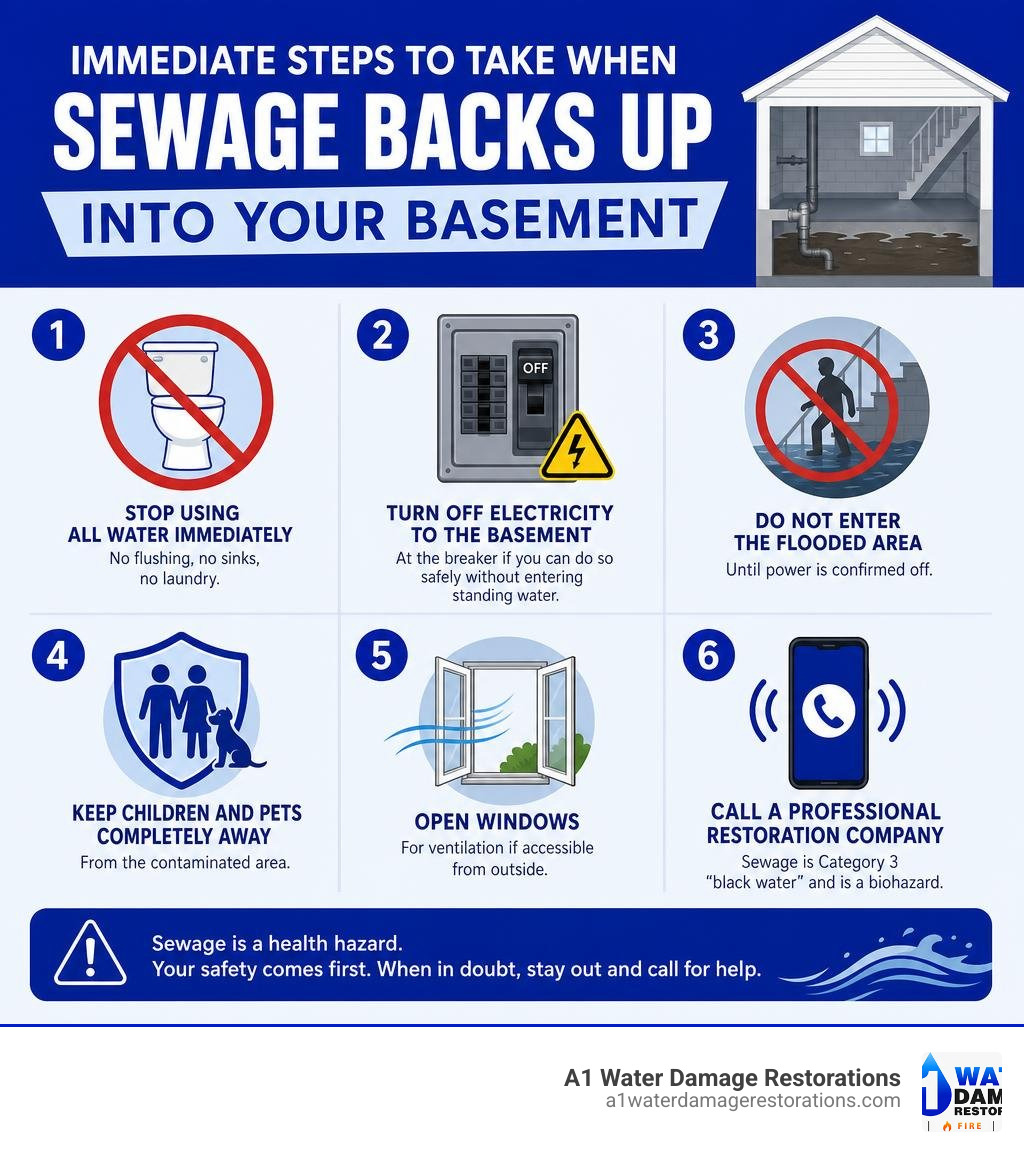
If you have sewage in your basement, here are the most important steps to take right now:
- Stop using all water immediately — no flushing, no sinks, no laundry
- Turn off electricity to the basement at the breaker if you can do so safely without entering standing water
- Do not enter the flooded area until power is confirmed off
- Keep children and pets completely away from the contaminated area
- Open windows for ventilation if accessible from outside
- Call a professional restoration company — sewage is Category 3 “black water” and is a biohazard
Sewage in a basement is one of the most serious and stressful emergencies a homeowner can face. It is not just a mess — it is a health hazard, a structural threat, and a financial hit, often all at once.
Raw sewage contains dangerous pathogens that cause illnesses like Salmonellosis, Dysentery, and Hepatitis A. It can also produce sewer gas — a mix of hydrogen sulfide and methane — that at high enough concentrations causes headaches, nausea, and dizziness. And before you even think about the biological risks, the biggest immediate danger is electrocution or gas explosion from flooded electrical systems.
The damage can spread fast. Mold can begin growing on wet organic surfaces within 24 to 48 hours. Porous materials like carpet, drywall, and insulation absorb contaminated water almost instantly and usually cannot be saved.
I’m Cole Nudel, a disaster restoration professional with A1 Water Damage Restorations in the Denver area, and I work with property owners navigating sewage in basement emergencies regularly. In this guide, I’ll walk you through exactly what to do — step by step.
Sewage in basement terms to know:
Immediate Safety Steps: What to Do When Sewage Backs Up
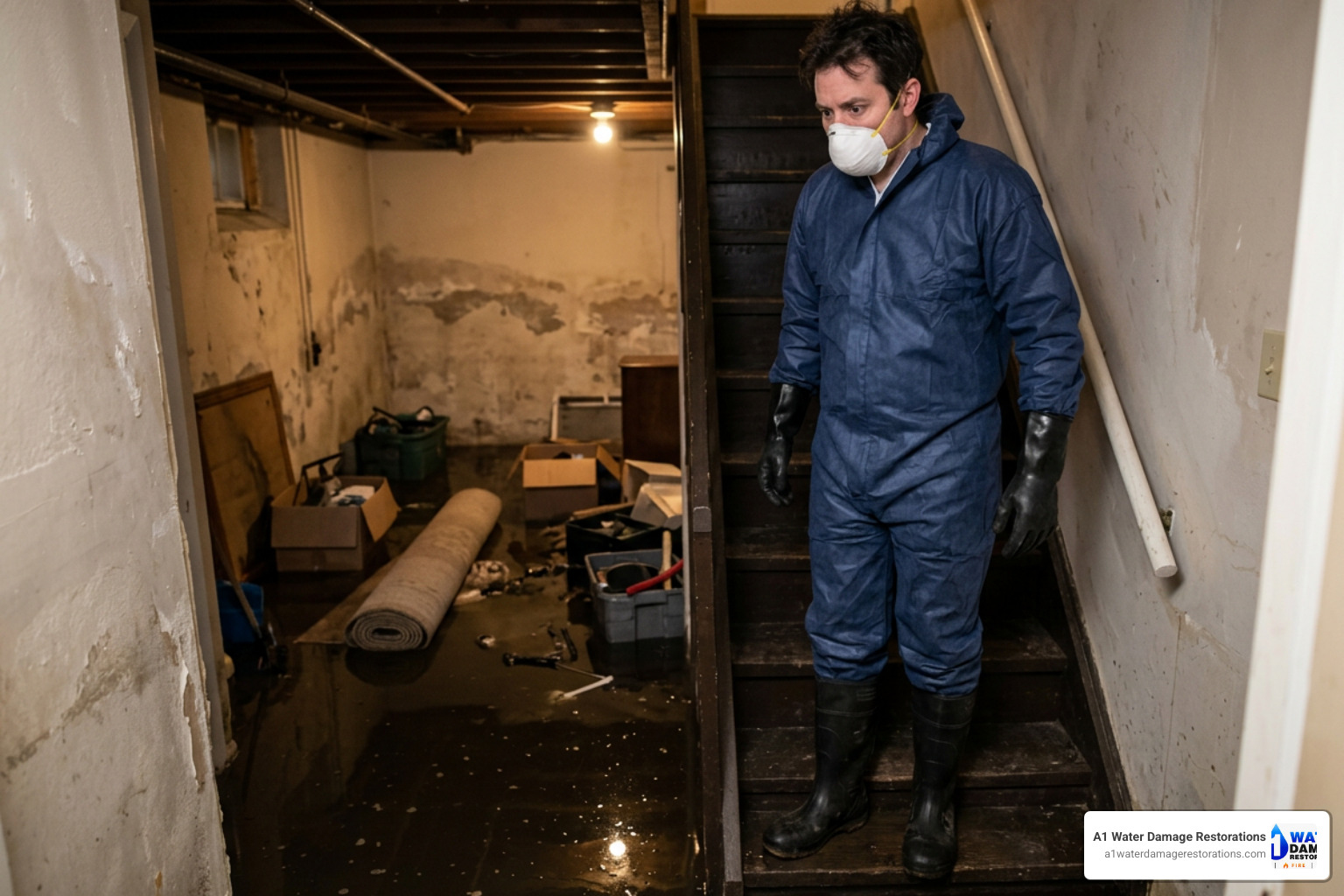
When you walk downstairs and realize there is sewage in basement spaces, your natural instinct might be to rush in, grab your belongings, and start sloshing around with a mop. We strongly advise you to take a deep breath and step back. Entering a flooded basement without taking proper precautions is incredibly dangerous.
The first thing you must do is stop all water usage in your home. If you flush a toilet, run the dishwasher, or take a shower upstairs, that water has nowhere to go but straight out of your basement floor drains, worsening the flood.
Next, address the electrical and gas hazards. If you have standing water in your basement, any submerged outlet, extension cord, or appliance (like your washer, dryer, or water heater) can electrify the entire pool of water. Before anyone sets foot in the basement, the electricity must be shut off at the main breaker panel. If your breaker box is located in the basement and you have to walk through water to reach it, do not touch it. Call your utility provider or a licensed electrician to handle the shutoff. Similarly, if your gas appliances are submerged, do not attempt to light matches or operate switches until your gas utility company has inspected the system.
If you must enter the area to assess the damage, you must wear heavy-duty personal protective equipment (PPE). This includes waterproof rubber boots, heavy-duty gloves, safety goggles, and an N95 facemask to avoid inhaling toxic sewer gases or mist. For more detailed safety insights, check out our guide on how to handle a flooded basement without losing your mind.
Why You Must Avoid Entering a Flooded Basement
A basement filled with sewage is not just dealing with “dirty water.” In the restoration industry, we classify this as Category 3 water, commonly known as “black water.” This water is highly unsanitary and contains raw human waste, industrial chemicals, and a cocktail of dangerous pathogens.
The physical health risks of coming into contact with Category 3 water are severe. Exposure can lead to:
- Salmonellosis and E. Coli: Causing severe gastrointestinal distress, cramping, and dehydration.
- Dysentery: Leading to severe inflammatory disorders of the intestine.
- Hepatitis A: A highly contagious liver infection that can be contracted through microscopic contact.
Additionally, the risk of electrocution is a silent killer. Water is an excellent conductor of electricity, and a submerged wire can turn a wet concrete floor into a lethal hazard. Finally, sewer gas—which is primarily composed of hydrogen sulfide and methane—can collect in closed basement environments. While low concentrations simply smell like rotten eggs, high concentrations can cause rapid dizziness, nausea, and in extreme cases, asphyxiation.
When to Call a Professional for Sewage in Basement
While a minor, single-drain clog can sometimes be cleared with a plunger or a hand snake, a systemic sewage backup is absolutely not a DIY project.
According to IICRC (Institute of Inspection Cleaning and Restoration Certification) standards, Category 3 black water cleanup requires specialized containment, professional-grade water extraction, and industrial-strength antimicrobial sanitization. Household wet/dry vacuums are completely inadequate and will actually atomize the bacteria, spraying microscopic pathogens directly into the air you breathe.
Professional restoration teams have the training, commercial extractors, air scrubbers, and safety gear required to safely remove the waste, dry out the structure, and sanitize the area to ensure it is completely safe for your family. If you are facing a major backup, you can learn more about our professional sewage cleanup services.
Understanding the Causes of Sewage in Basement
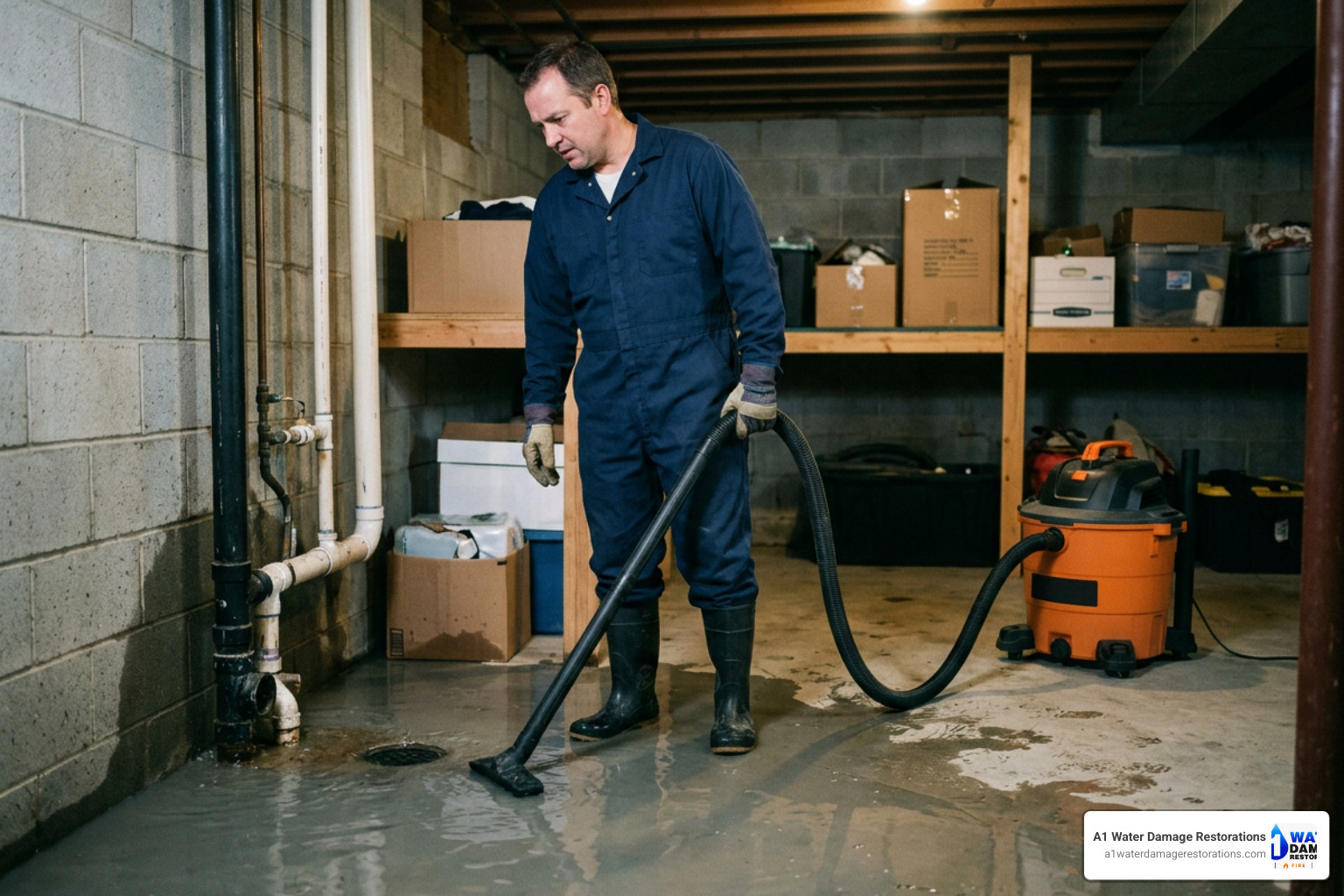
To prevent a future disaster, you have to understand why your basement drains are backing up in the first place. Your basement is the lowest point in your home, which means it is the path of least resistance. When something goes wrong in your plumbing or the municipal sewer system, gravity naturally pushes the wastewater out of your lowest drains first.
The most common causes of a sewage in basement emergency include:
- Tree Root Intrusion: This is the single most common cause of non-storm-related backups. Tree and shrub roots naturally seek out moisture. They can enter tiny cracks in older sewer lateral lines, expanding over time until they completely block the pipe.
- Grease and Flushable Wipes: Pouring cooking grease down the kitchen sink or flushing “flushable” wipes, paper towels, and feminine hygiene products down the toilet creates massive clogs. Grease solidifies inside the pipes, acting like glue for other debris.
- Heavy Rainfall and Storm Overloads: During severe storms, municipal sewer systems can become completely overwhelmed. When the city mains cannot handle the volume of water, the excess wastewater backs up through the residential lateral lines and into basement floor drains.
- Aging and Collapsing Pipes: Depending on where you live in the Denver Metro Area, your home’s pipes might be reaching the end of their lifespan. For instance, historic areas in Downtown Denver often still have Orangeburg pipes (made of compressed tar-paper) installed between the 1940s and 1970s, which are highly prone to structural collapse. Meanwhile, areas in Southeast Denver and Aurora frequently deal with pipe shifting and cracking due to unstable, old riverbed soils.
For a deeper look into these plumbing failures, check out this ultimate guide to sewage backups.
Property Owner vs. Municipal Responsibility
A common point of confusion for homeowners is figuring out who is responsible for paying for repairs. The plumbing infrastructure is divided into two main parts: the private building lateral and the municipal sewer main.
The building lateral is the underground pipe that runs from your home’s foundation to the middle of the street, where it connects to the city’s main sewer line. Under local municipal codes across Denver, Arvada, Westminster, and Wheat Ridge, the property owner is entirely responsible for the maintenance, clearing, and repair of this lateral line.
The city is only responsible if the blockage occurs within the municipal sewer main itself.
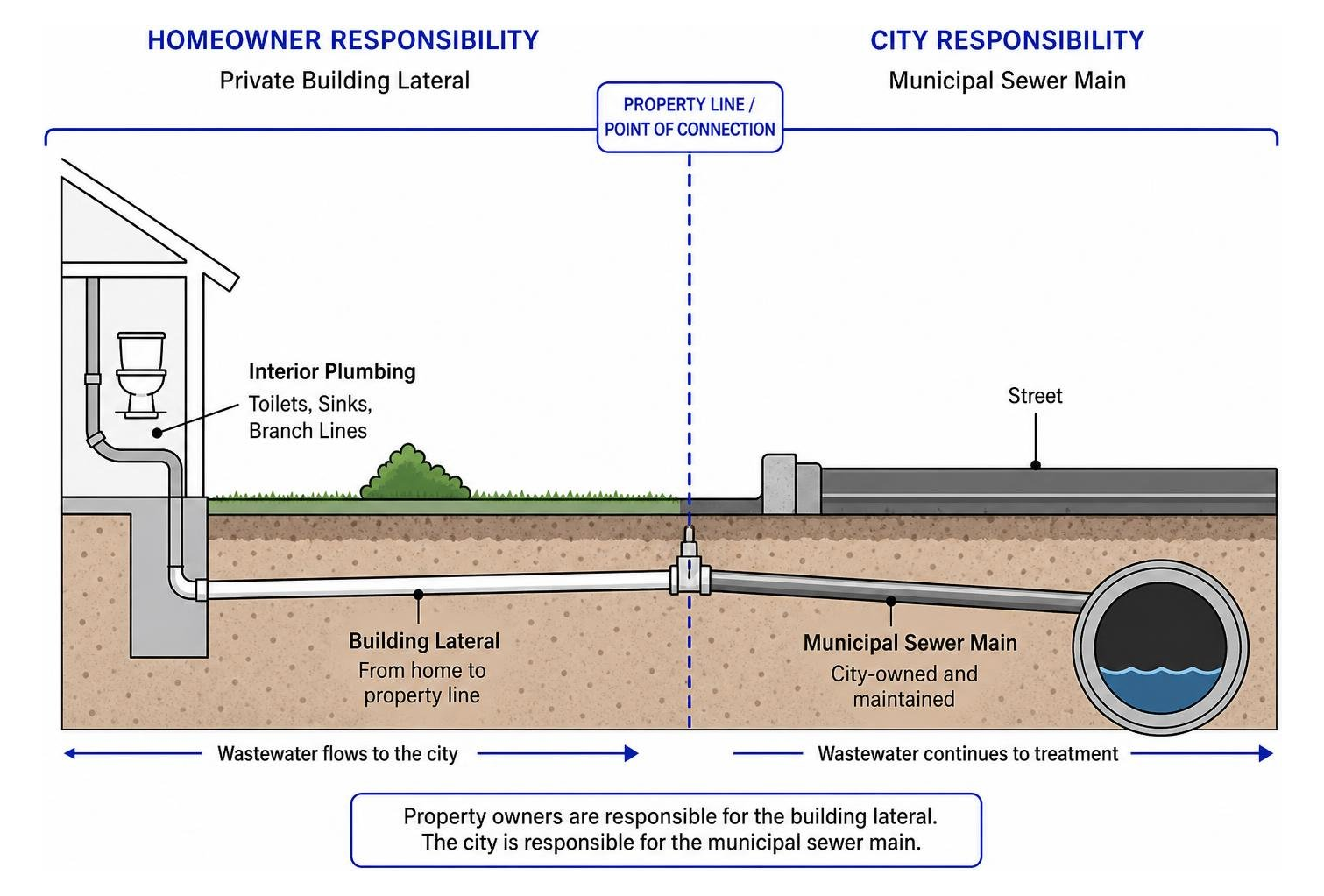
Here is a quick reference table to help you understand where the financial and maintenance boundaries lie:
| Feature / Pipe | Responsible Party | Common Issues Covered |
|---|---|---|
| Interior Plumbing (Toilets, Sinks, Branch Lines) | Homeowner | Grease clogs, flushed objects, local pipe leaks |
| Building Lateral (Foundation to Street Main) | Homeowner | Tree root intrusion, collapsed clay/Orangeburg pipes, sediment buildup |
| Lot Line Cleanout (LLCO) | Homeowner | Maintenance access, clearing blockages |
| Municipal Sewer Main (Under the Street) | City / Municipality | Main line blockages, city-wide storm overloads |
Basement Seepage vs. Sewer Backup
It is crucial to distinguish between basement seepage and a sewer backup, as they require entirely different professionals to fix.
- Basement Seepage: This occurs when groundwater saturates the soil around your foundation. High hydrostatic pressure forces clean or muddy water through foundation cracks, floor cracks, or window wells. This is a waterproofing issue, and resolving it typically involves interior drain tiles, sump pumps, or foundation crack repairs.
- Sewer Backup: This occurs when wastewater is physically forced backward through your plumbing fixtures—such as floor drains, toilets, utility sinks, or washing machine standpipes. The water is dark, foul-smelling, and highly toxic. This is a plumbing and biohazard restoration issue.
How to Clean, Disinfect, and Prevent Future Backups
Once the standing water is extracted, the real work of sanitization begins. Simply spraying some bleach on the floor is not enough to protect your home. For a complete look at the disinfection process, read our homeowners guide to disinfecting after a sewer backup.
Step-by-Step Sanitization for Sewage in Basement
When dealing with Category 3 black water, you must categorize all affected items as either porous, semi-porous, or non-porous.
- Porous Materials (Discard): Items like carpets, carpet padding, drywall, insulation, upholstered furniture, stuffed animals, and cardboard boxes act like sponges. They absorb pathogens deeply into their fibers. Because standard disinfectants cannot penetrate deeply enough to kill these embedded pathogens, these items must be completely removed and thrown away.
- Non-Porous Materials (Salvage): Hard, solid surfaces like concrete, tile, metal, and glass can be thoroughly cleaned, sanitized, and saved.
To sanitize hard surfaces, start by washing them with hot water and a heavy-duty detergent to remove physical soil. Next, apply a disinfecting solution. While a standard DIY sanitizing mixture of 8 tablespoons of laundry bleach per gallon of water (or a 1:10 ratio of household bleach to water) is effective on hard concrete, it is highly corrosive and should never be mixed with ammonia-based cleaners. Professional restoration companies use EPA-certified, hospital-grade disinfectants that neutralize pathogens without damaging your home’s structural elements.
Once sanitized, the basement must be dried using industrial-grade air movers and high-capacity LGR dehumidifiers to prevent mold colonization, which can start within 24 to 48 hours. Never use heat to dry a closed basement, as this creates a warm, humid greenhouse effect that accelerates mold growth.
Here is a general guide to what can be saved versus what must be thrown away:
- Unsalvageable (Throw Away):
- Carpet and carpet padding
- Saturated drywall and fiberglass insulation
- Upholstered furniture and mattresses
- Cardboard boxes and paper documents
- Food items (including boxed goods and produce) exposed to the water
- Salvageable (Clean and Disinfect):
- Concrete foundation walls and floors
- Ceramic tile and vinyl flooring (if sealed properly)
- Metal framing and solid wood studs (if treated with professional antimicrobials)
- Canned goods (must be scrubbed with soap, submerged in a sanitizing bath of 1 ounce of bleach per gallon of water for 15 minutes, and air-dried)
Preventative Measures and Backflow Prevention
If you have experienced a backup, taking proactive steps can ensure it never happens again:
- Install a Backwater Valve: For over 50 years, modern plumbing codes have required backwater valves on floor drains, but many older homes in Golden, Littleton, or Broomfield lack them. A backwater valve is a one-way valve installed on your sewer line. It allows wastewater to exit your home but features a flapper that seals shut if sewage begins flowing backward from the street. These valves require semi-annual maintenance to clear lint and grease buildup that can keep the flapper stuck open.
- Schedule Sewer Scope Inspections: If you are buying an older home, investing in a sewer scope inspection is highly recommended. A technician runs a high-definition camera down your lateral line to identify cracks, sags, or root intrusions before they cause a disaster.
- Regular Lateral Cleaning: Have your private sewer lateral professionally cleaned or snaked every 1 to 3 years to clear out sediment and minor root growth.
- Sump Pump Maintenance: Ensure your sump pump is clean, clear of debris like silt or gravel, and equipped with a battery backup system so it continues to operate during power outages.
Homeowners Insurance and Sewer Backup Coverage
Here is a critical statistic every homeowner should know: most standard homeowners insurance policies DO NOT cover sewer backup damage.
Standard policies typically cover sudden water damage from interior plumbing failures (like a burst pipe), but they explicitly exclude water that enters the home through sewers, drains, or sump pump failures.
To protect yourself, you must proactively purchase a specific sewer backup endorsement or policy rider. These endorsements are generally very affordable and can save you tens of thousands of dollars in cleanup and structural repair costs if an emergency occurs.
Frequently Asked Questions about Basement Sewage Issues
Why does my basement smell like sewage when there is no visible backup?
If your basement smells like rotten eggs but there is no standing water, the culprit is almost always a dry P-trap.
Every drain in your home—including your basement floor drains, utility sinks, and showers—features a U-shaped pipe called a P-trap. This trap is designed to hold a small amount of water, which acts as a physical barrier to block sewer gases from rising up into your home. If a drain is rarely used, the water in the P-trap will eventually evaporate, allowing hydrogen sulfide and methane to escape.
The Fix: This common issue is usually solved for under $50. Simply pour a gallon of water down every floor drain and utility sink to refill the trap. To slow down future evaporation, pour 2 to 3 tablespoons of mineral oil or cooking oil on top of the water. The oil forms a thin layer on the water’s surface, keeping the trap sealed for months. Other potential causes include a loose cleanout plug, an unsealed sump pump pit, or a failed wax ring on a basement toilet.
Can sewer gas in the basement make my family sick?
Yes, prolonged exposure to sewer gas can cause health issues. Sewer gas is primarily a mixture of hydrogen sulfide (which causes the sulfur or rotten egg smell) and methane.
At low concentrations, sewer gas is mostly an unpleasant nuisance, but it can cause headaches, nausea, sinus irritation, and dizziness over time. Children, pets, and individuals with respiratory conditions like asthma are particularly vulnerable.
At extremely high concentrations, methane (which is lighter than air and highly flammable) can accumulate near basement ceilings, creating a serious fire and explosion hazard. If you detect a strong, persistent odor, open your windows, run a fan to dilute the gas, and contact a professional immediately. For detailed troubleshooting, check out this basement sewage smell guide.
How long does it take to professionally clean up a sewage backup?
A standard professional sewage cleanup, sanitization, and structural drying process typically takes 1 to 3 days to complete, though severe cases involving extensive structural damage or complete basement finishes can take up to 7 days.
The professional process involves several key phases:
- Extraction: Removing all standing black water and solid waste.
- Demolition: Removing contaminated porous materials like wet drywall, carpet, and insulation.
- Sanitization: Applying EPA-certified antimicrobials to all structural surfaces.
- Drying: Setting up industrial dehumidifiers and air movers to pull deep moisture out of concrete and wood framing.
- Odor Neutralization: Using advanced air scrubbers or ozone treatments to eliminate lingering smells.
To learn more about the exact restoration steps, read our guide on sewage spill cleanup.
Conclusion
Dealing with a sewer backup in your basement is a stressful, high-stakes emergency, but you do not have to navigate it alone. Taking swift, informed action is the key to protecting your family’s health and preserving your property’s value.
At A1 Water Damage Restorations, we provide 24/7 emergency response services throughout the entire Denver Metro Area—including Boulder, Cherry Creek, Denver, Golden, Greenwood Village, Arvada, Westminster, Wheat Ridge, Broomfield, and Littleton. As a local, family-owned business, we pride ourselves on delivering comprehensive, IICRC-certified in-house services with a personal touch. We do not just clean up the mess; we restore your property better than ever.
If you are facing a sewage emergency or want to protect your home from future backups, contact us today to schedule professional sewage cleanup services.