

What Denver Business Owners Need to Know About Commercial Water Damage Restoration
Commercial water damage restoration in Denver is a time-critical process — and every hour you wait raises your repair costs and the risk of mold.
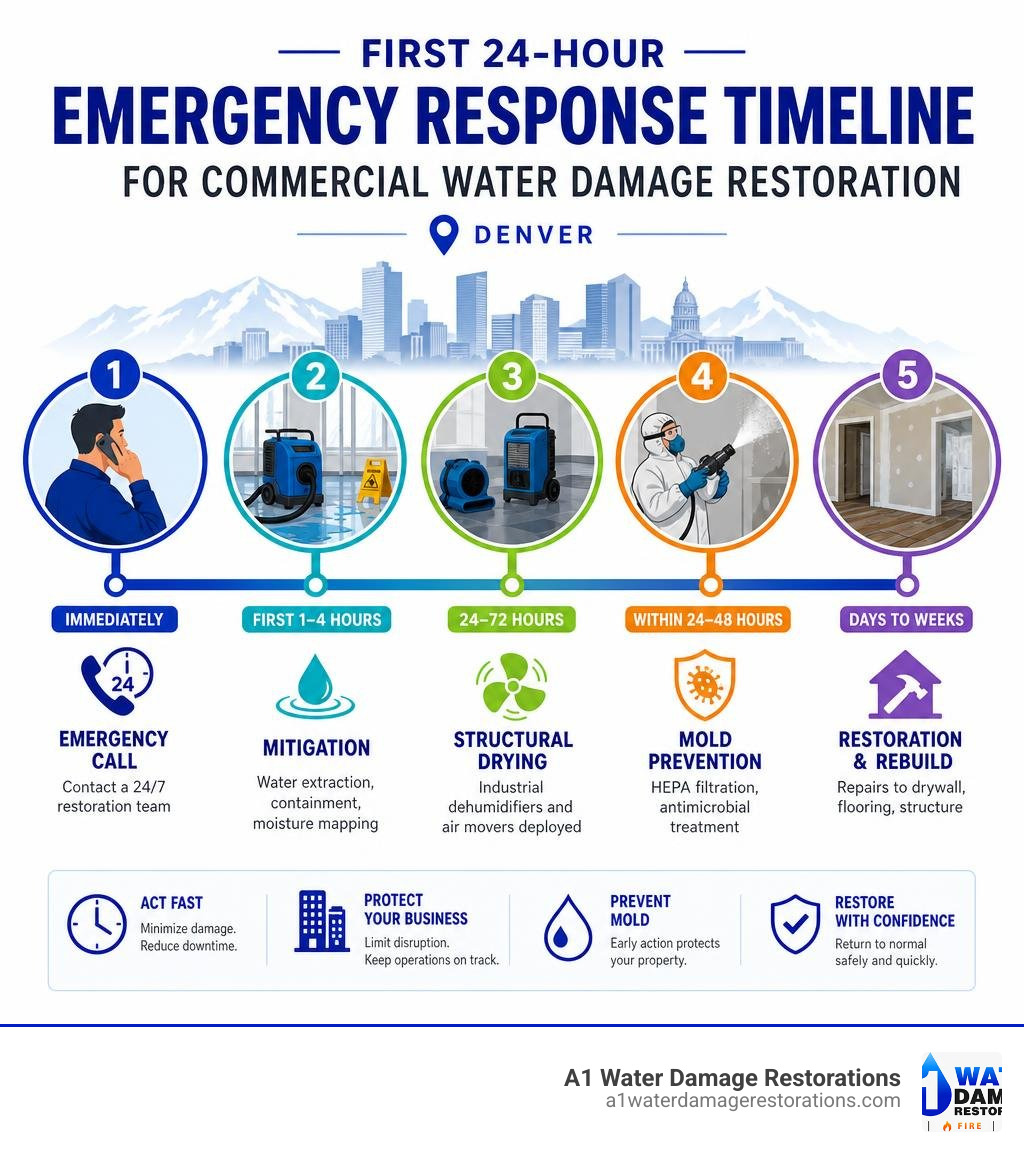
Here’s a quick overview of what to expect:
| Step | What Happens | Timeframe |
|---|---|---|
| 1. Emergency Call | Contact a 24/7 restoration team | Immediately |
| 2. Mitigation | Water extraction, containment, moisture mapping | First 1-4 hours |
| 3. Structural Drying | Industrial dehumidifiers and air movers deployed | 24-72 hours |
| 4. Mold Prevention | HEPA filtration, antimicrobial treatment | Within 24-48 hours |
| 5. Restoration & Rebuild | Repairs to drywall, flooring, structure | Days to weeks |
Water damage moves fast inside a commercial building. It travels through wall cavities, under raised flooring, into HVAC systems, and across multiple floors before you’ve even called for help. For Denver businesses, the risk is especially high. The city’s freeze-thaw winters, heavy spring storms, and aging building stock create conditions where a burst pipe or roof leak can shut down operations in hours.
The financial stakes are real. Commercial water damage restoration in Denver typically costs between $3,000 and $15,000 — and that’s before factoring in lost revenue from business interruption.
I’m Cole Nudel, a disaster restoration professional with A1 Water Damage Restorations serving the Denver metro area, where I work daily with business owners navigating the stress and complexity of commercial water damage restoration in Denver. In this guide, I’ll walk you through every stage of the process — from the first emergency call to getting your doors back open.
The Unique Environmental Risks Facing Denver Businesses
Denver is a beautiful place to do business, but our mile-high climate presents some very specific architectural challenges. From rapid temperature swings in February to sudden spring downpours, our weather keeps commercial property managers on their toes. Understanding these climate risks is your first line of defense. To dive deeper into the root causes of commercial water intrusion, check out our Guide to commercial water damage causes.
Freeze-Thaw Cycles and Winter Pipe Bursts
In Denver, winter doesn’t just bring beautiful powder to the mountains; it brings extreme, rapid temperature swings to the Front Range. It is not uncommon to experience a deep freeze followed by a rapid warming cycle within 24 hours.
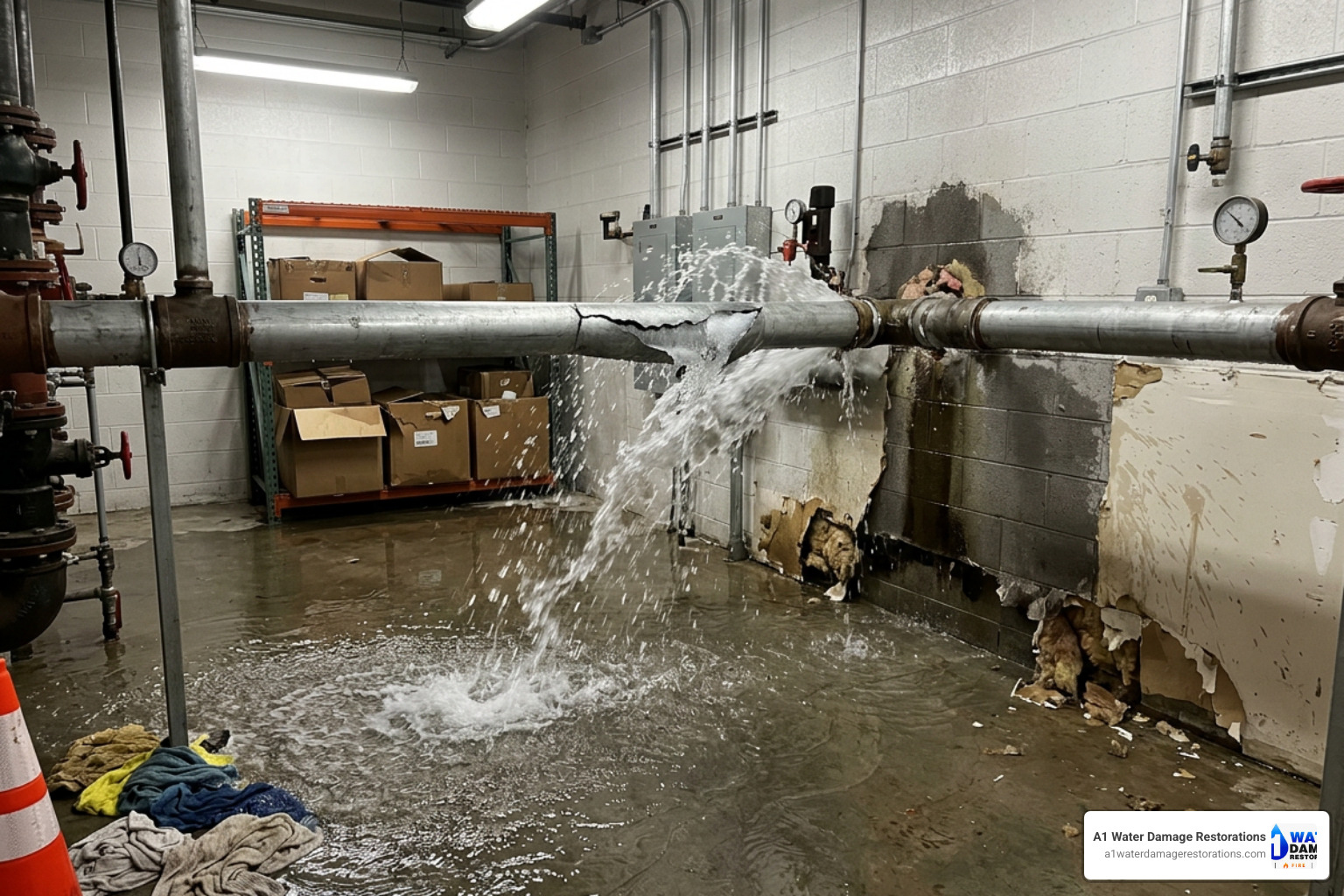
When we hit extreme sub-freezing temperatures—especially during extended cold snaps lasting five consecutive days or more—the water inside uninsulated or poorly insulated commercial pipes freezes and expands. The real trouble often starts during the rapid warm-up. As the ice melts, the sudden rush of pressurized water blows through weakened joints and cracked copper, resulting in catastrophic pipe bursts.
These bursts frequently occur in unheated basements, crawl spaces, exterior walls, and fire sprinkler lines. A single burst sprinkler line can release hundreds of gallons of water per minute, quickly flooding multiple floors of an office building or retail space.
Spring Storm Runoff and Flash Flooding
Once winter releases its grip, spring and summer bring a different kind of water threat: short, intense rainstorms and heavy hail.
Denver’s spring storms can dump inches of rain in under an hour. When large hail strikes, it quickly shreds foliage and breaks up debris, which then washes into roof drains and gutters. Once these drainage systems are clogged, water pools rapidly on flat commercial roofs, leading to structural overloading, roof leaks, or complete ceiling collapses.
Furthermore, older Denver neighborhoods—such as Wash Park, the Highlands, and Park Hill—feature below-grade commercial construction and original plumbing systems. When storm runoff overwhelms municipal storm sewers, stormwater and backflow can push directly into commercial basements, bringing highly contaminated “black water” into your workspace. For a comprehensive look at recovering from storm-related commercial crises, see our Storm damage repair guide.
Why Denver Businesses Need Specialized Commercial Water Damage Restoration Denver
When water invades a business, you cannot treat it like a residential basement leak. Commercial structures are massive, complex, and filled with expensive structural assets that require specialized mitigation techniques. For an overview of our full commercial capabilities, you can read More info about commercial services.
The High Cost of Operational Downtime
For any business, time is literally money. Every hour your doors are closed, or your employees are displaced, represents direct revenue loss and potential damage to your brand’s reputation.
Unlike a home, where drying can sometimes proceed at a slower pace, commercial water mitigation requires an urgent, highly coordinated rapid response. We prioritize minimizing business interruption by deploying scalable crews and advanced commercial water mitigation resources immediately. Our goal is to stabilize the property so you can maintain business continuity and protect your bottom line.
Structural Differences in Commercial Properties
Commercial buildings absorb and distribute water differently than residential homes. Residential properties are primarily wood-framed with standard drywall. Commercial spaces, however, feature:
- Steel framing and concrete subfloors: Concrete is highly porous; it acts like a sponge, absorbing water and slowly releasing it over time, which can ruin overlying flooring if not dried scientifically.
- Raised flooring systems: Often used in offices to run electrical and data cables, these interstitial spaces can trap standing water out of sight, creating a perfect breeding ground for mold and electrical hazards.
- Complex HVAC and ductwork: Water can migrate into HVAC air drops and mechanical rooms, threatening indoor air quality across the entire facility.
To highlight these differences, consider the structural demands of each property type:
| Feature | Residential Restoration | Commercial Restoration |
|---|---|---|
| Primary Materials | Wood framing, standard drywall | Steel studs, concrete subfloors, ceiling tiles |
| Water Migration | Follows gravity down walls and floors | Travels through electrical conduits, utility chases, and raised floors |
| Drying Equipment | Standard LGR dehumidifiers | High-capacity desiccant dehumidifiers and negative-air systems |
| Regulatory Hurdles | Basic insurance guidelines | OSHA safety standards, local building codes, environmental laws |
The Step-by-Step Commercial Water Recovery Process
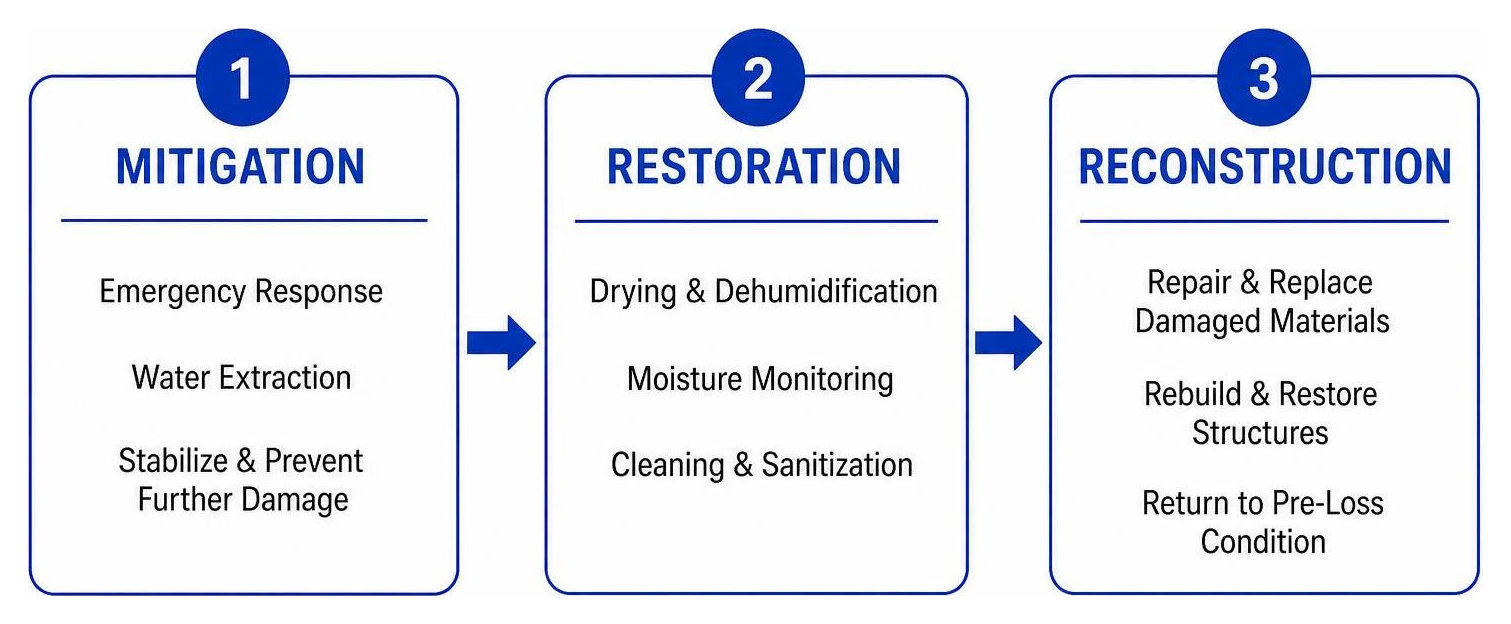
When disaster strikes, we follow a systematic, multi-phase recovery process designed to return your property to pre-loss condition quickly and safely. This process is divided into three critical phases: mitigation, restoration, and reconstruction. You can learn more about these individual service offerings on our Water damage restoration services page.
Phase 1: Emergency Mitigation and Water Extraction
The first phase is all about stabilization. We must stop the water source, extract standing water, and prevent the damage from spreading.
Upon arrival, our certified technicians perform a thorough on-site assessment using advanced moisture mapping technology, including FLIR thermal imaging cameras and moisture meters. This allows us to trace water migration behind finished walls and under floors without tearing up dry materials.
Next, we deploy heavy-duty, truck-mounted extractors and submersible industrial pumps to perform rapid water extraction. Removing the bulk of the standing water immediately is the single most effective way to prevent secondary structural damage.
Phase 2: Structural Drying and Dehumidification
Once the standing water is gone, the structure is still deeply saturated. This is where advanced drying technology becomes essential.
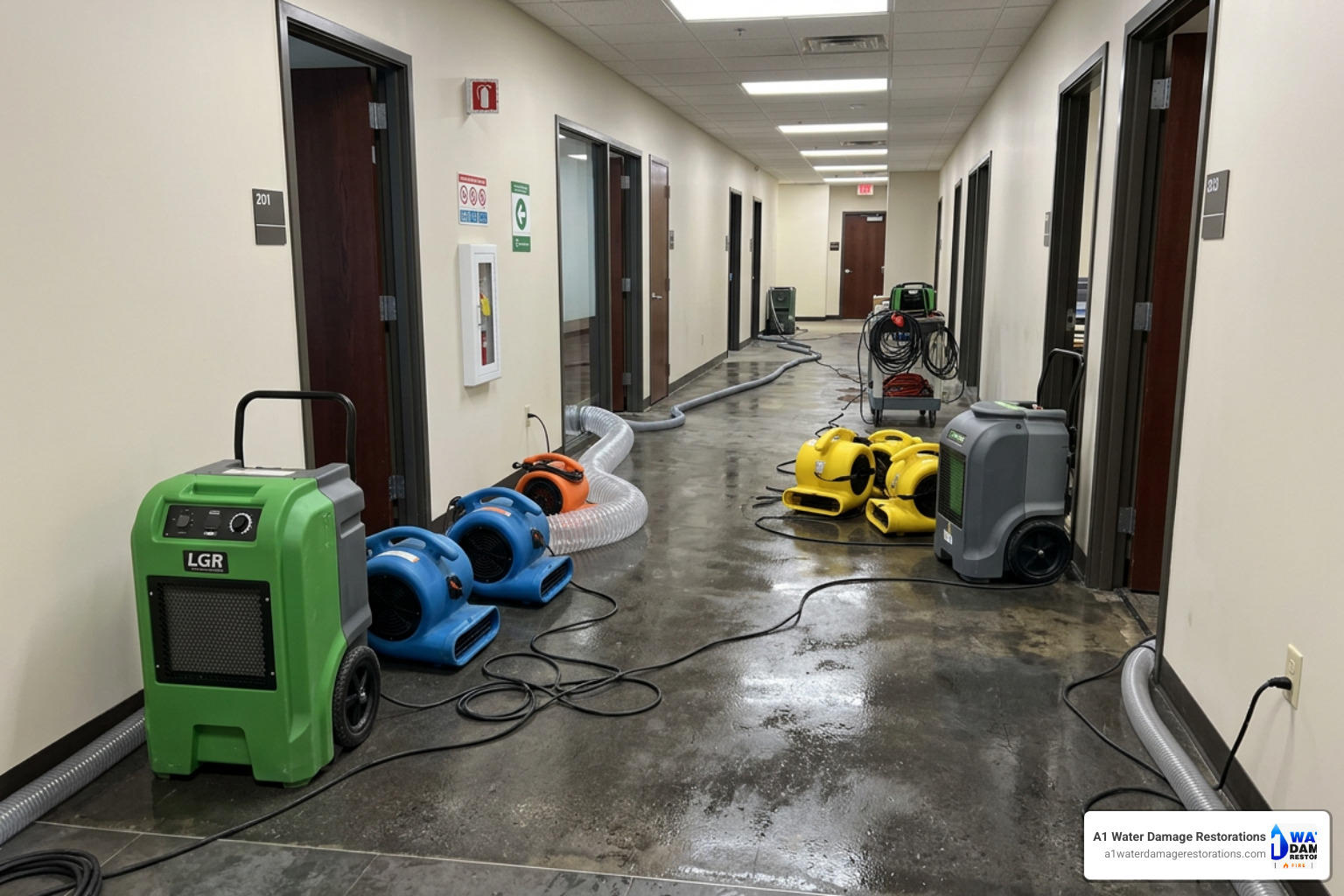
We place high-velocity air movers to promote evaporation and deploy Low Grain Refrigerant (LGR) or industrial desiccant dehumidifiers to pull moisture out of the air. Desiccant dehumidifiers are especially useful in large commercial spaces or multi-story buildings, as they produce ultra-dry air that can dry out dense materials like concrete and plaster. The drying process typically takes 24 to 72 hours, depending on humidity levels, airflow, and the materials affected.
Phase 3: Mold Remediation and Air Quality Control
Mold is an opportunistic hazard. Clean water can start producing mold spores in under 24 hours, and contaminated water like sewage moves even faster. If water damage is not properly treated within a strict 24 to 48-hour window, mold colonization begins, creating indoor air quality issues and potential liability for your business.
To prevent this, we use HEPA filtration and negative-air machines to capture airborne spores and prevent cross-contamination. Our team applies EPA-approved antimicrobial treatments to sanitize all affected surfaces. To understand the long-term benefits of proactive mold prevention in a business setting, read about our Mold removal strategies.
Navigating Insurance Claims and Choosing a Partner
Recovering from a commercial flood is stressful, but managing the paperwork shouldn’t be. Choosing a restoration partner who understands the business side of disaster recovery is just as important as the physical cleanup. To find out what to look for in a local provider, check out our guide on How to find commercial restoration.
How to Handle Commercial Property Insurance Claims
Commercial insurance policies are far more complex than standard homeowner policies. They often include provisions for business interruption, tenant improvements, and shared utility liabilities (especially in HOA-managed commercial condos).
To ensure a smooth claims process:
- Document Everything: Take detailed photos and videos of the damage before any mitigation work begins.
- Maintain Moisture Logs: Our team keeps exhaustive daily moisture logs, equipment usage records, and thermal imaging reports to provide your insurance adjuster with irrefutable proof of drying.
- Create an Asset Inventory: Catalog all damaged electronics, inventory, and office furniture.
- Utilize Direct Billing: We work directly with major commercial insurance carriers to streamline billing, helping you avoid out-of-pocket delays.
Key Credentials for Commercial Water Damage Restoration Denver
Do not trust your business to a contractor without the proper credentials. When vetting a restoration company, always verify:
- IICRC Certification: The Institute of Inspection, Cleaning and Restoration Certification (IICRC) is the gold standard for the industry. Technicians must be trained in S500 water damage restoration standards.
- EMR Safety Ratings: A low Experience Modification Rate (EMR) proves that the contractor has a strong safety record and complies with OSHA regulations on active commercial jobsites.
- Full Licensing and Insurance: Ensure they carry comprehensive general liability and pollution insurance (crucial for mold and sewage cleanup).
What to Look For in Commercial Water Damage Restoration Denver
Your restoration partner should act as an extension of your risk management team. Look for a company that offers:
- 24/7/365 Emergency Availability: Disasters don’t wait for business hours. You need a team that can be on-site within the hour.
- Local Geographic Presence: A company rooted in the Denver Metro Area—serving Boulder, Cherry Creek, Golden, Greenwood Village, Arvada, Westminster, Wheatridge, Broomfield, and Littleton—understands our regional weather patterns and local building codes.
- Full-Service Capabilities: Managing multiple contractors for cleanup, drying, mold remediation, and reconstruction is a logistical nightmare. Choose a partner that handles the entire lifecycle of the loss in-house.
Frequently Asked Questions About Commercial Water Damage
Can my business remain open during the restoration process?
In many cases, yes. We understand that shutting down completely is rarely an option. By setting up physical zoned containment barriers (using heavy-duty plastic sheeting) and deploying negative-air pressure systems, we can isolate the wet, active work areas from your daily business operations. We also utilize low-noise drying systems and can schedule noisy extraction work during off-hours to preserve your business continuity.
How much does commercial water damage restoration cost in Denver?
On average, commercial water damage restoration costs in Denver range from $3,000 to $15,000 or more. The final cost depends on several key variables:
- The category of water: Clean water (Category 1) is cheaper to mitigate than sewage or gray water (Category 2 or 3), which require specialized sanitization and disposal.
- The class of water: This refers to the rate of evaporation and the types of materials affected (e.g., wet carpets vs. saturated concrete subfloors).
- The scale of the damage: Multi-story commercial losses require more equipment and labor.
We always provide transparent, customized quotes after our initial on-site inspection.
How quickly does mold begin to grow after water damage?
Mold spores can begin to germinate in under 24 hours under ideal conditions (warmth, moisture, and organic food sources like drywall paper). If standing water is not extracted and structural drying is not initiated within 48 hours, mold will likely establish a foothold, leading to secondary damage and significantly higher remediation costs.
Conclusion
A water leak doesn’t have to sink your business. With the right preparation and a fast, professional response, you can minimize structural damage, prevent mold growth, and protect your revenue.
At A1 Water Damage Restorations, we are proud to be Denver’s trusted, family-owned restoration partner. Our team is fully IICRC-certified, available 24/7, and equipped with the industrial technology needed to handle commercial water losses of any scale. We serve businesses across the entire Denver Metro Area—including Boulder, Cherry Creek, Denver, Golden, Greenwood Village, Arvada, Westminster, Wheatridge, Broomfield, and Littleton.
If your commercial property has suffered water damage, don’t wait for the damage to spread. Visit our Denver damage restoration pillar page or contact us today to get our emergency response team on-site immediately. We’ll restore your property—and your peace of mind—better than ever.