

When Floodwater Hits, the Clock Starts Immediately
Flood damage mold removal is urgent — and the window to act is shorter than most people realize.
Here’s what you need to know right away:
- Mold can begin growing within 24 to 48 hours of water exposure.
- If you couldn’t dry everything within 48 hours, assume mold is already growing — even if you can’t see it yet.
- Small areas under 10 square feet (roughly 3 ft. x 3 ft.) can often be handled as a DIY project.
- Larger areas, sewage backups, or HVAC involvement require a certified professional.
- Porous materials like drywall, carpet, and insulation that stayed wet longer than 48 hours should be thrown out.
- Non-porous surfaces like metal, plastic, and glass can be cleaned with a 10% bleach solution.
- Never run your HVAC if you suspect mold — it will spread spores throughout the entire home.
A flooded home is already stressful. Add mold to the picture, and the stakes get even higher — fast. What looks like a water problem on the surface can quietly become a serious health and structural threat hiding inside your walls, under your floors, and behind your baseboards. Mold doesn’t need much: just moisture, warmth, and something organic to feed on. A flood gives it all three in abundance.
This guide walks you through exactly what to do — step by step — so you can stop mold before it takes hold, or remove it safely if it already has.
I’m Cole Nudel, a disaster restoration professional with A1 Water Damage Restorations serving the Denver Metro Area, where I’ve helped countless property owners navigate the overwhelming process of flood damage mold removal after unexpected water events. My hands-on experience in the field means every tip in this guide is grounded in what actually works — not just theory.
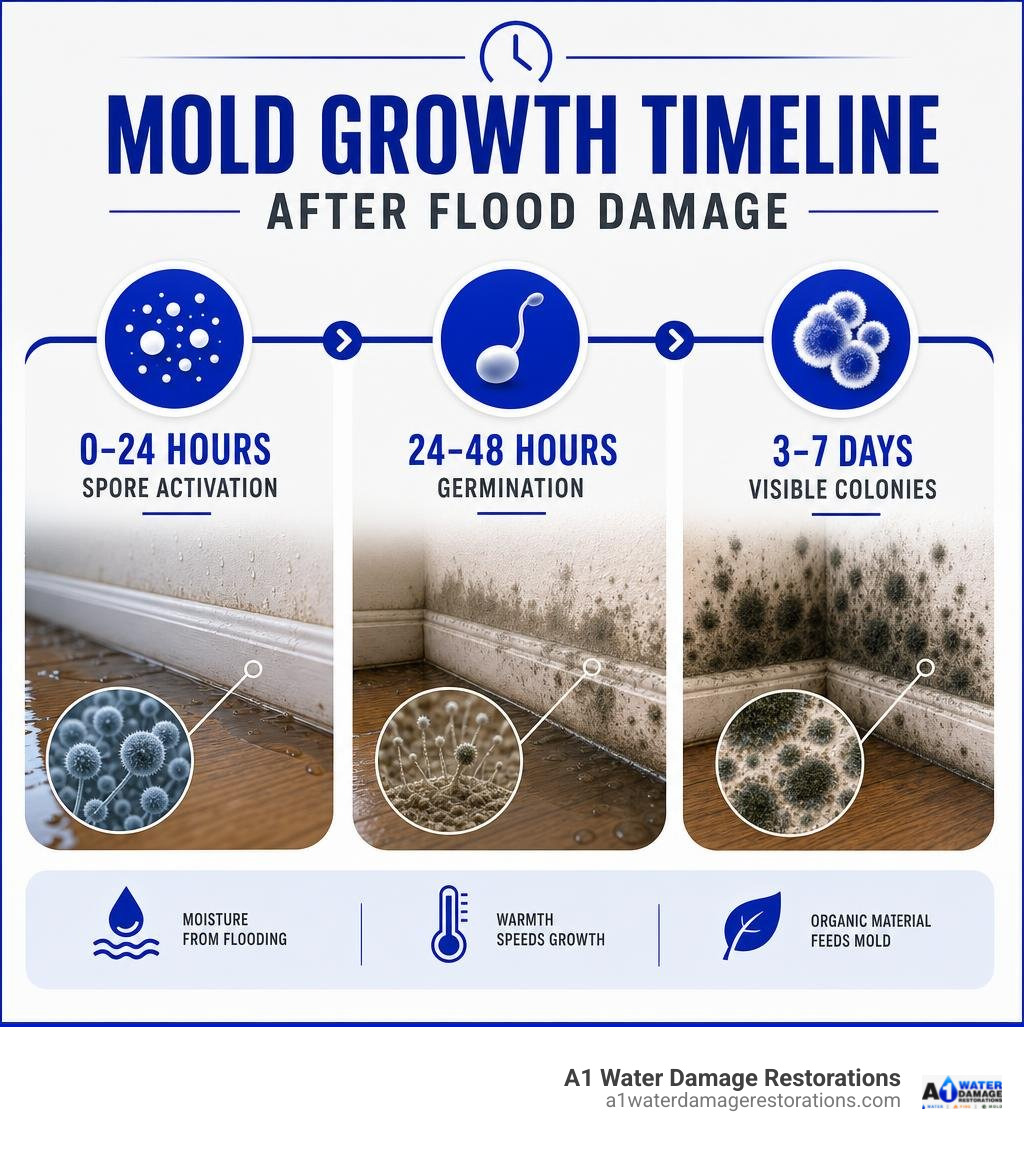
The 24-to-48-Hour Race: How Floodwaters Trigger Mold
When water enters your home, it triggers an invisible, high-speed countdown. Mold spores are omnipresent in the air around us, but they remain completely dormant until they find moisture. The moment floodwater saturates your floors, walls, and furniture, those dormant spores wake up and begin to germinate.
To protect your property from long-term structural decay and to safeguard your family’s health, you must Why Prioritize Mold Removal After Flooding immediately. Delaying even by a single day can turn a simple water extraction job into a massive, expensive remediation project. For detailed federal safety guidelines on post-disaster scenarios, you can also consult the CDC’s Homeowner’s Guide to Mold Cleanup.
Why Immediate Flood Damage Mold Removal Protects Your Health
Living alongside mold is not just unpleasant due to the damp, musty odors; it is a direct hazard to your physical well-being. When mold colonies feed on waterlogged building materials, they release millions of microscopic spores and volatile organic compounds into the air.
For many people, this exposure triggers immediate allergic reactions, including:
- Wheezing and persistent coughing
- Sore throat and nasal congestion
- Itchy, watery eyes and skin irritation
- Severe asthma attacks in diagnosed individuals
The risks escalate dramatically for vulnerable populations, such as young children, the elderly, and immune-compromised individuals. Furthermore, floodwaters are rarely clean. In restoration, we classify floodwater from outdoor storms or sewer backups as Category 3 “black water.” This highly contaminated water carries dangerous pathogens, bacteria, and viruses. When mold grows on top of this bacterial soup, the respiratory hazards multiply, potentially exposing occupants to toxic mycotoxins.
The Critical 48-Hour Window for Water Damage
Why is 48 hours the magic number? In the restoration industry, this is the “event horizon” for mold germination. Under ideal conditions—which a warm, humid, flooded indoor environment provides perfectly—mold spores can colonize wet surfaces within 24 to 48 hours.
Once the roots (called hyphae) burrow into porous materials, the mold begins to digest the organic matter, physically weakening the structure of your home. Drywall paper, wooden studs, and carpet backing are essentially gourmet meals for mold. If you cannot completely dry out the affected materials within this critical 48-hour window, you must proceed under the assumption that mold has already established a foothold, even if it is not yet visible to the naked eye.
Step-by-Step Flood Damage Mold Removal and Cleanup
If you have assessed the situation and determined that you can safely tackle the cleanup, you must follow a methodical, safety-first protocol.

Before you touch a single piece of damaged drywall or pull up a corner of wet carpet, you must protect yourself and prevent mold spores from traveling to unaffected areas of your home.
First, establish containment barriers. Seal off the work area from the rest of the house using heavy plastic sheeting (at least 4 mm thick) and duct tape. Cover all HVAC vents and doorways to ensure spores cannot travel through your ductwork. If possible, place a box fan in an outward-facing window within the work area to blow air outside, creating a temporary negative pressure system that exhausts airborne spores.
Next, equip yourself with proper Personal Protective Equipment (PPE). Standard dust masks from the hardware store will not protect your lungs from microscopic mold spores. You need:
- A NIOSH-approved N-95 respirator mask (or a half-face respirator with HEPA cartridges for larger projects).
- Non-vented safety goggles (goggles with open vent holes on the sides will allow spores to reach your eyes).
- Long rubber or nitrile gloves to protect your skin from both mold and harsh cleaning chemicals.
- Protective, disposable clothing or work clothes that you can immediately wash in hot water, separately from your regular laundry, once the job is done.
For more detailed safety advice, check out Consumer Reports’ guide on How to Clean Your Home After a Flood or read our expert-backed Top Strategies For Post Flood Mold Removal.
Safe Disposal of Water-Damaged Drywall, Carpet, and Insulation
Porous materials that have been saturated by contaminated floodwater or left wet for more than 48 hours cannot be saved. Attempting to clean them is a losing battle because mold grows deep inside their fibers and crevices.
- Drywall Removal: Drywall acts like a sponge, wicking water upward far above the visible flood line. Use a utility knife to score and cut out water-damaged drywall at least 15 to 24 inches above the high-water mark. This allows you to inspect the wall cavities behind it for hidden mold growth.
- Insulation Extraction: Fibrous insulation (such as fiberglass or cellulose) must be completely removed and thrown away. Once wet, it loses its insulating properties and becomes a permanent breeding ground for mold.
- Carpet and Padding Disposal: Carpet and the foam padding underneath retain moisture indefinitely. Cut the carpet into manageable strips, roll them up, seal them in heavy-duty trash bags, and dispose of them.
Always take detailed photographs of all damaged materials and structural areas for insurance documentation before hauling them to the curb.
Cleaning Solutions and Disinfection Methods for Hard Surfaces
Non-porous materials like metal, plastic, glass, and solid concrete can be successfully salvaged and cleaned. However, the cleaning sequence matters.
- Wash and Scrub: First, wash the surfaces with hot water and a non-phosphate, non-ammonia detergent. Phosphate residues from standard household cleaners can actually act as a food source for mold, so choose your soap carefully. Use a stiff brush on rough surfaces like concrete.
- Disinfect: Once the surface is clean of dirt and physical mold, apply a disinfecting solution. The CDC recommends mixing 1 cup of household liquid chlorine bleach with 1 gallon of water. Apply this solution to the hard surfaces and let it sit for at least 15 minutes to fully sanitize the area before rinsing with clean water.
- Chemical Safety Warning: Never mix bleach with ammonia or any other household cleaners. Doing so creates highly toxic chloramine gas, which can be fatal. Always ensure excellent ventilation by keeping windows open while working with bleach.
Drying Out Your Home: Preventing Mold After a Flood
Cleaning up the visible mold is only half the battle. If you do not completely resolve the moisture problem, the mold will simply return within a few days.
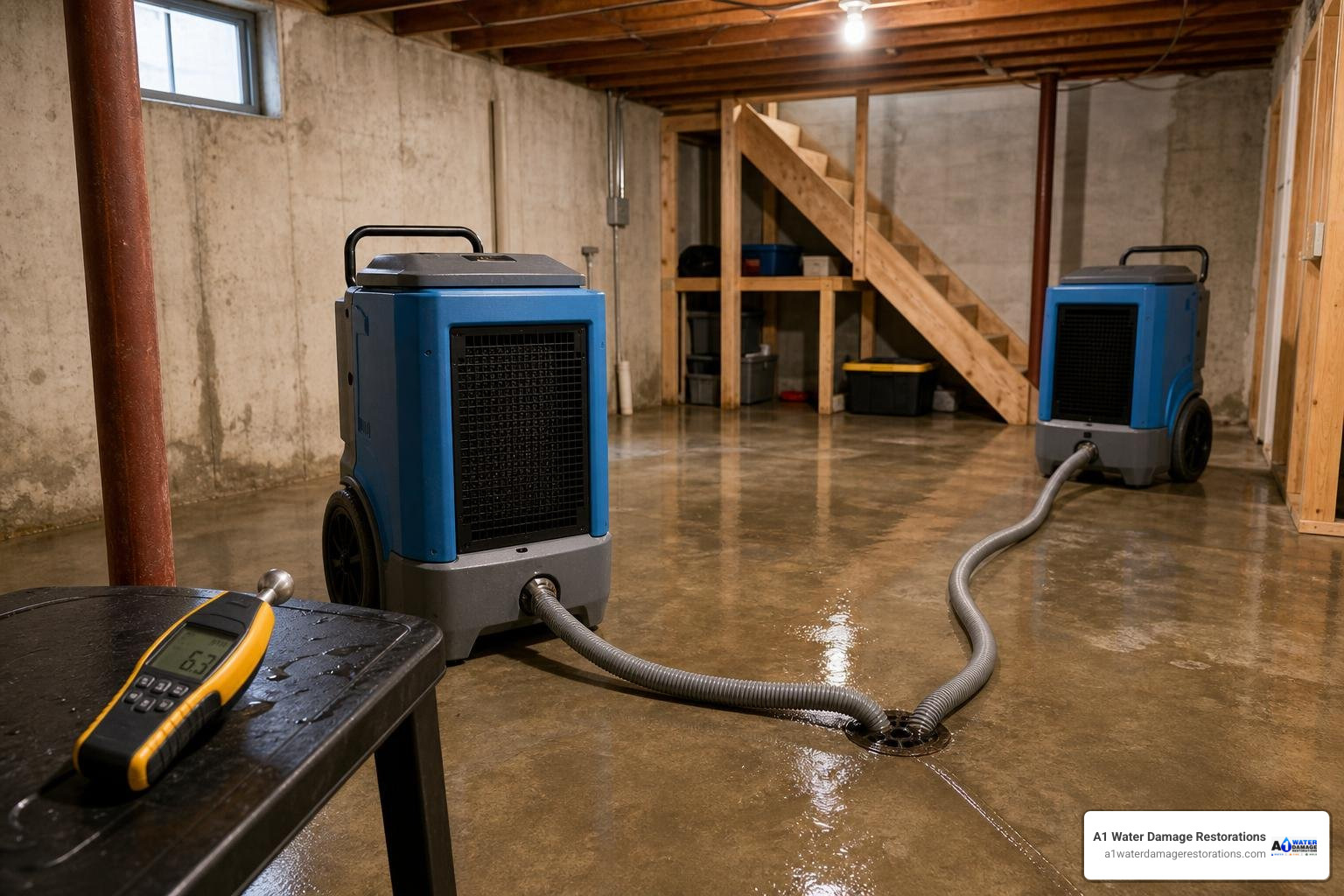
To stop the cycle of growth, you must dry the structure of your home aggressively. The EPA recommends keeping indoor relative humidity (RH) between 30% and 50% to inhibit mold growth. You can monitor this easily using an inexpensive humidity meter (hygrometer) from a local home improvement store.
For comprehensive strategies on moisture control, consult our guide on How To Prevent Mold After Flood Damage and review the National Center for Healthy Housing’s A Field Guide for Flooded Home Cleanup.
Salvaging Belongings vs. Discarding Contaminated Items
Deciding what to keep and what to throw away after a flood can be emotionally difficult, but applying the “48-hour rule” simplifies the process.
| Material Type | Examples | Salvageable? | Action Required |
|---|---|---|---|
| Non-Porous | Metal, glass, plastic, solid wood furniture | Yes | Wash with detergent, sanitize with a 10% bleach solution, and dry completely. |
| Porous (Saturated >48 Hours) | Drywall, carpets, padding, mattresses, cardboard, ceiling tiles | No | Bag securely and discard immediately to prevent spore spread. |
| Washable Fabrics | Clothing, linens, curtains | Yes | Wash immediately in hot water with laundry detergent; dry on high heat. |
| High-Value Documents | Photos, legal papers, historical books | Sometimes | Place in plastic bags and freeze immediately. Seek a professional document freeze-drying service. |
Professional Equipment and Techniques for Flood Damage Mold Removal
While household box fans and residential dehumidifiers are great for everyday humidity, they lack the power required to dry out a waterlogged building structure. Professional restoration teams use specialized equipment to manage the drying process scientifically:
- High-Velocity Air Movers: These industrial fans are designed to pull moisture out of dense materials like wooden wall studs and subfloors by blowing high-volume air directly across their surfaces.
- Low-Grain Refrigerant (LGR) Dehumidifiers: Unlike residential units, LGR dehumidifiers can pull massive amounts of water vapor out of the air even in very dry or cold conditions, bringing the relative humidity down to levels where mold cannot survive.
- HEPA Air Scrubbers: These machines continuously filter the air inside the containment zone, passing it through high-efficiency particulate air (HEPA) filters to capture microscopic mold spores, dust, and odors.
- Psychrometry Calculations: Restoration technicians use the science of psychrometry (the study of moist air) to measure temperature, relative humidity, and vapor pressure. By tracking these metrics daily with professional moisture meters, we can determine exactly how many air movers and dehumidifiers are needed to dry your home safely and efficiently, typically within 3 to 5 days.
Frequently Asked Questions about Flood Damage Mold Removal
When should I handle mold cleanup myself versus hiring a professional?
As a general rule of thumb established by the EPA, if the moldy area is less than 10 square feet (roughly a 3 ft. by 3 ft. patch), you can typically handle the cleanup yourself using proper PPE and cleaning solutions.
However, you should always hire a certified professional if:
- The water damage was caused by sewage or contaminated Category 3 water.
- The mold has penetrated your HVAC system or ductwork (running your heating or cooling system in this state will spread spores to every room).
- The mold is growing inside hidden wall cavities or under subfloors.
- You have pre-existing health conditions like asthma, severe allergies, or a compromised immune system.
How do I know if the mold cleanup is complete and my home is safe?
A successful mold remediation is about more than just visual cleanliness. Your home is safe to reoccupy when:
- The moisture source is completely resolved: All leaks are fixed, and structural materials are dry.
- The materials are dry: Wood framing moisture content must be below 20% (ideally below 15%), and subflooring must be at or below 16% before you reinstall drywall or flooring.
- There are no lingering odors: The damp, musty, earthy smell of active mold should be completely gone.
- A visual inspection is clear: There are no visible signs of mold or water damage.
- Post-remediation testing is successful: A qualified mold inspector can perform air sampling to verify that indoor spore counts are normal compared to outdoor reference samples.
Can I just use bleach to kill mold on porous surfaces?
No. This is one of the most common—and dangerous—DIY mistakes. Bleach is highly effective on non-porous surfaces like tile and metal, but it fails on porous materials like wood and drywall.
Because household bleach is mostly water, the chlorine chemical stays on the surface while the water penetrates deep into the porous material. This means the bleach only kills the surface mold, while the water penetrates deeper to feed the mold’s root system. A few days later, the mold will return stronger than before. For porous surfaces that cannot be discarded (like structural wood framing), use white vinegar (which kills 82% of mold species and penetrates porous materials) or professional-grade botanical disinfectants.
Conclusion
Dealing with flood damage and the threat of mold can feel completely overwhelming. But remember: you don’t have to face it alone, and you don’t have to let the water win. Taking swift, informed action within the first 24 to 48 hours is the single best thing you can do to protect your property and your family’s health.
At A1 Water Damage Restorations, we are a family-owned business providing 24/7 IICRC-certified water and mold restoration services across the Denver Metro Area—including Boulder, Cherry Creek, Denver, Golden, Greenwood Village, Arvada, Westminster, Wheatridge, Broomfield, and Littleton. We pride ourselves on providing comprehensive, in-house services with a warm, personal touch, ensuring your property is restored better than ever.
If you suspect hidden mold in your home or need professional structural drying, don’t wait for the damage to spread. Explore our Commercial Mold Removal Services or contact us today to speak with an expert who can help you make your home safe, dry, and healthy once again.