

Find a Trusted Restoration Company Fast
When searching for restoration companies near me, choose a provider that offers 24/7 emergency service, can assess the damage quickly, and has trained, properly insured technicians. Before authorizing work, ask for proof of IICRC certification, confirm they handle your type of loss, and request a clear written scope of work.
After water, fire, or mold damage, time matters. Mold can begin growing within 24 to 48 hours after water exposure, while smoke residue, standing water, and unsafe building materials can cause more damage the longer they remain. A qualified restoration team should help stabilize the property, document the loss for insurance, and manage drying, cleanup, repairs, and reconstruction as needed.
I am Cole Nudel, a disaster restoration professional with A1 Water Damage Restorations in the Denver area. Through hands-on work and my involvement with local referral professionals, I help property owners understand how to evaluate restoration companies near me and make informed choices during stressful emergencies.
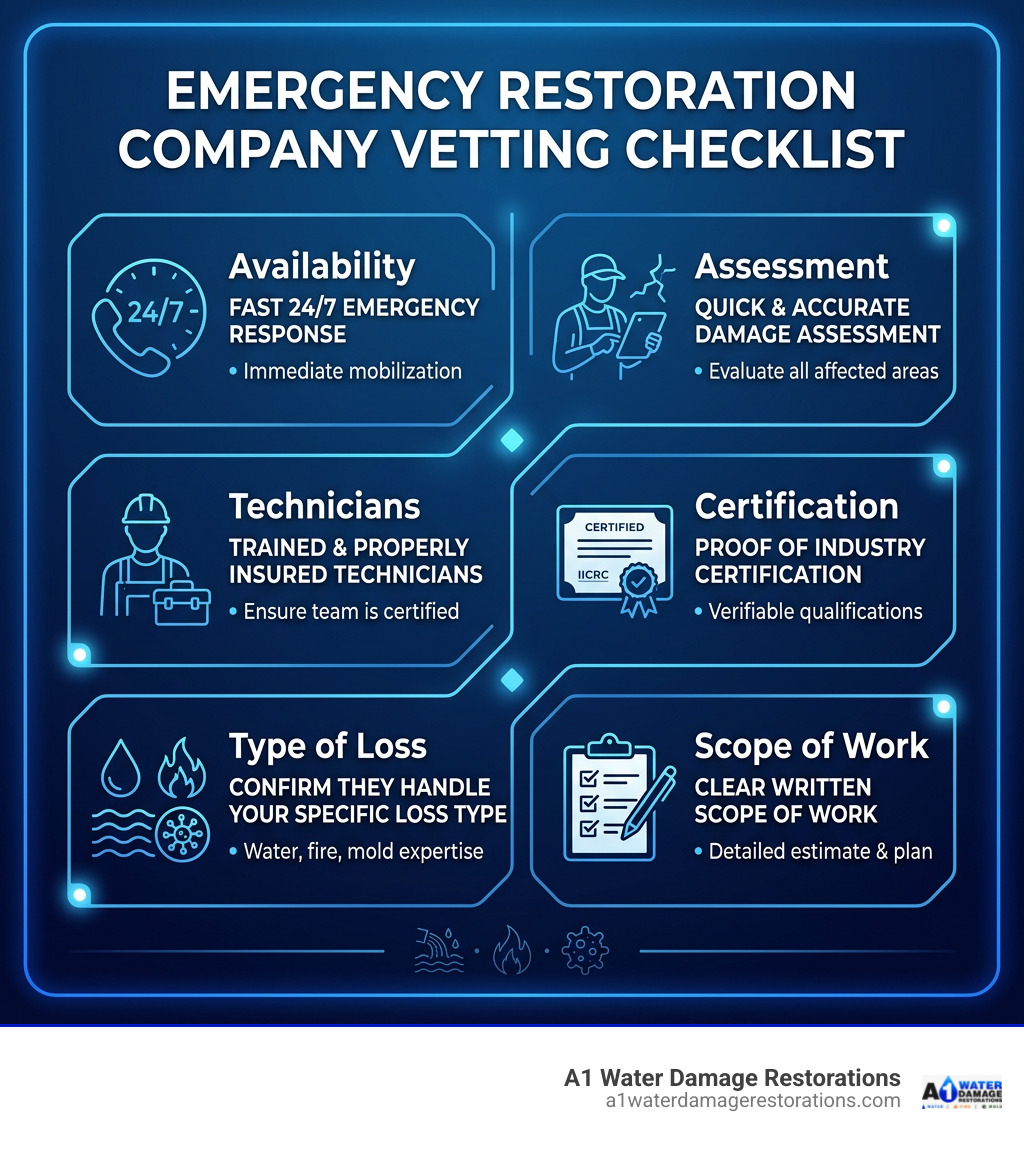
Simple restoration companies near me word guide:
Immediate Steps to Take After Water, Fire, or Mold Damage
When a sudden pipe burst or kitchen fire occurs, your first few decisions carry enormous weight. Experiencing property damage is overwhelming, but acting calmly and systematically will protect your safety, your structure, and your insurance claim. When you need immediate help, turning to our water damage contractors near me guide provides direct rescue solutions for navigating the first chaotic hours.
Halting Hazard Spread and Securing Property Safety
Safety always comes before salvage. Before walking into an affected area, address the immediate physical and environmental hazards:
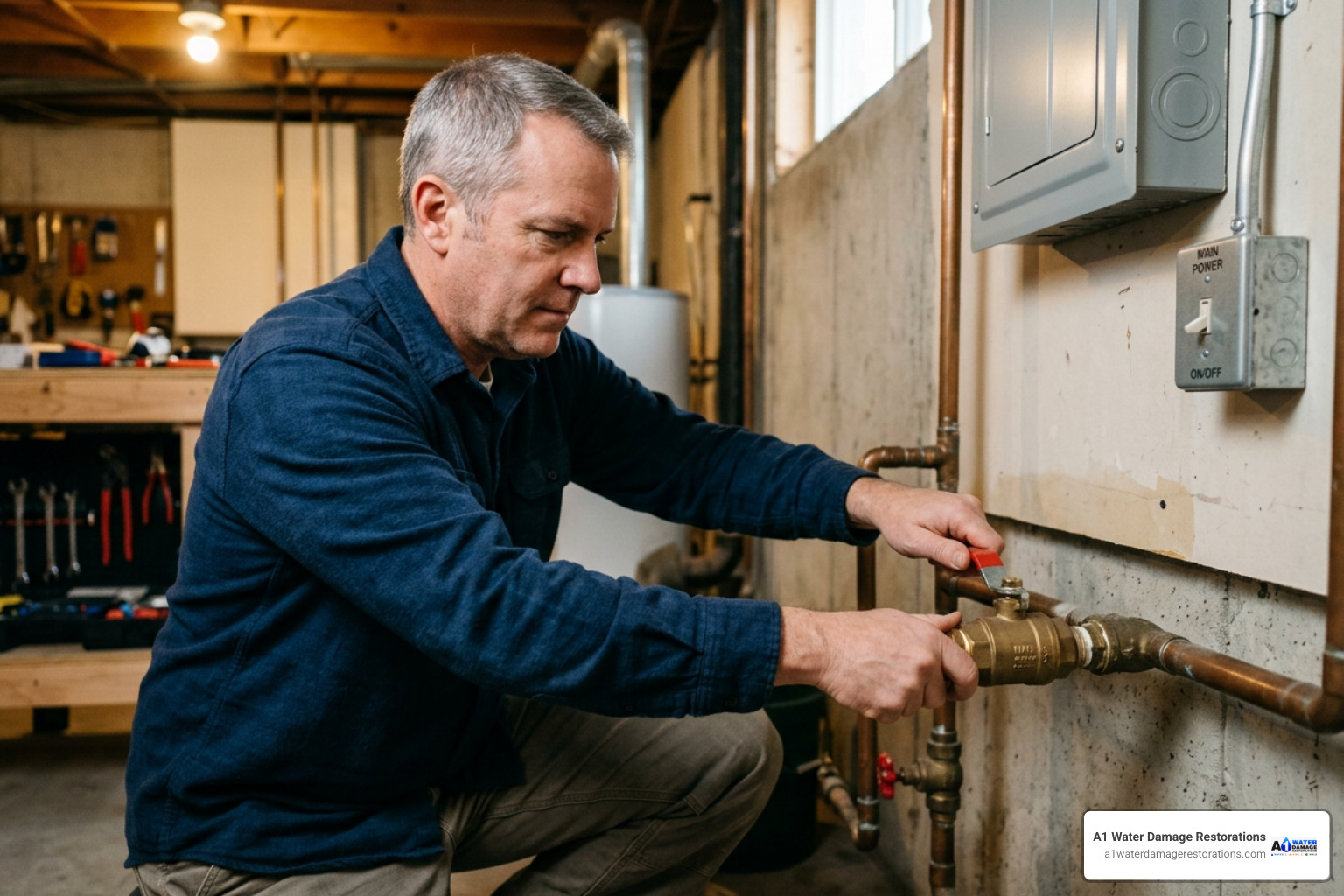
- Shut Off the Source: If water is actively pouring, locate your main water shutoff valve immediately. For localized appliance leaks, isolate the fixture’s individual angle stop.
- Eliminate Electrical Risks: Standing water and electricity are a fatal combination. If your electrical panel is in a dry, safe location, switch off circuit breakers to the flooded or burned areas. Never step into standing water to reach a breaker box.
- Assess Structural Stability: Saturated drywall, sagging plaster ceilings, and charred support beams can collapse without warning. Evacuate unstable rooms right away.
- Control Ventilation Carefully: If dealing with clean water, open windows to promote airflow. However, if dealing with mold growth, sewage backups, or heavy soot, keep the area closed off to prevent airborne spores and contaminants from migrating into unaffected living spaces.
- Wear Protective Equipment: Slip-resistant boots, rubber gloves, and an N95 respirator protect you from hazardous micro-particles and biological contaminants during initial property checks.
Documenting Structural Losses for Insurance Claims
Before removing materials or tossing ruined carpets, you must build an indisputable paper trail for your insurance adjuster. Clear, early evidence prevents claim delays and coverage disputes:
- Capture Comprehensive Photos and Videos: Take wide-angle shots of every damaged room, followed by high-resolution close-ups of structural damage, baseboards, flooring, and individual personal belongings.
- Log the Moisture and Soot Boundaries: Document waterlines on drywall, peeling paint, warped hardwood, and soot lines across ceilings.
- Create an Itemized Loss Inventory: List damaged items including their brand, age, approximate replacement value, and purchase receipts where available.
- Do Not Discard Evidence Prematurely: Leave structural materials in place until certified restoration professionals and your insurance adjuster can inspect and record moisture meter readings.
Core Capabilities of Restoration Companies Near Me
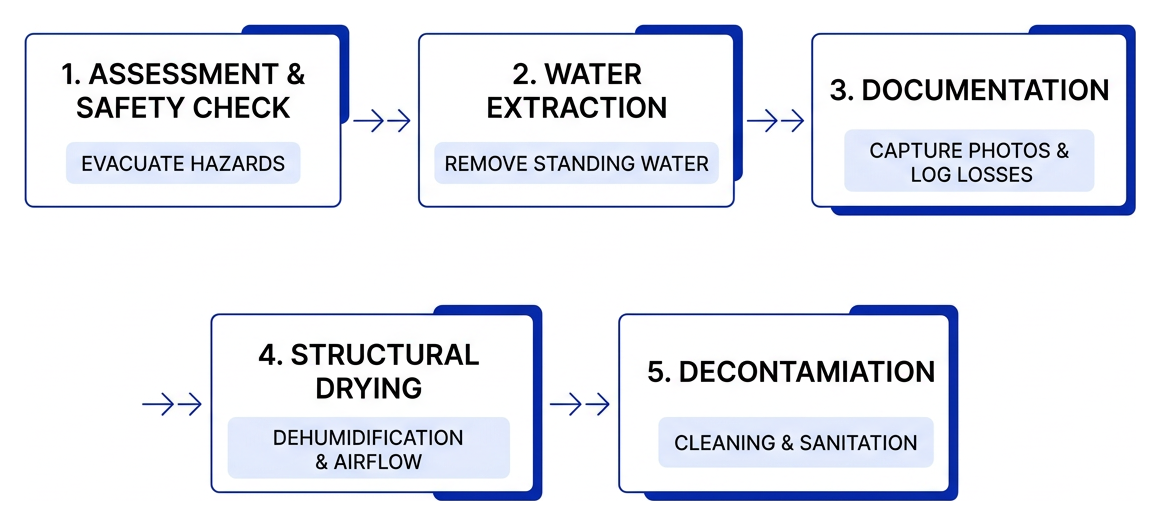
Property damage is rarely a single-step problem. Whether your home suffers a dishwasher overflow or an attic fire, restoration demands distinct phases: immediate stabilization, detailed sanitation, and full reconstruction. Having a single team handle every phase ensures accountability and seamless communication. Review the complete list of property restoration services to see how comprehensive disaster recovery works from start to finish.
Water Extraction and Advanced Structural Drying
Removing standing liquid is only the tip of the iceberg. Water seeps beneath hardwood planks, saturates sill plates, and climbs porous drywall via capillary action.
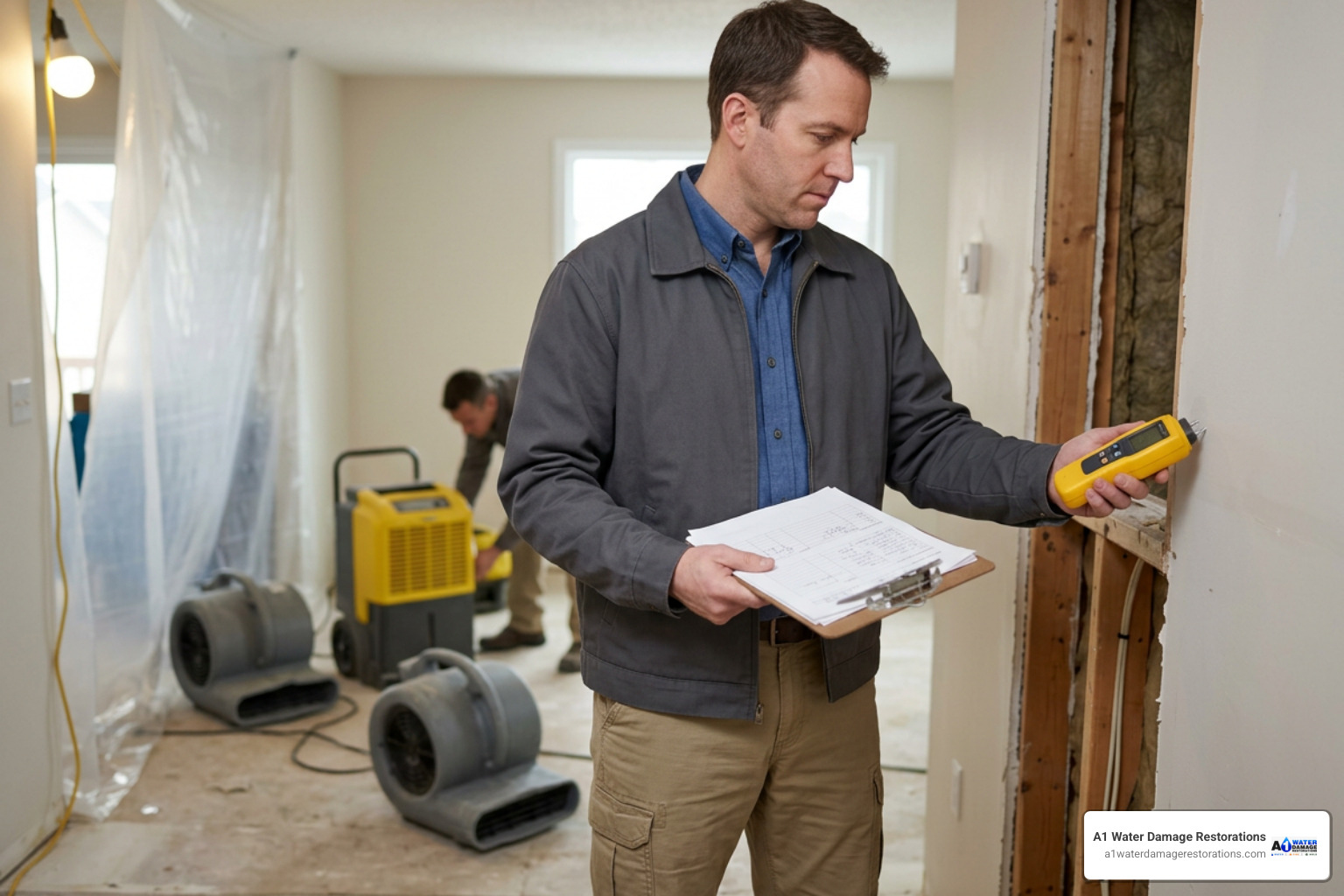
Our technicians utilize industrial-grade submersible extraction pumps and truck-mounted vacuum units to eliminate bulk water rapidly. Next, we use non-invasive moisture meters and thermal imaging cameras to track hidden moisture pockets behind wall cavities.
To achieve thorough structural drying, we set up high-velocity air movers alongside commercial desiccant or LGR (low-grain refrigerant) industrial dehumidifiers. This creates an optimal psychrometric drying environment, drawing moisture out of framing lumber and subflooring before applying EPA-registered antimicrobial treatments to prevent microbial blooms.
Fire, Smoke, and Soot Remediation
Fire damage extends far past charred framing. Corrosive smoke, microscopic soot, and acidic residues settle onto every surface, etching glass, discoloring porous tiles, and embedding stubborn odors into insulation.
Our remediation crews implement multi-stage cleanup protocols:
- Soot Neutralization: We categorize the residue (dry, wet, protein, or fuel oil soot) and apply targeted chemical sponges and ultrasonic cleaning baths.
- Air Scrubbing: HEPA-filtered air scrubbers continuously cycle indoor air, capturing microscopic soot particles down to 0.3 microns.
- Deep Odor Elimination: Rather than masking smells with perfumes, we deploy thermal fogging and hydroxyl generators that break down volatile organic compounds (VOCs) at the molecular level.
Biohazard, Sewage, and Mold Remediation Standards
Certain losses involve hazardous biological agents that threaten household health. Category 3 “black water” (such as sewer backups) and active fungal colonies require strict containment protocols:
- Negative Air Containment: Technicians construct physical plastic barriers (6-mil poly sheeting) with negative air machines to ensure mold spores and bacteria cannot escape into clean rooms.
- HEPA Vacuuming and Controlled Demolition: Porous, unsalvageable materials like wet insulation and rotted drywall are carefully bagged, sealed, and removed following strict safety regulations.
- Spore Abatement and Verification: Surfaces are treated with specialized biocides and detailed HEPA vacuuming before completing clearance testing. You can also review independent local restoration contractor reviews to see how vetted specialists handle complex hazardous cleanups in your neighborhood.
How to Evaluate and Choose Restoration Companies Near Me
During a property disaster, urgency can make you vulnerable to hiring the first contractor who answers the phone. However, choosing the wrong crew can lead to secondary mold damage, botched insurance claims, and shoddy reconstruction.
| Evaluation Criteria | Dedicated Independent Provider | National Franchise Network |
|---|---|---|
| Response Speed | Fast, local dispatch from nearby metro hubs | Varies; often routed through central national call centers |
| Insurance Coordination | Direct, hands-on adjuster advocacy and seamless local billing | Standardized corporate claims submission |
| Project Accountability | Single in-house team from mitigation through reconstruction | Often separates water mitigation from rebuild subcontractors |
| Local Knowledge | Familiar with regional soil, construction types, and weather | Follows general national operational templates |
| Community Roots | Deep local presence and neighbor-focused reputation | Brand-name recognition driven by national marketing |
Essential Credentials for Restoration Companies Near Me
To ensure your home is restored safely and up to industry standards, never hire an unverified contractor. Look for these non-negotiable qualifications:
- IICRC Certification: The Institute of Inspection, Cleaning and Restoration Certification (IICRC) sets global standards for our industry. Technicians should hold active certifications in Water Damage Restoration (WRT), Applied Structural Drying (ASD), and Fire and Smoke Restoration (SRT). Our team at A1 Water Damage Restorations operates as certified restoration experts who follow strict IICRC S500 and S520 guidelines on every job.
- State and Local Licensing: Make sure the company holds appropriate general contracting and specialty environmental licenses required across Colorado municipalities.
- Comprehensive Insurance Coverage: Verify that the company carries at least $1,000,000 to $2,000,000 in general liability insurance along with active Workers’ Compensation and pollution liability policies.
- OSHA Compliance: Crews must follow OSHA standards for personal protective equipment, confined space safety, and hazardous waste handling.
Comparing Franchises and Local Restoration Companies Near Me
Both national franchises and local independent firms operate across our region. Understanding how they work helps you pick the right partner:
- National Franchises: Provide strong name recognition and standard corporate systems, but local franchise quality can fluctuate depending on individual branch ownership and high technician turnover.
- Local Independent Specialists: Bring unmatched familiarity with local building codes, regional freeze-thaw cycles, and neighborhood architecture across Denver, Boulder, Littleton, Arvada, Golden, Broomfield, Westminster, Wheat Ridge, and Greenwood Village.
When you choose a dedicated family-owned company, you gain direct access to project leaders who care deeply about their local reputation. You can explore regional feedback through Denver damage restoration ratings to see how local providers stack up in real emergency situations.
Managing Timelines, Costs, and Insurance Coordination
Navigating property restoration involves balancing physical repairs with financial clarity. A dependable contractor manages both sides of the recovery process smoothly.
The 4-Phase Recovery Timeline
The complete restoration cycle typically follows four distinct operational stages:
- Emergency Dispatch & Assessment (Hours 1–4): Crews arrive on site, inspect structural integrity, complete moisture mapping, contain hazards, and initiate emergency extraction or tarping.
- Stabilization & Demolition (Days 1–2): Saturated, non-salvageable materials (drywall, carpet padding, burned trim) are removed, and containment zones are established.
- Structural Drying & Decontamination (Days 3–5): Industrial dehumidifiers and air scrubbers run continuously. Technicians monitor daily psychrometric logs until moisture levels match baseline standards.
- Rebuild & Reconstruction (Weeks 1–3+): Once dry and sanitized, the construction crew replaces drywall, repairs subfloors, paints, and installs trim, restoring your property to pre-loss condition or better.
Comparing how different providers manage these project phases is simple when you review how top insurance restoration services compared handle mitigation timelines and customer claims.
Restoration Pricing and Insurance Claim Navigation
For most residential water losses, mitigation costs typically fall between $1,500 and $10,000, depending on the square footage affected, water category (clean supply vs. sewage), and drying duration. Fire and mold remediation projects involving structural rebuilding can scale higher.
Professional restoration companies use Xactimate—the standard pricing software accepted by all major property insurance carriers. This ensures transparent, itemized line items that match adjuster expectations.
Rather than paying out of pocket and chasing reimbursement, work with a restoration partner that provides direct insurance billing. We work closely with your adjuster, submit detailed digital moisture logs and thermal imaging reports, and help you navigate your deductible without surprise fees. Take a moment to read our client testimonials and reviews to discover how seamless direct insurance coordination makes the recovery journey for local property owners.
Frequently Asked Questions About Property Restoration
How quickly should an emergency restoration company arrive on site?
An emergency restoration contractor should ideally arrive on site within 60 minutes of your call. Rapid response is critical because water spreads quickly through floors and subfloors, doubling structural damage and dramatically raising restoration costs. Having 24/7 dispatch capabilities ensures technicians can extract water and place drying equipment immediately, stopping secondary damage in its tracks.
What are the early signs of hidden mold and moisture damage?
Mold can begin multiplying within 24 to 48 hours following moisture exposure. Look out for these common warning signs:
- Persistent earthy or musty smells that linger even after cleaning.
- Discoloration, dark spotting, or yellow water stains along drywall, ceilings, and baseboards.
- Bubbling, peeling, or cracking paint and wallpaper.
- Warped, soft, or spongy hardwood and vinyl flooring.
- Unexplained allergy flare-ups, coughing, or sinus irritation when indoors.
What questions should I ask before hiring a restoration contractor?
Before signing any work authorization, ask these essential vetting questions:
- Are your technicians individually IICRC-certified in water, fire, or mold remediation?
- Do you provide a written, itemized estimate using industry-standard pricing software (Xactimate)?
- Will you bill my insurance company directly and handle adjuster documentation?
- Do you manage the complete project in-house, including final repairs and rebuilding?
- Are you licensed, bonded, and covered by comprehensive liability and pollution insurance?
Conclusion
When property damage strikes, every minute counts. Choosing a certified, responsive, and locally rooted team protects your home from ongoing damage and makes the insurance claims process simple and stress-free.
At A1 Water Damage Restorations, we deliver 24/7 IICRC-certified emergency response across Denver, Boulder, Cherry Creek, Golden, Greenwood Village, Arvada, Westminster, Wheat Ridge, Broomfield, and Littleton. As a family-owned business, we provide complete, in-house care from initial water extraction through final structural reconstruction. If you manage a facility or commercial property, explore our dedicated commercial restoration services to keep your business fully protected whenever disaster strikes.