

What to Do First After a Denver Storm
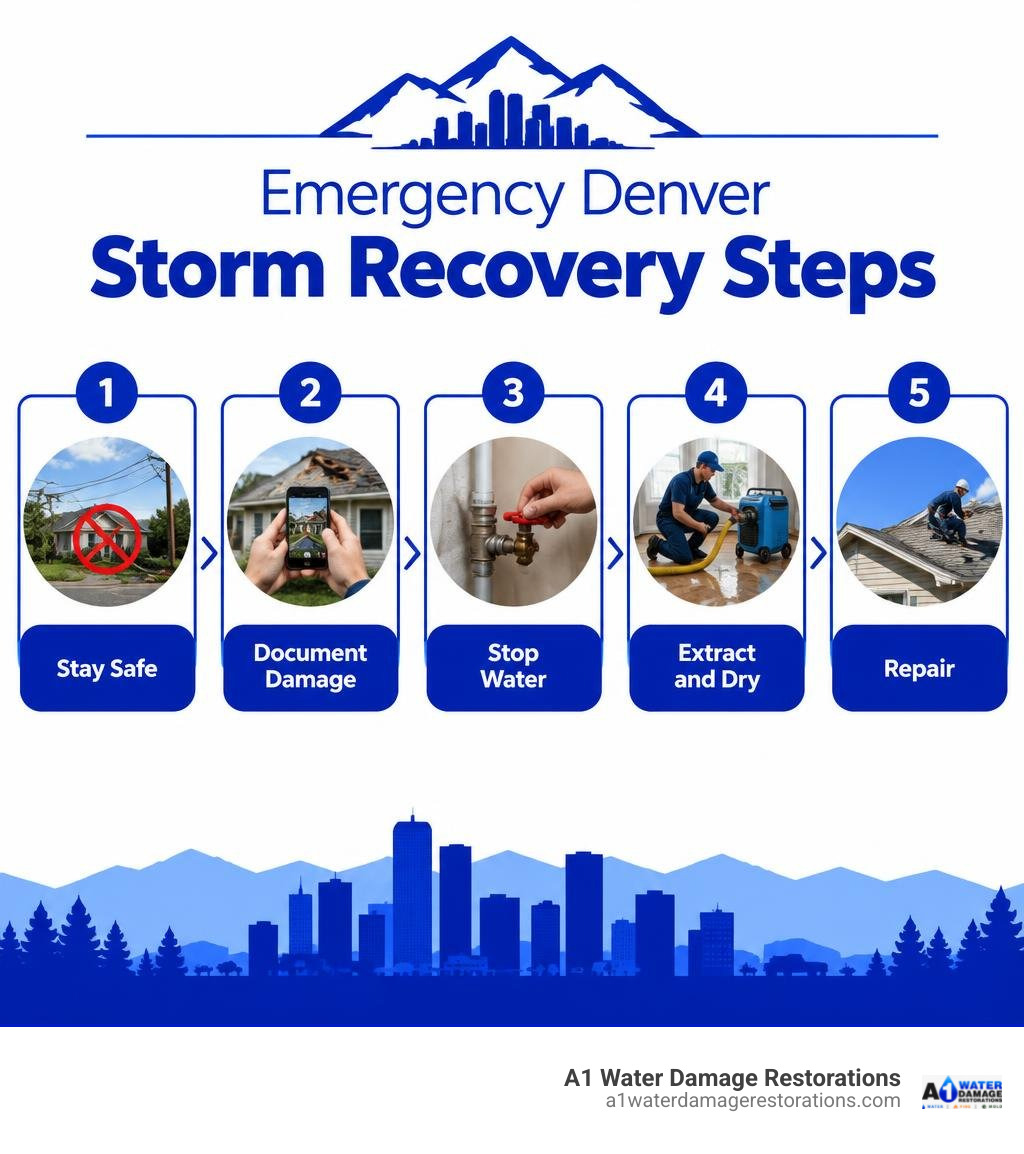
Stay clear of downed wires and unstable areas. If it is safe, stop water from entering, take photos of the damage, and call your insurer. Then contact a storm damage restoration professional to assess the property, remove standing water, and dry wet materials. Fast action can limit further damage after Denver hail, high winds, heavy snow, or flash flooding. According to the National Weather Service, Colorado’s Front Range is one of the most hail-prone regions in the country, making rapid response essential. This is why storm damage restoration Denver homeowners can count on starts with these immediate first steps.
A home and a vehicle may need different help. Restoration crews handle damage to buildings and belongings; an auto body shop or detailer can assess vehicle dents, paint, or wet interiors. The steps below focus on getting your property safe, dry, and ready for repairs.
I’m Cole Nudel, and I work in disaster recovery with A1 Water Damage Restorations in the Denver area. I use that experience to explain the storm damage restoration Denver property owners need, starting with the first steps after a storm.
7 Major Types of Storm Damage Affecting Denver Properties
The Front Range experiences some of the most dynamic, unpredictable weather patterns in North America. Rapid elevation shifts, cold mountain air masses colliding with warm plains moisture, and intense seasonal pressure drops generate severe weather conditions. When severe weather hits, knowing how to assess and repair storm damage in Denver gives property owners the upper hand in saving their structures.
Across Denver, Arvada, Broomfield, Golden, and Boulder, properties face several distinct storm threats:
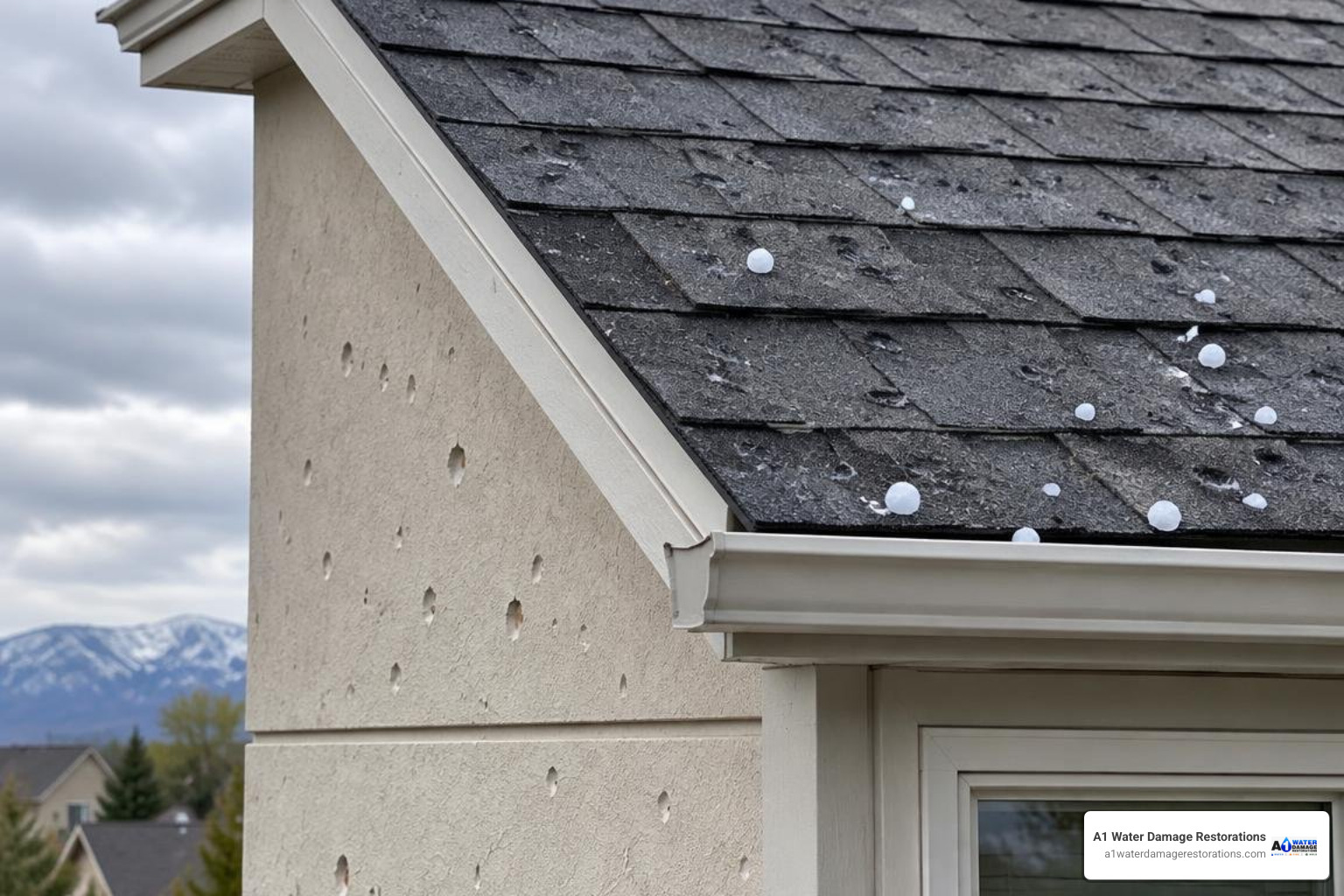
- Hail Impact Cratering: Massive hail storms batter roofs, crack stucco, dent siding, and smash skylights, leaving the interior envelope exposed.
- Wind Shear and Roof Breaches: High-velocity gusts tear off shingles, rip soffits, down trees, and compromise roof decking.
- Flash Flooding: Heavy precipitation overwhelms municipal storm drains, driving ground runoff straight into basement windows and egress wells.
- Subsurface Hydrostatic Pressure: Prolonged rain saturates the soil, forcing groundwater up through concrete basement slabs and foundation walls.
- Mud and Silt Intrusion: Fast-moving flash floods bring layers of toxic sediment, soil, and organic debris into living areas.
- Heavy Snowpack and Ice Dams: Winter weather brings intense weight loads, melting runoffs, and frozen eaves that push water backward underneath roof shingles.
- Sewer and Drain Backups: City mains that become backed up during downpours push contaminated blackwater directly into residential drains.
Hail, High Winds, and Heavy Snowpack
Hail storms across the Denver Metro area can produce stones larger than golf balls within minutes. These impacts fracture asphalt shingles, shatter slate tiles, and destroy gutters. When combined with fierce mountain winds, shingles pull away, exposing bare underlayment to torrential downpours. Following an organized roof storm damage checklist ensures no subtle punctures, dented flashings, or structural weaknesses are overlooked before water leaks rot the attic framing.
Heavy snowpack adds immense weight to roofs. As indoor heat rises, bottom layers melt and run toward colder eaves, forming thick ice dams that pool water right above the ceilings of living spaces.
Flash Flooding, Runoff, and Mud Inundation
Denver’s clay-heavy soils have poor absorption rates during torrential downpours. When rain falls faster than the earth can absorb it, surface water surges across driveways and into foundation lines. Basements in neighborhoods throughout Littleton, Westminster, and Wheat Ridge are particularly vulnerable to sump pump failure and egress window overflow.
This runoff carries thick mud and street contaminants, turning indoor living spaces into biohazard zones classified as Category 3 blackwater. Dealing with this level of intrusion requires specialized cleanup procedures, as detailed in our Denver flood damage cleanup guide, to eliminate pathogenic threats and prevent permanent floor ruin.
Essential Stages of Professional Storm Damage Restoration Denver
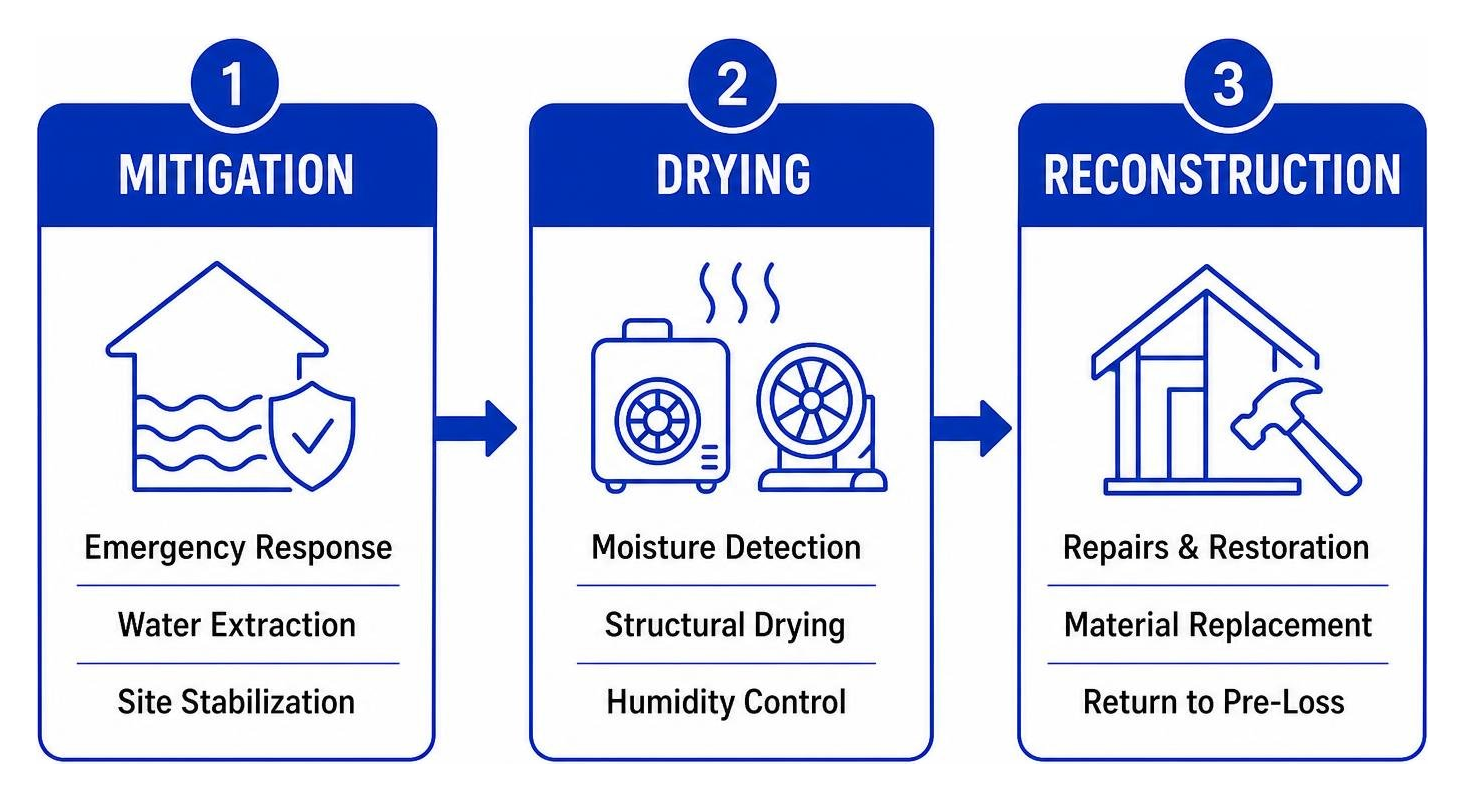
Recovering a property after a severe weather event requires a coordinated, multi-phase technical approach. Relying on simple household fans or opening a few windows will leave hidden moisture pockets behind walls and under floors. Understanding the value of saving your home with storm restoration services means stepping through a proven engineering and remediation protocol.
Emergency Mitigation and Water Extraction
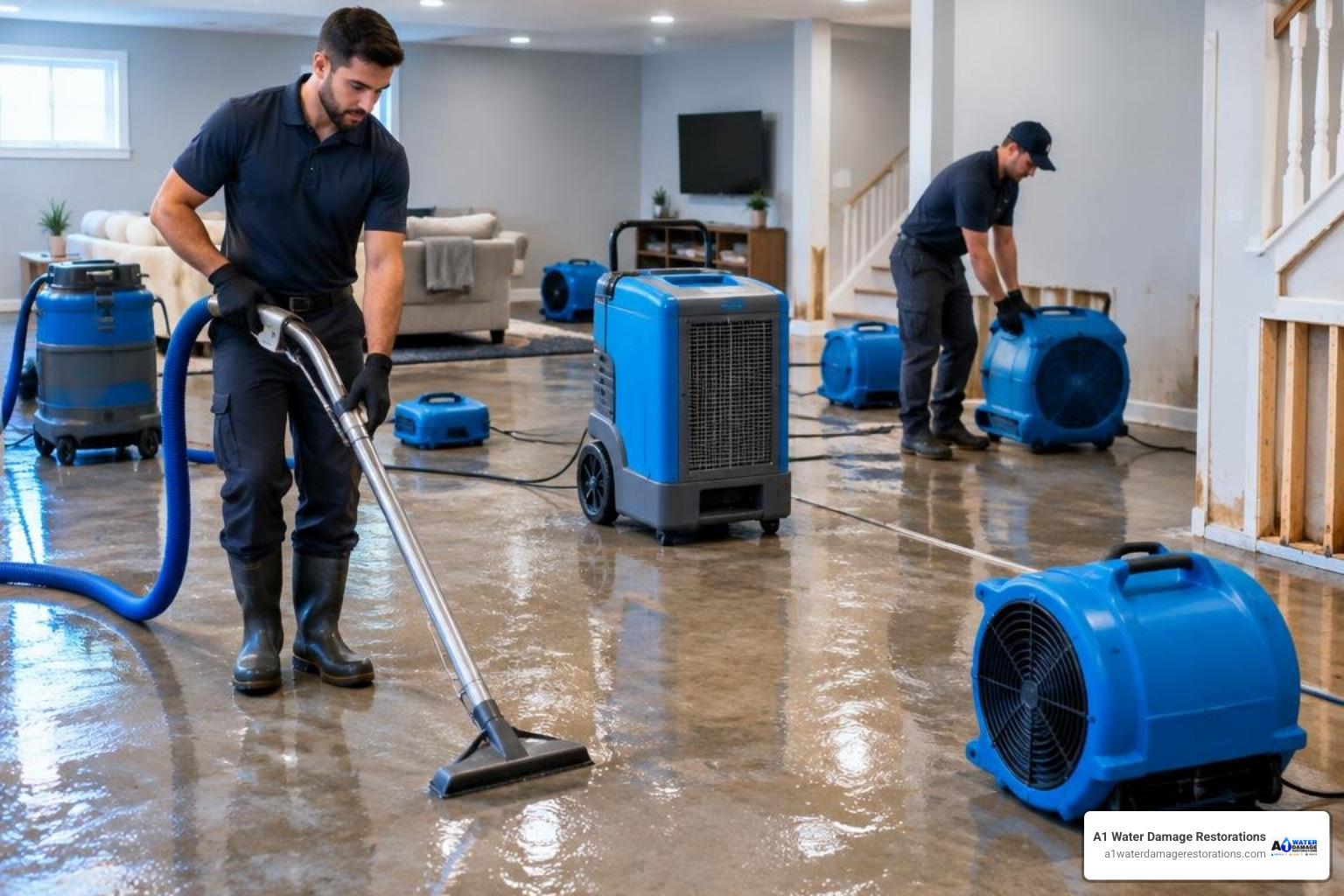
The moment our emergency team arrives on site, our immediate priority is site stabilization and standing water removal:
- Hazard Identification: We check for electrical hazards, structural stability, and gas line integrity before beginning work.
- Moisture Mapping: Using non-invasive thermal imaging cameras and penetrating moisture meters, we track every inch of moisture migration through walls, subfloors, and ceilings.
- High-Volume Water Extraction: Truck-mounted vacuum units and submersible industrial pumps pull standing water out of the building envelope rapidly.
- Antimicrobial Application: We treat affected building materials immediately with botanical and hospital-grade antimicrobials to halt rapid bacterial and fungal proliferation.
Structural Drying, Sanitization, and Rebuild
Once standing water is removed, the scientific drying phase begins:
- Dehumidification: We place Low-Grain Refrigerant (LGR) dehumidifiers throughout the structure to pull moisture vapors out of the ambient air and reduce relative humidity.
- Controlled Evaporation: High-velocity axial air movers direct airflow along floors, wall cavities, and ceiling joists to draw out deeply trapped moisture.
- Containment and Air Scrubbing: True HEPA air scrubbers capture airborne dust, mold spores, and particulates, maintaining clean air during drywall cut-outs.
- Sanitization and Deodorization: Thermal fogging and hydroxyl generators neutralize lingering storm odors at the molecular level.
- Structural Rebuilding: Damaged insulation, ruined drywall, and warped flooring are replaced to restore the property to pre-loss condition.
Navigating Restoration Costs, Timelines, and Insurance Claims
Storm damage recovery costs depend on several factors, including water category, affected square footage, and structural integrity. Understanding the variables mapped out in our breakdown of fire and water mitigation costs allows homeowners to make informed financial decisions when disaster strikes.
| Damage Type | Average Restoration Timeline | Typical Cost Range | Primary Equipment & Actions |
|---|---|---|---|
| Hail & Wind Roof Penetration | 3 to 7 Days | $2,500 – $8,500 | Roof tarping, attic extraction, insulation replacement, ceiling drying |
| Clean Water Basement Intrusion | 2 to 4 Days | $1,800 – $4,500 | Submersible pumps, LGR dehumidifiers, axial air movers, subfloor drying |
| Flash Flood / Mud Runoff (Cat 3) | 5 to 10 Days | $4,500 – $14,000+ | Silt removal, drywall cuts, antimicrobial sanitization, extensive drying |
| Major Structural Storm Impact | 2 to 4+ Weeks | $10,000 – $35,000+ | Shoring, structural tear-out, complete structural rebuild, framing repairs |
Assessing Costs for Storm Damage Restoration Denver Properties
Accurate restoration estimates are prepared using Xactimate, the industry-standard software used by property insurance carriers. This ensures consistent, transparent, and fair market line-item pricing for every phase of recovery—from emergency board-up and tarping to psychrometric moisture monitoring.
Expediting the Insurance Claim Process
Navigating an insurance claim after a major storm can feel overwhelming. Following these steps helps keep your claim moving smoothly:
- Document Thoroughly: Take date-stamped photos and videos of all damaged materials, structural elements, and ruined personal property before anything is discarded.
- Prevent Secondary Loss: Insurers require property owners to take reasonable steps to prevent further damage. Immediate tarping, boarding, and emergency water extraction satisfy this policy requirement.
- Keep Daily Moisture Logs: Our technicians maintain detailed psychrometric logs detailing daily temperature, relative humidity, and moisture content reductions, giving adjusters undeniable proof of necessary work.
- Direct Carrier Billing: We work directly with your insurance adjuster to review estimates, submit supplemental documentation, and streamline the claims process.
How to Select a Qualified Denver Emergency Restoration Contractor
When a storm hits, local markets often see fly-by-night contractors who lack proper equipment, licenses, or insurance. Knowing the process of finding emergency repair in less than an hour can save you from costly mistakes.
Why 24/7 Response Matters for Storm Damage Restoration Denver
When seeking storm damage restoration, Denver property owners must prioritize immediate dispatch and 24/7 availability. Water moves quickly through building materials. Drywall wicks water upward within minutes, wood framing begins to swell and twist within hours, and active mold colonies can establish within 24 to 48 hours. Having access to dedicated 24-hour restoration services ensures that industrial extractors and drying equipment are working on your property before irreversible secondary damage takes hold.
Verification Checklist: Licensing, Insurance, and Certifications
Before hiring a restoration company to enter your home or business, verify the following qualifications:
- IICRC Certification: Look for certifications from the Institute of Inspection, Cleaning and Restoration Certification, specifically in Water Damage Restoration (WRT), Applied Structural Drying (ASD), and Microbial Remediation.
- Comprehensive Insurance: The contractor must carry active General Liability, Workers’ Compensation, and Pollution/Environmental Liability coverage.
- Local Physical Presence: Partner with established local teams rooted in communities like Greenwood Village, Cherry Creek, Boulder, and Denver rather than out-of-state storm chasers.
- Commercial-Grade Equipment Inventory: Ensure the company owns industrial desiccant and LGR dehumidifiers, HEPA filtration systems, and thermal imaging gear.
Frequently Asked Questions About Denver Storm Recovery
How quickly should storm damage cleanup begin to prevent mold growth?
Cleanup and extraction should begin within 24 to 48 hours of water intrusion. In the Front Range climate, indoor relative humidity levels can spike dramatically after storms. Combined with warm indoor temperatures, porous building materials like drywall paper and carpet padding become ideal breeding grounds for mold spores in less than two days.
Does standard homeowners insurance cover severe Colorado storm damage?
Standard homeowners policies in Colorado typically cover sudden and accidental damage caused by wind, hail, lightning, and heavy snow load. However, standard policies do not cover overland flash flooding, mudslides, or groundwater seepage; these events require dedicated flood insurance through the National Flood Insurance Program (NFIP) or private flood endorsements. Sewer backups also typically require a specific policy rider.
What certifications should a reliable restoration contractor possess?
A reputable restoration company should hold IICRC firm certification with technicians trained in Water Damage Restoration (WRT), Applied Structural Drying (ASD), and Applied Microbial Remediation (AMRT). Additionally, contractors should be lead-safe certified under EPA guidelines and comply with OSHA workplace safety standards.
Conclusion
Severe weather along the Colorado Front Range is an inevitable reality of living in this beautiful region. When severe storms tear through Denver, Boulder, Golden, Arvada, Broomfield, Westminster, Wheat Ridge, Littleton, Cherry Creek, or Greenwood Village, quick action makes all the difference between a simple cleanup and a catastrophic structural loss.
At A1 Water Damage Restorations, our family-owned team is standing by 24/7 with the certified expertise, advanced drying technology, and compassionate personal care needed to return your home or business to safety. If your property has been hit by severe weather, contact us immediately for comprehensive storm damage restoration you can rely on.