

Find Certified Water Restorers in Boulder Fast
Certified water restorers Boulder property owners can trust should offer fast emergency response, proven training, industrial drying equipment, clear moisture documentation, and help with insurance records. After a leak, flood, burst pipe, fire-suppression event, or mold-related moisture problem, the right team can limit structural damage and reduce the risk of secondary mold growth.
Look for a restoration company that can:
- Respond quickly and assess safety risks.
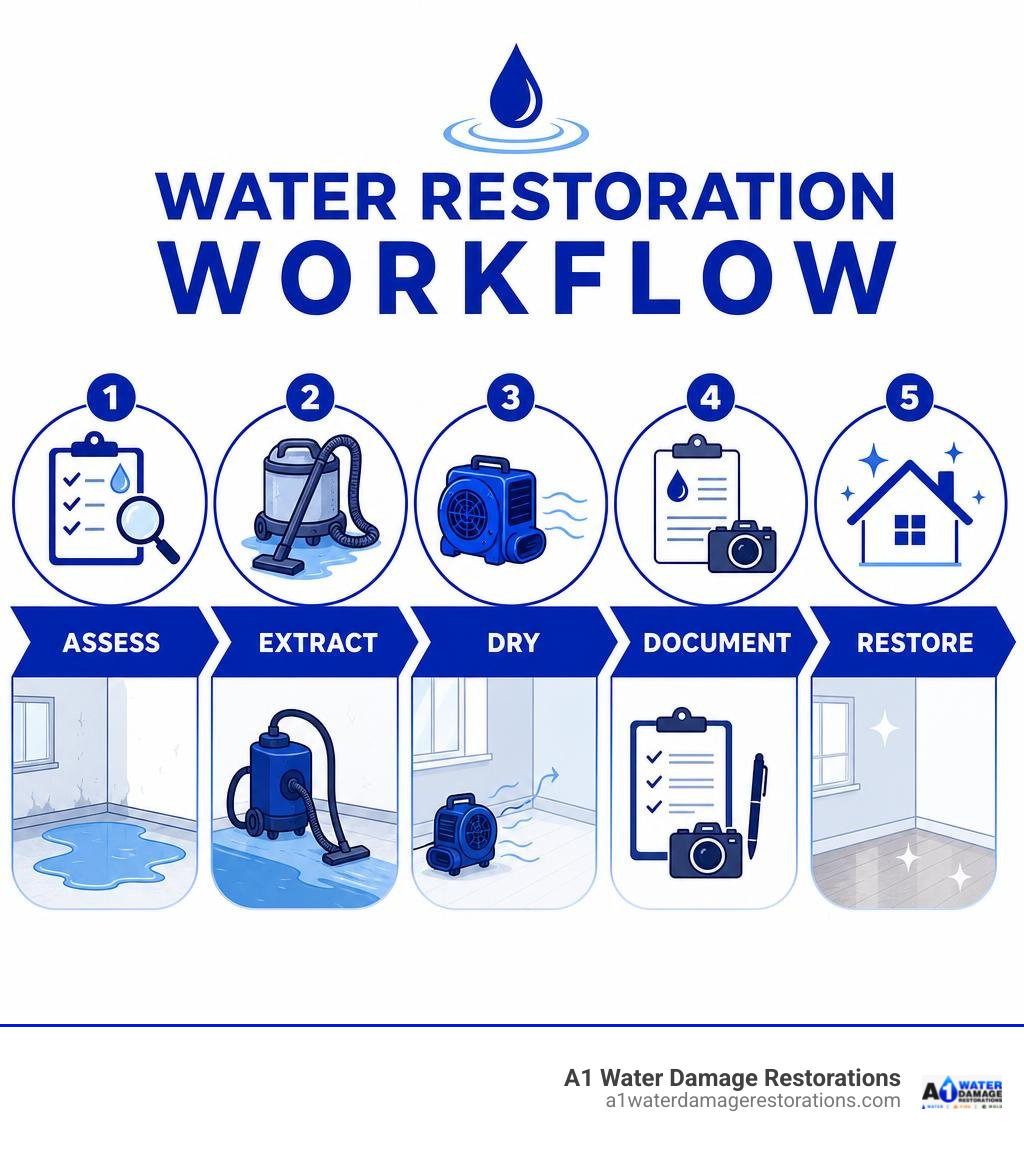
- Extract standing water and protect affected contents.
- Dry walls, floors, and hidden building materials with professional equipment.
- Document damage, readings, and work completed for your insurance claim.
- Explain the scope, timeline, and next steps in plain language.
Boulder’s changing weather, winter freezes, and sudden plumbing failures can turn a small water issue into a major disruption. Certification, local experience, and careful moisture control matter because a surface that looks dry may still hold damaging moisture underneath.
I am Cole Nudel, a disaster restoration professional with A1 Water Damage Restorations in the Denver area, where I help property owners navigate urgent water, fire, and mold damage. My experience with certified water restorers Boulder residents need informs the practical guidance in the sections ahead.
Key Qualities of Top Certified Water Restorers in Boulder
When water invades your home or commercial building, time is your fiercest rival. Water moves quickly into subfloors, creeps behind baseboards, and saturates drywall. Choosing qualified, certified water restorers Boulder can turn a potential disaster into a manageable recovery process.
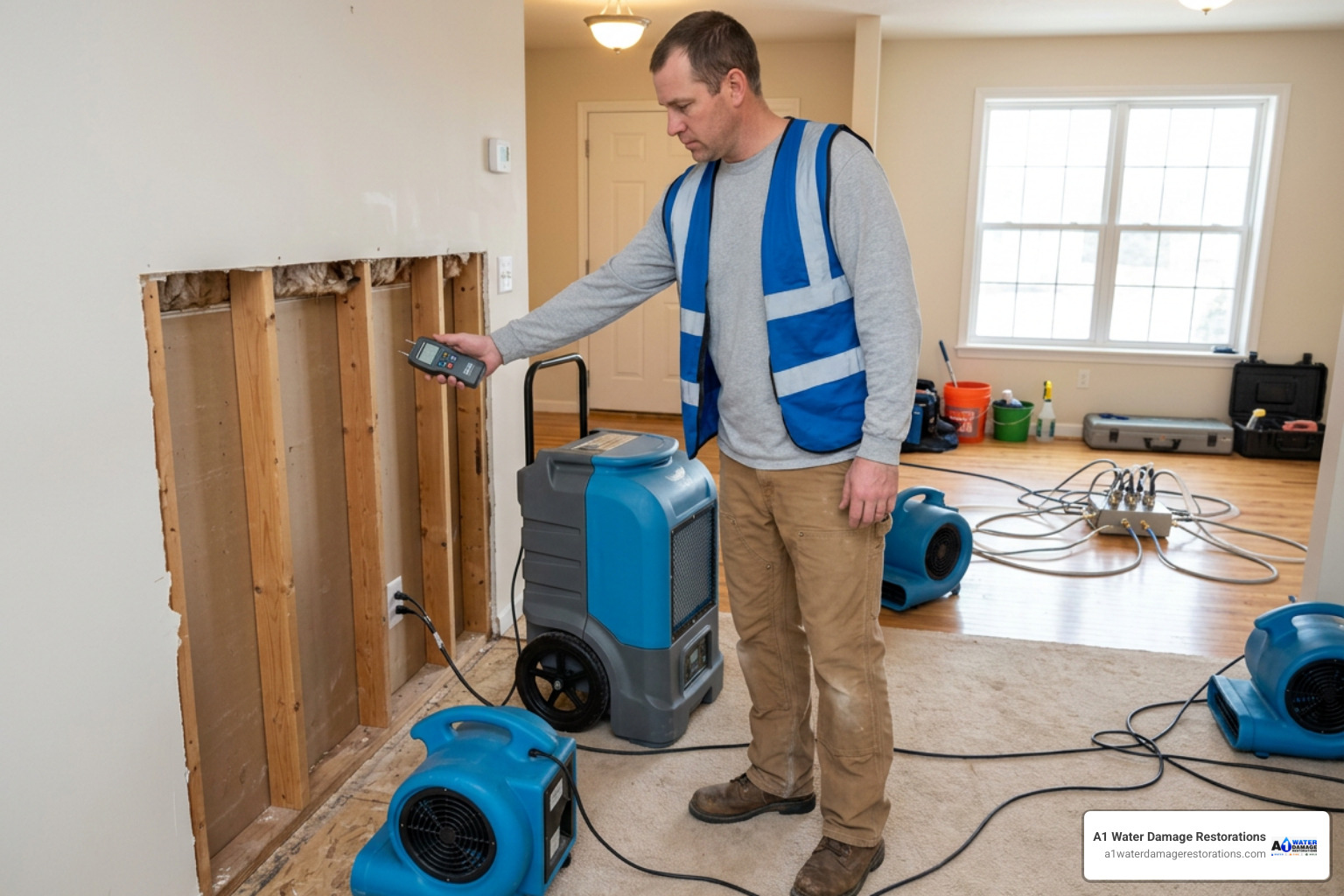
Top-tier restoration teams share specific operational qualities that set them apart:
- 24/7 Rapid Emergency Response: Water doesn’t wait for business hours. A burst pipe at 2:00 AM on a Sunday demands an immediate response team equipped to stop water flow and begin extraction right away.
- Industry-Leading Technical Standards: Water mitigation isn’t just about mopping floors; it is an applied science (psychrometrics). Top restorers strictly follow standards set by the Institute of Inspection, Cleaning and Restoration Certification (IICRC).
- Commercial-Grade Equipment Fleet: Professional restorers use high-capacity LGR (Low Grain Refrigerant) dehumidifiers, high-velocity air movers, axial fans, heat drying systems, and specialized injection dryers for hardwood floors and wall cavities.
- Advanced Moisture Detection Technology: A surface might feel dry to the touch, but thermal imaging cameras and penetrating or non-penetrating moisture meters reveal hidden water pockets trapped within structural assemblies.
- Comprehensive Project Coordination: Managing a restoration project involves multiple moving parts, including plumber coordination, structural drying, contents packing, and insurance communication. Working with a restoration specialist who coordinates the entire workflow delivers better project handling and gives property owners true peace of mind.
How to Verify Certified Water Restorers in Boulder
Not every contractor with a truck and a shop vacuum is equipped to handle structural water drying. To protect your property and finances, take these essential steps to verify credentials before work begins:
- Confirm Active IICRC Credentials: Verify that the firm holds active certification in Applied Structural Drying (ASD) and Water Damage Restoration (WRT). certified technicians understand how moisture travels through structural materials and how to dry assemblies without causing secondary destruction.
- Evaluate Local Reputation and Survey Data: Look for verified customer feedback. Across extensive industry ratings spanning over two decades and thousands of surveyed customers, top-performing restoration companies consistently maintain average satisfaction scores of 4.4 out of 5 stars or higher. High customer retention and positive reviews reflect consistent service quality.
- Review Insurance and Licensing: Ensure the company carries comprehensive general liability insurance, workers’ compensation, and pollution liability coverage (vital for mold and sewage cleanup).
- Verify Equipment Brands and Cleaning Agents: Inquire about their equipment and products. Reliable restorers utilize trusted, industry-grade drying equipment and botanical or hospital-grade antimicrobials, such as Benefect, DryAir, and GMS North America systems.
For an in-depth look at local restoration protocols and guidelines, consult our detailed Boulder damage restoration guide. If you ever need insights on property damage solutions in other regions, you can also explore this resource on Water Damage Golden Beach – Restoration & Repair Company .
What to Expect from Certified Water Restorers in Boulder
When you engage a certified team, you should expect a systematic, highly transparent workflow designed to restore your property efficiently:
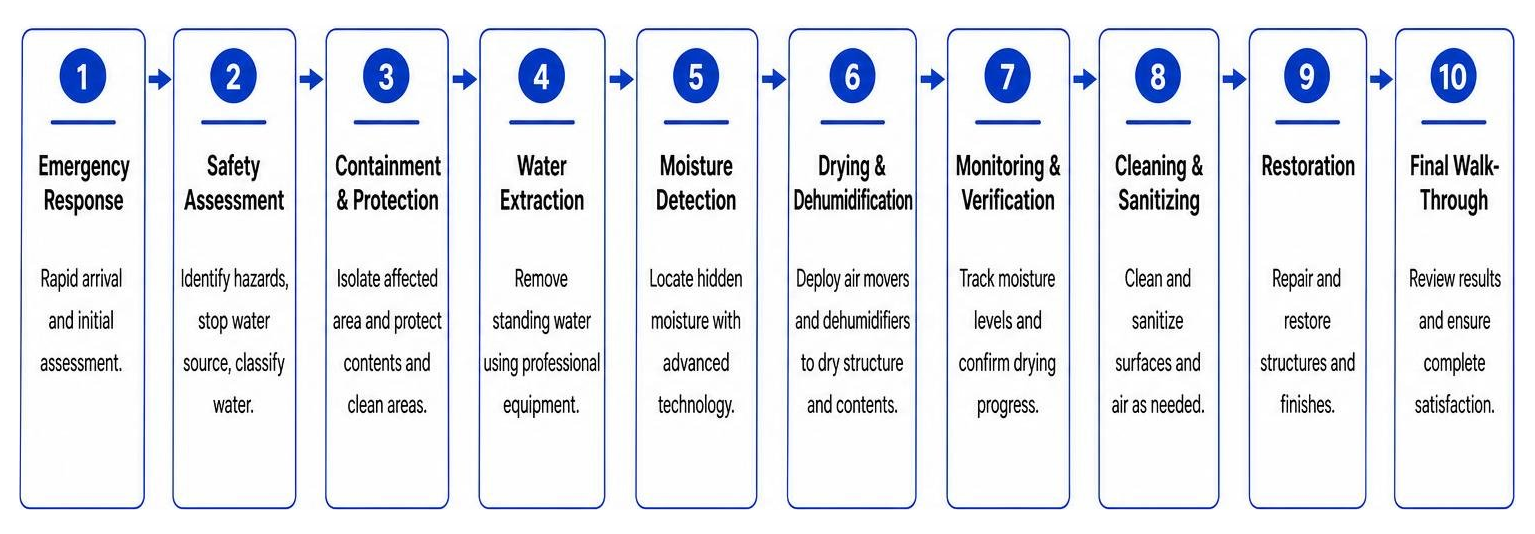
- Immediate Safety Assessment: Upon arrival, technicians evaluate structural integrity, identify electrical hazards, locate the water source, and determine the water contamination category (Category 1 Clean Water, Category 2 Gray Water, or Category 3 Black Water).
- Containment and Content Protection: Technicians set up physical containment barriers to isolate affected zones and protect clean areas. Sensitive personal belongings, artwork, and electronics receive targeted drying or off-site pack-out treatment.
- Transparent Communication and Documentation: Expect daily updates with moisture mapping logs, relative humidity readings, and photos that detail every step of the drying process for your records and insurance claim.
To learn more about standard cleanup protocols and emergency services, check out our guide on the Top 10 fire water restoration services.
Common Causes and Prevention of Water Damage in Boulder
Boulder’s unique geography—sitting right where the Great Plains meet the Rocky Mountains—creates dynamic weather patterns that directly contribute to water intrusion risks.
- Winter Freeze-Thaw Cycles: Sudden temperature drops cause standing water inside uninsulated pipes to freeze, expand, and rupture pipes.
- Spring Snowmelt Runoff: Rapid warming in spring melts heavy mountain snowpacks quickly, sending torrents of water down creeks, straining stormwater systems, and seeping into basements through foundation cracks.
- Summer Flash Floods and Heavy Storms: Severe summer downpours deliver immense volumes of rain in short windows, leading to surface water intrusion and sewer backups.
- Aging Municipal and Home Plumbing: Corroded supply lines, failing water heaters, and clogged drain lines remain constant risks year-round regardless of the weather outside.
| Cause of Water Damage | Prevention & Mitigation Strategy | Urgency Level |
|---|---|---|
| Burst Pipes (Winter Freeze) | Insulate exposed pipes in unheated spaces; keep interior heat above 55°F; drip faucets during severe cold snaps. | Critical / Emergency |
| Spring Snowmelt & Runoff | Direct downspouts 5+ feet away from foundation; install sump pumps with battery backups; seal foundation wall cracks. | High |
| Plumbing Appliance Leaks | Replace rubber washing machine lines with braided stainless steel hoses; inspect water heaters older than 8 years. | Moderate to High |
| Sewer / Drain Backups | Install backwater valves on main drain lines; avoid flushing grease or non-flushable wipes; inspect main lines routinely. | Critical (Biohazard) |
| Roof & Gutter Overflows | Clean gutters twice annually; clear debris from roof valleys; inspect flashing after high wind events. | Moderate |
Immediate Action Steps After Water Damage
Taking the right action within the first few minutes of discovering water damage can significantly reduce structural destruction and restoration costs:
- Stop the Flow safely: If safe to do so, shut off the main water valve immediately. If the leak stems from a specific appliance, turn off the dedicated shutoff valve behind it.
- Turn Off Electrical Power: If standing water contacts electrical outlets, baseboard heaters, or appliances, turn off the main circuit breaker before stepping into the water.
- Document Everything: Take clear photos and high-definition video of all standing water, damaged structure, saturated furniture, and personal items before moving anything.
- Avoid Unsafe DIY Extraction: Household vacuum cleaners are not designed for water pickup and pose serious electrical hazard risks. Contact certified water restorers Boulder right away to deploy professional submersible pumps and weighted extraction tools.
The Water Damage Restoration Process and Timeline
Restoring a property from water damage requires a scientific approach to psychrometrics—balancing temperature, relative humidity, and airflow to draw trapped moisture out of building materials.
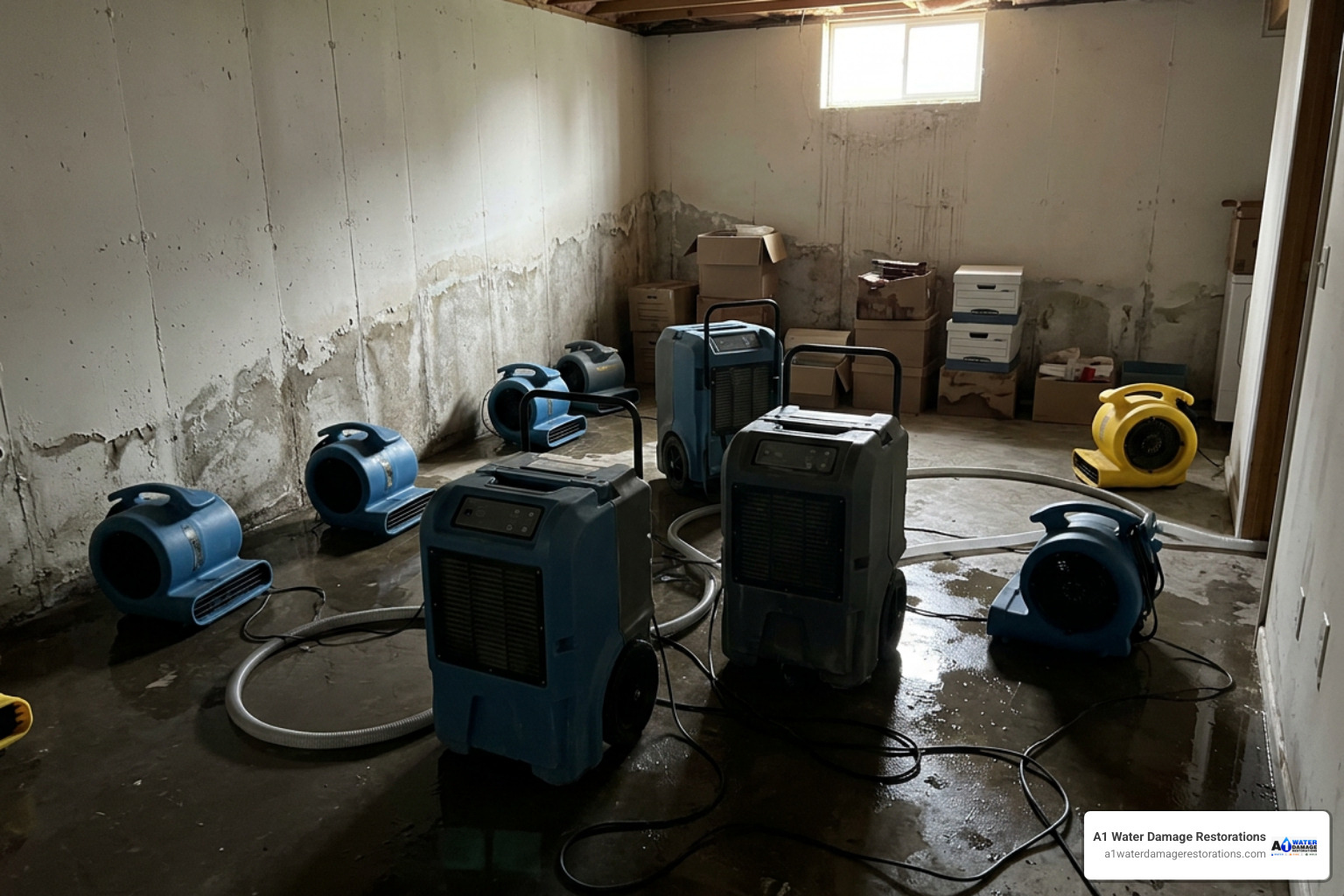
The complete professional water restoration sequence follows several detailed stages:
- Comprehensive Inspection & Damage Classification: Technicians assess the class of water damage (Class 1 through Class 4) based on the absorption rate of surrounding materials like carpet, drywall, concrete, or hardwood.
- Water Extraction: Using truck-mounted or portable extraction units equipped with weighted carpet rovers, technicians extract up to 90% of standing and trapped water directly from subfloors and carpets.
- Controlled Demolition & Materials Management: Non-restorable, highly contaminated materials (such as saturated drywall above the water line or wet standard carpet padding) are cleanly removed to open up wall cavities for thorough drying.
- Structural Drying & Dehumidification: Industrial air movers evaporate surface moisture into the air, while high-efficiency LGR dehumidifiers pull moisture out of the air to maintain controlled, low-humidity environments.
- Moisture Monitoring & Sanitization: Technicians visit daily to log psychrometric readings, reposition equipment, and apply EPA-registered antimicrobials to prevent microbial growth.
The timeline for water damage restoration generally ranges between 3 to 5 days for standard structural drying. However, several critical factors can expand this duration:
- Severity and Class of Damage: Class 4 non-bound water intrusions in materials like concrete, hardwood, or plaster require specialized heat drying and extra time.
- Contamination Level: Sewage or Category 3 black water demands extended sanitization, biohazard protocols, and extensive material removal.
- Structural Complexity: Multi-story water flow down through floor assemblies requires controlled drying at each level.
Commercial Property Restoration Considerations
When water hits a commercial facility, downtime directly impacts business revenue. Commercial water restoration requires high-capacity commercial equipment fleets, strict adherence to OSHA safety guidelines, and organized multi-phase project management to keep parts of the building operational.
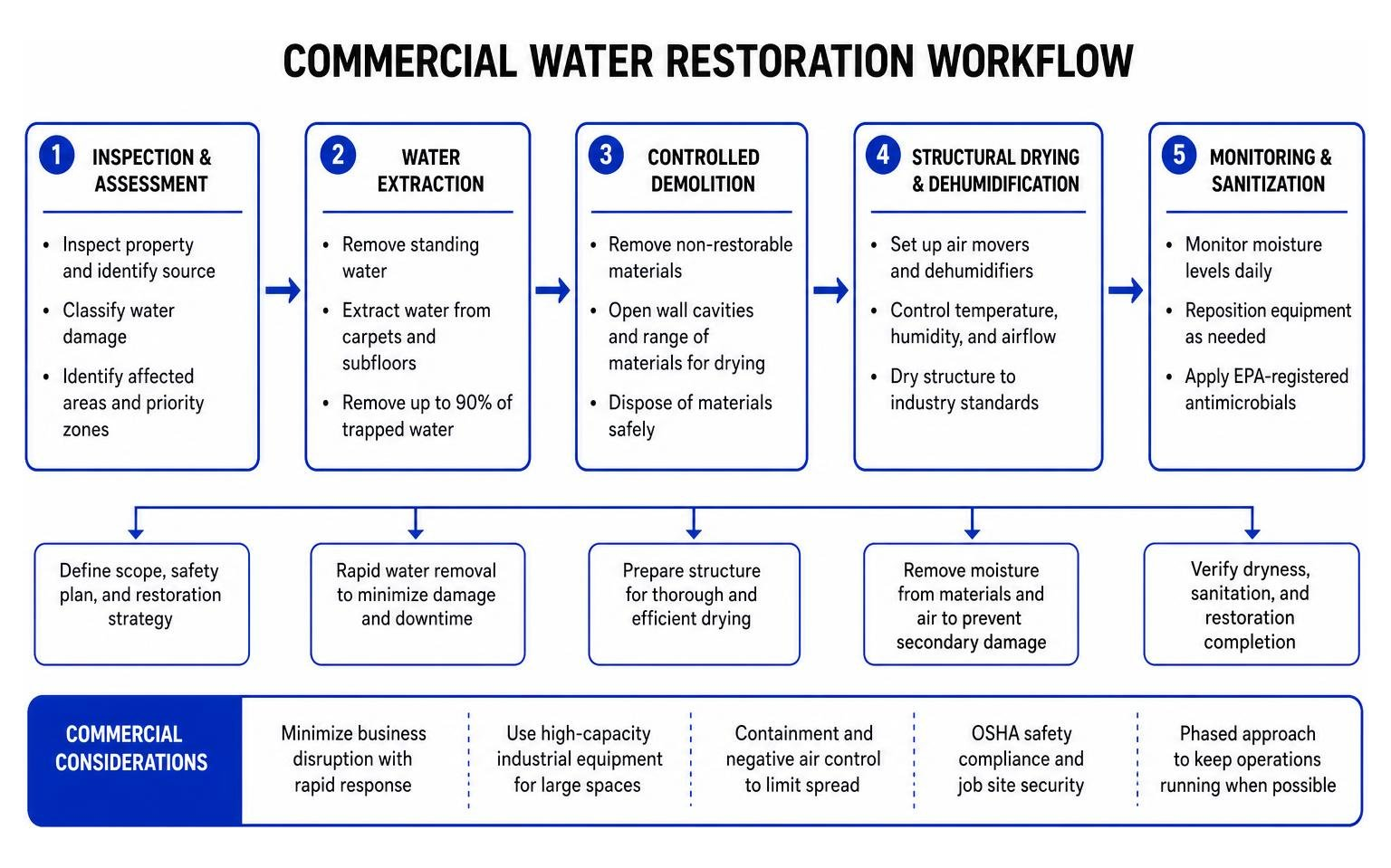
Commercial restoration teams balance immediate water extraction with minimal operational disruption by establishing negative air pressure containment zones and using low-noise industrial equipment setups. For detailed operational strategies for commercial spaces, read our guide on what to know about storm damage repair for commercial properties.
Costs, Insurance Claims, and Regional Restoration Challenges
Understanding the financial and geographic factors of water restoration helps property owners make informed decisions:
- Restoration Costs: Expenses vary depending on the square footage involved, category of water, equipment run-time, and structural repairs required. Standard water mitigation typically ranges from $1,500 for small, localized cleanups to $10,000+ for large multi-room structural events.
- Insurance Claim Navigation: Standard homeowners and commercial property insurance policies generally cover sudden and accidental internal water events (e.g., burst pipes, appliance failure). They rarely cover gradual leaks or rising floodwaters unless you hold a separate flood insurance policy through NFIP or private carriers.
- Insurance Documentation: Professional restorers compile complete insurance packages, featuring thermal imaging scans, daily moisture logs, line-item Xactimate scope estimates, and comprehensive photo documentation. Direct insurance billing streamlines the claims process for property owners.
Boulder’s geographical conditions present unique physical challenges for water drying:
- High Altitude Effects: Lower atmospheric pressure at high elevation alters evaporation rates and psychrometric conditions. Equipment calibration must account for these atmospheric differences to ensure effective dehumidification.
- Winter Freeze Cycles: Sub-zero outdoor winter temperatures prevent simple ventilation options. Restorers must introduce controlled heat drying systems into sealed structures to maintain target drying temperatures.
Preventing Secondary Mold Growth
Under ideal conditions, mold spores can germinate on damp building materials within 24 to 48 hours. In dry indoor spaces, trapped structural moisture creates optimal conditions for mold colonization behind baseboards and inside wall cavities.
Preventing secondary mold growth requires rapid action:
- Maintain indoor relative humidity below 50%.
- Deploy HEPA air scrubbers during structural drying to capture airborne spores and particulates.
- Apply EPA-registered botanical antimicrobials (like Benefect) to prevent fungal spores from establishing roots on wet wood studs or drywall backing.
To learn how to protect yourself from predatory practices during mold remediation, refer to our informative guide on how to find the best mold removal in Denver without getting scammed.
Frequently Asked Questions about Water Restoration in Boulder
How long does the professional water restoration process usually take?
For standard clean water damage (Category 1), the structural drying phase typically takes 3 to 5 days. However, if dense construction materials like hardwood flooring, plaster walls, or subfloor concrete slabs are saturated, full drying can take 7 days or longer. Daily monitoring with calibrated moisture meters ensures that structural drying continues until pre-loss moisture equilibrium levels are verified.
How do restoration contractors assist with insurance claims?
Certified restoration contractors act as technical partners during the claims process. They document the water origin, map wet areas with infrared moisture cameras, create itemized Xactimate estimates, and submit detailed daily psychrometric drying logs directly to your insurance adjuster. This comprehensive documentation minimizes claim delays and helps ensure fair reimbursement.
What regional climate factors affect water damage drying in Boulder?
Boulder’s high elevation and semi-arid regional climate present both advantages and challenges. While naturally low outdoor ambient humidity aids the overall drying process, cold winter temperatures significantly slow evaporation rates. Certified restorers use high-capacity LGR dehumidifiers and targeted indirect air heaters to create optimal indoor psychrometric conditions regardless of outside cold.
Conclusion
Navigating structural water damage in your home or business requires fast action, specialized scientific equipment, and local expertise. Partnering with certified water restorers Boulder ensures your property is treated with the precise technical care needed to stop damage, prevent dangerous secondary mold, and navigate insurance claims smoothly.
At A1 Water Damage Restorations, we deliver 24/7 IICRC-certified emergency response across Boulder and the entire Denver Metro area. As a family-owned business, we manage every stage of your recovery in-house—from initial water extraction and structural drying to complete property restoration.
If you are dealing with a sudden plumbing leak, burst pipe, or storm emergency, discover why A1 Water Damage Restorations is Denvers go-to for storm flood restoration services.
Ready to protect your property? Contact us today to learn more or explore our full suite of expert solutions on our dedicated page for Comprehensive Water Damage Restoration Services. We are ready 24/7 to return your building back to normal.