

What to Do After Storm Damage in Denver
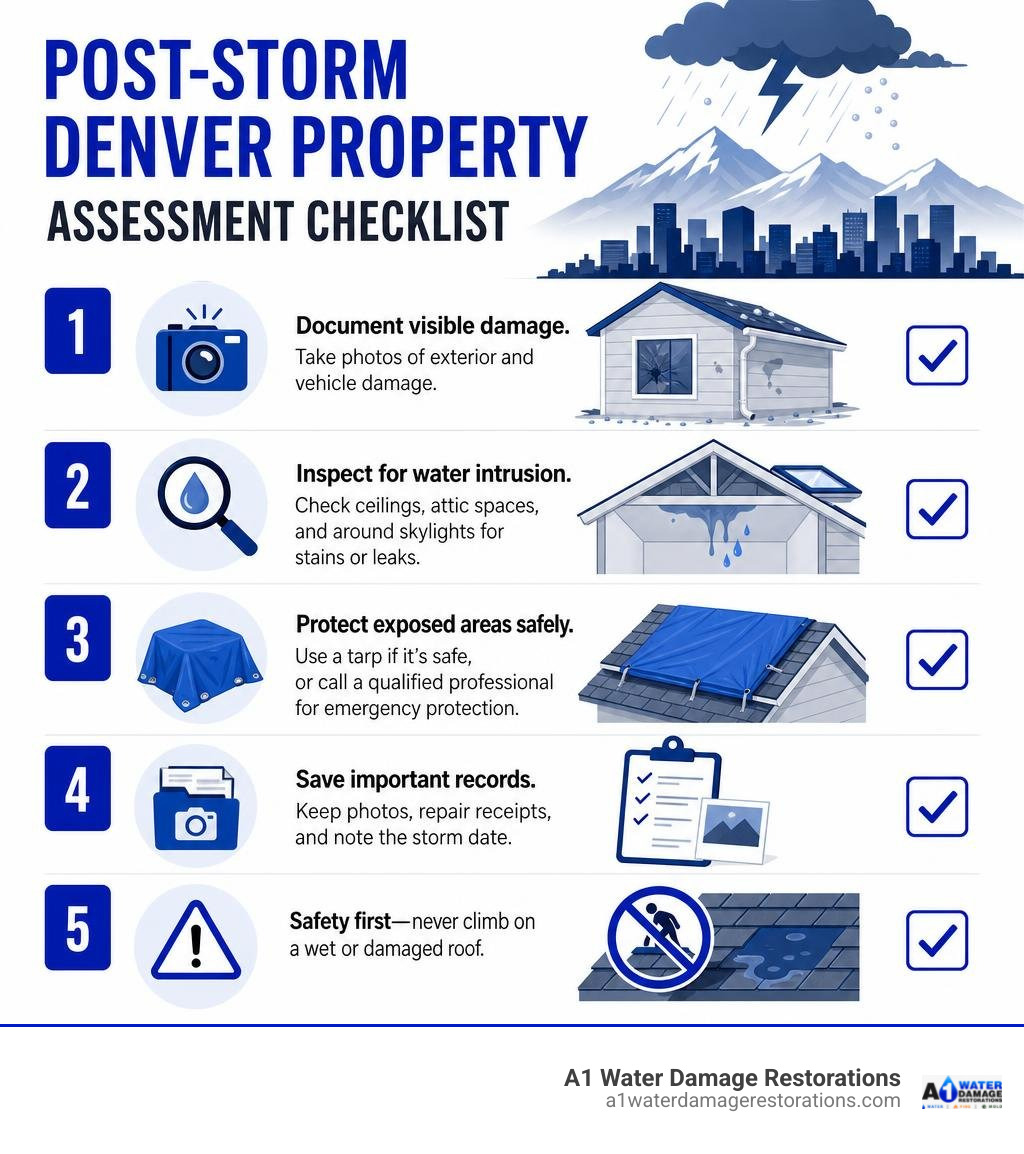
After a Denver hail, wind, or heavy-rain storm, check for immediate safety hazards, document visible damage, and stop water from getting inside. Do not climb onto a wet or damaged roof.
- Photograph dented gutters, cracked siding, broken windows, roof debris, and vehicle damage.
- Check ceilings, attic spaces, and around skylights for water stains or active leaks.
- Cover exposed areas with a tarp only if it is safe to do so, or call a qualified restoration professional for emergency protection.
- Save photos, repair receipts, and the storm date before contacting your insurer.
Denver sits near Colorado’s Hail Alley, where warm, moist air and mountain weather patterns can fuel severe thunderstorms. The June 1, 2026 storm brought hail up to 1.75 inches across parts of the metro area, with 2-inch stones reported farther east in Bennett and Woodrow. Hail can bruise shingles, knock loose protective granules, crack skylights, dent metal components, and create leaks that may not show up right away.
I am Cole Nudel, a disaster restoration professional with A1 Water Damage Restorations in the Denver area. My work helping property owners navigate storm damage Denver recovery informs the practical inspection, documentation, and mitigation steps that follow.
Recent Severe Weather Patterns and Storm Damage Denver Experiences
Living along the Front Range means enjoying over 300 days of sunshine, but it also means facing some of the most volatile weather in North America. The eastern plains of Colorado and the Denver metro corridor sit directly within “Hail Alley.” This geographic corridor experiences 20 to 30 severe hail storms every year, producing more large, property-damaging hail than almost anywhere else on the continent.
Our high elevation plays a major role in this phenomenon. Because Denver sits a mile above sea level, the freezing level in the atmosphere is much closer to the ground. When powerful summer updrafts sweep warm moisture from the Gulf of Mexico up against the Rocky Mountains, frozen precipitation doesn’t have enough time to melt before slamming into our neighborhoods.
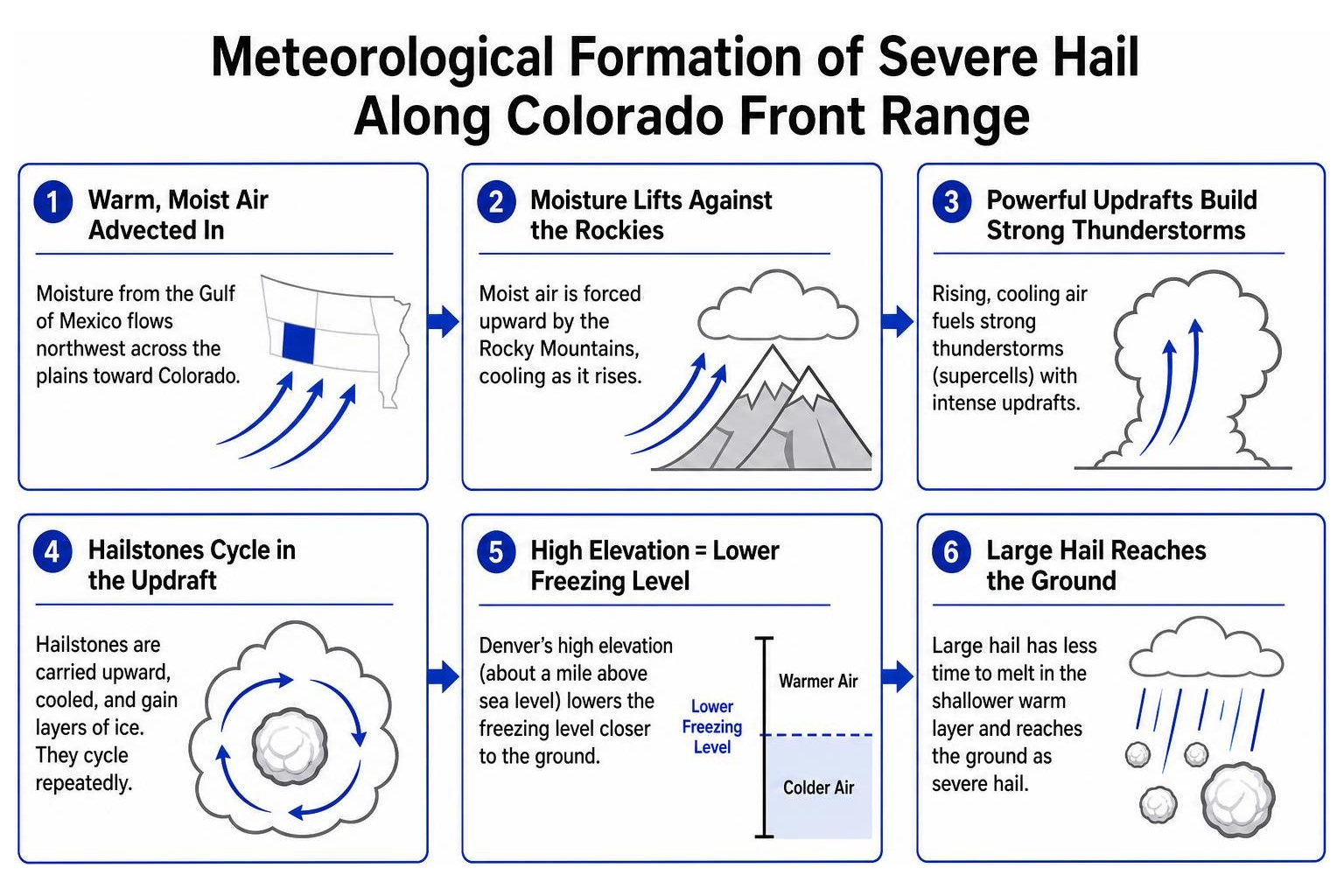
We saw this dynamic in full force on June 1, 2026, when severe supercells tore across the Denver metro area, dropping golf-ball-sized hail (1.75 inches) throughout central neighborhoods, Golden, and Littleton, while eastern communities like Bennett and Woodrow saw stones reaching 2 inches in diameter. During late June severe weather, wind gusts reached an astonishing 113 mph near Akron, alongside hail up to 3 inches near Sterling.
These events mirror Colorado’s historic summer of 2018, when multiple severe hail events caused roughly $620 million in damage across the state, with the June 18th and 19th storms alone totaling $276 million across the metro area. Following major storms, owners of hail-damaged vehicles, roofs urged to get their property assessed before latent leaks cause extensive structural issues. Keeping an eye on localized storm data through tracking the ice your guide to Colorado hail reports helps property owners understand the exact severity of hail that struck their specific neighborhood.
| Hail Size (Inches) | Familiar Comparison | Expected Structural & Exterior Damage |
|---|---|---|
| 0.75″ – 1.00″ | Penny to Quarter | Cosmetic gutter dents, minor paint chipping, light granule loss on aging asphalt shingles. |
| 1.25″ – 1.50″ | Half Dollar to Ping-Pong Ball | Significant granule displacement, fractured shingle mats, cracked vinyl siding, broken plastic roof vents. |
| 1.75″ – 2.00″ | Golf Ball to Tennis Ball | Punctured roof underlayment, shattered skylights, dented metal flashing, widespread siding cracks, compromised structural integrity. |
| 2.50″+ | Baseball to Softball | Catastrophic structural penetration, shattered clay/concrete tiles, destroyed window frames, immediate interior water intrusion. |
How to Safely Inspect and Document Property Damage
After severe weather passes over communities like Arvada, Broomfield, or Wheat Ridge, safety must remain your number one priority. Downed power lines, unstable tree branches, and slick surfaces present immediate physical hazards. We always advise homeowners never to climb onto a compromised or wet roof.
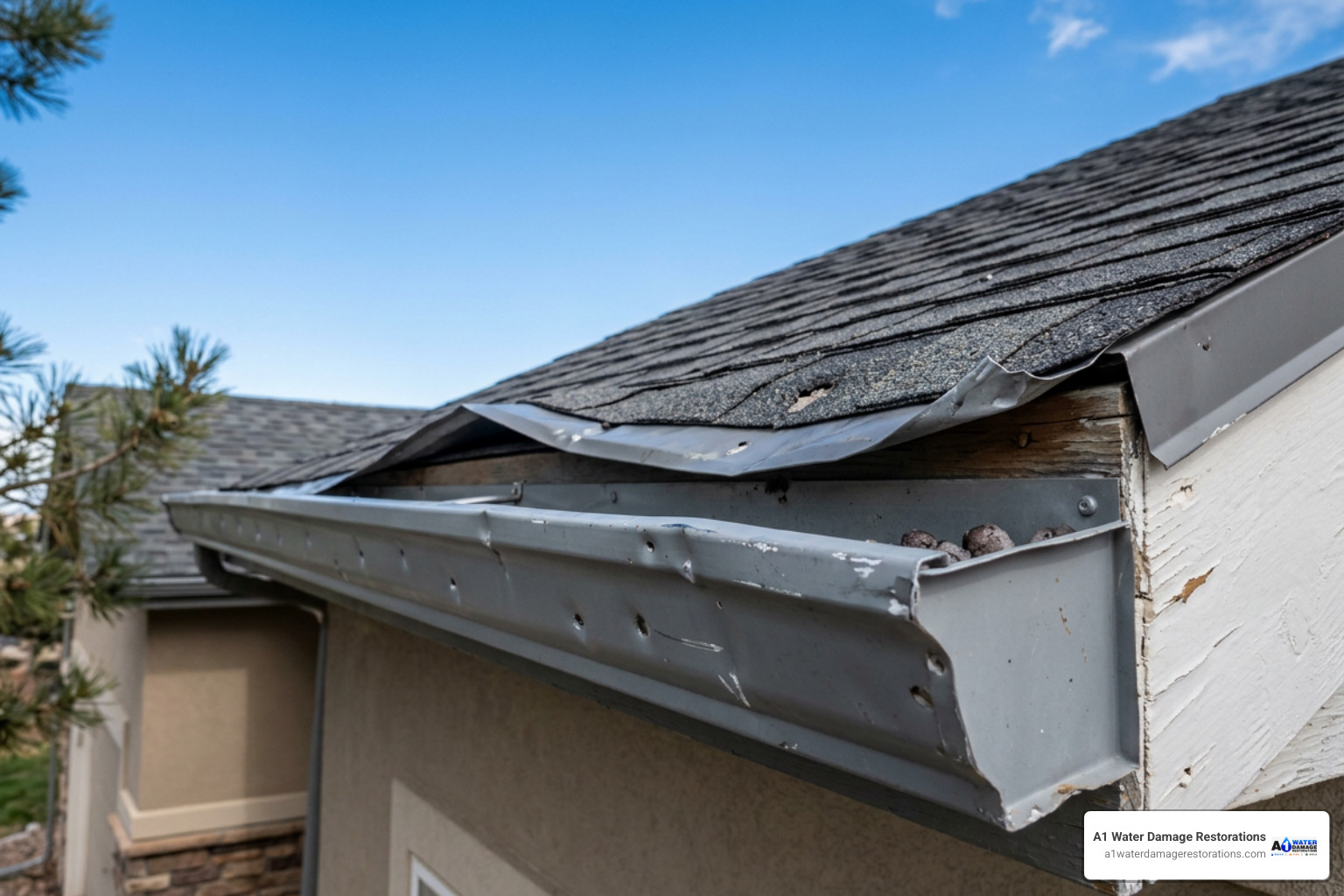
Begin your initial damage assessment safely from the ground. Walk around the entire perimeter of your home and inspect exterior fixtures:
- Look for dented gutters, downspouts, metal fascia, and garage doors.
- Inspect window glass, frames, and outdoor air conditioning units for impact fins or coil damage.
- Check siding for hairline fractures, chipped paint, or punch-through holes.
- Walk your interior living spaces, including the attic, checking ceilings and walls for damp insulation, dripping water, or discoloration.
If you discover active moisture intrusion, fast emergency mitigation is essential to stop rot and microbial growth. Utilizing a structured roof storm damage checklist what to do after a disaster will ensure you don’t miss vital structural checkpoints. When structural breach threatens your living areas, knowing how to find emergency storm damage repair in Denver in less than an hour allows you to secure emergency tarping and board-up services before water spreads.
Hidden Signs of Storm Damage Denver Roofs Sustain
Hail impacts rarely look like clean puncture holes from the ground. In fact, some of the most destructive hail damage remains entirely invisible to the untrained eye until weeks or months later when water finally finds its way into your living room ceiling. Learning how to handle a storm damaged roof without losing your mind starts with understanding what professional inspectors look for:
- Granule Displacement & Pitted Spots: Hail strikes knock away the protective mineral granules that shield asphalt shingles from ultraviolet radiation. This leaves dark, soft “bruises” where the fiberglass matting underneath is exposed to direct sunlight, leading to rapid decay.
- Micro-Fractures in Underlayment: Heavy hail flexes shingles downward, cracking the delicate waterproof membrane beneath without visibly displacing the shingle surface.
- Loosened Flashing & Pipe Boots: High winds and hail impacts break the seals around chimneys, vent stacks, and valleys, creating pathways for wind-driven rain.
- Cracked Skylight Casings: Even impact-rated acrylic skylights can develop hairline fractures around the perimeter flashing that slowly seep moisture into attic framing.
Steps to Document Storm Damage Denver Residents Must Take
Comprehensive, clear documentation makes the difference between an insurance claim that gets approved smoothly and one that ends up delayed or denied. As a local restoration team serving areas from Cherry Creek to Boulder, we recommend compiling an ironclad evidence portfolio:
- Capture High-Resolution, Timestamped Photos: Photograph broad angles of your entire home, followed by close-ups of specific impacts on siding, screens, fences, paint, outdoor furniture, and vehicles.
- Record Video Walkthroughs: Narrate a video tour of your property exterior and attic space, pointing out newly developed dents, loose trim, or active leaks.
- Log the Exact Date and Time: Document the storm event (such as the June 1, 2026 hailstorm) and gather local meteorological reports or news bulletins confirming hail diameter in your specific zip code.
- Perform Moisture Mapping: Professional restorers use non-invasive moisture meters and thermal imaging cameras to track hidden moisture pockets trapped behind drywall and underneath floorboards.
- Retain Emergency Mitigation Receipts: Keep clear copies of invoices for emergency tarps, water extraction, or board-up services, as these are typically reimbursable under standard policy mitigation clauses.
Navigating Colorado Insurance Claims and Avoiding Storm Chasers
Filing an insurance claim for severe weather damage can feel overwhelming, especially when half your neighborhood is dealing with the exact same mess. In the wake of major Front Range storms, such as those covered in reports like Denver hail storm delivers golf ball sized hail across metro area, thousands of homeowners submit claims simultaneously.

Understanding the claims process ensures you receive fair compensation for all necessary structural repairs. Most standard Colorado homeowner insurance policies cover direct physical losses caused by hail and wind, subject to your deductible. Reviewing the homeowners guide to hail damage and insurance scams will help you understand policy language, replacement cost value (RCV) versus actual cash value (ACV), and how depreciation holdbacks work.
Colorado Insurance Claim Filing Timelines
Time is of the essence when dealing with storm recovery. In Colorado, standard property insurance policies typically carry a strict one-year deadline from the official date of loss to file your property damage claim and complete approved repairs.
If your home sustained hail impact during the June 1, 2026 weather event, that calendar date establishes your statutory clock. Waiting too long can result in claim denials, especially if an insurer argues that water intrusion or mold was caused by deferred maintenance rather than the storm itself. Following a proven framework like when disaster strikes your home a restoration playbook helps keep your documentation, adjusters’ appointments, and repair milestones perfectly on schedule.
Protecting Your Home From Unlicensed Contractors
Within 24 to 48 hours of any notable hailstorm in Greenwood Village, Westminster, or Denver, out-of-state “storm chasers” begin knocking on doors. These transient crews follow storm tracks across the country, collect insurance checks, perform rushed or substandard work, and vanish before workmanship defects become apparent during the next freeze-thaw cycle.
Protecting your investment requires diligence. Consult don’t get battered a homeowners guide to hail damage roofing contractors and adhere to these essential guidelines:
- Demand Proof of Local Presence: Work exclusively with established Colorado companies that maintain permanent local physical offices and local references.
- Verify Licensing and Insurance: Always confirm that your contractor carries active general liability insurance, workers’ compensation coverage, and proper municipal contractor licenses through local city building departments and the Colorado Department of Regulatory Agencies (DORA).
- Never Sign an Assignment of Benefits (AOB) at Your Door: Retain total control over your insurance claim proceeds and settlement discussions.
- Secure Detailed Written Warranties: Reputable local restoration companies provide comprehensive warranties covering both materials and labor.
Frequently Asked Questions About Denver Storm Recovery
Does homeowner insurance cover hail and wind restoration in Colorado?
Yes. Most standard Colorado homeowners insurance policies provide coverage for hail, wind, and falling debris damage under dwelling coverage provisions. However, you are responsible for paying your policy deductible. Depending on your specific policy terms, repairs may be settled under Replacement Cost Value (RCV) or Actual Cash Value (ACV), which factors in depreciation based on the age of your roof or exterior materials.
How long do I have to file a hail damage claim in Colorado?
Under most Colorado insurance contracts, homeowners have up to one year from the exact date of loss to file an insurance claim. Even though a 12-month window exists, you should contact your insurer and an IICRC-certified restoration specialist immediately. Prompt filing ensures clear evidence linking the damage to a specific storm event and prevents secondary issues like mold growth or structural rot from complicating your settlement.
Why does my roof need an inspection if it looks fine from the ground?
Ground-level views rarely reveal shingle bruising, micro-fractures in underlayment, or damaged flashing around chimneys and vents. Hail impacts frequently shatter the fiberglass matting beneath the surface while leaving the outer layer seemingly intact. Over time, sunlight and rain break down these bruised areas, leading to latent attic leaks, structural wood rot, and interior drywall damage long after your insurance claim window has closed.
Conclusion
Recovering from severe Colorado storms doesn’t have to be a stressful, confusing ordeal. When severe weather impacts your home or business, taking prompt, organized action preserves your property value and protects your family’s safety.
At A1 Water Damage Restorations, we provide 24/7 emergency response throughout Denver, Boulder, Golden, Broomfield, Westminster, Arvada, Wheat Ridge, Littleton, Cherry Creek, and Greenwood Village. As a family-owned, IICRC-certified restoration company, our team delivers comprehensive, in-house structural drying, emergency tarping, moisture mapping, and full-service property recovery with a personal touch. If severe weather has impacted your property, contact us today to schedule your comprehensive assessment for storm damage Denver restoration and let us restore your home better than ever.