

What to Do When Sewage Backs Up in Your Basement
Stop using every toilet, sink, shower, and appliance that drains water. Keep people and pets out of the basement. Do not step into sewage or standing water to reach an electrical panel. If you can shut off power from a dry, safe location, do so. Then call your local sewer utility to report the backup and arrange professional help to find the blockage and clean the contaminated area.
I’m Cole Nudel, a disaster restoration professional with A1 Water Damage Restorations in the Denver area. My experience helping property owners navigate damage informs this sewage backup basement guide, from the first safety steps to cleanup and prevention.
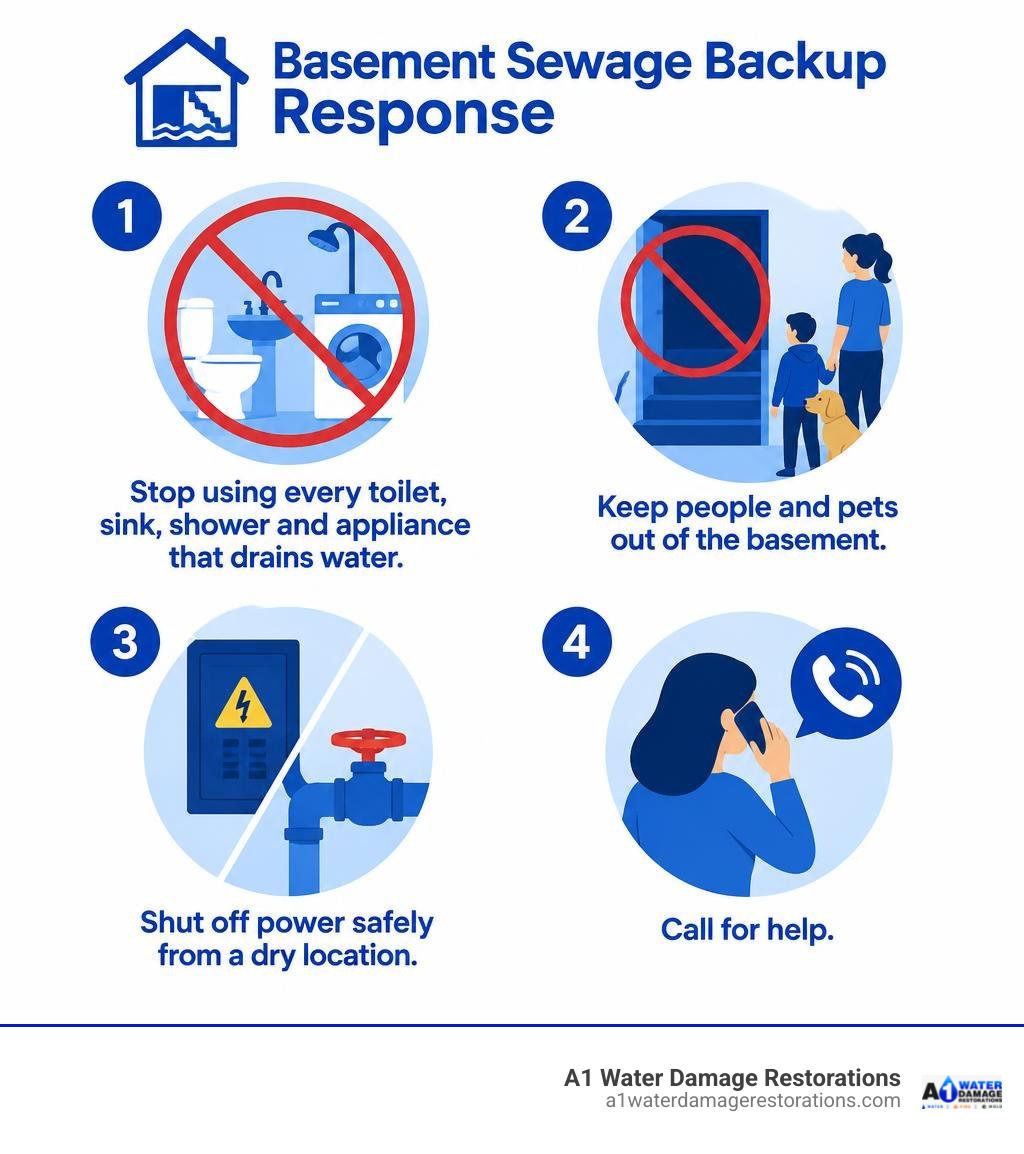
Immediate Emergency Actions for a Sewage Backup in Your Basement
Discovering blackwater pooling around your basement floor drain is every homeowner’s worst nightmare. Wastewater backups present immediate health risks, structural threats, and electrical hazards. Before trying to diagnose what went wrong down in the pipes, you must stabilize the environment. Following proper emergency sewer line backup steps protects your household from severe illness and accidental injury.
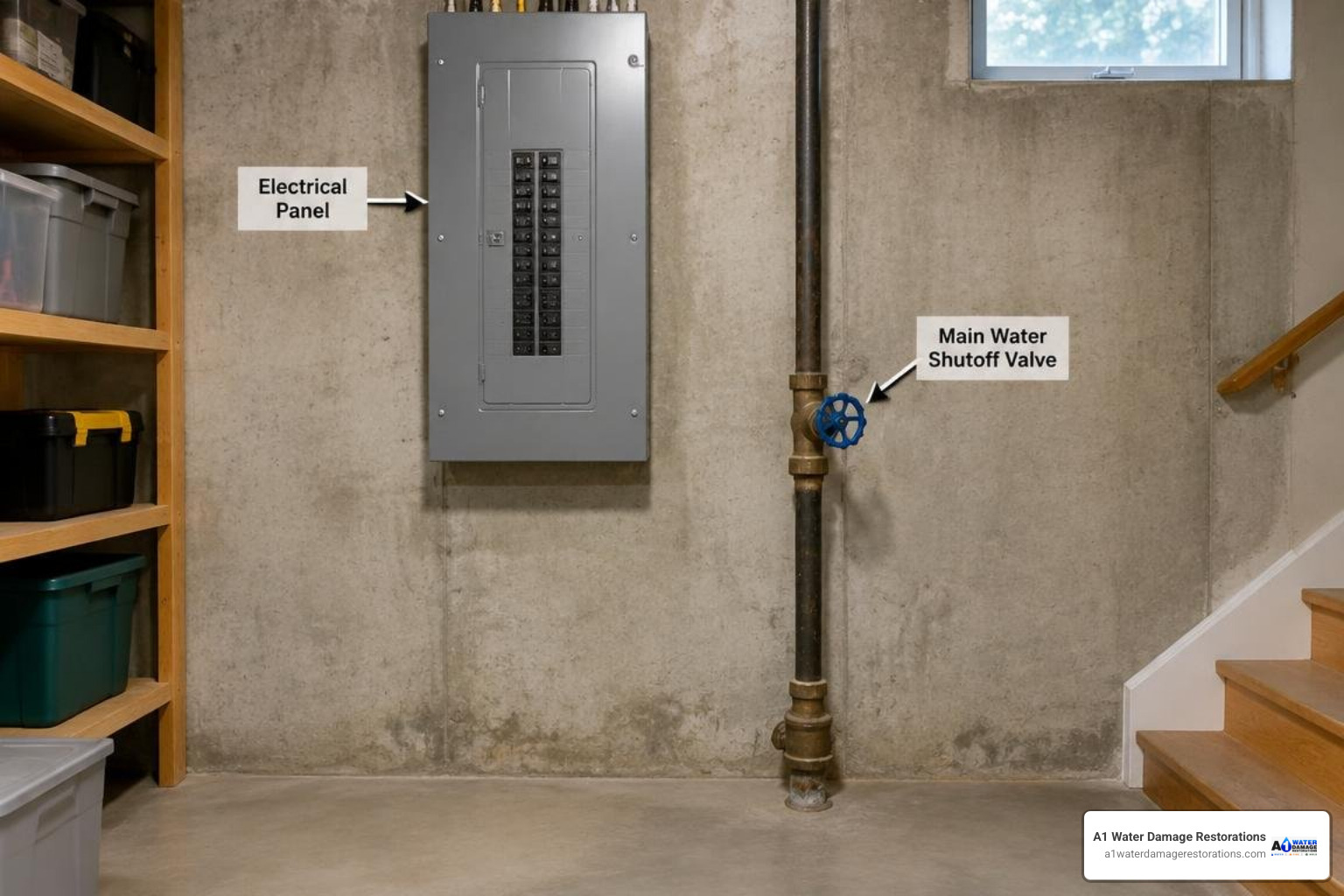
Personal protective equipment (PPE) is non-negotiable. If you must get close to the basement stairs or entry point, equip yourself with heavy rubber boots, waterproof nitrile gloves, full eye protection, and an N95 or half-mask respirator. Never enter raw sewage barefoot, in sneakers, or without adequate skin coverage.
Step 1: Secure Electrical, Gas, and Water Systems
Water and electricity are a fatal combination. If the standing sewage has reached electrical outlets, extension cords, baseboard heaters, or your breaker panel, do not step into the water.
- Electricity: If your electrical panel is located upstairs or in an unaffected, dry area, switch off the circuit breakers that supply the basement. If the panel is surrounded by standing blackwater, contact your electric utility immediately to shut off service externally.
- Gas Utilities: If your water heater or furnace is partially submerged, pilot lights can blow out, creating gas accumulation risks. If you detect the odor of natural gas alongside sewage smells, exit the home and call your gas provider.
- Main Water Shutoff: Turn off the main water valve to the home. This prevents family members from accidentally running taps or appliances that add liquid to the overflow. Knowing what to do when basement floor drains overflow starts with cutting off the incoming water supply.
Step 2: Stop All Household Water Fixtures and Restrict Access
Every drop of water that goes down an upstairs sink, toilet, or shower drains straight into your main sewer lateral. If that line is blocked, running a single load in the washing machine can force gallons of additional blackwater out through your basement floor drain.
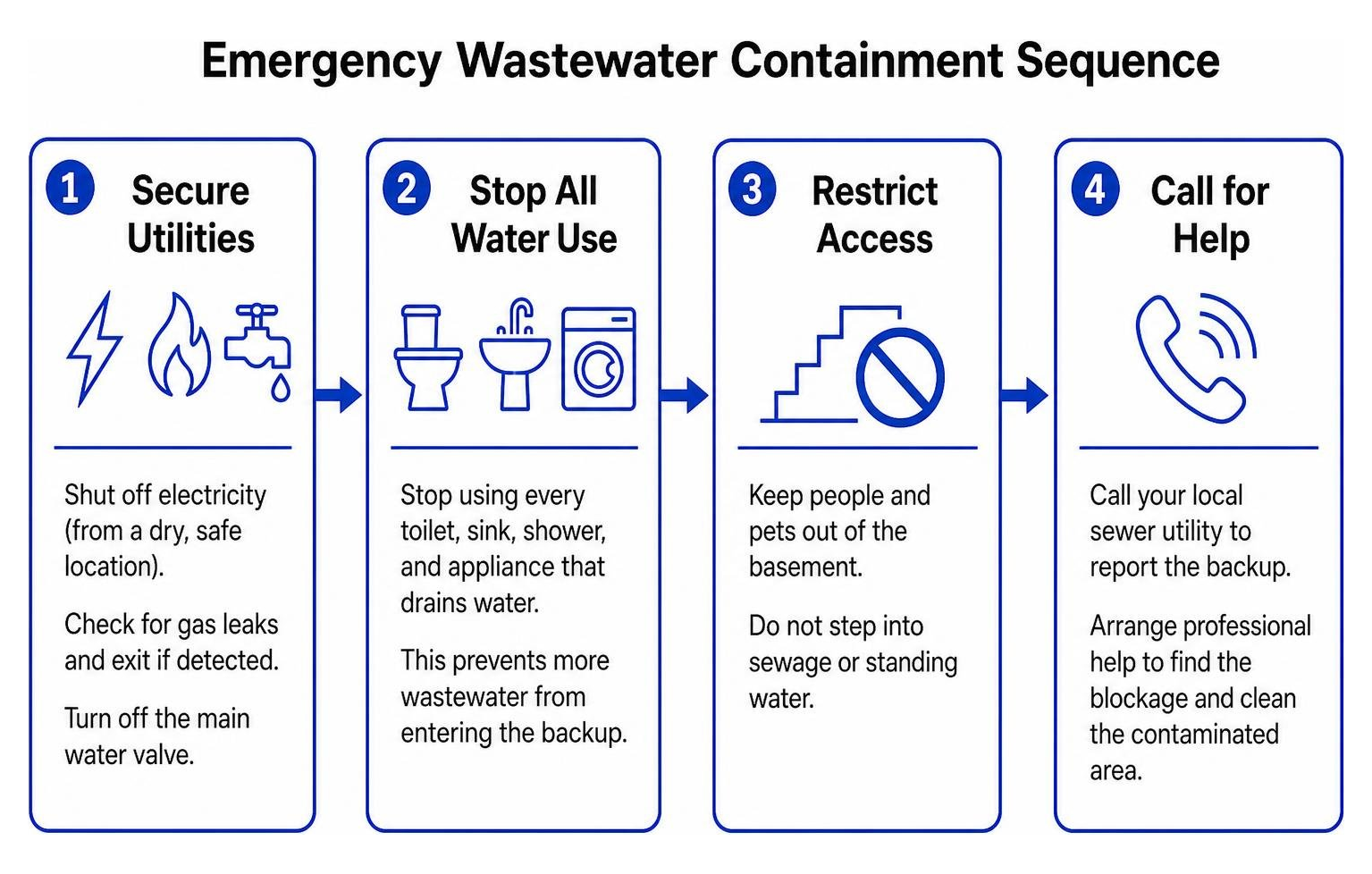
Post signs or lock the basement door to keep children and pets away. Raw sewage contains live bacteria, viruses, and parasites. Biohazard isolation is critical: establish a strict quarantine boundary at the top of the basement stairs to stop cross-contamination from spreading into your upper-level living areas.
Diagnosing the Root Cause: Private Sewer Lateral vs. Municipal Main
To solve the problem, you need to understand where the blockage is located: in your private sewer lateral or the municipal sewer main.
The private sewer lateral is the underground pipe connecting your home’s internal plumbing to the public sewer line in the street. As outlined in the Detroit Basement Backup & Flooding Handbook, property owners are responsible for maintaining and repairing this lateral line.
To understand the mechanics of residential sewer line overflow, consider these indicators:
- Private Lateral Issue: If only your home is experiencing a backup, or if the water level rises specifically when you run upstairs fixtures, the obstruction is almost certainly in your private lateral pipe.
- Municipal Sewer Main Surcharge: If you have turned off all household water but blackwater continues to gush out of your basement floor drain or lower toilet, the city main beneath your street is likely overwhelmed or blocked. In this scenario, check with your neighbors—if their basements are also backing up, the city main is surcharged.
Common Causes of Basement Sewer Line Blockages
Sewer lines fail for several predictable reasons:
- Improper Disposal (FOG and Wipes): Fats, oils, and grease (FOG) solidify inside cool pipes, creating dense grease caps. Combined with “flushable” wipes—which do not break down like toilet paper—these blockages form impassable obstructions.
- Tree Root Intrusion: Tree roots naturally seek moisture and nutrients. They penetrate tiny microscopic joints or cracks in underground pipes, expanding until they create dense root balls that trap solid waste.
- Aging Pipe Materials: Homes built before the 1970s often rely on clay tile or cast iron pipes. Over decades, cast iron corrodes internally, catching toilet paper, while clay lines crack, shift, or collapse under soil settling.
- Pipe Sags or Bellies: Shifting soil causes sections of pipe to sag, forming low points where water and solids collect instead of flowing freely via gravity.
A professional camera inspection allows certified technicians to look inside your sewer lateral, pin-pointing the exact cause and determining whether hydro-jetting, mechanical snaking, or pipe replacement is required.
Sewer Backup vs. Groundwater and Stormwater Flooding
Not all basement water comes from the sewer system. It is vital to distinguish between a sanitary sewer backup, groundwater seepage, and surface stormwater runoff:
| Feature | Sanitary Sewer Backup | Groundwater Seepage | Stormwater Runoff |
|---|---|---|---|
| Source | Municipal main or sewer lateral | Rising water table beneath slab | Surface rain or melting snow |
| Entry Point | Floor drains, basement toilets, sinks | Floor cracks, cove joints, porous walls | Window wells, doors, foundation cracks |
| Water Quality | Category 3 Blackwater (biohazard) | Category 1 (Clean) or Category 2 | Category 2 (Greywater with silt/soil) |
| Odor | Strong sewage/hydrogen sulfide | Earthy or musty | Neutral to muddy |
| Primary Mechanism | Reverse pipe pressure / blockage | Hydrostatic pressure through concrete | Surface pooling / poor exterior grading |
| Mitigation Tool | Backwater check valve | Sump pump & interior drain tile | Exterior grading & extended downspouts |
How to Clean and Remediate Contaminated Basement Water
Handling raw sewage requires professional equipment and strict biological decontamination. Because raw sewage falls under Category 3 blackwater, DIY cleaning is hazardous and frequently leaves behind hidden micro-pollutants and mold spores.
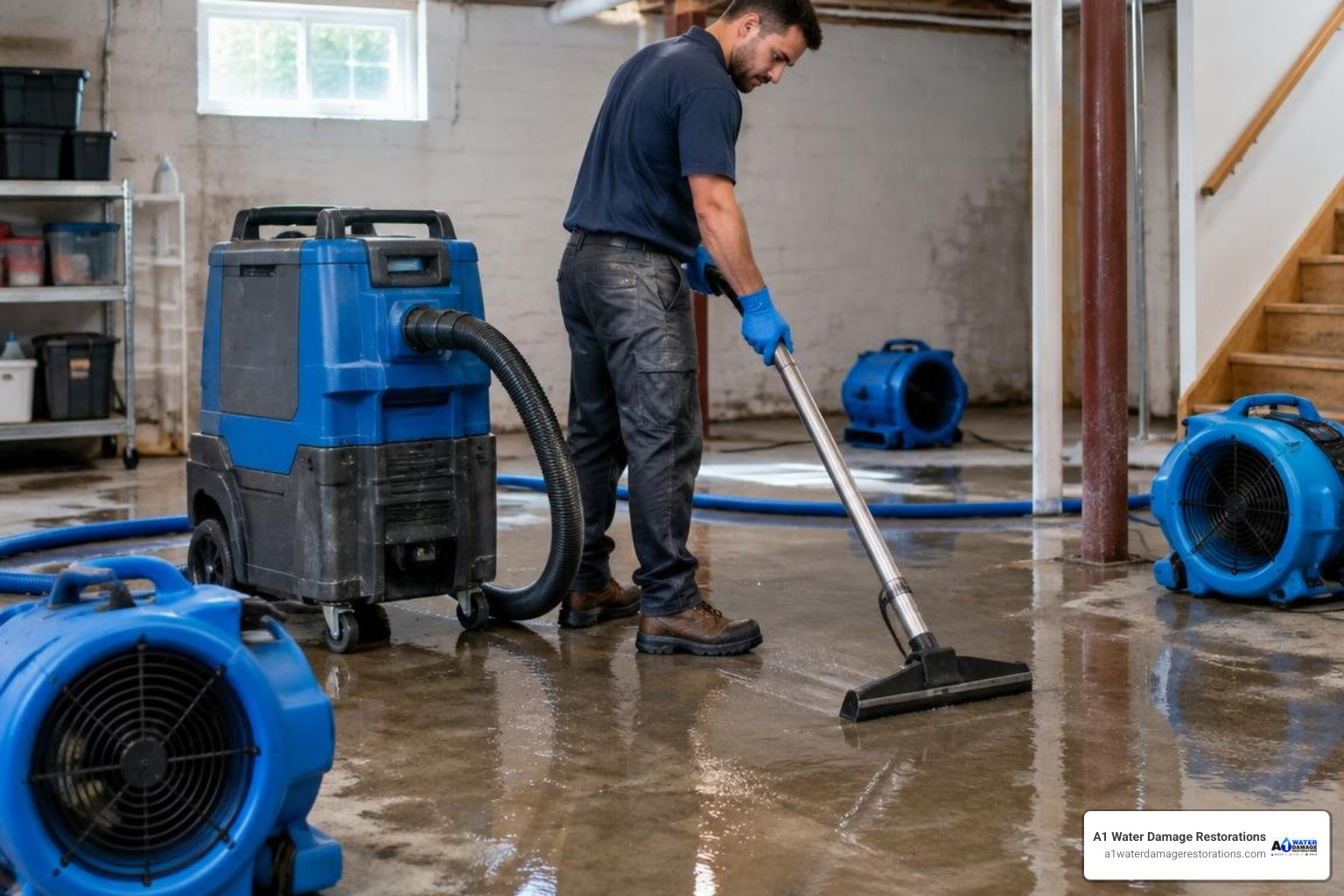
Professional restoration crews follow a structured protocol. To learn more about full extraction, review our step-by-step home sewage spill restoration guide.
Health Risks and Biohazards of a Sewage Backup in Your Basement
Sewage contains a complex soup of biological contaminants:
- Bacterial Pathogens: High concentrations of Escherichia coli (E. coli), Salmonella, Campylobacter, and Shigella, all of which cause severe gastrointestinal illness.
- Viral Agents: Hepatitis A, Norovirus, and Rotavirus, which spread through airborne aerosols or surface contact.
- Parasites: Giardia lamblia and Cryptosporidium, which resist standard household cleaners.
- Toxic Gases: Decomposing organic matter releases hydrogen sulfide and methane gas. In poorly ventilated basements, these gases displace oxygen, causing dizziness, eye irritation, or asphyxiation.
Extraction, Sanitization, and Mold Prevention Protocols
Our remediation specialists follow strict industry standards, including the IICRC S500 Standard for Professional Water Damage Restoration:
- Bulk Extraction: Submersible trash pumps and commercial truck-mounted vacuum units extract liquid blackwater and heavy solids rapidly.
- Controlled Demolition of Porous Items: Porous materials saturated with blackwater cannot be sanitized safely. Carpet, carpet padding, upholstered furniture, cardboard boxes, and wet drywall must be cut out (typically 12 to 24 inches above the water line), double-bagged, and discarded.
- Deep Cleaning & EPA-Registered Disinfectants: Non-porous surfaces (such as concrete slabs and structural framing) undergo thorough pressure washing, detergent scrubbing, and treatment with commercial broad-spectrum antimicrobials. Proper disinfecting protocols following a sewer backup are necessary to eliminate pathogens.
- Structural Drying: Mold can begin colonizing within 24 to 48 hours in a humid basement. Technicians position industrial air movers and low-grain refrigerant (LGR) dehumidifiers to pull moisture out of the air and concrete foundation until relative humidity drops below 50%.
Long-Term Solutions, Jurisdictional Responsibility, and Insurance
Fixing the initial backup is only step one. Protecting your property against future sewer overflows requires structural safeguards, regular maintenance, and the right insurance coverage.

Preventing a Future Sewage Backup in Your Basement with Backwater Valves
A backwater valve is a mechanical fitting installed on your main sewer line beneath the basement floor.
Under normal conditions, a hinged internal flapper stays open, allowing household wastewater to flow by gravity into the public sewer. When municipal sewer mains overload and reverse direction toward your basement, the backflowing water lifts the internal flapper, sealing the pipe tightly.
Key prevention considerations:
- Annual Maintenance: Inspect and clean the flapper and rubber gaskets once a year to ensure debris or grease does not prevent complete closure.
- Plumbing Standards: Technical resources like the Sewer Backup Prevention Backwater Valves and Check Valves Guide highlight that while plumbing codes have required backwater valves on low-lying floor drains for decades, many older homes still lack them.
- Overhead Sewer Conversions: For high-risk areas, converting basement plumbing to an overhead sewer system—which pumps basement wastewater upward into an elevated drain line—provides strong protection against public main surcharges.
Municipal Responsibilities vs. Property Owner Liabilities
Understanding who pays for what depends on where the physical damage or blockage occurs:
- Property Owner: Responsible for maintaining, cleaning, and repairing the entire private sewer lateral from the foundation out to the connection point at the city main.
- City / Sewer District: Responsible for clearing blockages, tree roots, or collapses within the public main line located under the public street or municipal easement.
Official regional policies, such as the Peoria Sanitary Sewer Guidelines and Erie County Basement Flooding Regulations, confirm that property owners carry full legal responsibility for their private lateral lines. However, some utility districts offer financial incentives, cost-sharing programs, or sewer bill credits for homeowners who install backwater valves or overhead sewer conversions.
Insurance Coverage and Sewer Backup Riders
A standard homeowner insurance policy (such as an HO-3 policy) excludes damage caused by water and sewer backups.
To safeguard your home:
- Add a Water Backup Endorsement: Purchase an optional sewer and drain backup rider. Coverage typically ranges from $5,000 to $25,000 or more in protection for structural repairs, personal property replacement, and professional biohazard remediation.
- Document Everything: If a backup occurs, take high-resolution photos and video of all standing water, damaged personal belongings, and entry points before removing any items. Keep all receipts from emergency restoration services for your adjuster.
Frequently Asked Questions About Basement Sewer Backups
Does standard homeowners insurance cover a sewage backup?
No. Standard policies exclude damage caused by sewer backups, drain overflows, and regional flooding. You must purchase a specific “Water Backup and Sump Discharge or Overflow” endorsement on your policy. Without this optional rider, all cleanup, demolition, and reconstruction costs must be paid out-of-pocket.
How can I tell if the sewer blockage is in my pipe or the city main?
If the backup only happens when you run water inside your home (such as taking a shower or running the dishwasher), the blockage is inside your private lateral. If water continues bubbling up out of your floor drain when all household fixtures are shut off, or if your neighbors on both sides are experiencing identical basement flooding, the municipal sewer main is blocked or surcharged.
How quickly does mold grow after a sewer backup?
Mold spores germinate within 24 to 48 hours when exposed to moisture, organic material (like drywall or wood), and warm temperatures. Because sewage water contains high nutrient levels, microbial proliferation accelerates quickly. Rapid water extraction and professional dehumidification are essential to prevent secondary mold infestations.
Conclusion
A sewage backup in your basement is an urgent emergency that requires quick decision-making and rigorous sanitation. By shutting off utilities safely, avoiding contact with hazardous blackwater, and bringing in certified restoration specialists, you can protect your family’s health and minimize long-term property damage.
At A1 Water Damage Restorations, we provide 24/7 IICRC-certified water, fire, and mold restoration across the Denver Metro Area. As a family-owned business, our priority is delivering comprehensive, in-house emergency service with a personal touch, ensuring your basement is extracted, sanitized, dried, and restored better than ever.
If you are currently facing an emergency, contact our team immediately for professional sanitary sewer backup restoration and let us help you reclaim your home.