

Mold in Denver? Here’s What You Need to Know Right Now
If you’ve spotted fuzzy patches on your walls or caught a whiff of something musty in your basement, mold remediation in Denver CO may be exactly what your property needs — and the clock is already ticking.
Quick answer for Denver property owners dealing with mold:
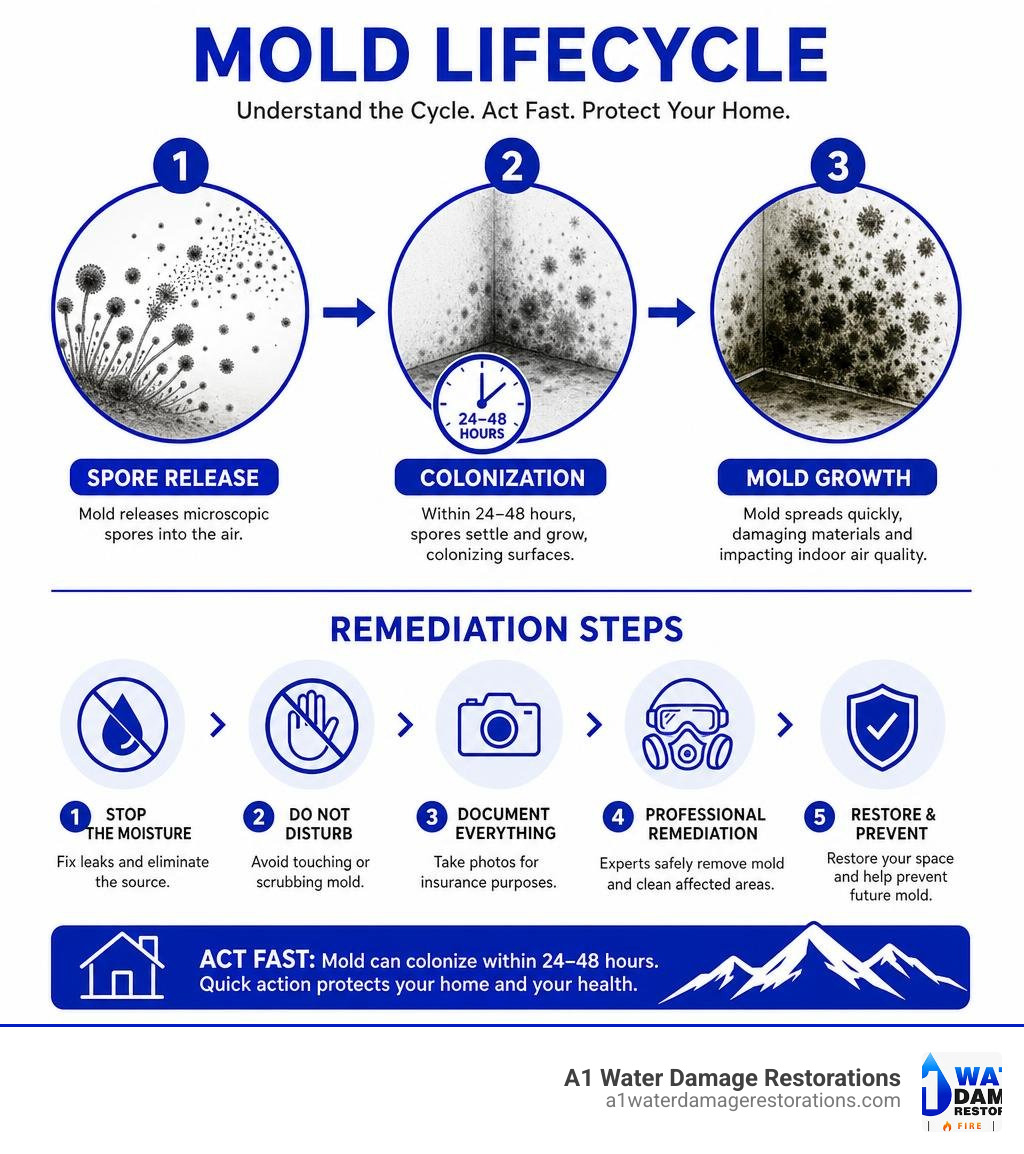
- Stop the moisture source (shut off water, close windows, turn off HVAC)
- Don’t disturb the mold — touching or scrubbing it spreads spores
- Document everything with photos for your insurance claim
- Call a certified mold remediation company — mold can colonize within 24–48 hours of water exposure
- Vacate the affected area if the growth is widespread or you have respiratory conditions
Denver’s semi-arid reputation fools a lot of homeowners. People assume a dry climate means no mold risk. But Colorado’s freeze-thaw cycles, spring snowmelt, summer thunderstorms, and clay soil drainage issues create the perfect hidden conditions for mold to take hold — especially in basements, crawl spaces, and attics.
Mold isn’t just an eyesore. Left untreated, it damages drywall, insulation, and structural wood — and it can seriously affect the health of everyone inside your home.
I’m Cole Nudel, a disaster restoration professional serving the Denver area with A1 Water Damage Restorations, where I specialize in helping property owners navigate the urgent and often overwhelming process of mold remediation in Denver CO. If you’re dealing with mold right now, this guide will walk you through everything you need to know — from identifying the problem to getting your home safe again.
Simple guide to mold remediation denver co terms:
Understanding Mold Remediation vs. Mold Removal
When property owners discover a fuzzy green or black patch in their home, their first instinct is often to search for “mold removal.” However, there is a massive scientific and practical difference between simply removing visible mold and executing a complete mold remediation protocol.
To understand this, we have to look at how mold behaves. Mold spores are naturally occurring everywhere in our environment. In fact, in a typical indoor environment, background mold spores are present at baseline levels of 200 to 500 spores per cubic meter. They drift through open windows, hitch rides on our clothes, and float through our HVAC systems completely unnoticed.
Because spores are omnipresent, it is physically impossible to achieve “100% mold removal” from any indoor space. Any company promising to completely eliminate every single spore from your home is selling you a fantasy.
Instead, professional restoration teams focus on mold remediation. Remediation is the comprehensive process of identifying the underlying moisture source, containing the active fungal growth, removing contaminated building materials, cleaning the air, and restoring the indoor environment back to safe, natural baseline levels.
To explore these differences in depth, you can read more about proven mold removal strategies that we use to keep Colorado homes safe.
Why Simple Mold Removal Isn’t Enough
If you simply wipe away visible mold with a sponge and some household cleaner, you are only addressing the tip of the iceberg. This cosmetic surface cleaning leaves the root structure of the mold (the hyphae) completely intact inside porous materials like drywall, wood framing, and carpet padding.
When you scrub active mold without proper containment, you also trigger a defense mechanism: the colony releases millions of microscopic spores into the air. These airborne spores drift to other areas of your home, settling in wall cavities, under floorboards, and inside air ducts. The moment those spores find even a tiny amount of moisture, they will establish new colonies, leading to costly structural damage and recurring infestations.
Before you grab a bucket and start scrubbing, it is vital to learn how to clean mold safely to prevent cross-contaminating your entire property.
The Science of Mold Remediation in Denver CO
Performing mold remediation in Denver CO requires a deep understanding of our unique local environment. Denver’s semi-arid climate and high altitude create a false sense of security. Many homeowners think, “We live in a dry climate, so mold can’t possibly grow here.”
In reality, our climate actually contributes to unique mold patterns:
- High Elevation Condensation: Because of the rapid temperature swings in the Front Range, warm, humid air inside a home quickly condenses when it hits cold exterior walls or window frames. This creates localized microclimates of high humidity that mold loves.
- Clay Soils: The Denver metro area is famous for expansive clay soils. When it rains or the snow melts, clay retains water and pushes it against basement foundations, leading to slow, hidden moisture intrusion.
- The Freeze-Thaw Cycle: Rapid shifts from freezing winter temperatures to warm sunny days cause building materials to expand and contract, creating tiny structural cracks where water—and eventually mold—can seep in.
Understanding these regional factors is a key part of our specialized Denver mold removal guide, which is tailored to properties across the Front Range.
Common Causes and Rapid Growth of Denver Mold
Mold is nature’s ultimate recycler. Its primary goal in life is to break down dead organic matter, such as the wood, paper, and natural fibers that make up our homes. To thrive, mold only needs three things: mold spores (which are already present), an organic food source (drywall, wood, carpet), and moisture.

In Colorado, moisture is almost always the limiting factor. When an unexpected water event occurs, mold is ready to strike. Some of the most common culprits we see in local homes include:
- Spring Snowmelt and Clay Soils: As heavy winter snowpacks melt, water pools around foundations. The expansive clay soil prevents proper drainage, forcing water through basement walls and crawl spaces.
- Summer Thunderstorms: Sudden, violent downpours can quickly overwhelm gutters, leading to roof leaks or window well flooding.
- Burst Pipes and Plumbing Leaks: Cold Colorado winters frequently cause frozen and burst pipes, while slow, hidden plumbing leaks behind drywall can go unnoticed for months.
- Condensation Buildup: High indoor humidity from cooking, showering, or poorly ventilated crawl spaces can cause moisture to pool on cold surfaces.
When moisture penetrates these surfaces, it doesn’t take long for the damage to become severe. For example, black mold on drywall can ruin structural integrity and require complete demolition if not caught early.
Denver’s Climate and the 24-Hour Mold Growth Window
Time is your greatest enemy when dealing with water damage. Under the right conditions, mold spores can begin developing and colonizing within 24 to 48 hours after water exposure. If a moist environment is left unaddressed, mold can fully colonize and become visible within 72 to 96 hours.
This rapid growth window is why we emphasize that water damage is always a true emergency. If you have experienced a burst pipe, a sewer backup, or a flooded basement, professional extraction and drying must begin immediately. The longer building materials remain wet, the higher the likelihood of widespread fungal growth.
To protect your property, you can read about why prioritize mold removal after flooding to understand the critical timeline of water mitigation.
Hidden Moisture Sources in Colorado Homes
Not all mold problems announce themselves with a giant, visible stain on your living room ceiling. In fact, some of the most dangerous mold infestations are completely hidden from view.
Crawl spaces and attics are particularly vulnerable in the Denver metro area. Many older homes in neighborhoods like Cherry Creek, Golden, or Arvada have dirt floor crawl spaces that constantly release moisture into the subfloor. Without a proper vapor barrier, this moisture rises, rotting the floor joists and feeding massive, silent mold colonies.
Similarly, slow roof leaks can drip into attics for months before water finally stains the ceiling below. By the time you notice a spot on your drywall, the attic insulation and roof decking above may already be heavily contaminated.
If you suspect you have a hidden moisture issue, check out our guide on identifying black mold in your attic to learn the warning signs.
Health Risks and When to Call the Professionals
Living or working in a mold-contaminated environment is more than just unpleasant—it can pose real health risks. When mold colonies feed and reproduce, they release microscopic spores, fragments, and volatile organic compounds (VOCs) into the air.
For many individuals, inhaling these airborne particles triggers allergic reactions and respiratory irritation. Common symptoms of mold exposure include:
- Sneezing, coughing, and wheezing
- Irritated, watery, or red eyes
- Runny nose and sinus congestion
- Skin rashes or hives
- Aggravated asthma attacks in sensitive individuals
Those with pre-existing respiratory conditions, allergies, asthma, or compromised immune systems are particularly vulnerable. To keep your family safe, consult with experts who understand Front Range properties. You can learn more by reading dont let black mold spoil your Denver home.
The Dangers of Black Mold Exposure
Among the various types of mold found indoors, Stachybotrys chartarum—commonly referred to as “black mold” or “toxic black mold”—receives the most attention. This dark greenish-black fungus thrives on materials with high cellulose content (like drywall and wood) that have been continuously wet for an extended period.
What makes certain molds like Stachybotrys particularly concerning is their ability to produce mycotoxins. Mycotoxins are natural chemical compounds released by the mold that can be toxic when inhaled or touched. Widespread exposure to mycotoxins has been linked to more severe symptoms, including chronic fatigue, headaches, difficulty concentrating, and persistent respiratory issues.
While visual identification alone cannot confirm if a mold is toxic (only laboratory analysis can do that), any dark, heavy mold growth should be treated with extreme caution. For safe, step-by-step elimination strategies, refer to our black mold begone guide.
Signs You Need Professional Mold Remediation in Denver CO
How do you know when a mold problem has outgrown DIY cleaning and requires professional intervention? The Environmental Protection Agency (EPA) states that if the cleanable mold covers an area less than 10 square feet (roughly a 3-foot by 3-foot patch), homeowners can often handle it themselves using proper precautions.
However, you should always call a certified professional if:
- The affected area is larger than 10 square feet: Large-scale infestations require specialized containment and commercial-grade air scrubbers.
- You smell a persistent musty odor but can’t see the source: This strongly indicates hidden mold behind walls, under floors, or inside HVAC ductwork.
- The mold was caused by contaminated water: If the moisture came from sewage, a toilet overflow, or outdoor flooding, the water is highly contaminated and poses severe biohazard risks.
- Members of the household are experiencing unexplained health issues: If allergies or respiratory symptoms improve when you leave the house and worsen when you return, professional testing and remediation are highly recommended.
For more tips on choosing a qualified local team, read our resource on finding the right experts in Denver.
The Step-by-Step Professional Mold Remediation Process
At A1 Water Damage Restorations, we don’t guess—we follow a strict, scientifically backed protocol. Our certified technicians strictly adhere to the IICRC S520 Standard for Professional Mold Remediation, ensuring that every project is handled safely, thoroughly, and legally.
To understand what happens behind the scenes, you can read our comprehensive guide on mastering mold remediation. Here is a detailed breakdown of how we restore your home:
Step 1 to 3: Inspection, Containment, and Air Filtration
- Step 1: Inspection & Moisture Assessment: We begin by using advanced diagnostic tools, including moisture meters, hygrometers, and FLIR infrared thermal imaging cameras. These tools allow us to pinpoint the exact boundaries of the moisture intrusion without tearing down your walls. We also highly recommend utilizing independent, third-party mold testing companies to collect air and surface samples before work begins. This ensures an unbiased assessment of the spore levels in your home.
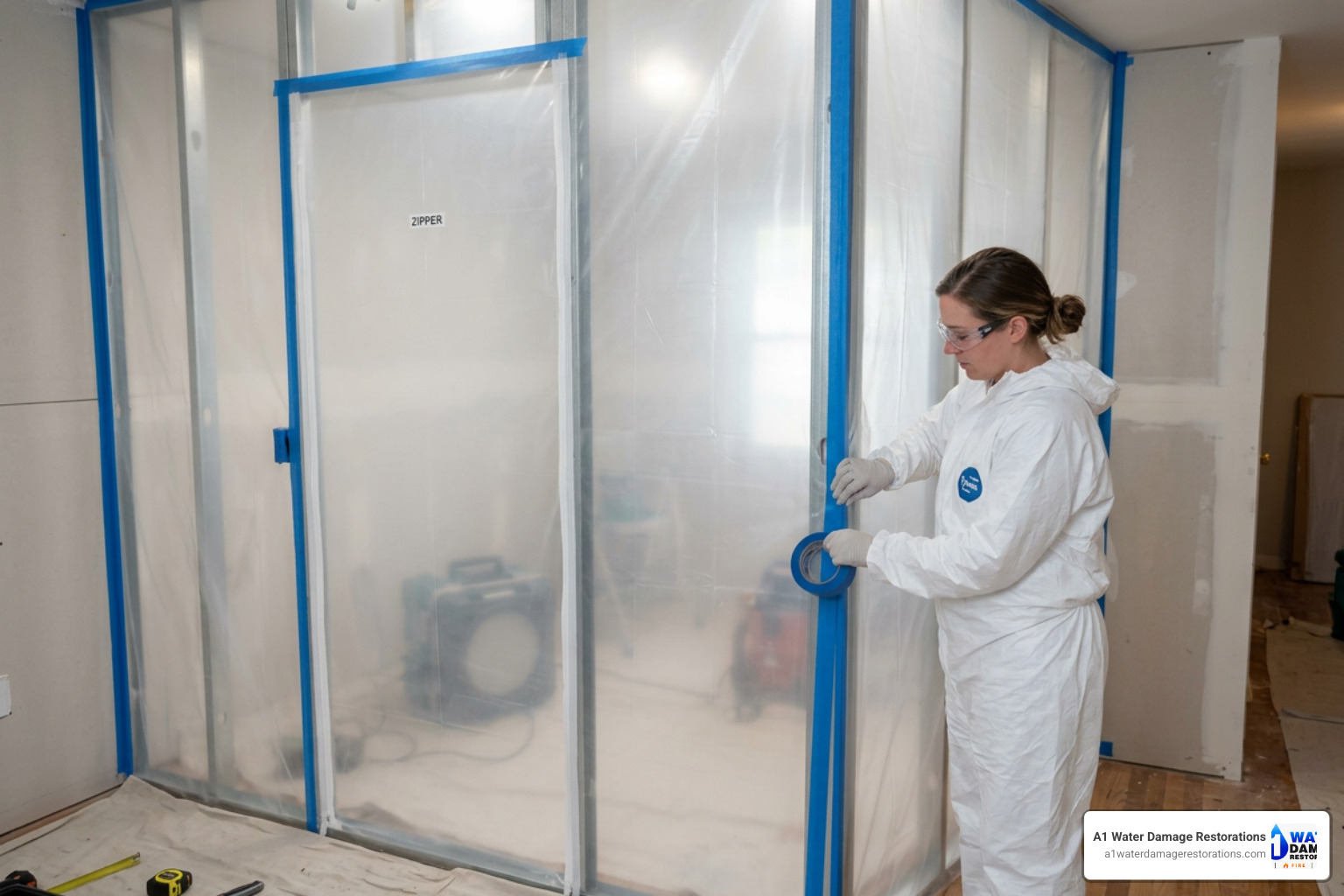
- Step 2: Containment & Negative Air Pressure: To prevent mold spores from spreading to clean areas of your home, we erect heavy-duty plastic containment barriers. We then establish negative air pressure within the containment zone using industrial air movers. This ensures that air only flows into the work area, preventing contaminated air from escaping into the rest of your property.
- Step 3: Advanced Air Filtration: We deploy commercial HEPA air scrubbers within the containment zone. These powerful machines continuously pull air from the room, passing it through multi-stage filtration systems that capture 99.97% of microscopic particles as small as 0.3 microns, including mold spores and dust.
Step 4 to 6: Removal, Eco-Safe Treatment, and Clearance Testing
- Step 4: Controlled Demolition & Removal: Non-porous materials (like metal and glass) can be thoroughly cleaned and sanitized. However, porous materials (like mold-infested drywall, insulation, and carpeting) cannot be completely salvaged. We carefully bag and seal these contaminated materials inside the containment zone before disposing of them safely.
- Step 5: HEPA Vacuuming & Eco-Safe Treatment: We vacuum all remaining structural wood and hard surfaces with HEPA-filtered vacuums to remove physical mold debris. Next, we apply eco-safe, EPA-registered, enzyme-based antimicrobial solutions to clean and disinfect the surfaces, killing any remaining root structures without introducing harsh chemical fumes into your home.
- Step 6: Post-Remediation Clearance Testing: Once cleaning is complete, we perform a thorough final inspection. We then bring in an independent, third-party environmental tester to conduct post-remediation clearance testing. This independent laboratory analysis compares the indoor spore counts inside the work area to the outdoor air baseline. Only when the indoor air is proven to be as clean as, or cleaner than, the natural outdoor air do we take down our containment walls and declare the project complete.
The Cost and Timeline of Mold Remediation Denver CO
One of the most common questions we receive is: “How much is this going to cost, and how long will it take?” Because every mold infestation is unique, the exact cost and timeline depend on the size of the affected area, the accessibility of the mold, and whether structural repairs are needed.
To help you plan, we’ve put together a general breakdown of estimated costs and timelines for residential properties in the Denver metro area:
| Infestation Size | Estimated Cost Range | Average Project Duration | Common Examples |
|---|---|---|---|
| Small / Contained (Under 10 sq. ft.) | $500 – $1,500 | 1 – 2 Days | Small bathroom wall patch, minor window sill mold, localized plumbing leak. |
| Medium / Moderate (10 to 100 sq. ft.) | $1,500 – $3,500 | 2 – 4 Days | Single-room wall cavity, small crawl space section, moderate laundry room leak. |
| Large / Extensive (Over 100 sq. ft. or Multi-Room) | $3,500 – $6,000+ | 3 – 5+ Days | Flooded basement, widespread crawl space contamination, whole-house attic mold. |
Note: These are estimated cost ranges. Post-remediation drying, independent laboratory testing, and structural reconstruction (rebuilding drywall, painting, installing new carpet) can add 1 to 2 days to the overall schedule.
If you are working with a tight budget, we encourage you to read our practical tips on mold remediation on a dime to learn how to manage costs effectively.
Frequently Asked Questions about Mold in Colorado
Is mold remediation covered by homeowners insurance in Colorado?
In Colorado, whether mold remediation is covered by your homeowners insurance depends almost entirely on the source of the moisture.
- When it is covered: Insurance typically covers mold remediation if it is the direct result of a “sudden and accidental” covered water event. For example, if a water pipe suddenly bursts in your kitchen wall and mold develops before the drying process is complete, your policy will likely cover both the water damage and the mold cleanup—provided you filed the claim promptly.
- When it is NOT covered: Insurance generally does not cover mold that results from long-term neglect, deferred maintenance, or gradual seepage. For instance, if a slow, minor leak under your kitchen sink goes unfixed for two years, causing widespread mold, the insurance company will likely deny the claim, citing a lack of maintenance. Additionally, standard policies do not cover mold caused by rising groundwater or external flooding unless you carry separate, specific flood insurance.
To protect your rights and ensure you get a fair shake from your adjuster, always document everything with clear photos and detailed reports. To avoid common pitfalls during this process, read our guide on how to avoid mold removal scams.
What should I do immediately after discovering mold?
If you discover a mold colony or sudden water damage in your home, taking the correct immediate steps can save you thousands of dollars in repairs:
- Safety First: Keep children, pets, and anyone with respiratory conditions away from the affected area.
- Stop the Water Source: If the mold is caused by an active leak, turn off the water main immediately.
- Turn Off Your HVAC System: If you suspect mold is near your air vents or furnace, shut down your heating and cooling system to prevent spores from blowing throughout your entire home.
- Do NOT Disturb the Mold: Avoid scraping, scrubbing, or spraying household bleach on the mold. Disturbing the colony will release millions of spores into the air.
- Document the Damage: Take plenty of high-quality photos and videos of the mold and the water source for your insurance records.
- Call the Professionals: Contact a certified restoration company immediately to inspect the damage and set up professional containment.
For more immediate, actionable advice, check out our list of emergency mold removal techniques.
How can I prevent mold from returning after remediation?
The golden rule of mold prevention is simple: control the moisture, control the mold. Once professional remediation is complete, you must take active steps to ensure the moisture source never returns:
- Maintain Low Indoor Humidity: Keep your home’s relative humidity below 50% (ideally between 30% and 50%). You can easily monitor this with an inexpensive hygrometer.
- Improve Ventilation: Always run exhaust fans in your bathrooms and kitchen during and after use. Ensure your clothes dryer vents directly to the outdoors, not into your attic or crawl space.
- Encapsulate Crawl Spaces: If your home has a dirt-floor crawl space, consider professional encapsulation with a heavy-duty vapor barrier and a dedicated dehumidifier.
- Maintain Gutters & Grading: Ensure your gutters are clean and that the soil around your foundation slopes away from your home to prevent rainwater from pooling against your basement walls.
For a deeper dive into long-term prevention, read our expert recommendations on top mold remediation strategies.
Conclusion
Dealing with mold can be incredibly stressful, but you don’t have to navigate it alone. At A1 Water Damage Restorations, we have spent years helping homeowners across the Denver Metro Area—including Boulder, Cherry Creek, Golden, Greenwood Village, Arvada, Westminster, Wheatridge, Broomfield, and Littleton—restore their properties safely and effectively.
As a family-owned business, we pride ourselves on providing 24/7, IICRC-certified emergency response with a deeply personal touch. We manage the entire process in-house—from initial moisture detection and containment to eco-safe remediation and structural reconstruction—ensuring your home is restored to a condition that is better and safer than ever before.
If you suspect you have a mold or water damage emergency, don’t wait for the problem to grow. Contact us today at A1 Water Damage Restorations, and let us help you kick those spores to the curb. For immediate assistance with water extraction or drying, visit our Denver water damage restoration services page.