

Why Smoke Odor Removal Is Harder Than It Looks
Effective smoke odor removal starts with understanding that smoke doesn’t just hang in the air — it physically bonds to walls, floors, fabrics, and hidden surfaces at a microscopic level. Covering it up doesn’t work. You have to remove it.
Here’s how to remove smoke odor from your home:
- Ventilate immediately — open windows, run box fans outward, shut off your HVAC
- Gear up — wear an N95 mask, safety glasses, and rubber gloves before entering
- Remove saturated items — get smoke-soaked textiles out fast (within 48-72 hours)
- Clean all surfaces — use dry chemical sponges first, then TSP solution on hard surfaces
- Treat carpets and upholstery — baking soda, HEPA vacuuming, and enzyme cleaners
- Clean your HVAC — replace filters and schedule duct cleaning before restarting
- Neutralize remaining odor — activated charcoal, ozone treatment, or thermal fogging
- Call a professional if odor persists after 3-10 days of active treatment
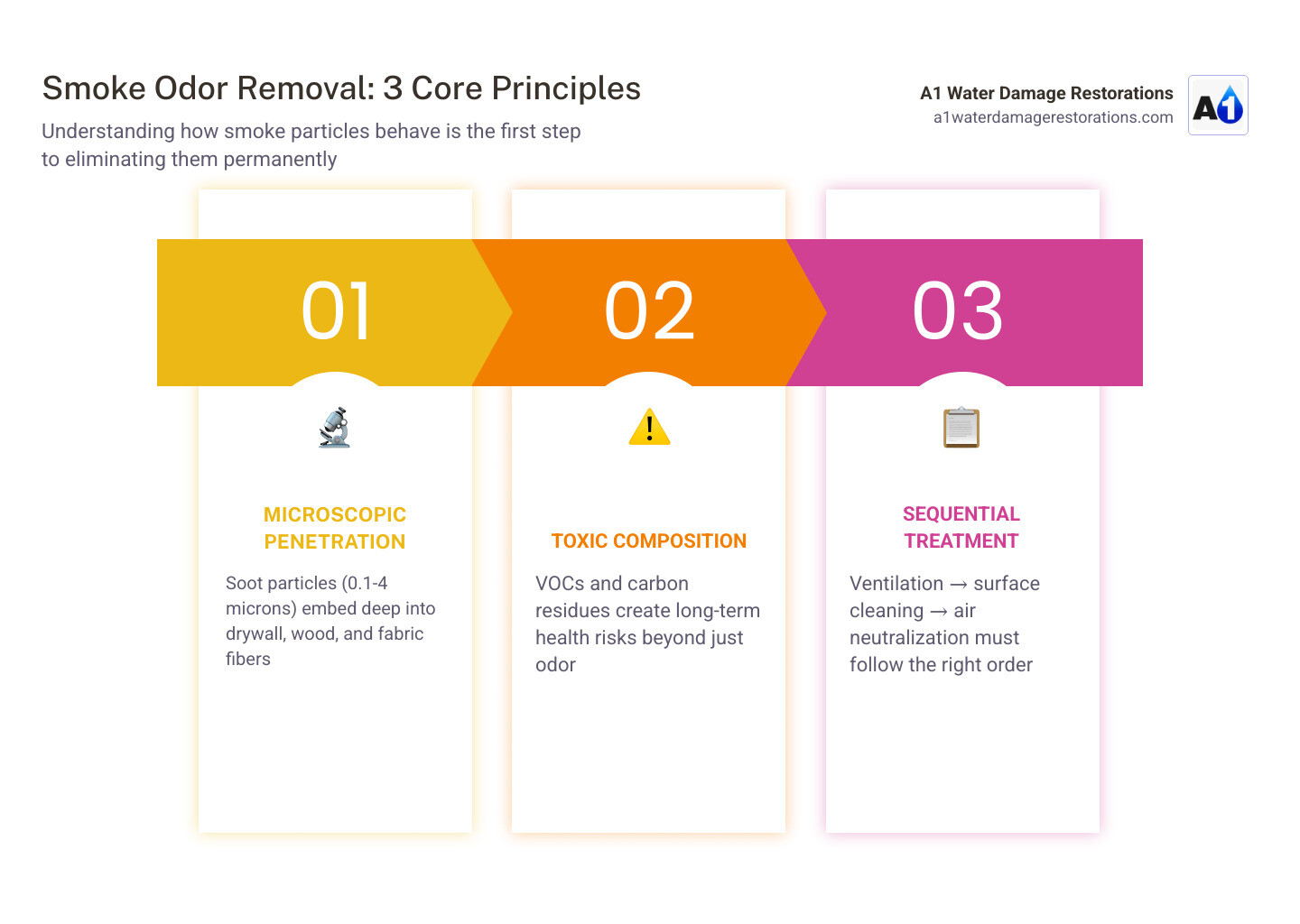
The lingering smell after a fire or heavy smoking isn’t just unpleasant — it signals that toxic soot particles and volatile organic compounds (VOCs) are still present in your home. These microscopic particles range from 0.1 to 4 microns in size, small enough to penetrate drywall, wood, and fabric. Thorough cleaning can reduce airborne VOC concentrations by over 50%, but getting there requires the right steps in the right order.
I’m Cole Nudel, a disaster restoration professional with A1 Water Damage Restorations in the Denver Metro Area, where I work daily with homeowners navigating exactly this kind of smoke odor removal challenge. In this guide, I’ll walk you through every step — from the first hour after a fire to knowing when it’s time to bring in the pros.
Understanding the Science of Smoke and Health Risks
To effectively tackle smoke odor removal, we have to look at what we’re actually fighting. Smoke isn’t just a gas; it’s a complex cocktail of solid particles, liquid droplets, and gases. When a fire burns, it creates soot—a carbon residue that is incredibly tiny. These particles range from 0.1 to 4 microns. To put that in perspective, a human hair is about 70 microns wide. Because they are so small, they don’t just sit on your table; they dive deep into the pores of your drywall and the fibers of your sofa.
Fire Smoke vs. Cigarette Smoke
There is a major difference between the two. Fire smoke is often “acrid” and aggressive. It contains burnt plastics, synthetic fabrics, and even heavy metals, creating a corrosive residue. Cigarette smoke, on the other hand, leaves behind a yellowish, sticky resin called nicotine. While fire smoke is a sudden trauma to the home, cigarette smoke is a slow-motion invasion that builds up layers of “third-hand smoke” over years.
The Role of Humidity and VOCs
Did you know that humidity levels above 60% actually accelerate the absorption of smoke odors? In our semi-arid Colorado climate, we don’t always worry about moisture, but if a fire occurred and water was used to put it out, that high humidity helps those Volatile Organic Compounds (VOCs) sink even deeper into your walls.
These VOCs aren’t just smelly; they are health risks. Lingering smoke can cause:
- Respiratory irritation and asthma flare-ups.
- Persistent headaches and dizziness.
- Long-term risks from carcinogens trapped in the “ghost” of the fire.
For minor odors, products like Zep Smoke Odor Eliminator – 16 oz can help neutralize airborne molecules, but for structural damage, a deeper approach is required.
Safety Precautions and Initial Preparation
Before you grab a bucket and sponge, we need to talk safety. Entering a smoke-damaged property without protection is a recipe for lung irritation.

The Safety Checklist
- PPE is Non-Negotiable: Wear an N95 or P100 respirator mask, safety glasses, and heavy-duty rubber gloves.
- Structural Integrity: Ensure the fire department or a structural engineer has cleared the building for entry.
- HVAC Shutdown: This is the most common mistake. Turn off your HVAC system immediately. If you leave it running, you are effectively “pumping” soot and odor into every single room through the ductwork.
- Containment: If only one room was affected, seal it off with plastic sheeting to prevent the odor from migrating.
Ventilation Strategies
Open every window and door. However, don’t just let the air sit there. Use box fans to create a “negative pressure” environment. Place fans in the windows facing outward to suck the contaminated air out of the house. This forces fresh air to be pulled in from other openings, effectively flushing the environment. For a deeper look at the timeline, check out our Step-by-Step Guide to Smoke Damage Restoration.
Step-by-Step Guide to Surface and Fabric Cleaning
Now we get to the “elbow grease” portion of smoke odor removal. You cannot deodorize what you haven’t cleaned. If soot remains on a surface, it will continue to “off-gas” (release smells) forever.
| Cleaning Agent | Best Used For | Why It Works |
|---|---|---|
| Baking Soda | Carpets, Upholstery | Absorbs moisture and neutralizes acidic odors. |
| White Vinegar | Hard surfaces, Laundry | Breaks down the sticky resins in nicotine and smoke. |
| TSP (Trisodium Phosphate) | Walls, Ceilings, Floors | A heavy-duty degreaser that lifts oily soot. |
| Activated Charcoal | Air Deodorization | High surface area “traps” odor molecules in the air. |
Effective Smoke Odor Removal for Walls and Hard Surfaces
Walls act like giant sponges for smoke. To clean them:
- Dry Clean First: Use a “dry chemical sponge.” These are specialized latex sponges that lift soot without smearing it. If you use water first, you’ll just turn the soot into a permanent stain.
- Wash Bottom-Up: When you move to wet cleaning (using a TSP solution), start at the floor and work your way up. This prevents “streaking,” where dirty water runs down a dry, sooty wall and leaves a permanent mark.
- Odor-Blocking Primers: If the smell persists after cleaning, you must use a specialized primer like Zinsser BIN or Kilz Original. Standard latex paint will not stop smoke smells; they will bleed through the new paint in weeks.
For those dealing with apartment-specific challenges, see our guide: Up in Smoke: A Guide to the Best Way to Get Rid of Smoke Smell in Apartment Units.
Smoke Odor Removal for Upholstery and Carpets
Soft goods are the hardest to save. If an item is heavily saturated, it may be a total loss. However, for salvageable items:
- HEPA Vacuuming: Use a vacuum with a True HEPA filter (which traps 99.97% of particles). Standard vacuums often just blow the tiny soot particles back out the exhaust.
- The Vinegar Wash: For clothes and curtains, add one cup of white vinegar to the wash cycle. Crucial Tip: Never put these items in the dryer until the smell is 100% gone. The heat of the dryer will “set” the odor permanently.
- Enzyme Cleaners: Use a Smoke Odor Elimination Kit | ProKlean Professional Odor Removal or similar enzymatic sprays that break down the organic compounds in the smoke.
For more on saving your belongings, read From Fire to Fresh: The Magic of Contents Restoration.
Neutralizing Air Quality and HVAC Systems
Once the surfaces are clean, we have to tackle the air and the hidden “lungs” of your home—the HVAC system.
The HVAC Battle
Your air ducts are likely coated in a fine layer of soot. Even if the house is clean, the moment the furnace kicks on, the smell returns.
- Duct Cleaning: This requires professional equipment to “scrub” the interior of the metal vents.
- Filter Upgrade: Switch to a MERV 13 filter or higher. These are dense enough to catch smoke particles that standard “blue” filters miss.
- Coil Cleaning: Soot often settles on the evaporator coils of your A/C unit, requiring a specialized chemical wash.
Professional Neutralization Techniques
When DIY methods fail, we turn to science.
- Ozone Generators: These machines create O3, which is highly reactive. It oxidizes odor molecules, destroying them. Warning: You, your pets, and your plants must be out of the house during this treatment, as ozone is toxic to breathe.
- Hydroxyl Generators: These are safer than ozone and can be run while people are in the home. They use UV light to create hydroxyl radicals that clean the air, much like the sun does outdoors.
- Thermal Fogging: This is the “gold standard” for fire restoration. We use a machine that creates a fog of deodorizer. Because the fog particles are as small as the original smoke particles, they follow the exact same path into the cracks and crevices to neutralize the smell at the source.
For quick surface and air touch-ups, a Zep Smoke Odor Eliminator 16 oz & a Blue Microfiber Rag bundle is a great tool for homeowners to keep on hand.
When to Call Professionals for Smoke Odor Removal
We often get asked, “Can I do this myself?” The answer depends on the scale. If you burnt a bag of popcorn, you’re fine with some vinegar and a fan. But if you’ve had a structural fire or are dealing with decades of heavy smoking, professional help isn’t just a luxury—it’s a necessity for your health.
Why Professional Restoration Wins
- The Timeline: Most homes require 3 to 10 days of active treatment. Professionals using thermal foggers or hydroxyl generators can often cut this down to 3–5 days for even severe odors.
- Hidden Soot: Smoke travels through electrical outlets, behind baseboards, and into attic insulation. We use specialized “soot seekers” and air quality monitors to find what you can’t see.
- Protein Fires: If you had a grease fire in the kitchen, it leaves a nearly invisible, sticky film that is incredibly foul-smelling. Standard soap won’t touch it; it requires specialized enzymatic degreasers.
- Wildfire Impact: In the Denver Metro Area—from Boulder to Littleton—we often deal with wildfire smoke. Even if the fire was 240 kilometers away, it can deposit fine ash and VOCs in your home.
Insurance and Documentation
Does homeowners insurance cover this? In most cases, yes. Standard policies typically cover fire and smoke damage restoration, including professional deodorization. At A1 Water Damage Restorations, we work directly with your insurance to document every step, ensuring your claim is handled smoothly. Check out The Ultimate Checklist for Hiring a Fire Damage Cleanup Repair Service to make sure you’re asking the right questions.
Frequently Asked Questions about Smoke Odors
How long does it take to fully eliminate smoke smell?
For a minor incident, 3–5 days of aggressive ventilation and cleaning usually does the trick. For a significant fire, expect 1–2 weeks of professional treatment. Without professional intervention, smoke odor can literally last for years as it slowly off-gasses from the structural wood.
Does homeowners insurance typically cover smoke odor restoration?
Yes. Because smoke odor is considered “damage” (as it affects the habitability and value of the home), restoration is usually a covered peril. We recommend calling us for an assessment to provide to your adjuster.
Can I just paint over smoke-damaged walls to hide the smell?
No. This is the most expensive mistake you can make. The oils in the smoke will prevent the paint from bonding properly, and the odor molecules will eventually “migrate” through the paint. You must clean with TSP and use an odor-sealing primer first.
Conclusion
Smoke odor removal is a marathon, not a sprint. Whether you are in Arvada, Westminster, or downtown Denver, the key is to act fast—ideally within the first 48 to 72 hours—to prevent the smell from becoming a permanent part of your home’s structure.
At A1 Water Damage Restorations, we take pride in being a family-owned, IICRC-certified team. We don’t just “mask” smells; we use molecular-level science to restore your home’s air quality so you can breathe easy again. From initial soot removal to advanced thermal fogging, we provide a personal touch to a stressful situation.
If you’re struggling with a lingering scent that just won’t quit, don’t wait for it to sink deeper. We offer 24/7 emergency response throughout the Denver Metro Area, including Golden, Cherry Creek, and Broomfield.
Ready to get the fresh air back? Explore our Services: Fire Damage or give us a call today. We’ll restore your property better than ever.