

How to Clean Mold From an Air Conditioner Safely
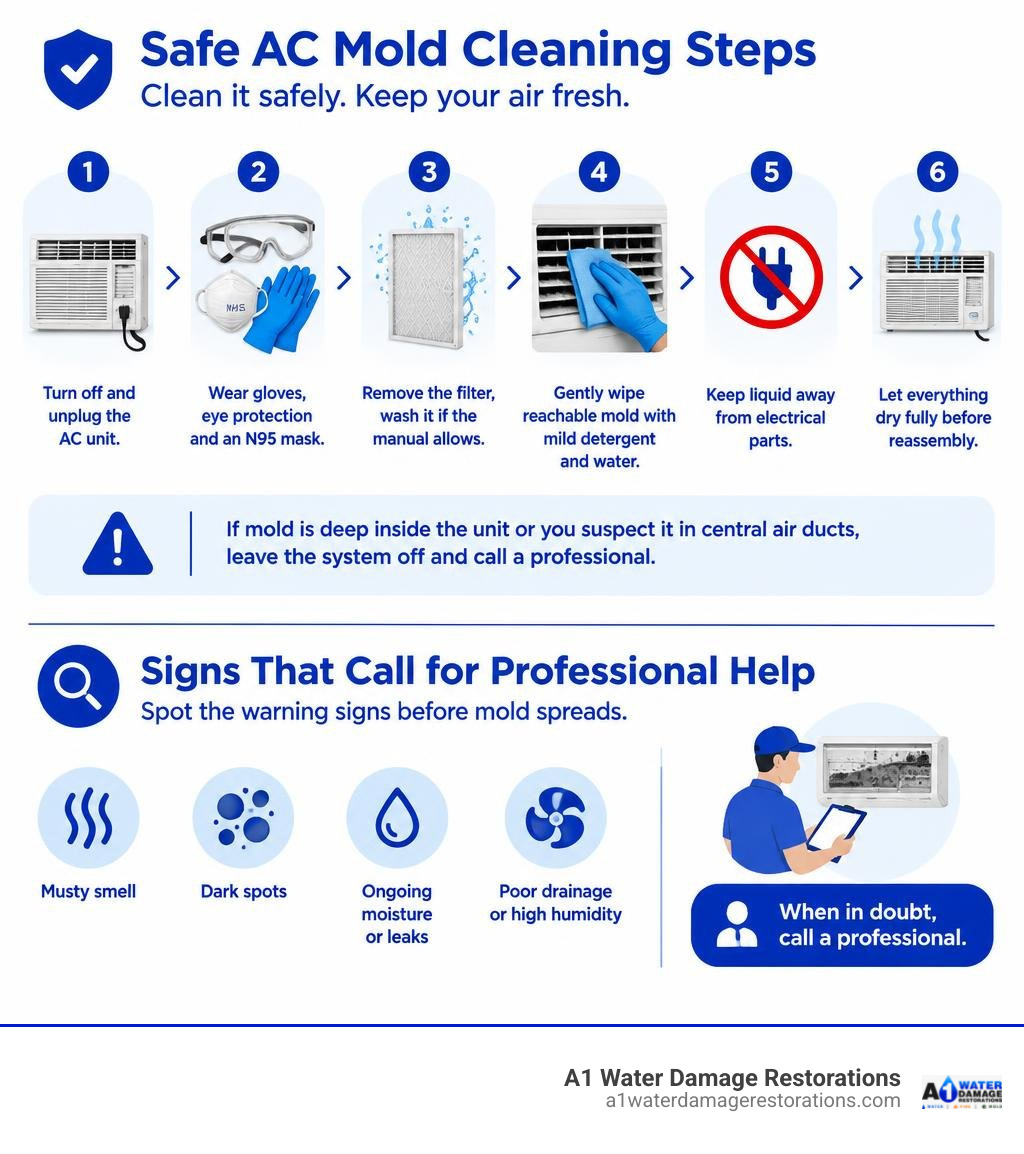
Turn off and unplug a window AC before cleaning it. Put on gloves, eye protection, and an N95 mask. Remove the filter, wash it if the manual allows, then gently wipe reachable mold from the grille and other hard surfaces with mild detergent and water. Keep liquid away from electrical parts, and let everything dry fully before reassembly. If mold is deep inside the unit or you suspect it in central air ducts, leave the system off and call a professional.
A musty smell or dark spots may be your first clue. Moisture trapped alongside dust gives mold a place to grow, so cleaning alone may not solve the problem unless you also fix poor drainage or excess humidity.
I’m Cole Nudel, and I work in disaster restoration with A1 Water Damage Restorations in the Denver area. My experience with property damage shapes this guide to cleaning mold from air conditioner units safely, including when to stop and get help.
Identifying AC Mold: Causes, Warning Signs, and Health Risks
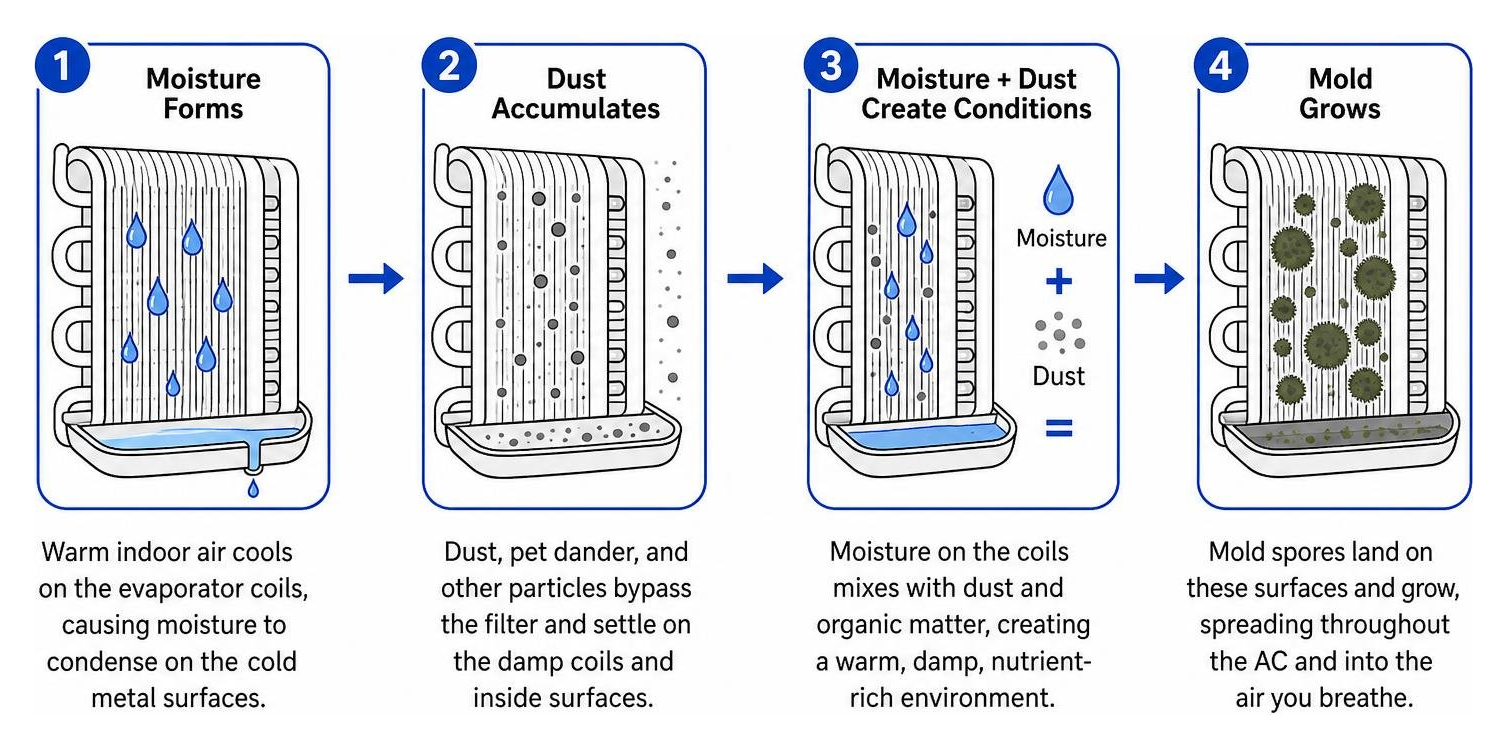
Air conditioners keep us cool, but their internal design makes them an unintentional sanctuary for fungi. Inside every cooling system, warm indoor air passes over freezing evaporator coils. As the air chills, water condenses on the cold metal surfaces. When this condensation meets ambient household dust and elevated humidity, mold finds everything it needs to thrive.
Recognizing the early warning signs of an infestation lets you act before spores colonize the entire mechanical assembly. In our work, we often see homeowners mistake early fungal growth for normal dust buildup. However, once you notice an earthy or stale smell every time the fan kicks on, fungal growth is already well underway. You can read more about the health risks associated with damp environments or review best practices by learning how to clean mold in house safely and effectively.
Why Moisture and Dust Cause AC Fungal Growth
Mold spores exist naturally in outdoor and indoor air. They only become a problem when they find moisture, warmth, and organic matter. An air conditioner creates this exact environment in several ways:
- Evaporator Coils: When chilling air, moisture condenses rapidly on metal fins. This constant water supply keeps the coil surface wet during peak cooling cycles.
- Dust Accumulation: Dust, pet dander, and skin cells bypass poorly fitted air filters and settle on damp internal components, serving as an abundant food source.
- Drain Pan Standing Water: If a drain line gets blocked by dirt or algae, water backs up in the drip pan underneath the evaporator, creating a dark, stagnant reservoir.
- High Indoor Humidity: When indoor relative humidity climbs above 50%, moisture inside the unit evaporates much more slowly, giving fungal colonies extended time to develop.
Health Hazards and Warning Signs of Spore Inhalation
When mold grows on the blower fan, directional louvers, or coil surface, the cooling system forcibly distributes microscopic spores and microbial volatile organic compounds (VOCs) through your living space.
According to health guidelines from public agencies like the CDC, inhaling airborne mold spores triggers several distinct health issues. People with allergies or asthma are particularly vulnerable. Common symptoms include:
- Persistent nasal congestion and frequent sneezing
- Wheezing, shortness of breath, and tightness in the chest
- Red, itchy, or watery eyes and throat irritation
- Unexplained headaches or sinus pressure when the system runs
- More severe complications in rare cases, such as hypersensitivity pneumonitis or fungal lung infections
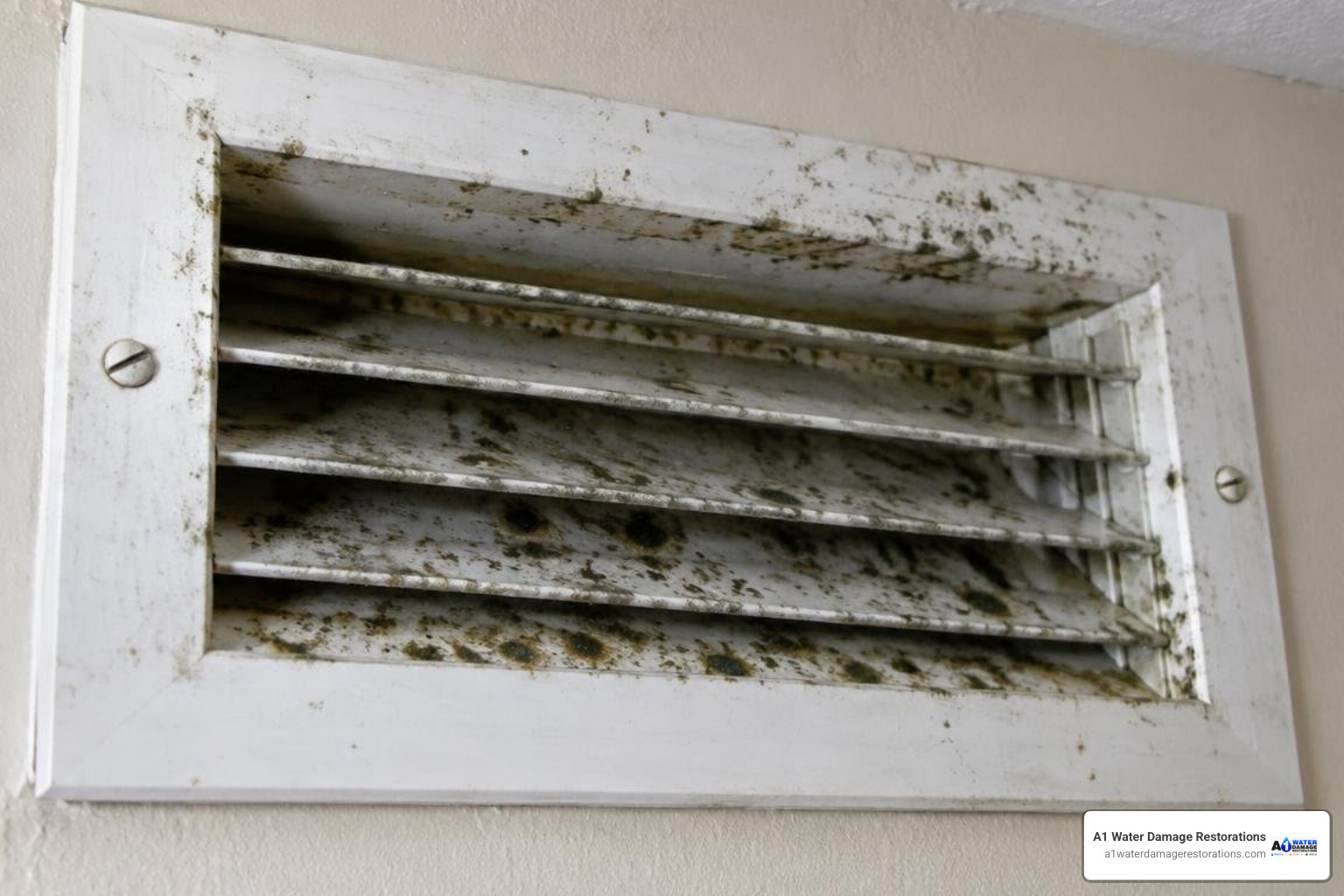
If you spot dark green or black clusters on the directional louvers or notice your allergies flaring whenever the fan runs, it is time to shut down the unit and perform a thorough cleanup.
Complete Guide to Cleaning Mold From Air Conditioner Units at Home
Cleaning a moldy air conditioner requires safety precautions. The goal is to remove the active fungal growth without damaging delicate components like aluminum coil fins, insulation foam, or electrical control boards.
Before touching any unit, gather the proper personal protective equipment (PPE):
- N95 or HEPA-rated respirator mask to avoid breathing agitated spores
- Nitrile or rubber gloves to shield your skin from cleaners and mold
- Safety goggles without open side vents to guard your eyes against splashes
- Soft-bristle nylon brush or fin brush
- Microfiber cloths and clean towels
- Plastic spray bottle filled with an appropriate cleaning agent
| Cleaner Type | Active Agent | Pros | Cons / Risks | Best Use Area |
|---|---|---|---|---|
| White Vinegar Solution | 5% Acetic Acid (1:1 with water) | Bleach-free, kills mold, safe for aluminum, mild odor | Requires dwell time (10–15 min) | Plastic casing, louvers, drip pans, light coil mold |
| Commercial Foaming Coil Cleaner | Alkaline/Surfactant agents | Penetrates deep between fins, no-rinse formulas available | Higher cost, chemical fumes during use | Evaporator and condenser coils |
| Chlorine Bleach Solution | Sodium Hypochlorite (1:10 dilution) | Fast stain remover, powerful surface disinfectant | Highly corrosive to aluminum coils, degrades plastic, harsh fumes | Hard plastic drain pans only (NEVER on coils) |
| EPA-Registered Mold Disinfectant | Plant-based or quaternary compounds | Eliminates spores, prevents regrowth, no damage to metal | More expensive than vinegar | Overall interior casing, fan blades, exterior shroud |
Step-by-Step for Cleaning Mold From Air Conditioner Window Units
Window units and portable models are self-contained, which makes them prime candidates for careful at-home cleaning. Follow these steps to restore your unit without harming internal parts:
- Cut the Power: Unplug the power cord from the wall outlet completely. If hardwired, shut off the circuit breaker at your main service panel.
- Move the Unit Outdoors: Window AC units contain loose water and active spores. Carry the unit outside to a sturdy table, patio, or driveway so you avoid releasing spores inside your living areas.
- Disassemble the Outer Shell: Unscrew the front grille, directional louvers, and the metal exterior casing. Place all mounting screws safely into a small container.
- Wash the Air Filter: Slide the reusable filter out. Vacuum away dry dust, then submerge it in warm water mixed with mild dish soap or a 1:1 white vinegar solution. Scrub lightly, rinse with clean water, and lay it flat to dry.
- Vacuum Loose Debris: Using a vacuum with a HEPA filter and a soft brush attachment, remove dry dust, pet hair, and cobwebs from the evaporator fins, condenser, and base pan.
- Apply Your Cleaning Solution: Spray your vinegar solution or an EPA-registered mold disinfectant liberally over the plastic frame, drain pan, fan blower wheel, and coil fins. Avoid wetting the control box, wiring harnesses, or digital display panel.
- Gently Scrub the Mold: Use your soft-bristle brush to lift visible mold colonies. Brush parallel to the aluminum coil fins to avoid bending or crushing them.
- Rinse Carefully: Use a low-pressure spray bottle or gentle water stream to rinse the base pan and plastic surfaces. Never use a high-pressure pressure washer, as it easily flattens thin metal coil fins.
- Allow 24 Hours of Drying Time: Set all parts in a warm, dry, shaded spot for a full 24 hours. Reassembling or powering on a damp unit traps moisture inside and invites immediate fungal regrowth.
- Reinstall with Proper Pitch: Reattach the shroud, screws, and dried filter. When sliding the unit back into your window frame, ensure it has a slight outward tilt (roughly one-quarter to one-half inch drop toward the outside) so condensation drains freely out the rear drainage port. If you want further manufacturer-backed procedures, review guidelines on safely cleaning window air conditioners.
Safe Chemical and Natural Products for Cleaning Mold From Air Conditioner Coils
Coils demand specialized care because aluminum fins are fragile and easily corroded. A common mistake is spraying standard household chlorine bleach directly onto coils. Bleach oxidizes and eats through aluminum, causing pinhole refrigerant leaks over time.
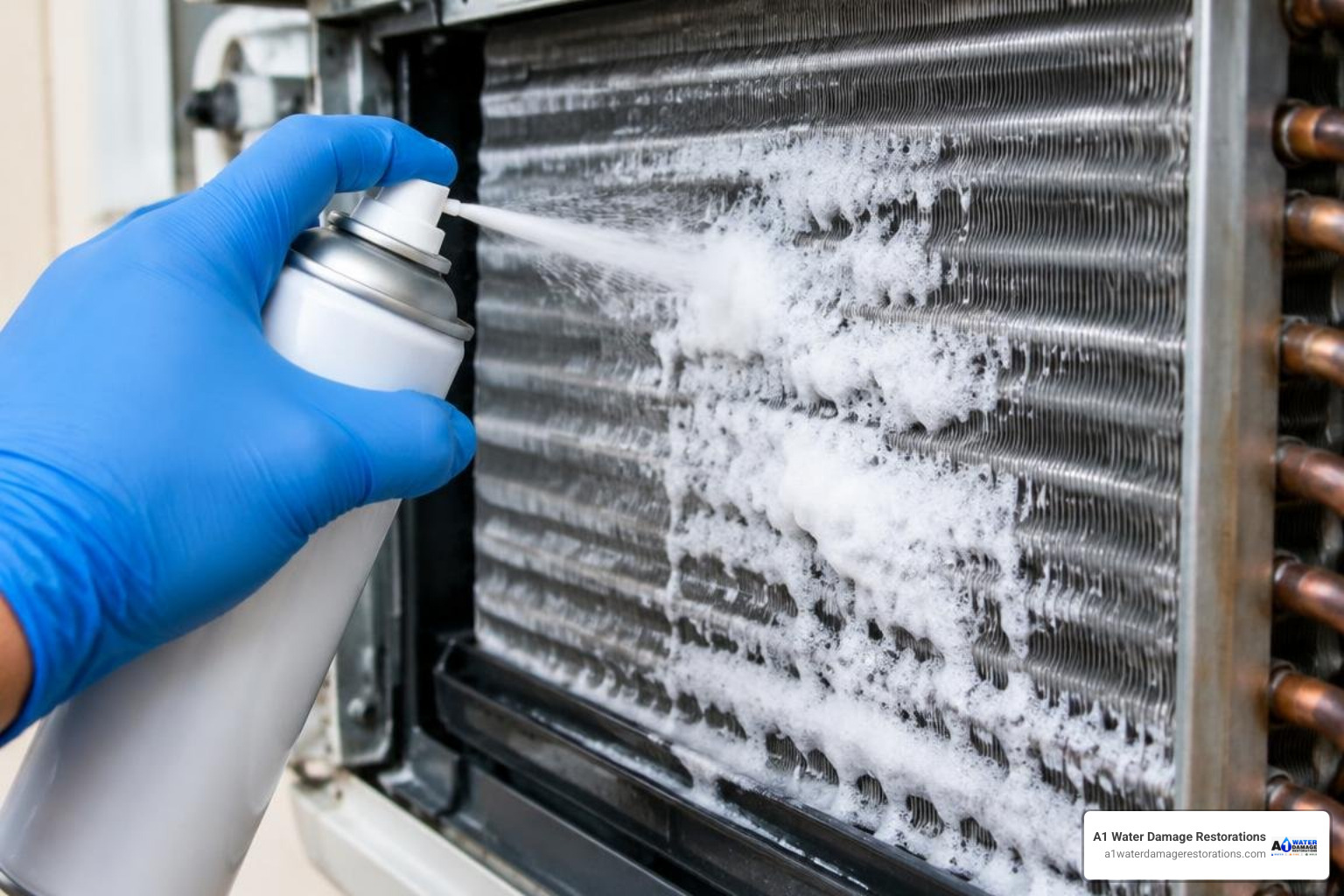
Instead, choose dedicated foaming coil cleaners or a distilled white vinegar mixture:
- Self-Rinsing Foaming Sprays: Products formulated specifically for evaporator coils expand into expanding foam that works between thin fins. As the cooling cycle runs later, natural condensation washes away the foam and emulsified grime into the drain pan.
- Pure Distilled White Vinegar: Mixing equal parts white vinegar and distilled water provides a gentle, mildly acidic treatment that penetrates fungal cells without eating away at aluminum or releasing hazardous fumes.
- Enzymatic Pan Tablets: Dropping slow-dissolving condensate tablets into your drip pan prevents algae, slime, and fungal colonies from forming in stagnant water.
Addressing Mold in Central HVAC Ducts and Car AC Systems
Mold is not limited to standalone units; it also spreads across central air conditioning systems and vehicle cabins. Central heating and cooling systems pose larger remediation challenges because ductwork distributes spores throughout multiple rooms simultaneously.
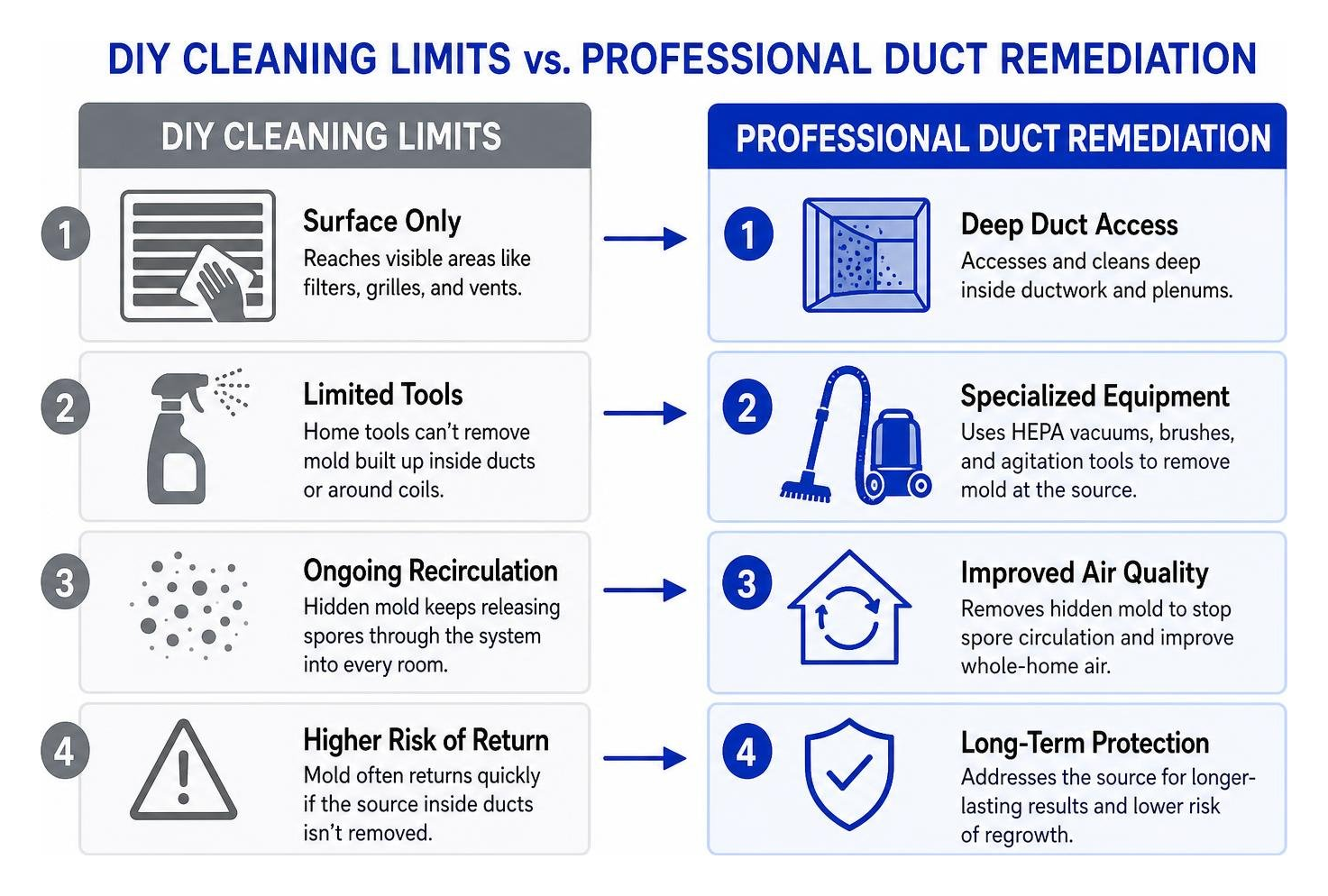
When central systems are compromised, relying on basic room-by-room surface cleaning is rarely enough. Learning the fundamentals of eliminating mold in HVAC ducts without ruining indoor air and applying effective AC vent mold cleaning practices will help keep your entire home safe.
How to Handle Central AC Ducts and Air Handlers
If you suspect mold inside a central air handler or rigid ductwork, take the following steps:
- Shut Off the System Immediately: Turn the thermostat setting to “OFF” to prevent the blower from cycling spores through living rooms and bedrooms.
- Inspect the Supply Registers: Remove vent grates with a screwdriver and inspect the immediate boot area. You can clean removable metal vent covers in a sink using warm soapy water and vinegar.
- Examine the Air Handler and Coils: Check the indoor evaporator coil cabinet and primary condensate drain pan. If mold growth covers the blower motor assembly or line-insulated ductwork, stop.
- Avoid Unapproved Chemical Biocides: The EPA explicitly advises against introducing unverified chemical biocides or aerosol foggers into residential duct systems, as these chemicals can degrade duct insulation and irritate lungs.
- Engage Certified Restorers: Porous internal fiberglass duct liners cannot be wiped clean once mold sets in. These materials require containment, negative-air HEPA extraction, and professional remediation by certified mold duct cleaning services.
Removing Mildew and Odors From Car Air Conditioners
Automotive air conditioners operate in confined spaces with variable humidity, making them prone to foul, sour smells. The musty odor usually stems from condensation trapped inside the heater-evaporator core under the dashboard or a moldy cabin air filter.
Here is how to clear vehicle AC mildew safely:
- Replace the Cabin Air Filter: Locate the filter box (usually behind the glove compartment), discard the old, dust-filled filter, vacuum the slot, and slide in a fresh activated-charcoal filter.
- Use Evaporator Core Foam Cleaner: Insert the extension tube of a specialized automotive AC cleaner into the center cabin vents or the outdoor cowl drain tube. Discharge the expanding foam directly onto the evaporator core to dissolve mildew.
- Clear the Cowl Air Intake: Clear leaves, pine needles, and standing water from the exterior plastic grate at the base of the windshield where fresh air enters your vehicle.
- Run the Fan on High: After applying treatment, run the vehicle fan on high heat without the AC compressor engaged for 10 minutes to bake out residual moisture.
Long-Term Mold Prevention and When to Replace Your Unit
Cleaning an air conditioner is rewarding, but keeping spores away for good requires controlling indoor moisture and building steady maintenance habits.
Maintenance Habits to Prevent Future Spore Buildup
- Maintain 30% to 50% Indoor Humidity: Use standalone or whole-home dehumidifiers to keep indoor relative humidity below 50%. Mold cannot grow easily in drier air.
- Run the “Fan-Only” Mode: After using the cooling function on humid days, switch the AC unit to fan-only mode for 15 to 20 minutes before turning it off. This dries the evaporator coil and prevents stagnant moisture from lingering inside.
- Flush the Condensate Drain Regularly: Pour one cup of distilled white vinegar down the central AC condensate drain line every spring and autumn to dissolve algae buildup and prevent drain line overflows.
- Clean or Replace Filters Monthly: Check filters every 30 to 60 days during peak summer use. Clean filters maintain strong airflow and stop organic dust from feeding fungal growth.
- Install UV-C Germicidal Lights: Mounting an HVAC-grade UV-C light directly above the indoor coil helps sterilize airborne microbes and prevents slime from colonizing the drain pan.
Cleaning vs. Replacement: When an AC Is Beyond Repair
Sometimes an air conditioner is too far gone for basic DIY cleaning to make financial or practical sense. Use the One-Third Rule: if mold covers more than 33% of the unit’s internal surface area, replacement is usually safer and more cost-effective.
Consider replacing your unit under these conditions:
- Degraded Internal Insulation: If porous foam insulating blocks inside the unit are black with embedded mold, they cannot be sanitized and will continue to release spores.
- Deep Coil Corrosion: If thick mold is intertwined with peeling, rusted metal and heavily oxidized copper tubes, cleaning may cause refrigerant leaks.
- Persistent Odor After Cleaning: If a musty smell returns within 48 hours of a full teardown and cleaning, mold is likely growing deep behind the motor housing.
- Unit Age: Window units over 8 to 10 years old have lower energy efficiency. The cost of materials, deep cleaning time, and potential health risks often outweighs the price of a modern replacement unit.
For larger central HVAC mold infestations, consult a comprehensive guide to mold remediation to explore professional containment and structural restoration options.
Frequently Asked Questions About Cleaning AC Mold
Can I run my air conditioner if I suspect mold inside?
No, you should never run an air conditioning unit if you suspect active mold growth inside. Operating the fan aerosolizes spores and spreads them through your room or ductwork. This degrades your indoor air quality and increases the risk of allergy flare-ups, headaches, and respiratory irritation. Turn the system off until it has been inspected and thoroughly cleaned.
Does white vinegar kill mold on AC coils better than bleach?
Yes. Distilled white vinegar (containing roughly 5% acetic acid) kills the vast majority of mold species without corroding delicate aluminum fins. Household bleach contains chlorine, which rapidly oxidizes and corrodes aluminum and copper tubing, causing permanent structural damage and refrigerant leaks. Vinegar is also much safer to breathe in enclosed spaces.
How often should AC drain lines and filters be cleaned?
Wash reusable filters or swap disposable filters every 30 to 60 days during the cooling season. For central HVAC systems, flush the condensate drain line with distilled white vinegar at least twice a year—once in spring before cooling starts, and once in autumn—to prevent clogs, standing water, and microbial growth.
Conclusion
Protecting your indoor air starts with proactive maintenance and controlling the moisture that mold relies on to survive. By using the right cleaning solutions, handling delicate coil fins with care, and keeping condensate drains clear, you can keep your air conditioning system running cleanly all season long.
If you discover extensive contamination throughout your ductwork or air handler, our team at A1 Water Damage Restorations is ready to help. We provide 24/7 IICRC-certified mold remediation across the Denver Metro Area—including Boulder, Cherry Creek, Golden, Greenwood Village, Arvada, Westminster, Wheat Ridge, Broomfield, and Littleton. Check out our in-depth HVAC mold remediation and cleaning guide for more expert strategies to keep your home’s air fresh, pure, and safe.