

Understanding Thirdhand Smoke and Why Tobacco Odors Linger
The best way to get rid of tobacco smell is to remove the source, deep-clean every affected surface, and continuously filter the air. Start by laundering all washable fabrics with white vinegar and baking soda, then scrub hard surfaces and seal nicotine-stained walls with an odor-blocking primer. Finally, run an air purifier with both a True HEPA filter and a heavy activated carbon bed to capture the gaseous compounds that cause lingering odors.
Tobacco smoke does not simply vanish into thin air once a cigarette, pipe, or cigar is extinguished. It consists of fine particulate matter, sticky aerosols, and volatile organic compounds (VOCs). When tobacco burns, it generates a microscopic film loaded with nicotine, heavy metals, and over 400 unique chemical odorants. This sticky residue adheres relentlessly to everything it encounters.
Because indoor environments are filled with porous materials—such as drywall, ceiling tiles, wood framing, carpets, and upholstery—these microscopic particles penetrate deep beneath visible surfaces. When environmental conditions change, such as when humidity rises or indoor temperatures climb, these trapped particles off-gas back into the room. Applying targeted smoke odor removal techniques is the only permanent solution to break this continuous cycle of contamination.
What Is Thirdhand Smoke and Its Health Risks?
Thirdhand smoke refers to the chemical residue and particulate matter that remains embedded in indoor environments long after secondhand smoke has cleared. When nicotine deposits settle on surfaces, they react with common indoor atmospheric pollutants, such as nitrous acid, to create carcinogenic tobacco-specific nitrosamines (TSNAs).
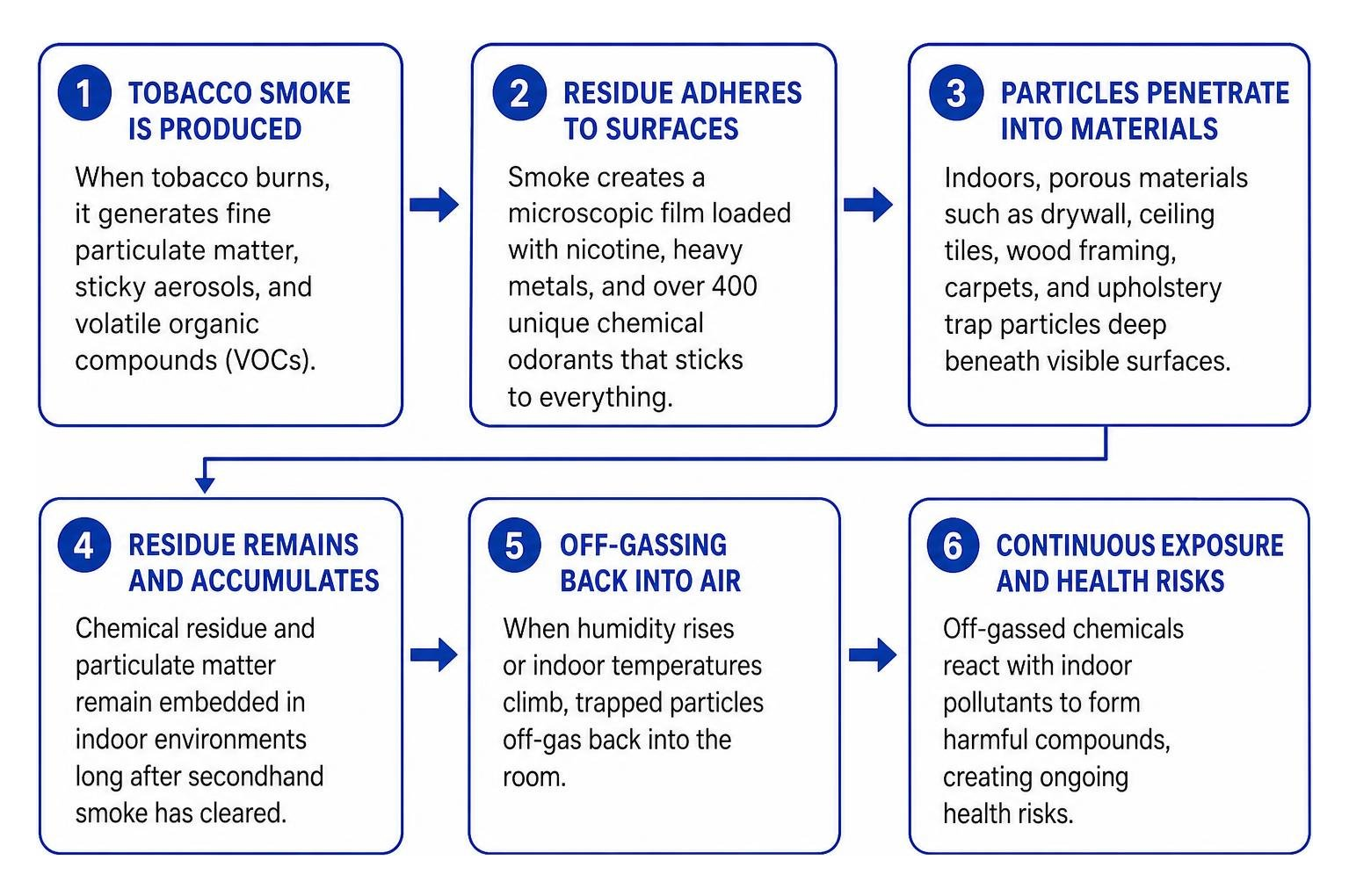
This sticky chemical buildup is not just an aesthetic nuisance or an unpleasant stench; it represents an ongoing health hazard. Infants and small children face the greatest danger because they crawl across carpets, touch contaminated furniture, and frequently put their hands in their mouths. A medical overview of thirdhand smoke risks demonstrates that these lingering residues can irritate delicate respiratory pathways, trigger asthma episodes, and expose occupants to systemic toxic compounds over extended periods.
How Long Does It Take to Clear Smoke Odor from a House?
The time required to eliminate tobacco smoke odor depends on three major factors: the duration of smoking indoors, structural permeation, and the speed of active air exchange.
- Light, Occasional Exposure: If a guest smoked indoors for an evening or two, running continuous ventilation paired with washing surface fabrics will generally clear the smell within 24 to 48 hours.
- Moderate Indoor Smoking: A home exposed to smoking over several months typically requires 1 to 2 weeks of intensive deep cleaning, including carpet extraction, wall scrubbing, and continuous air scrubbing.
- Heavy, Multi-Year Accumulation: When tobacco has been smoked inside a property for years, the nicotine resin embeds into the subfloors, studs, and HVAC ductwork. In these scenarios, completely neutralizing the odor can take several weeks of deep remediation, structural sealing, and specialized oxidation treatments.
The Best Way to Get Rid of Tobacco Smell from Fabrics, Clothes, and Personal Items
Soft fabrics act like giant sponges for airborne chemicals. The fibrous structure of natural and synthetic textiles captures oily smoke particles and traps them deep between individual weaves.
Whether you are dealing with everyday garments, delicate drapery, or upholstered furniture, surface masking sprays are never enough. When dealing with shared multi-family spaces, learning specialized methods for treating apartment smoke smell helps isolate and eradicate odors before they travel into soft furnishings.
The Best Way to Get Rid of Tobacco Smell from Clothes and Upholstery
To treat contaminated clothing, bedding, and removable slipcovers, follow these proven laundry steps:
- Pre-Soak in Vinegar Solution: Submerge washable fabrics in a basin or washer filled with warm water and 1 to 2 cups of distilled white vinegar for at least 60 minutes. The mild acetic acid cuts through the oily chemical film binding the smoke molecules to the threads.
- Wash with Baking Soda Boost: Launder the items using your regular heavy-duty laundry detergent paired with 1 full cup of baking soda. Baking soda elevates the wash water’s pH, directly neutralizing acidic odor compounds.
- Hang Dry in Direct Sunlight: Avoid placing smoke-affected fabrics in a heated dryer until you are 100% sure the odor is gone, as high heat permanently bakes residual odors into fabric fibers. Instead, line-dry fabrics outside in fresh air and direct sunlight, allowing natural ultraviolet rays to break down organic contaminants.
- Deep Steam Extraction for Non-Washable Upholstery: For fixed sofa cushions and heavy drapes, use a commercial hot-water extractor or fabric steamer. Treat the upholstery with an enzyme-based fabric cleaner before extraction to digest the microscopic residues lodged in the padding.
Best Way to Get Rid of Tobacco Smell from Skin, Hair, and Breath
Because nicotine passes through pores and bonds to natural bodily oils, washing with standard water alone leaves a telltale scent. To clear tobacco odors from your body quickly and completely:
- Skin and Hands: Wash hands thoroughly using an exfoliating scrub made of citrus-infused liquid soap mixed with a teaspoon of baking soda. The alkaline grit removes resin from fingers, while citrus oils dissolve tar. Applying alcohol-based sanitizer immediately after smoking also helps break down sticky oils on the skin.
- Hair: Hair cuticles absorb airborne smoke rapidly. Use a clarifying or chelating shampoo designed to strip heavy product and mineral buildup. If you cannot wash your hair right away, spray dry shampoo at the roots, let it absorb oils for two minutes, and brush it out completely.
- Breath and Oral Cavity: Tar and smoke particles coat the tongue, palate, and gums. Brush your teeth and use an active oxygenating mouthwash. Scraping your tongue with a dedicated tongue scraper removes the physical residue where stale tobacco odors linger, as highlighted in this doctor-reviewed guide on smoke smell removal.
Deep Cleaning Hard Surfaces, Walls, and HVAC Systems
Washing fabrics is only half the battle. Tar and nicotine rise with warm smoke, creating a yellow, sticky glaze across painted walls, ceilings, baseboards, and window panes.

To restore a fresh indoor environment, you must systematically clean, neutralize, and seal these structural components. Following our complete cigarette smell removal guide will give you a clear roadmap for tackling heavy contamination throughout the entire property.
Washing and Sealing Nicotine-Stained Walls
Never paint directly over nicotine-stained drywall without washing and priming it first. Nicotine easily dissolves into standard latex paint, bleeding straight through fresh coats and releasing odors whenever the weather turns warm.
- Chemical Degreasing: Mix trisodium phosphate (TSP) or a heavy-duty degreaser with hot water according to package directions. Wearing heavy rubber gloves and safety glasses, wash the walls and ceilings from the bottom up to avoid dirty drip marks. Rinse thoroughly with clean warm water.
- Odor-Sealing Primer: Once the drywall is completely dry, apply one to two solid coats of a dedicated, shellac-based or high-solids oil-based stain-and-odor-blocking primer. This creates an impermeable barrier that locks trapped chemical molecules inside the substrate.
- Finish Coat: After the primer cures fully, apply your topcoat of quality latex wall paint.
Deodorizing Carpets, Wood Floors, and Furniture
Flooring takes the brunt of falling ash and settling smoke particulates.
- Carpets and Rugs: Thoroughly vacuum using a machine equipped with a sealed HEPA filtration system. Sprinkle baking soda generously across the entire carpet, work it into the fibers using a stiff broom, and leave it for 24 hours before vacuuming again. For heavy contamination, use hot-water extraction with an alkaline rinse agent.
- Hardwood Flooring: Clean finished wood with a pH-neutral cleaner. If nicotine has penetrated through worn floor finishes into the raw timber, the floor must be professionally sanded down, resealed, and top-coated.
- Wood Furnishings: Nicotine sticks to varnish and unfinished inner drawers. Restore your pieces using proven techniques for restoring smoke-scented wood furniture without damaging the underlying finish.
Purifying Indoor Air and HVAC Ducts
Your heating and cooling system actively recirculates contaminated air through every room in your house. Nicotine and soot cling to the interior of metal ducting and coat the AC evaporator coils.
- Replace Air Filters: Immediately swap standard fiberglass filters for high-efficiency pleated filters rated MERV 11 or higher with an integrated carbon layer.
- Clean Ductwork and Vents: Remove supply and return vent covers and wash them in warm, soapy water. Use a HEPA-filtered vacuum with a long hose attachment to remove settled dust and ash from inside the duct openings.
- Continuous Air Scrubbing: Running dedicated air cleaners helps you in reclaiming indoor air quality while deep cleaning is underway.
Natural Odor Absorbers vs. Professional Remediation Methods
Addressing smoke odors requires choosing the right tool for the severity of contamination. Everyday DIY odor absorbers work well for active air freshening and minor exposure, but severe or historical thirdhand smoke demands industrial oxidation and specialized restoration techniques.
| Method / Treatment | Best Used For | Pros | Limitations |
|---|---|---|---|
| Activated Charcoal | Mild, ongoing odor absorption in enclosed spaces (closets, cars). | Natural, non-toxic, passive; absorbs VOCs continuously. | Slow acting; cannot clean or dissolve physical nicotine residue. |
| White Vinegar & Baking Soda | Surface cleaning and laundry additive. | Inexpensive, readily available, safe around children and pets. | Requires physical labor; ineffective against deep subfloor contamination. |
| HEPA + Carbon Air Purifiers | Continuous airborne particle and chemical filtration. | Runs safely 24/7; removes allergens and airborne smoke compounds. | Filters need regular replacement; does not treat walls or furniture. |
| Ozone Generation (Professional) | Severe, structural smoke permeation throughout entire homes. | Penetrates every crack, porous surface, and duct to destroy molecules. | Toxic during use; requires complete evacuation of people, pets, and plants. |
| Thermal Fogging (Professional) | Pervasive soot and smoke odor removal. | Mimics smoke particle size to pair with and neutralize embedded odors. | Requires specialized restoration equipment and professional training. |
Top Natural Odor Absorbers for Ongoing Smoke Neutralization
If you want to maintain fresh air naturally without introducing synthetic perfumes, deploy these proven odor absorbers:
- Activated Charcoal: Place porous fabric bags filled with activated bamboo charcoal in room corners, closets, and vehicles. Activated charcoal has millions of microscopic pores that capture and hold gaseous odor molecules. Learn more about choosing the right cigarette smoke odor absorber for your specific room size.
- Distilled White Vinegar Bowls: Set shallow bowls filled with white vinegar near air vents or in rooms where smoke was present. The evaporating acetic acid neutralizes airborne alkaline smoke compounds.
- Fresh Coffee Grounds: Place bowls of dry, freshly ground coffee on counter tops. Nitrogen contained within coffee grounds helps absorb and neutralize volatile sulfur and nitrogen compounds found in tobacco smoke.
When to Call Professional Restoration Services
When tobacco residue has accumulated across decades, DIY cleaning methods often hit a brick wall. When smoke has migrated into ceiling cavities, subflooring, and crawlspaces, standard cleaning supplies cannot reach the source of the problem.
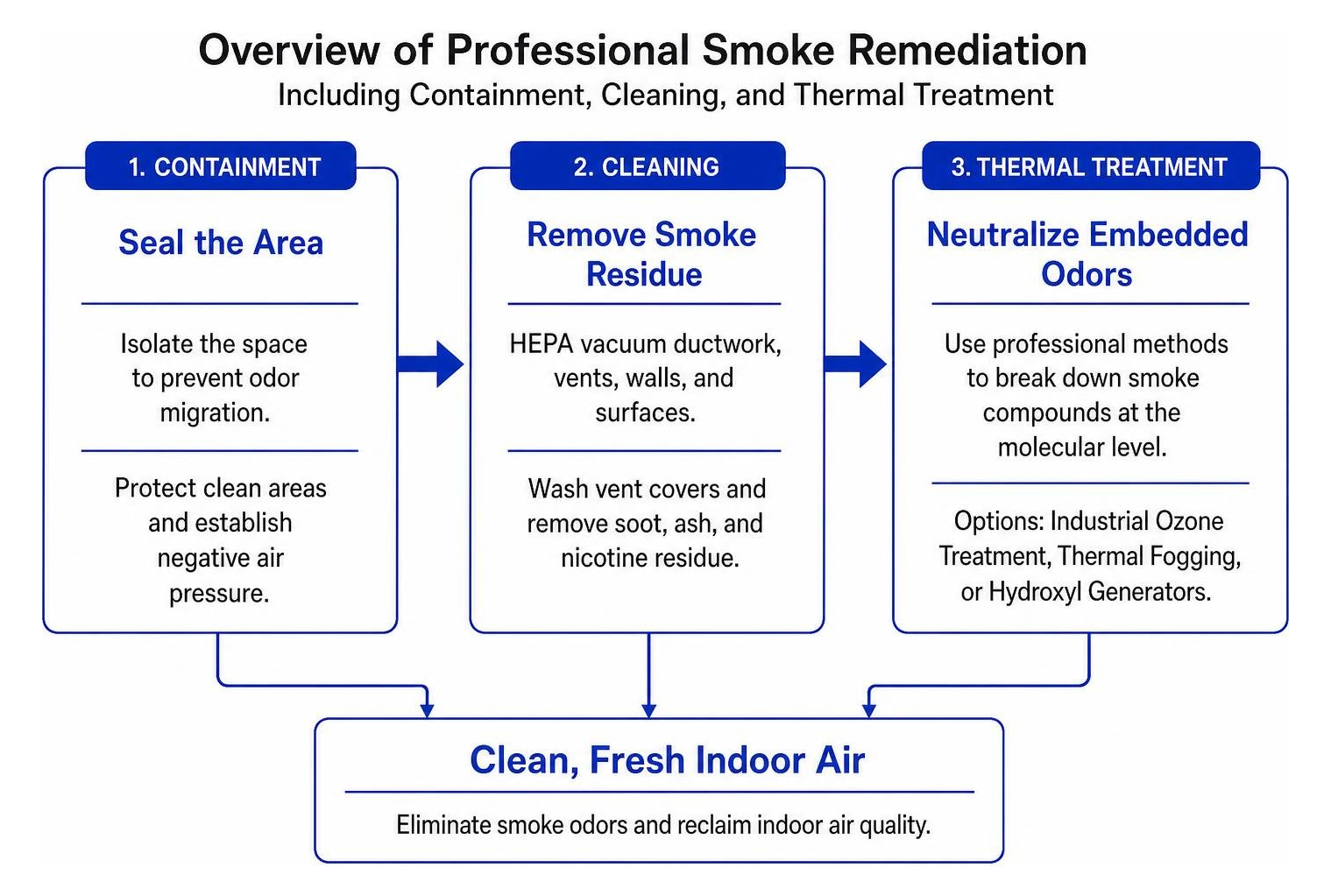
Professional restoration technicians use advanced methods to break down smoke compounds at a molecular level:
- Industrial Ozone Treatment: Ozone generators produce unstable ozone gas that oxidizes odor-causing molecules on contact. This treatment must only be administered by trained professionals in completely sealed, unoccupied spaces.
- Thermal Fogging: Thermal foggers heat specialized solvent-based odor counteractants into a dry micron-sized fog. This fog penetrates porous building materials along the exact same paths the original smoke traveled, pairing with and neutralizing embedded chemical residues.
- Hydroxyl Generators: Hydroxyl machines use ultraviolet radiation and humidity to generate safe atmospheric radicals that break down organic chemical bonds, allowing odor removal to take place even while spaces remain occupied.
Reviewing our step-by-step smoke damage restoration protocol shows how these commercial systems ensure odors never return.
Frequently Asked Questions About Eliminating Tobacco Smoke Odor
What is the fastest way to remove tobacco smell from a room?
The fastest way to clear a room is by creating immediate cross-ventilation while physically capturing airborne chemicals. Open windows on opposite sides of the room and place box fans facing outward in one window to exhaust stale air, while another fan pulls clean air in.
Simultaneously, wipe down all hard surfaces with a 50/50 mix of warm water and white vinegar, wash all blankets and curtains, and run an air purifier equipped with both a True HEPA filter and a heavy activated carbon bed on its maximum speed setting.
Can you completely remove old, lingering cigarette smell from a car?
Yes, but it requires addressing the entire vehicle cabin:
- Replace the Cabin Air Filter: Remove and replace the old cabin filter located behind the glovebox, as it holds onto concentrated smoke residues.
- Wash the Headliner and Seats: Use an automotive fabric and upholstery shampoo to clean the fabric headliner, carpet floor mats, and seat cushions. Extract the liquid thoroughly with a wet-dry vacuum.
- Clean the Glass: Smoke leaves a greasy haze on the interior glass. Clean windshields and windows with an ammonia-based or alcohol-based glass cleaner.
- Deploy Carbon Packs: Place activated charcoal bags beneath the front seats to absorb any remaining odors lingering in the foam padding.
Will standard HEPA air purifiers eliminate cigarette smoke odor?
A standard HEPA filter alone will capture physical soot, ash, and particulate matter, but it cannot remove tobacco smoke odor. Odors are carried by volatile organic compounds and gases, which pass directly through HEPA filtration media.
To eliminate tobacco odor, an air purifier must include a True HEPA filter combined with a substantial, dedicated activated carbon filter (preferably containing several pounds of granulated carbon or treated with potassium permanganate) to adsorb gaseous chemical compounds.
Conclusion
Lingering tobacco odor is a stubborn, complex problem rooted in the chemical nature of thirdhand smoke. Because nicotine and tar embed themselves deep inside drywall, upholstery, flooring, and air duct systems, simply covering up the stench with aerosol sprays or scented candles will never provide a lasting fix. True freshness requires removing the physical source, thoroughly cleaning and neutralizing affected materials, and filtering the indoor atmosphere.
By systematically laundering soft textiles, washing and sealing stained walls, purifying your HVAC system, and utilizing effective natural odor absorbers, you can successfully reclaim a clean, fresh, and healthy living space.
When thirdhand smoke residue is too deeply ingrained for standard household methods, professional remediation is the most dependable path forward. As a family-owned restoration provider, our team at A1 Water Damage Restorations provides 24/7 IICRC-certified restoration services across the entire Denver Metro Area—including Boulder, Cherry Creek, Denver, Golden, Greenwood Village, Arvada, Westminster, Wheatridge, Broomfield, and Littleton. We combine advanced oxidation technology with a personal touch to ensure your home is restored better than ever.
Explore our comprehensive professional fire and smoke damage restoration services today, and let our certified team help you clear the air permanently.