

Act Fast When a Main Sewer Backup Starts
A main sewer backup needs fast action: stop using all water fixtures, keep people and pets away from the affected area, and shut off power to the flooded space only if it is safe to do so. Then call a licensed plumber and report the issue to your local sewer utility. Do not flush toilets, run sinks, shower, or use the washing machine until the blockage is cleared.
Sewage can rise through a basement floor drain, shower, toilet, or other low fixture when wastewater cannot move through the sewer line. The cause may be a clog in your private sewer lateral, tree roots, aging or broken pipe, or a public sewer main overwhelmed by a major storm. Because sewage may carry harmful bacteria, viruses, and pollutants, treat it as a health hazard, not ordinary floodwater.
The good news: quick containment, clear documentation, and professional cleanup can limit damage and support an insurance or utility claim.
I am Cole Nudel, a disaster restoration professional with A1 Water Damage Restorations in the Denver area. I help property owners navigate the urgent cleanup, drying, and recovery work that follows a main sewer backup.
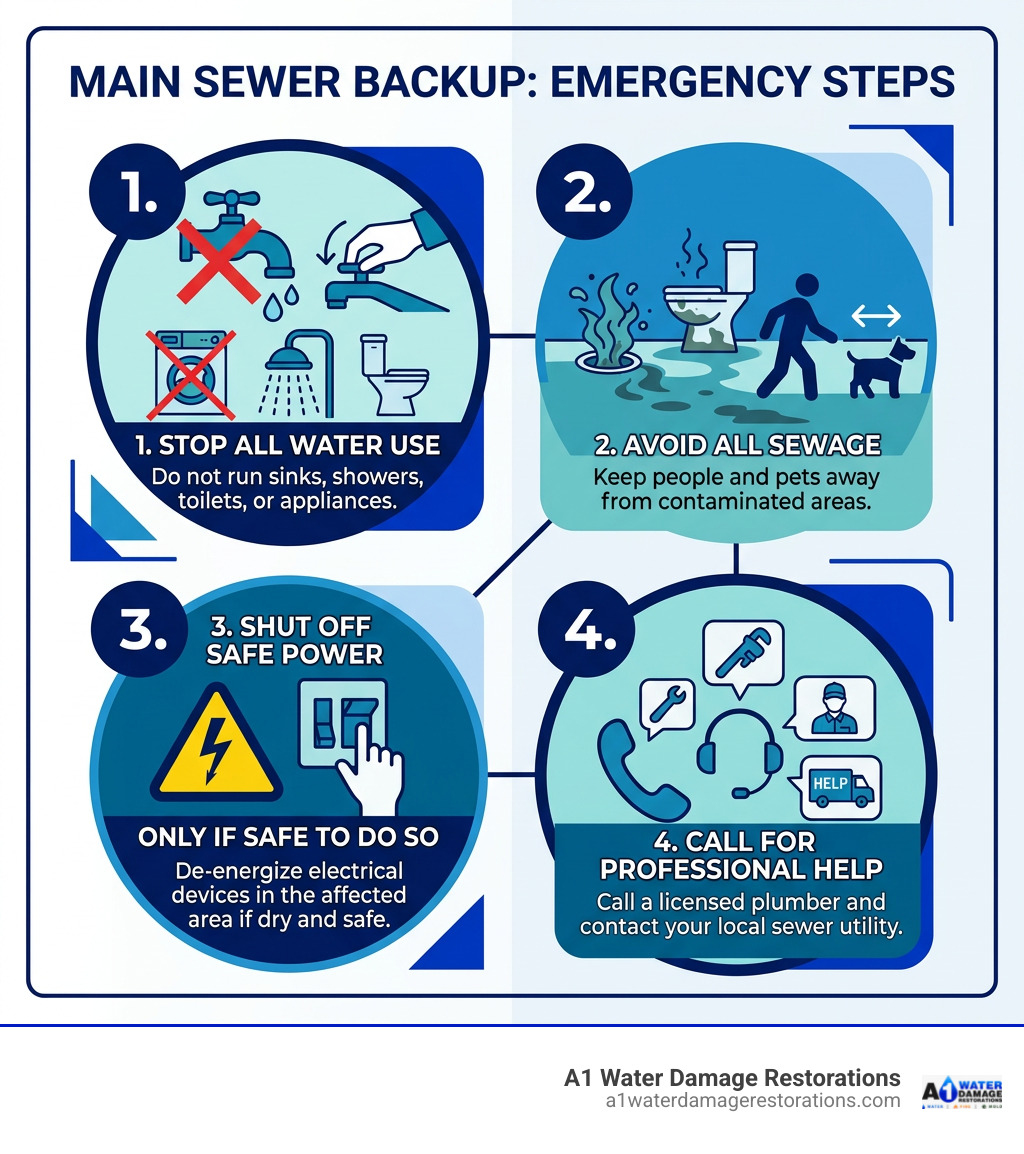
Quick look at main sewer backup:
What Causes a Main Sewer Backup in Residential Homes?
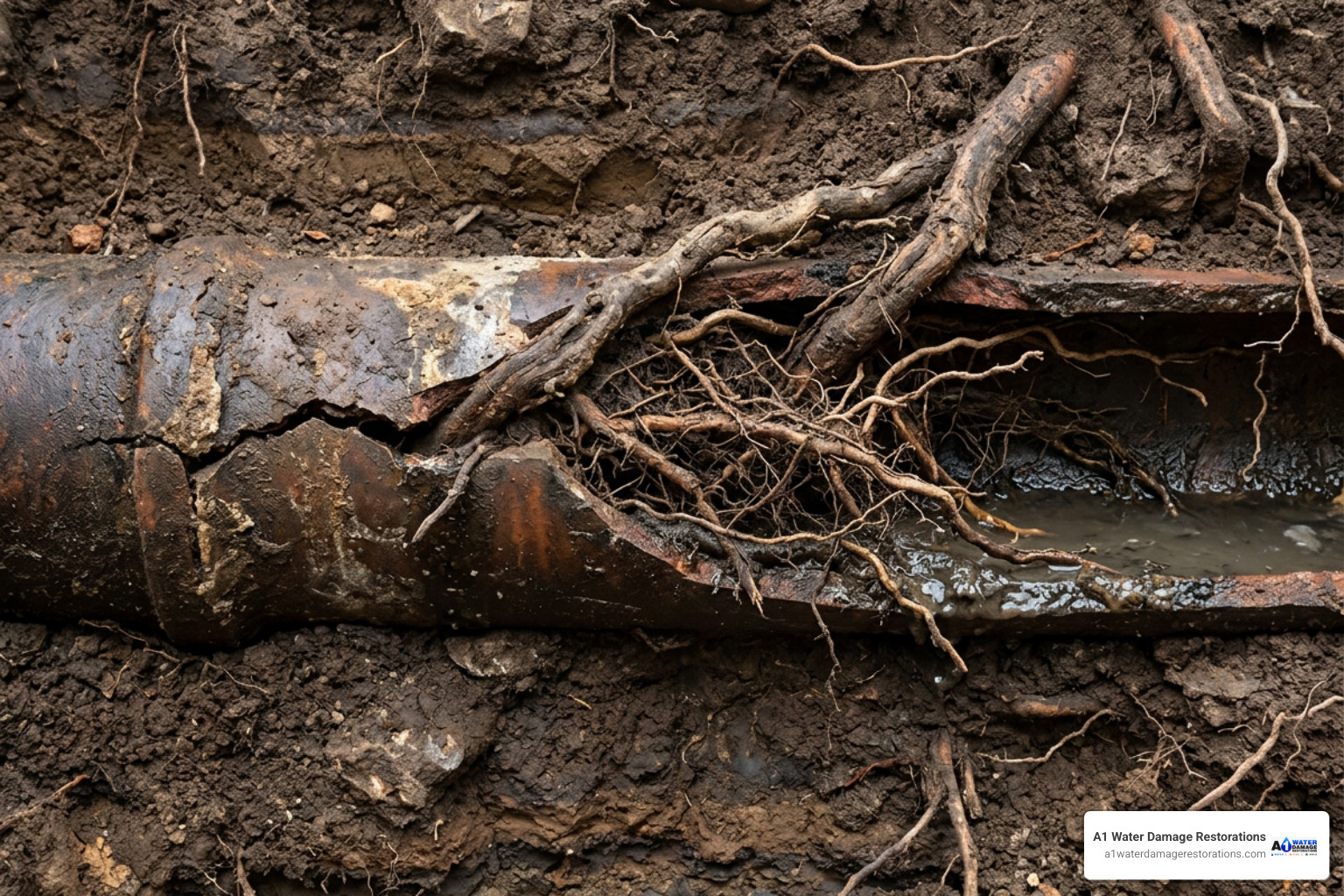
A wastewater backup happens when something obstructs the continuous, gravity-assisted flow of water leaving your home. When wastewater encounters an obstruction, it has nowhere to go but backward, seeking the lowest physical exit points in your plumbing system—usually basement floor drains, showers, or ground-level toilets.
Several primary culprits trigger these blockages:
- Tree Root Infiltration: Tree roots naturally seek out moisture and nutrients. They can penetrate tiny hairline fissures or loose joints in underground sewer pipes. Once inside, roots grow and expand into dense, web-like root balls that snag toilet paper and solid waste, completely choking off the pipe. Silver Maples, Willows, and other fast-growing trees are especially notorious for infiltrating sewer lines.
- Fats, Oils, and Grease (FOG): Liquid grease poured down kitchen drains cools and solidifies inside the pipe walls. Over time, layers of congealed grease accumulate, narrowing the pipe diameter until water can no longer pass through.
- Flushed Foreign Items and “Flushable” Wipes: Despite what product packaging claims, wet wipes, paper towels, facial tissues, diapers, and feminine hygiene products do not break down like toilet paper. They bind with grease and catch on pipe imperfections, creating stubborn obstructions.
- Pipe Sagging (“Bellied” Pipes): Soil shifting or improper bedding beneath a sewer pipe can cause a section to sink or sag, creating a low spot known as a belly. Gravity cannot push solids uphill out of the belly, causing debris and wastewater to collect until a full blockage forms.
- Aging Infrastructure and Pipe Deterioration: Municipal sewer mains often have an expected operational lifespan of around 100 years, and private laterals often match the age of the house they serve. Older clay, cast iron, or Orangeburg (bituminized fiber) pipes deteriorate over decades, eventually cracking, corroding, or collapsing completely under soil weight.
- Heavy Rainfall and Wet-Weather Overloads: During intense storms, massive amounts of stormwater and groundwater can enter the sanitary sewer system through surface flooding, cracked lines, or unpermitted foundation drain connections. When the municipal sewer main exceeds capacity, wastewater is forced backward up private service lines into connected homes.
For deeper insights into how municipal systems handle these issues, review the City of Madison Sanitary Sewer Backup Guide.
Private Lateral vs. Public Main Blockages
Understanding the difference between your private sewer lateral and the public sewer main is crucial when determining who handles the repair.
- The Private Sewer Lateral: This is the underground pipe connecting your home’s internal plumbing to the municipal main in the street or alley. In most municipalities across the Denver Metro Area—including Denver, Arvada, Westminster, Golden, Littleton, Broomfield, and Boulder—the property owner owns and is entirely responsible for maintaining and repairing the lateral all the way to the connection at the main sewer main.
- The Public Sewer Main: This is the large municipal utility pipe running under the street that collects wastewater from multiple private laterals and transports it to a wastewater treatment facility.
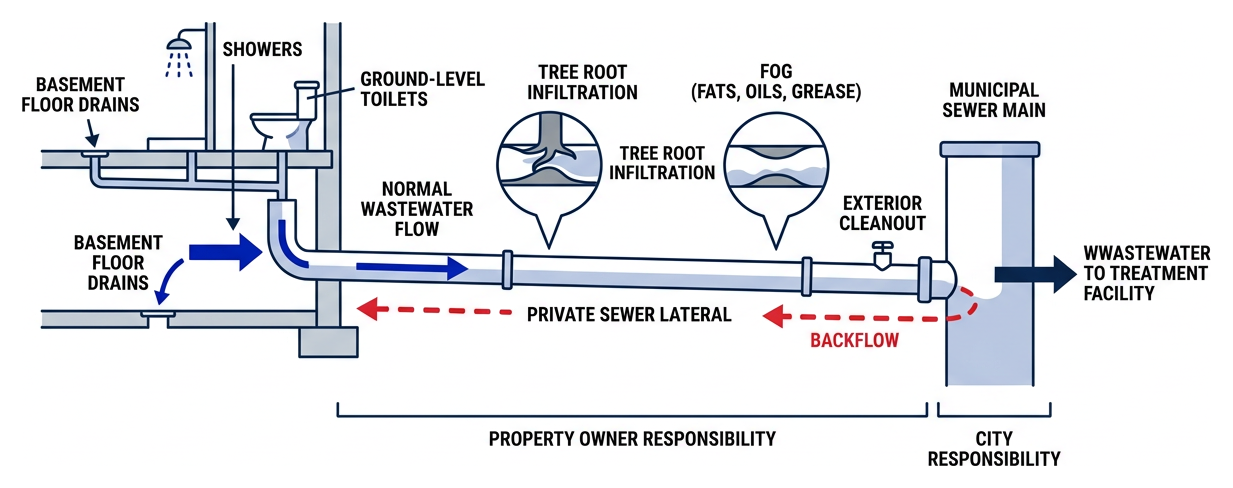
How can you tell if the blockage is isolated to your private lateral or located in the public main?
- Check the Cleanout: If your home has an exterior ground-level sewer cleanout cap, look to see if sewage is backing up out of the cleanout pipe in your yard. If the cleanout is overflowing while no water is running inside your home, the blockage is downstream toward the street.
- Check with Neighbors: Speak to your immediate next-door neighbors. If multiple adjacent homes are experiencing simultaneous sewer backups during heavy rain, the municipal sewer main is likely backed up or overloaded. If you are the only home affected, the clog is almost certainly inside your private lateral line.
- CCTV Video Scoping: A professional plumber inserts a specialized waterproof camera down the sewer line to pinpoint the exact location and nature of the obstruction. To see how local governments maintain their infrastructure, check the City of Boulder Sanitary Sewer Rehabilitation Program.
Early Warning Signs of Sewer Trouble
A primary line backup rarely happens without warning. Recognizing the early symptoms allows you to intervene before wastewater spills across your basement floor:
- Gurgling Drains and Bubbling Toilets: When air is trapped in the plumbing lines due to a downstream obstruction, water displacement forces air back up through P-traps, creating audible bubbling or gurgling sounds when you flush a toilet or drain a sink.
- Multiple Fixture Backups: If using your washing machine causes water to rise inside your basement shower, or running the bathroom sink causes the nearby toilet to bubble, the issue is in your main line rather than a single branch line.
- Pervasive Sewage Odors: The smell of sewer gas (hydrogen sulfide) escaping from basement floor drains or plumbing vents indicates that waste is sitting stagnant in the lateral or that dry P-traps are allowing sewer gases to travel back indoors.
- Slow Drainage Throughout the Home: If every sink, tub, and toilet in the house drains sluggishly at the same time, the main exit pipe is failing to discharge water properly.
- Soggy Patches in the Yard: An unexplained damp spot, sinkhole, or unusually lush, green patch of grass above your buried sewer line often indicates an underground pipe break or joint separation leaking wastewater into the soil.
Immediate Actions to Take During a Plumbing Emergency
When wastewater starts backing up, remaining calm and taking systematic steps prevents cross-contamination, safeguards your home’s electrical systems, and limits structural damage.
Immediate Emergency Steps for a Main Sewer Backup
- Stop All Water Usage Immediately: Do not flush any toilets, take showers, run dishwashers, or use washing machines. Any water you introduce into your plumbing system has nowhere to go and will immediately spill out of your lowest drains.
- Shut Off the Electrical Power: If standing sewage reaches electrical outlets, baseboard heaters, extension cords, or appliances (such as water heaters and furnaces), do not step into the water. Turn off the power at the main breaker box only if the electrical panel is safely accessible in a dry, unaffected area. If the panel is in the flooded zone, contact your electric utility to shut off power at the meter.
- Keep People and Pets Out of the Area: Quarantine the flooded rooms immediately. Children, pets, and immunocompromised family members must stay away from the affected area to avoid accidental exposure or tracking contamination into clean living spaces.
- Locate and Carefully Check the Outdoor Cleanout: If you have an accessible exterior cleanout, removing the cap can release pressure and direct escaping sewage into the yard rather than inside your basement.
- Avoid Chemical Drain Openers: Never pour caustic chemical drain cleaners (like sulfuric acid or lye-based products) into drains during a main line backup. These chemicals will not dissolve heavy root masses or collapsed pipes, and they will sit in the backed-up wastewater, creating severe chemical burn hazards for plumbers and restoration technicians.
- Notify the Authorities and Professionals: Call your local sewer utility emergency line to report the backup and verify that the public main is flowing freely. If your municipality determines the main line is clear, immediately contact a licensed plumber to clear the line and reach out to our team at A1 Water Damage Restorations to begin structural extraction and sanitization. For additional guidance on managing side sewer issues, review the Seattle Public Utilities Side Sewer Guidance.
Essential Safety Precautions and Health Risks
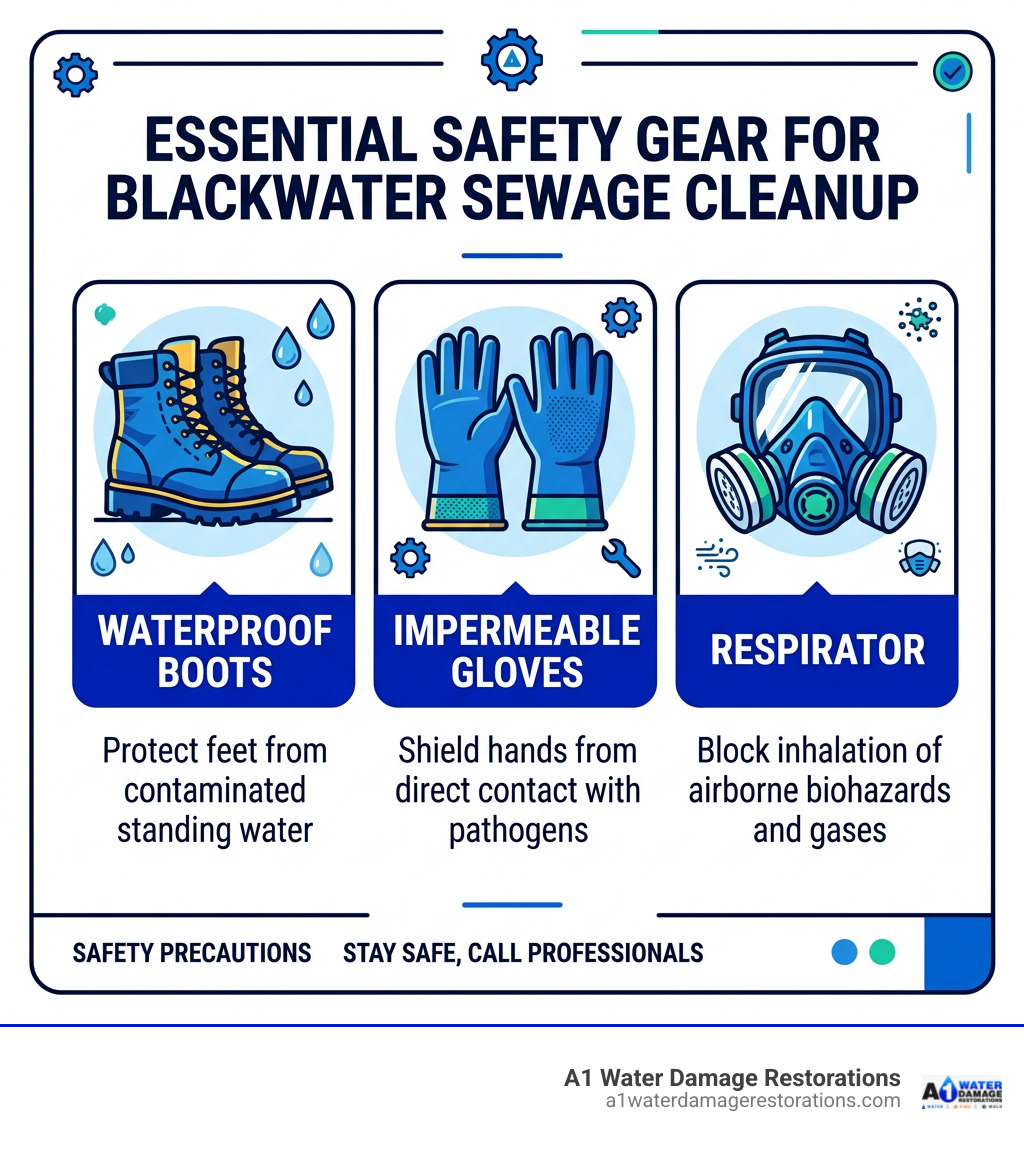
Sewage backups are classified by the Institute of Inspection, Cleaning and Restoration Certification (IICRC) as Category 3 “Blackwater” events. Category 3 water is grossly contaminated and contains pathogenic agents, toxic biohazards, and hazardous materials.
Direct contact with raw sewage or inhalation of airborne contaminants carries severe health risks:
- Gastrointestinal Illnesses: Pathogens such as E. coli, Salmonella, Giardia, and Cryptosporidium can cause severe vomiting, cramping, diarrhea, and dehydration.
- Viral Infections: Sewage can transmit hepatitis A, rotavirus, and enteroviruses.
- Skin and Eye Infections: Microscopic abrasions exposed to blackwater can rapidly develop into cellulitis, staph infections, or severe dermatological reactions.
- Respiratory Irritation: Airborne bioaerosols and mold spores that propagate in warm, damp sewage environments cause severe respiratory inflammation, especially in individuals with asthma or allergies.
If you must enter the perimeter of an affected area, always wear Personal Protective Equipment (PPE):
- Heavy-duty, waterproof rubber boots.
- Thick nitrile or rubber gloves (avoid thin disposable gloves).
- Full eye protection (non-vented safety goggles).
- A well-fitted N95 or P100 respirator mask.
- Disposable protective coveralls to keep biohazards off your clothing.
How to Clean Up and Disinfect After Sewage Intrusion
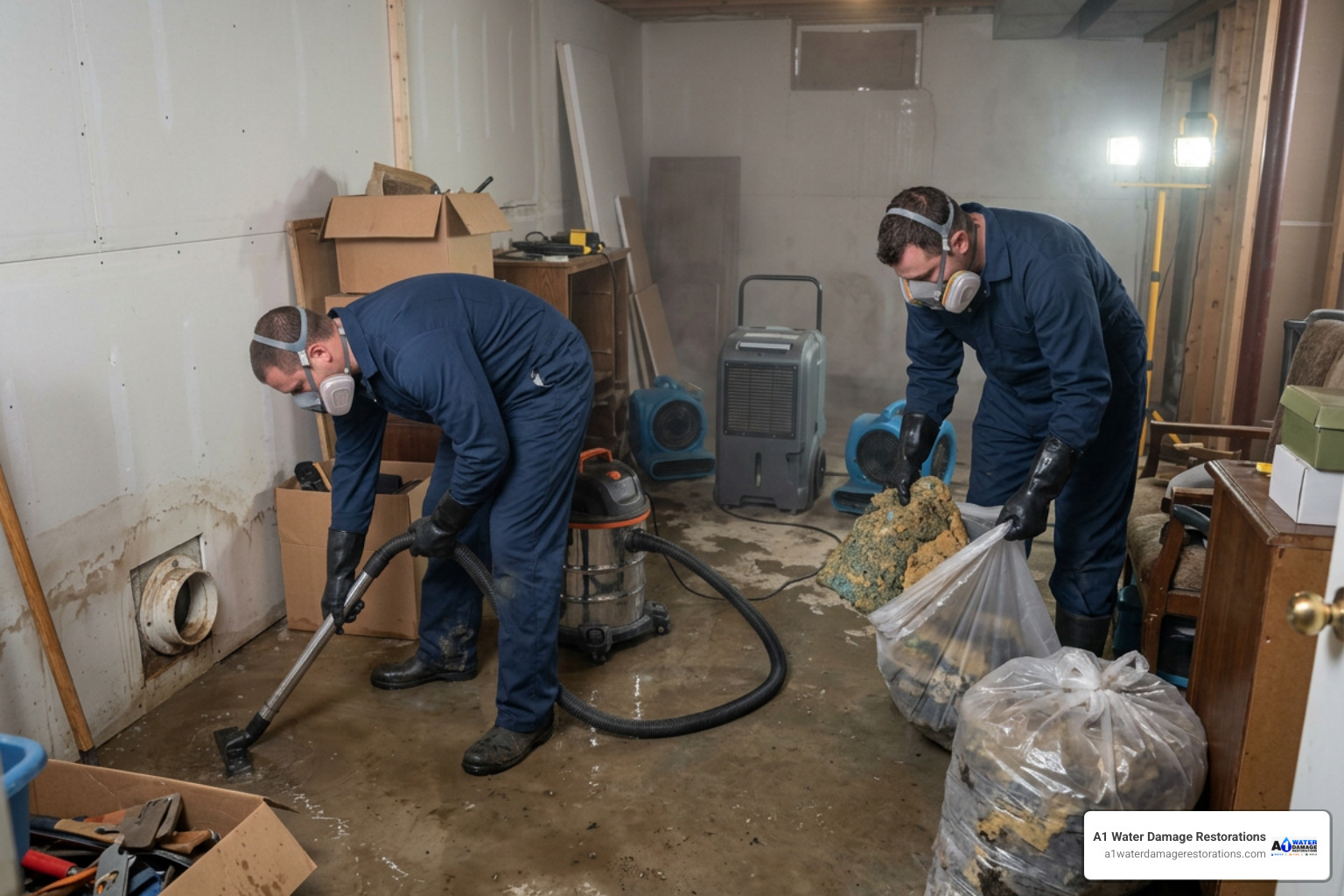
Cleaning up after a sewage backup is not a standard DIY weekend chore. Because blackwater penetrates porous building materials within hours, improper cleanup creates long-term structural rot and dangerous hidden mold colonies.
Sanitization Protocols and Material Removal
Our certified technicians at A1 Water Damage Restorations adhere to rigid IICRC S500 standards to restore your living space to a safe, sanitary state:
- Rapid Blackwater Extraction: Technicians use commercial truck-mounted vacuum units equipped with specialized filtration to extract standing liquid, sludge, and solid waste from floors.
- Removal of Non-Restorable Porous Materials: Category 3 water permanently contaminates porous and semi-porous items. Materials that must be safely bagged, removed, and discarded include:
- Saturated carpets, padding, and area rugs.
- Drywall and gypsum board (cut and removed at least 12–24 inches above the highest water line).
- Fiberglass, cellulose, or mineral wool insulation.
- Particleboard, laminate flooring, and warped solid hardwoods.
- Saturated upholstered furniture, mattresses, and cardboard storage boxes.
- Cleaning of Non-Porous Surfaces: Hard surfaces like poured concrete, metal, and structural framing are scrubbed using professional-grade detergents, hot water, and mechanical agitation to remove all residual bio-load.
- Application of EPA-Registered Antimicrobials: After washing, surfaces are treated with broad-spectrum hospital-grade disinfectants and antimicrobial agents to eliminate remaining bacteria, viruses, and fungi. (Safety note: Never mix household bleach with ammonia-based cleaning products, as this produces toxic chloramine gas.)
- Structural Drying and Dehumidification: Industrial LGR (low-grain refrigerant) dehumidifiers and high-velocity axial air movers are deployed to draw deep-seated moisture out of concrete foundations and wood framing.
- HEPA Air Scrubbing: Commercial air scrubbers fitted with HEPA filters and activated carbon stages run continuously to capture airborne particulate matter, mold spores, and lingering sewer odors.
Professional Solutions to Clear a Main Sewer Backup
While restoration technicians handle the interior cleanup, a licensed drain specialist or master plumber must address the physical pipe blockage:
- High-Pressure Hydro Jetting: Hydro jetting uses specialized nozzles to blast water at pressures up to 4,000 PSI through your sewer line. This scours the inner walls of the pipe, cutting through heavy root intrusions, flushing out mineral scale, and stripping away grease accumulations.
- Mechanical Drain Snaking (Augering): A heavy-duty motorized steel cable fitted with specialized cutting heads is inserted down the cleanout to bore through stubborn physical clogs and punch holes through root masses.
- Video Camera Pipeline Inspection: Following mechanical clearing, a self-leveling fiber-optic camera is pushed through the pipe to inspect the line’s structural integrity, locate pipe bellies, and check for structural cracks.
- Cured-in-Place Pipe (CIPP) Relining: If the pipe is cracked or compromised by roots but structurally intact, trenchless pipe relining creates a new pipe within the old one. An epoxy-saturated liner is pulled into place, inflated, and cured, sealing all cracks and joints without excavating your landscaping.
- Trenchless Pipe Bursting or Traditional Excavation: If the pipe has fully collapsed or suffered severe bellies, pipe bursting pulls a new high-density polyethylene (HDPE) pipe through the old line while fracturing the damaged pipe outward. In cases with severe depth or structural challenges, open-trench excavation may be required to replace the line.
Navigating Insurance Claims, City Reimbursement, and Prevention
Recovering from a sewer disaster involves understanding the boundary lines between private responsibility and municipal liability, filing insurance claims correctly, and upgrading your home to prevent future backups.
| Factor | Private Sewer Lateral | Municipal Sewer Main |
|---|---|---|
| Physical Location | Extends from home foundation to the street/utility connection. | Runs underneath public roadways, easements, or alleys. |
| Maintenance Responsibility | Property owner is responsible for regular cleaning, rodding, and repairs. | Municipal utility or sanitation district is responsible for upkeep. |
| Common Causes of Failure | Tree roots, grease accumulation, flushed wipes, collapsed pipes. | Stormwater surcharge, massive structural main collapses, utility-wide blockages. |
| Repair Cost Responsibility | Property owner / Private homeowner insurance. | City / Public wastewater utility provider. |
| Typical Claims Process | Homeowner files claim under optional Sewer Backup Insurance Rider. | Property owner files administrative claim with municipality or city risk management. |
Navigating Insurance and Municipal Claims
- Standard Homeowners Insurance Exclusions: Standard HO-3 homeowners insurance policies generally exclude damage caused by sewer backups and water that backs up through drains.
- Sewer and Drain Backup Rider: To ensure coverage, homeowners should purchase an optional Water Backup and Sump Overflow Endorsement (often called a sewer rider). These endorsements are relatively inexpensive and provide dedicated policy limits (typically ranging from $5,000 to $25,000+) to cover cleanup, structural drying, and personal property replacement.
- Filing a Municipal Claim: If a backup is caused by an issue in the municipal main line, you can file a formal damage claim with your city or sanitation district. Most municipalities require administrative claims to be filed within a strict timeframe (often within 90 days of the incident). Document the event thoroughly: take clear photos and videos of the damage before cleanup begins, maintain every invoice and itemized receipt, and log all correspondence with utility dispatchers and plumbing contractors.
Long-Term Prevention Strategies
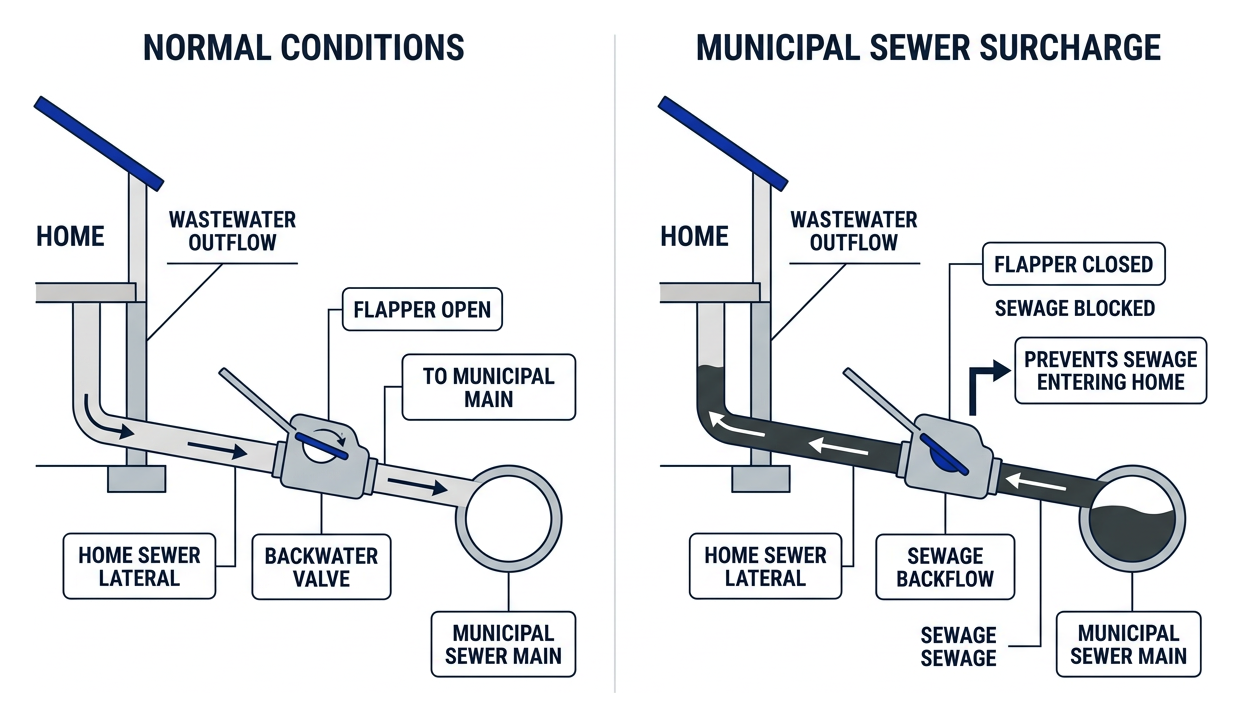
- Install a Backwater Valve: A backwater valve is a mechanical check-valve installed on your main sewer lateral in the basement. Under normal conditions, wastewater flows out into the municipal main. If the city sewer surcharges and pushes water backward, the internal flapper swings shut, blocking sewage from entering your home. Inspect and clean your backwater valve at least twice a year to clear any lint or debris from the flapper hinge.
- Practice Conscious Drain Habits:
- Never pour fats, oils, or grease down any drain. Collect cooking grease in a heat-safe container, allow it to solidify, and discard it in the trash.
- Adhere strictly to the “Three Ps” rule for toilets: only flush Pee, Poop, and (toilet) Paper.
- Dispose of all wet wipes, sanitary napkins, dental floss, and facial tissues in the trash.
- Maintain Basement Sump Pumps: Sump pumps should pump groundwater out to your lawn or dedicated storm sewer connections. Never tie foundation drains or sump pump discharge lines into your sanitary sewer floor drains, as this can overload your private line during rainstorms.
- Schedule Regular Video Inspections: If you live in an older home with mature trees nearby, have a licensed plumber perform a video camera inspection of your sewer lateral every 1 to 2 years to catch root intrusion and structural defects early.
Frequently Asked Questions About Sewer Line Backups
Who is responsible for paying for sewer backup repairs?
In almost all jurisdictions, the property owner is legally and financially responsible for maintaining, clearing, and repairing the private sewer lateral from the home’s foundation all the way to the municipal connection point. If the backup is conclusively proven to have originated from a blockage or collapse within the municipal sewer main, the local sanitation district or city utility is typically responsible for clearing the main, and homeowners may submit a claim for restoration costs through the city’s risk management department.
Does standard homeowners insurance cover sewer backups?
No. Standard baseline homeowners insurance policies (such as standard HO-3 forms) exclude damage resulting from sewer backups, surface water flooding, and sump pump overflows. To protect your property, you must add a specific Water Backup of Sewers or Drains Endorsement to your policy. This rider provides designated funds for water extraction, material tear-out, sanitization, structural drying, and personal property replacement.
How can I prevent future sewer line clogs?
To prevent future sewer line backups, install an accessible, code-compliant backwater prevention valve on your main waste line. Avoid washing cooking grease, coffee grounds, and harsh chemicals down drains, and never flush wet wipes or feminine hygiene products. For properties with mature landscaping, schedule regular sewer rodding and high-pressure hydro jetting every 18 to 24 months to prevent tree roots from choking the lateral.
Conclusion
A main sewer line backup is one of the most stressful emergencies a homeowner can face. Because Category 3 blackwater carries significant health risks, swift containment and professional remediation are critical to protect your family’s safety and preserve your home’s structural integrity.
Stop using water immediately, avoid walking into contaminated areas, shut down electrical circuits if safe, and contact licensed professionals right away.
At A1 Water Damage Restorations, our family-owned team delivers 24/7 IICRC-certified emergency response across the entire Denver Metro Area, including Denver, Boulder, Cherry Creek, Golden, Greenwood Village, Arvada, Westminster, Wheat Ridge, Broomfield, and Littleton. We handle the entire recovery process—from initial wastewater extraction and deep antimicrobial sanitization to structural drying, insurance claim documentation, and complete reconstruction.
When plumbing disasters strike, trust our rapid-response team to restore your home safely and thoroughly. Contact us today for emergency assistance or learn more about our professional sewage cleanup services.