

HVAC Cleaning for Mold: What to Do First
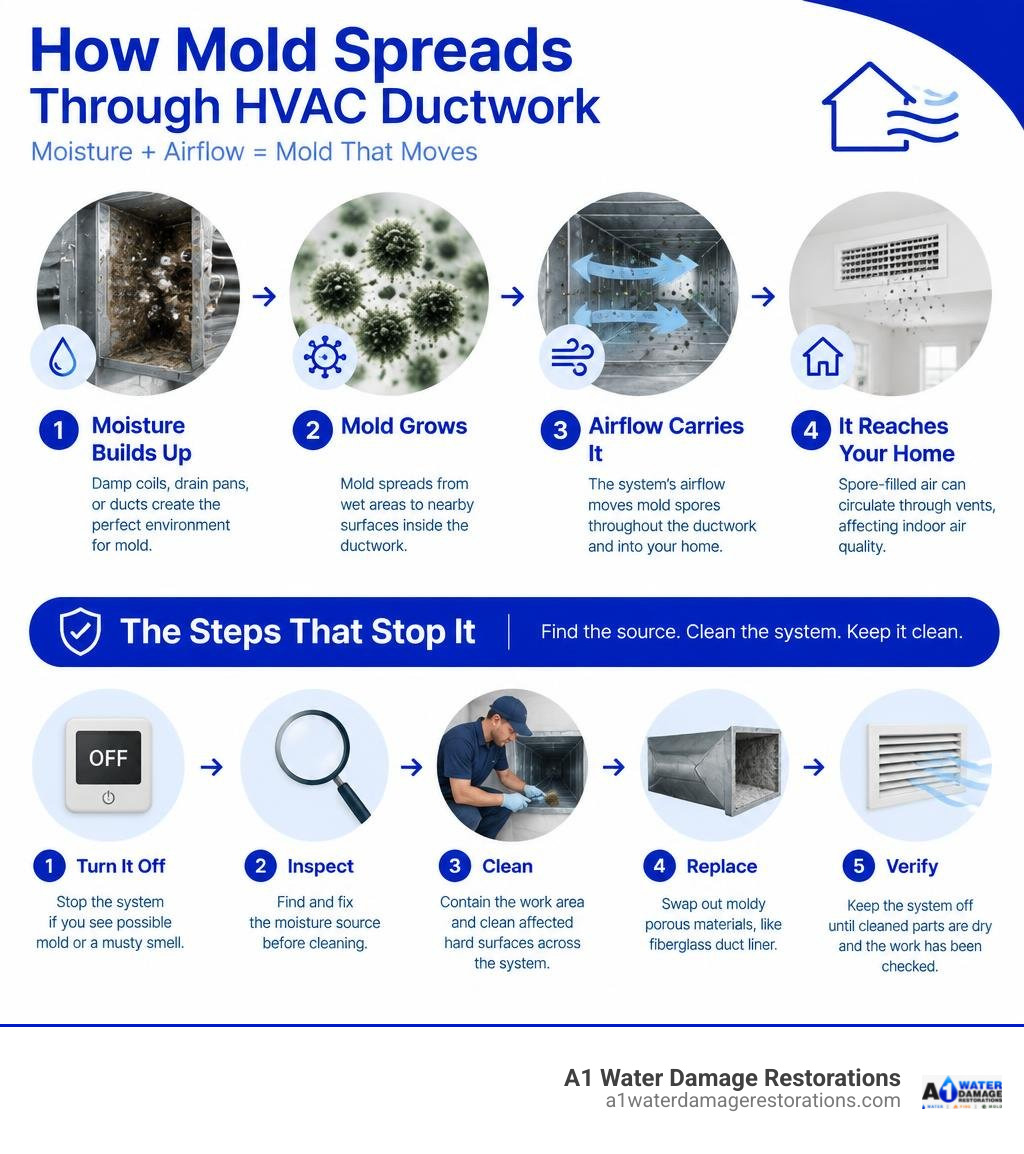
If you see possible mold in your HVAC system, turn it off and arrange an inspection. Effective HVAC cleaning for mold starts with finding and fixing the moisture source. A qualified crew can then contain the work area, clean affected hard surfaces across the system, and replace moldy porous materials such as fiberglass duct liner. The system should stay off until cleaned parts are dry and the work has been checked.
A musty smell when the air runs is worth investigating. Damp coils, drain pans, and ducts can support mold growth, and airflow may carry particles through the home.
I’m Cole Nudel, a disaster restoration professional with A1 Water Damage Restorations in the Denver area. My work in disaster recovery informs this guide to HVAC cleaning for mold, from the first safety steps to preventing it from returning.
Common hvac cleaning for mold vocab:
Recognizing Signs and Root Causes of HVAC Contamination
When microbial growth establishes a colony inside your air handler or ventilation network, it rarely stays confined to one spot. Because your heating and cooling system acts as the respiratory tract of your property, active colonies release spores, microbial volatile organic compounds (mVOCs), and microscopic fragments directly into the airstream.
The most frequent warning sign is a persistent, earthy, or locker-room-like odor that intensifies whenever your blower motor kicks on. Occupants often report unexplained allergy flare-ups, chronic coughing, scratchy throats, sinus irritation, or headaches that ease when they leave the building. You might also spot dark speckling, fuzzy patches, or suspicious streaking around supply vents, return grilles, or within the air handler compartment.
Public health authorities emphasize vigilance regarding air distribution pathways; following official CDC guidance on checking HVAC systems for mold helps building owners catch contamination before spores become widespread. If you suspect an issue, focusing on eliminating mold in HVAC ducts without ruining your air quality protects your household from aggressive cross-contamination during investigation and remediation.
Primary Causes: Humidity, Condensation, and Drainage Failure
Mold spores are everywhere in outdoor and indoor air, but they remain dormant until they encounter moisture, darkness, and an organic food source like accumulated household dust, skin cells, and pollen.
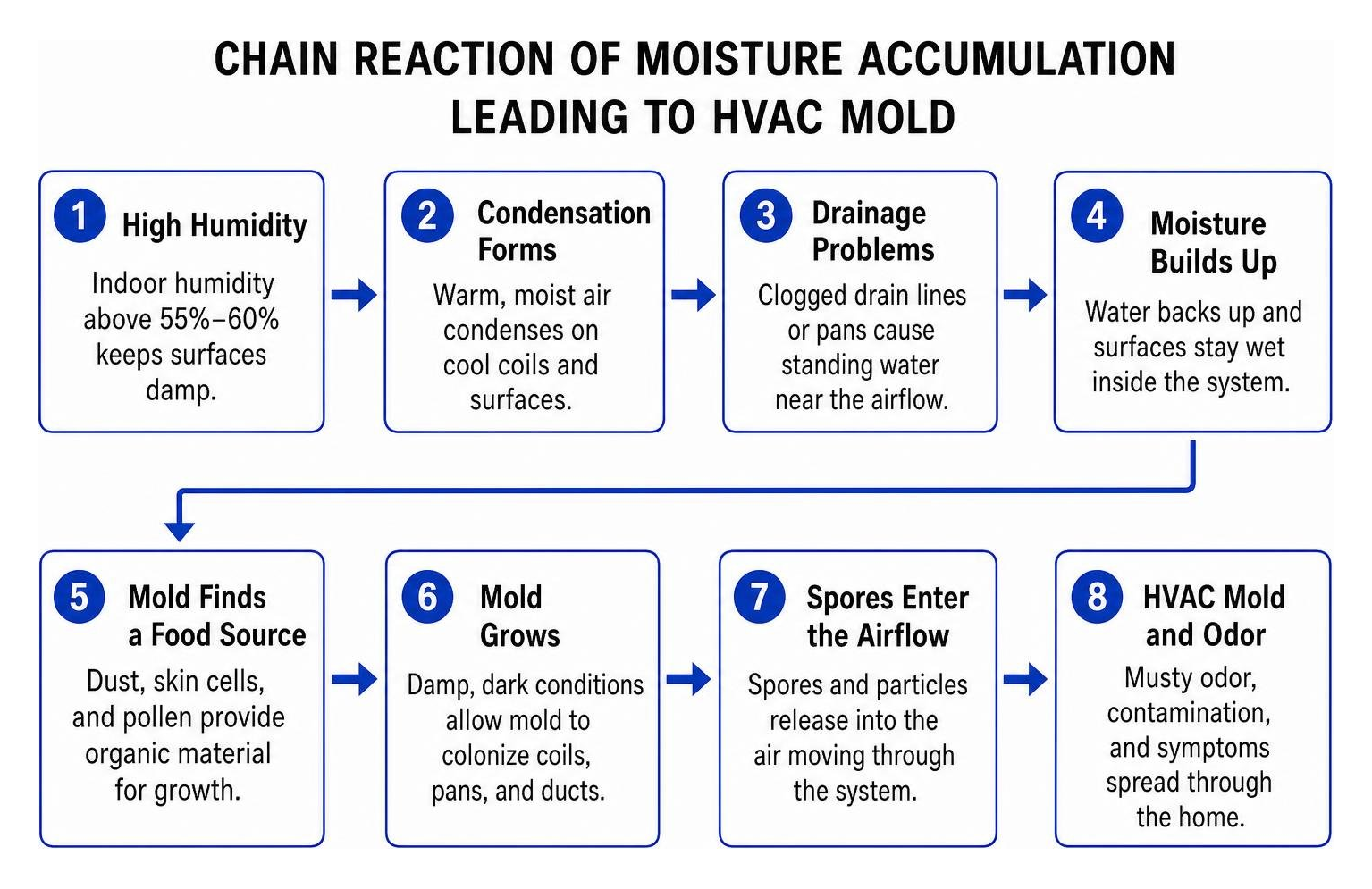
The primary mechanical breakdowns and environmental triggers that lead to severe HVAC contamination include:
- Clogged Condensate Drain Lines and Pans: As your evaporator coil extracts humidity from warm air, water drips into a collection pan and drains outside. When algae, dust, or sludge block this line, water backs up, creating standing moisture right next to the high-velocity airstream.
- Dirty Evaporator Coils: A neglected evaporator coil collects fine particulate matter. When combined with regular condensation during cooling cycles, the coil becomes an ideal breeding ground for biological growth.
- Excessive Indoor Humidity: Maintaining relative humidity above 55% to 60% prevents building materials from drying out, allowing fungal spores on duct walls and registers to germinate.
- Ductwork Condensation: When warm, humid air surrounds uninsulated or poorly sealed metal ducts in unconditioned crawl spaces, basements, or attics, moisture condenses on the metal surfaces—a process known as duct sweating.
- Improperly Sized HVAC Equipment: An oversized air conditioner or heat pump cools a home too quickly without running long enough to pull moisture out of the air. This short-cycling leaves high humidity behind, fueling mold growth across the air handler.
Differentiating Surface Dust from Active Biological Growth
Not every dark smudge inside a vent is toxic mold. In many homes across Denver, Westminster, and Littleton, heavy dust, soot from candles, or pet dander can settle inside register boots and appear alarming.
To determine whether you are dealing with inert particulate accumulation or an active microbial colony, we evaluate the system against industry environmental conditions defined in restoration standards:
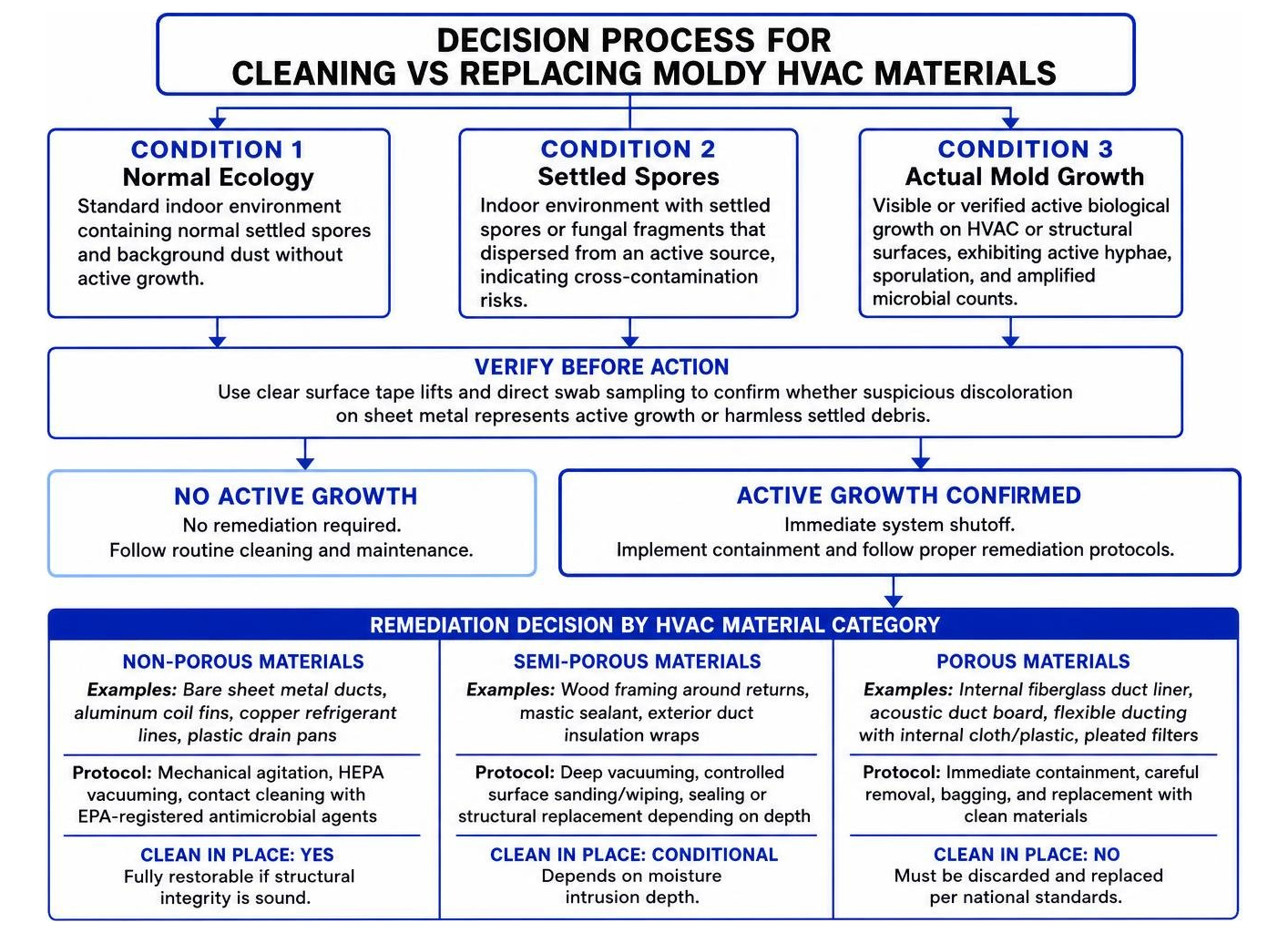
- Condition 1 (Normal Ecology): Standard indoor environment containing normal settled spores and background dust without active growth.
- Condition 2 (Settled Spores): An indoor environment with settled spores or fungal fragments that dispersed from an active source, indicating cross-contamination risks.
- Condition 3 (Actual Mold Growth): Visible or verified active biological growth on HVAC or structural surfaces, exhibiting active hyphae, sporulation, and amplified microbial counts.
Restoration professionals use clear surface tape lifts and direct swab sampling to confirm whether suspicious discoloration on sheet metal represents active growth or harmless settled debris before undertaking extensive demolition.
Essential Protocols for HVAC Cleaning for Mold
When active growth is confirmed, improvising or spraying random household cleaners into a running vent can cause serious harm. Turning on your system while mold is present forces spores deep into wall cavities, soft furnishings, and living spaces.
Immediate shutoff of the system is the crucial first step. From there, strict physical engineering controls must be put in place before any scrubbing or vacuuming begins. Homeowners should also follow safe procedures when managing surface vents, referencing proven safe AC vent mold cleaning methods to avoid loosening spores into their living areas.
| HVAC Component Category | Material Examples | Remediation Protocol | Can It Be Cleaned in Place? |
|---|---|---|---|
| Non-Porous Materials | Bare sheet metal ducts, aluminum coil fins, copper refrigerant lines, plastic drain pans | Mechanical agitation, HEPA vacuuming, contact cleaning with EPA-registered antimicrobial agents | Yes — fully restorable if structural integrity is sound |
| Semi-Porous Materials | Wood framing around returns, mastic sealant, exterior duct insulation wraps | Deep vacuuming, controlled surface sanding/wiping, sealing or structural replacement depending on depth | Conditional — depends on moisture intrusion depth |
| Porous Materials | Internal fiberglass duct liner, acoustic duct board, flexible ducting with internal cloth/plastic, pleated filters | Immediate containment, careful removal, bagging, and replacement with clean materials | No — must be discarded and replaced per national standards |
Containment Protocols During HVAC Cleaning for Mold
To ensure that dislodged mold spores do not escape into occupied living quarters, certified restoration teams isolate the work zones. This process starts by sealing every supply and return register grille throughout the home with heavy-duty plastic sheeting and painter’s tape.
Within the mechanical room or attic where the air handler sits, technicians establish a negative pressure containment zone using heavy poly sheeting and continuous HEPA-filtered air scrubbers. During active remediation, these air filtration devices must deliver a minimum of four (4) complete air changes per hour (ACH) within the containment workspace. This constant negative pressure ensures that any airborne spores dislodged during physical cleaning are captured instantly rather than drifting into adjacent bedrooms or living rooms.
Remediation vs Replacement of Ductwork Components
A critical distinction in professional mold remediation is knowing what can be salvaged and what must be removed.
Bare sheet metal ductwork is non-porous and can be scrubbed, sanitized, and fully restored. However, internal fiberglass duct liner and porous fibrous duct board present a different challenge. When mold hyphae penetrate the porous matrix of internal fiberglass insulation, standard surface wiping cannot reach the root structure without shredding the insulation fibers.
Furthermore, the Environmental Protection Agency explicitly states that there are currently no EPA-registered biocides approved for internal porous fiberglass duct liners. Attempting to encapsulate or spray over moldy internal insulation is a temporary cosmetic mask that risks recurrent spore release. For comprehensive safety, follow recognized EPA protocols for residential mold cleanup and replace all contaminated porous materials with clean sheet metal wrapped with external insulation.
Step-by-Step Professional Remediation and Deep Cleaning
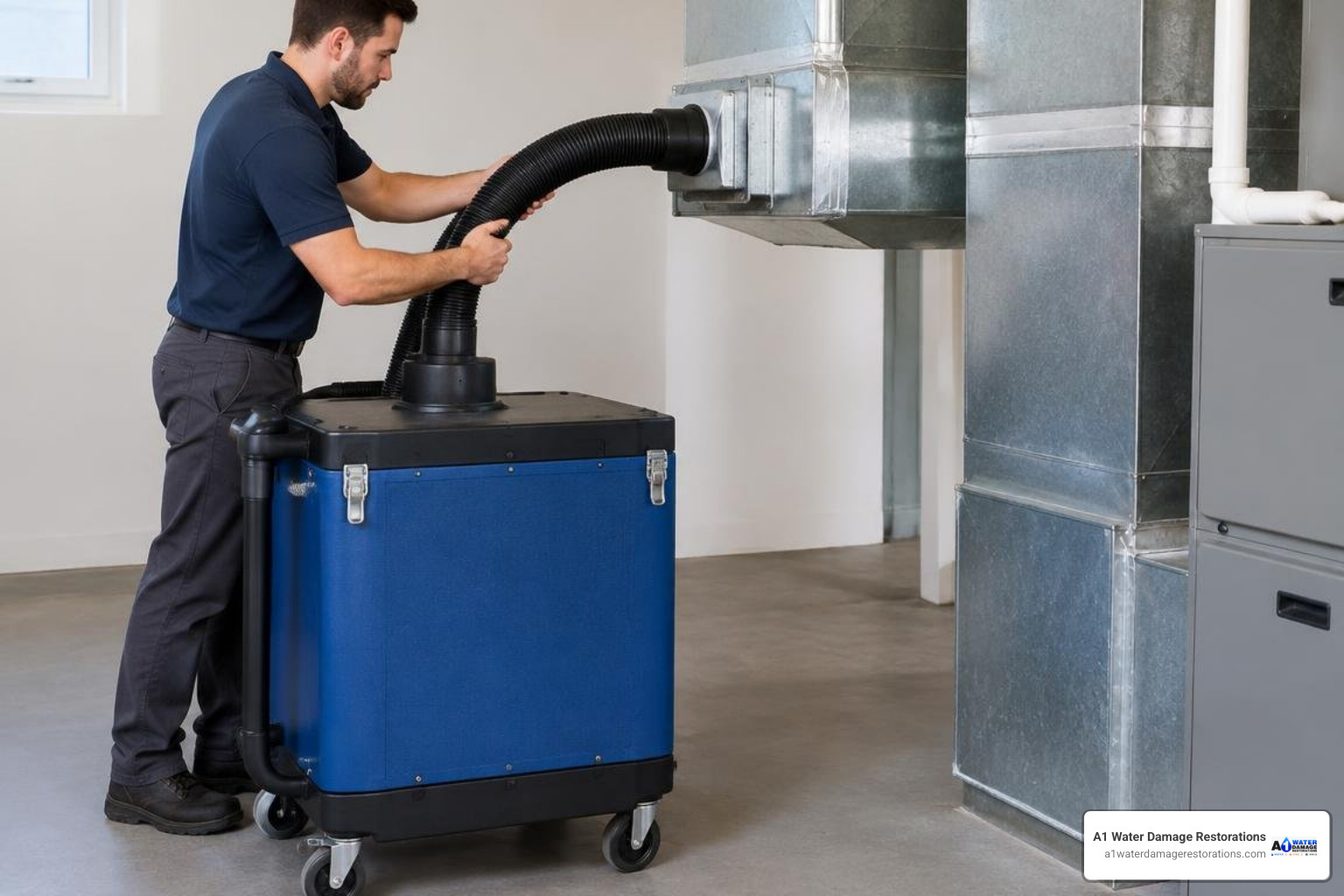
Restoring an HVAC system contaminated with mold requires specialized equipment and methodical execution. Simply blowing compressed air through the vents is ineffective and will only spread the problem.
A comprehensive approach adheres to rigorous protocols, such as those detailed in our professional mold remediation process, ensuring every inch of the air pathway is cleaned, sanitized, and verified.
Air Handler, Coil, and Blower Assembly Restoration
The air handling unit houses the dampest components of your entire climate control system, making it the most common site for mold colonization.
- System De-energization and Access: The electrical disconnect is locked out. Technicians open service panels to access the blower compartment, evaporator coil, and drain assembly.
- Source Containment: Industrial HEPA vacuums—certified to capture 99.97% of particles down to 0.3 microns—are used to remove loose debris, dust, and visible fungal mats from the cabinet interior, motor housing, and blower wheel blades.
- Evaporator Coil Restoration: The cooling fins are treated with an EPA-registered, non-corrosive foaming coil cleaner that lifts biological films from deep between the tight metal fins. Technicians use soft brushes and controlled rinsing to flush contaminants away without bending delicate aluminum fins.
- Drain Pan and Condensate Line Decontamination: The condensate drain pan is scrubbed clean of all biofilm and sludge. The drain line is mechanically cleared and flushed with an antimicrobial solution to clear blockages and stop standing water accumulation.
Duct Agitation and Source Extraction
Once the mechanical cabinet is clean, attention turns to the supply and return duct runs:
- Negative Air Hookup: A high-powered negative air extraction system is connected to the main trunk line, pulling thousands of cubic feet of air per minute through HEPA filters venting outside the home whenever possible.
- Creation of Strategic Service Openings: Where access doors do not exist, technicians cut precise service openings into sheet metal trunk lines according to strict sheet metal fabrication guidelines.
- Mechanical Agitation: Working from the register furthest from the vacuum toward the main unit, technicians feed high-velocity rotary brushes, pneumatic air whips, and skipper balls through each duct branch. This dislodges adhered mold colonies and fungal dust from duct walls, sweeping them directly into the powerful negative airstream.
- Antimicrobial Application: On non-porous sheet metal, technicians apply an EPA-registered disinfectant mist specifically formulated for HVAC environments to treat any remaining microscopic biological spores.
- Airtight Sealing: All created access ports are sealed using heavy-gauge sheet metal patches, mechanical fasteners, and mastic tape to ensure the system is completely airtight.
Industry Standards and Reputable Contractor Verification
When it comes to biological contamination in your ventilation network, not all cleaning companies possess the training, containment tools, or certifications needed to manage mold safely. General air duct cleaning is distinct from microbial remediation.
Hiring a contractor who adheres to established national guidelines ensures your home is treated safely. Homeowners should look for firms that follow the National Air Duct Cleaners Association (NADCA) standard outlined in the NADCA ACR assessment and cleaning standards, alongside the Institute of Inspection, Cleaning and Restoration Certification (IICRC) S520 Standard for Professional Mold Remediation.
Finding certified mold duct cleaning services guarantees that the crew working on your home carries verified credentials, such as NADCA’s Air Systems Cleaning Specialist (ASCS) certification, and uses proper containment throughout the project.
Avoiding Common Duct Cleaning Scams and Fraudulent Practices
The duct cleaning sector has unfortunately seen an influx of deceptive operators offering cut-rate promotions. Protecting your household requires recognizing the warning signs of fraudulent contractors:
- “Blow-and-Go” $99 Whole-House Specials: Unscrupulous operators advertise unrealistically low rates, only to spend twenty minutes with a household shop vacuum before trying to upsell thousands of dollars in unneeded “mold treatments.”
- Unsubstantiated Chemical Fogging: A technician should never spray an unverified biocide or aerosol sealant into your vents without first mechanically cleaning the dust and debris. Applying chemicals over dirt does not kill mold roots and introduces airborne chemical irritants to your home.
- Failure to Clean the Entire System: Reputable remediation covers the complete air path—including supply ducts, return trunks, blower assembly, evaporator coils, and drain pan. Cleaning only the supply vents leaves the contamination source active inside the air handler.
- Unverifiable Licensing and Insurance: Always request proof of liability insurance, worker’s compensation, and third-party certifications (such as IICRC and NADCA) before letting anyone touch your ventilation system.
Post-Remediation Verification and Clearance Testing
How do you confirm that your HVAC system is genuinely clean and safe to operate? True remediation concludes with structured post-cleaning verification:
- Visual Inspection: Technicians use high-lumen inspection lamps and digital borescopes to examine the deep interiors of duct trunks, verifying that all non-porous surfaces are clean and free of visible dust and biological residue.
- Particle Count Testing: Using handheld laser particle counters, technicians compare indoor particulate counts against outdoor baseline metrics to confirm air scrubbing efficiency.
- Independent Clearance Testing: In cases of severe contamination, an independent Indoor Environmental Professional (IEP) can collect post-remediation air or surface swab samples to verify that fungal spore counts have returned to normal Condition 1 ecology.
Long-Term Maintenance and Prevention Strategies
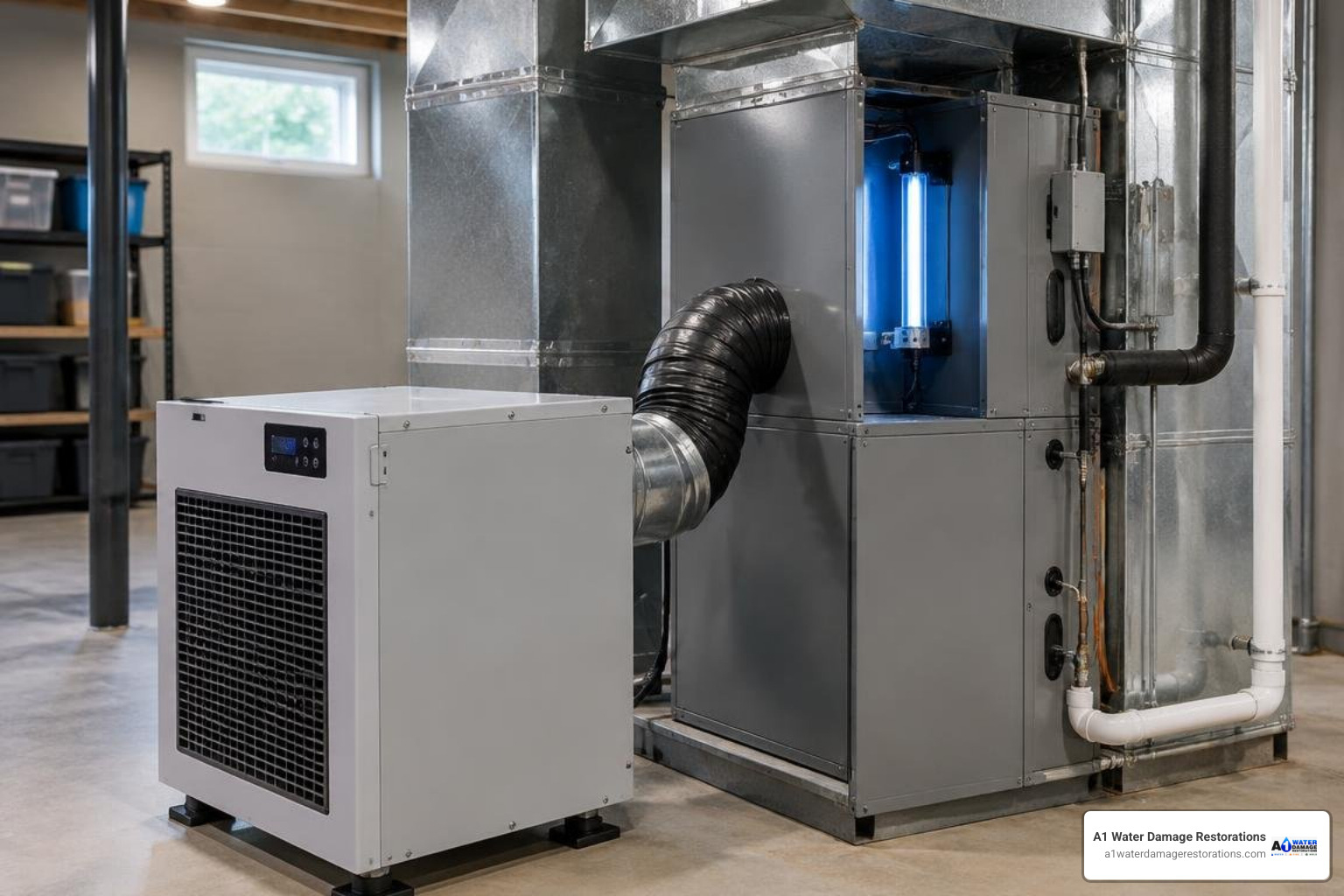
Remediating contaminated ductwork is only half the battle; stopping moisture recurrence is what keeps your indoor air clean over the long haul. Without resolving underlying moisture sources, airborne spores will eventually settle and recolonize the system.
A proactive approach to moisture control, airflow balancing, and continuous air purification protects your indoor air quality across every season.
Moisture Management Following HVAC Cleaning for Mold
Moisture control is your primary defense against future fungal growth:
- Maintain Optimal Relative Humidity: Keep indoor relative humidity between 30% and 50% year-round. In humid summer months, integrating a whole-house dehumidifier with your central HVAC system removes excess moisture without overcooling your home.
- Seal and Insulate Duct Runs: Ensure all duct joints are sealed with mastic sealant and wrapped with exterior insulation, especially in unconditioned areas like attics and crawl spaces across Broomfield, Golden, and Arvada, to eliminate condensation.
- Install Drain Pan Float Switches: Adding an automated float switch to your condensate collection pan will shut off your AC immediately if the drain line blocks, preventing standing water accumulation.
- Address Water Intrusion Immediately: If you experience an attic roof leak, plumbing spill, or basement seepage near your furnace, dry wet materials within 24 to 48 hours to prevent spores from infiltrating your return ductwork.
Air Filtration Upgrades and In-Duct Purification
To maintain clean internal components and ensure your system continues delivering fresh air, consider these targeted equipment upgrades:
- Upgrade Air Filtration: Replace thin fiberglass filters with pleated filters rated MERV 8 to MERV 11. These capture microscopic spores and fine organic dust without restricting necessary system airflow. Inspect and change your filters every 1 to 3 months.
- Install In-Duct UV-C Sanitizing Lamps: Installing continuous UV-C germicidal lamps directly above your air handler’s evaporator coil prevents mold, algae, and bacterial slime from colonizing the wet coil fins and drain pan.
- Consider In-Duct Photohydrolysis Purifiers: Advanced in-duct purifiers generate active antimicrobial ions (such as hydroperoxides) that circulate through the ductwork and living areas, neutralizing airborne fungal spores on contact.
Frequently Asked Questions About HVAC Mold Remediation
Can I clean mold out of my air ducts myself?
We strongly advise against DIY mold remediation inside air ducts. While a homeowner can safely vacuum register grilles or wash removable vent covers, tackling active mold inside ductwork requires specialized negative air extraction and sealed containment.
Household vacuum cleaners—even those with basic HEPA filters—lack the static lift and sealed motor housings needed for duct systems. Using standard tools or spraying bleach into your ducts will agitate mold colonies, sending millions of spores throughout your home while corroding delicate metal surfaces. For complete safety, use specialized mold removal services equipped with industrial source-removal equipment.
How do professionals verify that mold is completely gone?
Qualified restoration professionals follow a structured three-part verification process defined by NADCA and IICRC standards. First, an exhaustive visual inspection using borescopes confirms that all non-porous duct surfaces, coils, and blower components are free of surface residue.
Second, surface contact sampling (such as tape lifts or protein tests) verifies that surfaces are biologically clean. Finally, in extensive remediation projects, an independent third-party environmental specialist can perform indoor air quality sampling to ensure airborne spore counts inside the property match or fall below outdoor reference levels.
How often should HVAC systems be inspected for biological growth?
Residential air handling systems and duct networks should receive a thorough inspection for cleanliness and microbial growth at least once per year. In climates with high humidity or in buildings equipped with central humidifiers, systems should be inspected at least twice annually—ideally during spring and fall seasonal tune-ups.
Regular inspections allow technicians to spot clogged condensate lines, dirty coils, or duct leaks early, resolving minor issues before they turn into costly microbial contamination.
Conclusion
Discovering mold inside your heating and cooling system can feel overwhelming, but modern restoration techniques provide reliable, lasting solutions. By turning off the system, setting up negative-pressure containment, mechanically cleaning all non-porous surfaces, and replacing compromised porous materials, you can safeguard your property and restore healthy indoor air.
At A1 Water Damage Restorations, our IICRC-certified specialists provide 24/7 emergency response throughout Denver, Boulder, Cherry Creek, Greenwood Village, Wheat Ridge, and surrounding communities. As a family-owned restoration partner, we bring care, expertise, and advanced equipment to ensure your living spaces are safe, clean, and comfortable.
If you suspect biological growth in your air handler or ventilation system, consult our guide to HVAC mold cleaning or reach out to our team today to schedule a comprehensive assessment.