

Mold Damage Repair in Denver Starts With the Moisture Source
For mold damage repair in Denver, first stop the leak or other source of moisture. Avoid disturbing visible mold. Then have the affected area assessed, damaged materials safely removed or cleaned, and the space fully dried. If the moisture problem remains, mold can return.
Denver’s dry outdoor air does not prevent mold indoors. A burst pipe, roof leak, or wet basement can leave enough moisture behind for growth, including inside walls. This guide explains what repairs involve, what may affect the cost, and how to help prevent another outbreak.
I’m Cole Nudel, a disaster restoration professional with A1 Water Damage Restorations in the Denver area. My work informs my guidance on Mold damage repair Denver property owners may need after water damage.
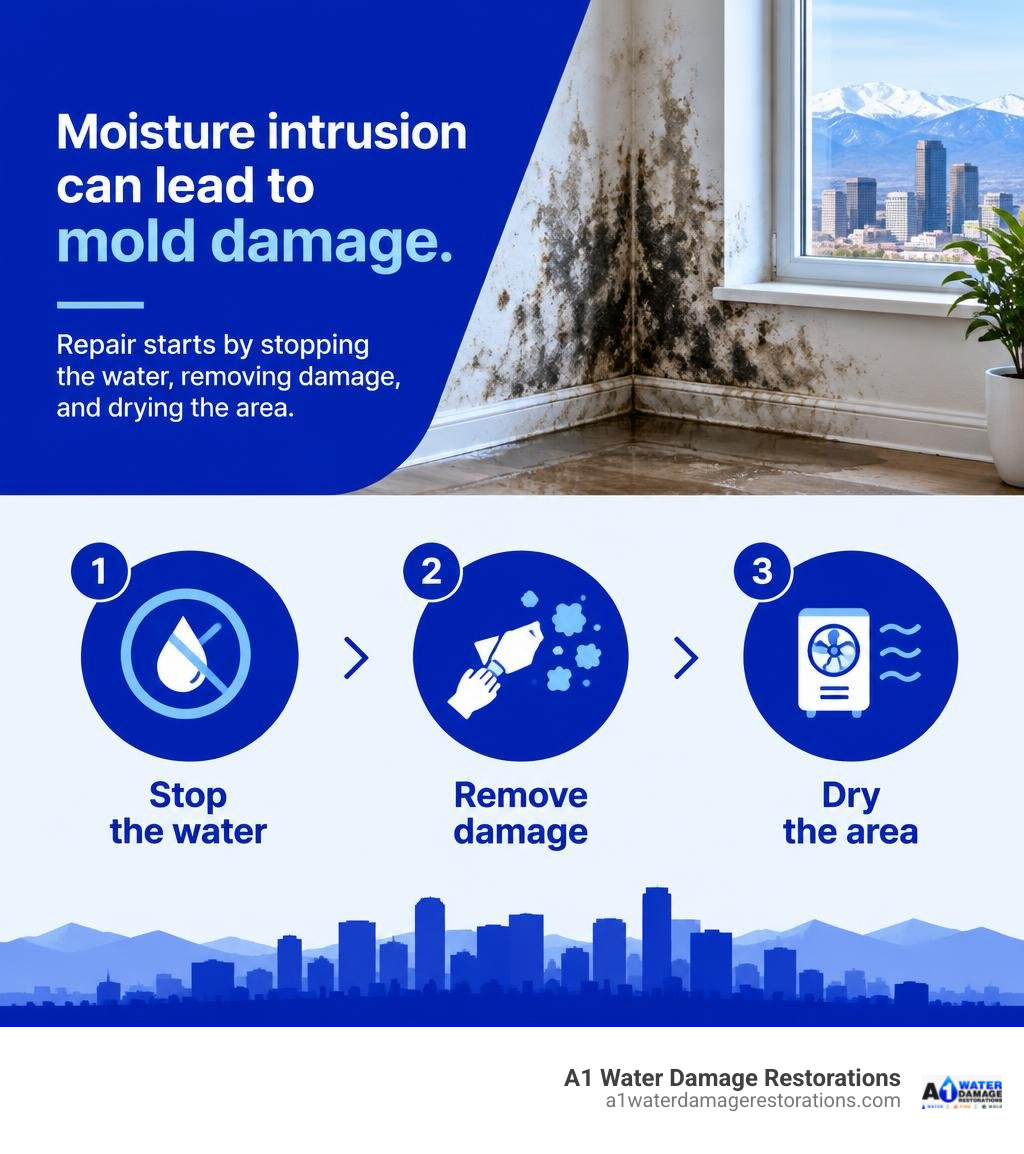
Mold damage repair Denver terms explained:
Moisture Sources and Health Risks in the Front Range Climate
Many property owners assume that Colorado’s semi-arid environment naturally safeguards buildings from fungal colonization. In reality, approximately 30% of homes across the Denver metro area struggle with hidden moisture issues that create hospitable microclimates for microbial colonies.
When cold outdoor temperatures collide with heated indoor living spaces, moisture collects rapidly on building envelopes. Our older housing stock—particularly historic brick bungalows in Denver and mid-century builds across Arvada and Littleton—often lacks the advanced moisture barriers found in newer construction. Local environmental health agencies, including Boulder County guidance on indoor mold, point out that unmitigated indoor moisture compromises indoor air quality and damages key building assemblies.
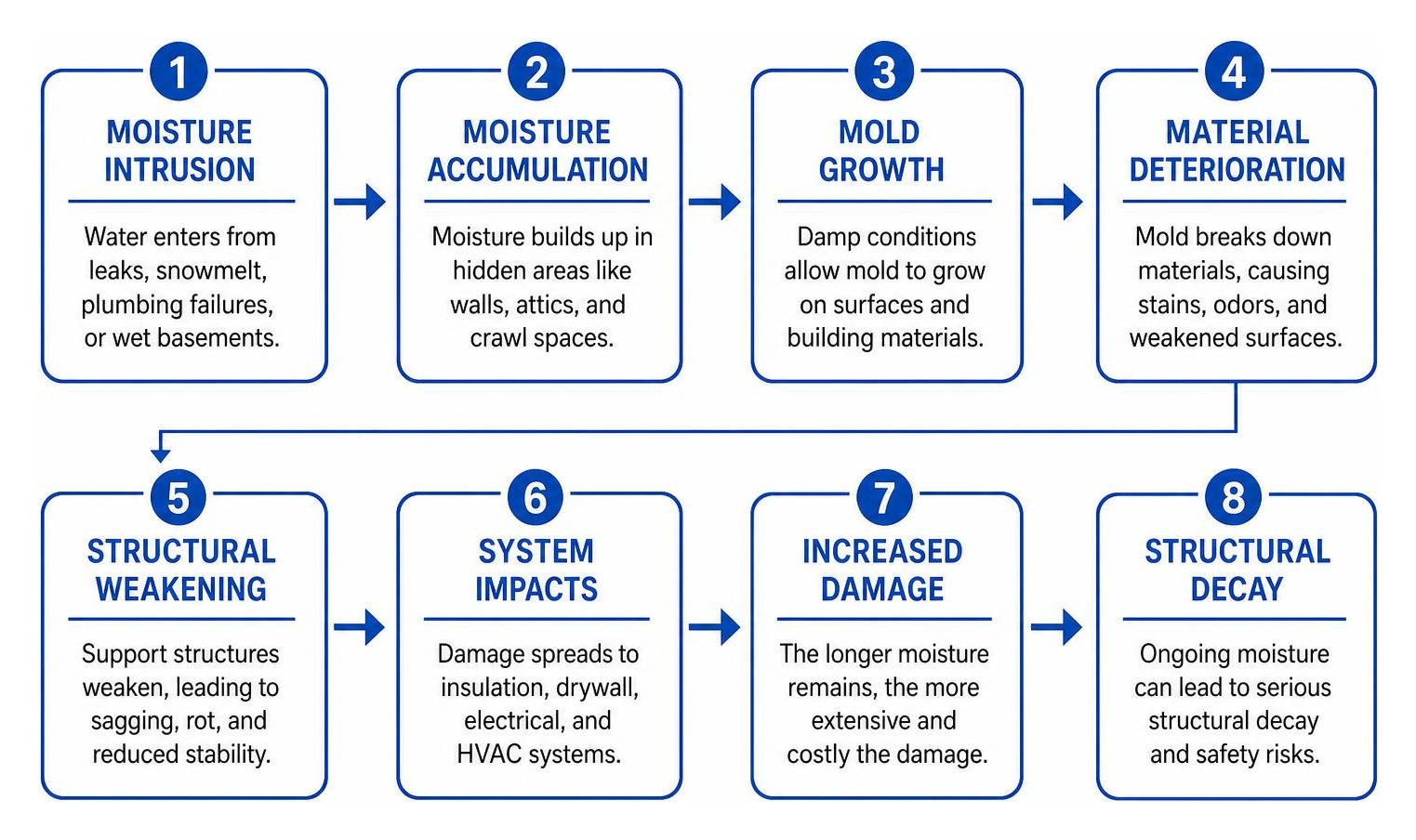
Common Causes of Structural Water Damage in Denver
Structural water damage across the Front Range stems from both environmental factors and mechanical failures:
- Winter Snowmelt and Ice Dams: Heavy snow accumulation along roof eaves frequently melts and refreezes, pushing liquid water beneath shingles and into attic trusses.
- Plumbing Failures: Sub-zero winter cold snaps lead to frozen, bursting supply lines that flood drywall cavities within minutes.
- Basement and Crawl Space Intrusion: Spring thaw and heavy downpours saturate the expansive clay soils common in Golden, Broomfield, and Westminster, pushing groundwater through foundation micro-fissures.
- Mechanical Sump Failures: Power outages or worn-out pumps during storms leave basements vulnerable, highlighting the need for prompt Denver water extraction and sump pump maintenance.
- Poor Attic and Crawl Space Ventilation: Trapped humidity from cooking, laundry, and showers condenses on cold roof decking, fostering extensive hidden fungal growth.
High-Altitude Health and Air Quality Impacts
Denver’s high elevation means our air is naturally dry, which can dry out nasal passages and mucous membranes, making respiratory systems more vulnerable to airborne contaminants. When mycotoxins and fungal spores enter an enclosed living area, they can aggravate existing allergies and trigger severe asthma episodes. Local health data shows that asthma rates are 10% higher in Denver neighborhoods with elevated indoor humidity and older housing infrastructure.
When dangerous species take hold behind wet baseboards or subflooring, addressing the black mold risks in residential properties becomes essential for preserving both occupant safety and the building’s structural integrity.
Step-by-Step Protocol for Mold Damage Repair Denver
Effective remediation goes far beyond simply spraying bleach over a dark patch on your wall. Bleach only addresses surface discoloration on non-porous surfaces and introduces extra water into porous materials like drywall, often fueling deeper root growth.
Following a comprehensive guide to mold remediation ensures every phase of repair follows strict industry standards, targeting the root cause while restoring damaged structures safely.
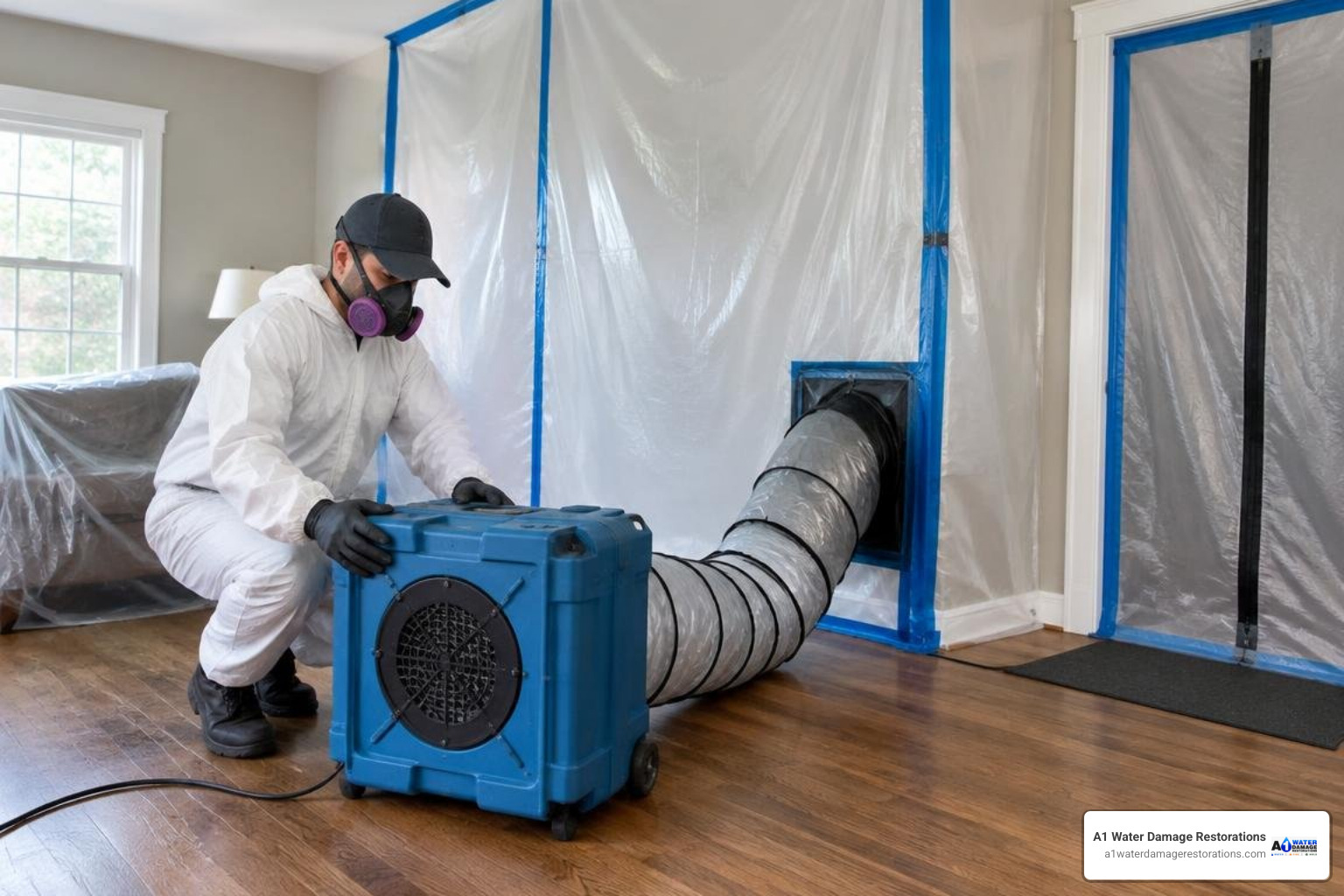
Containment and Structural Material Removal
To prevent cross-contamination to clean areas of the home, technicians isolate the work zone:
- Negative Air Pressure Isolation: Heavy-duty 6-mil plastic barriers seal off doorways, hallways, and HVAC registers, while commercial air machines vent air to the outdoors, keeping spores from drifting into adjoining rooms.
- Moisture Mapping and Thermal Imaging: Infrared cameras and non-invasive moisture meters identify the precise boundaries of dampness trapped behind walls, under floorboards, and within ceiling framing.
- Controlled Demolition: Porous building materials that cannot be fully cleaned—such as saturated drywall, acoustic tiles, and insulation—are carefully removed. Knowing the exact procedures for removing mold-damaged drywall prevents uncontained spore plumes from dispersing during removal.
- Debris Bagging and Disposal: Contaminated porous debris is double-bagged inside the containment zone and wiped down before being transported out of the building.
Deep Cleaning, Antimicrobial Sanitization, and HVAC Remediation
Once contaminated porous materials are removed, structural elements undergo thorough decontamination:
- HEPA Vacuuming: Structural framing, floor joists, and concrete slabs are vacuumed using commercial equipment with certified HEPA filters capable of capturing particles down to 0.3 microns.
- Antimicrobial Treatment: EPA-registered botanicals and biocides are applied to framing lumber to eliminate remaining hyphae and inhibit future colonization.
- HVAC Decontamination: Forced-air heating systems frequently circulate spores throughout the home. Completely eliminating mold spores from HVAC ductwork ensures clean air circulation throughout your property.
- Clearance Verification: Independent environmental testing verifies that indoor spore counts have returned to normal baseline levels before reconstruction begins.
Costs, Appraisals, and Insurance for Mold Damage Repair in Denver
The overall cost of remediation depends on the severity of the intrusion, how long the moisture went unnoticed, and the square footage of affected structural framing.
| Infestation Scope | Typical Affected Area | Average Denver Metro Cost Range | Common Structural Work Required |
|---|---|---|---|
| Minor (Localized) | Under 20 sq. ft. (Single corner, small vanity leak) | $1,500 – $2,800 | Minor drywall patch, spot sanitization, basic drying |
| Moderate (Single Room) | 20 – 100 sq. ft. (Bathroom, laundry room, partial basement) | $2,800 – $6,000 | Wall section removal, subfloor cleaning, duct sanitization |
| Severe (Multi-Room/Structural) | 100+ sq. ft. (Full basement flood, crawl space, multi-story leak) | $6,000 – $10,000+ | Framing repairs, full insulation replacement, extensive reconstruction |
Reviewing the details behind understanding professional mold remediation costs helps homeowners plan their budgets effectively.
Budgeting Factors and Property Value Considerations
Unaddressed fungal damage does more than degrade building materials—it directly impacts your real estate equity. Front Range appraisers estimate that unmitigated mold issues can reduce a property’s market value by up to 20%.
Colorado real estate disclosure laws require sellers to document known structural defects and historical water intrusions. Investing in certified structural repair protects your family’s health today while safeguarding your property value for tomorrow.
Navigating Colorado Insurance Policies for Water and Mold Claims
Roughly 50% of property water damage claims in Colorado involve secondary fungal contamination. However, coverage depends on the underlying cause:
- Covered Incidents: Most standard homeowner policies cover damage that is sudden and accidental, such as a frozen pipe burst during a January cold snap or an abrupt water heater rupture.
- Policy Exclusions: Gradual leaks, maintenance neglect, and water seeping through exterior foundation walls are often excluded unless you carry specific policy endorsements.
- Documentation: Keep detailed records, including moisture logs, thermal imaging scans, and itemized restoration scopes, to help support your insurance claim.
Long-Term Moisture Control and Property Protection Strategies
Repairing existing damage is only half the battle; true restoration ensures the environment remains inhospitable to future spores.

Maintaining Optimal Indoor Relative Humidity
Colorado’s climate shifts rapidly between humid spring rainstorms and dry winter freezes. To maintain a safe home environment:
- Keep indoor relative humidity between 30% and 50% year-round using dedicated whole-home or portable dehumidifiers in basements and crawl spaces.
- Place digital hygrometers in lower levels, bathrooms, and utility closets to spot moisture spikes early.
- Run bathroom exhaust fans for at least 20 minutes after showers to prevent condensation from accumulating on ceilings and trim.
- Seal drafty window frames to stop winter condensation from pooling on sills.
Professional Standards for Mold Damage Repair Denver Contractors
When hiring a restoration partner, verify they hold up-to-date industry credentials:
- IICRC Certification: Look for firms certified in Applied Microbial Remediation (AMRT) and Water Damage Restoration (WRT).
- Regulatory Compliance: Contractors must adhere to Colorado Department of Public Health and Environment (CDPHE) standards and local municipal building codes across Denver, Greenwood Village, Wheat Ridge, and Cherry Creek.
- Comprehensive Insurance: Ensure your contractor carries dedicated environmental pollution liability insurance alongside standard general liability coverage.
Frequently Asked Questions About Mold Damage Repair in Denver
How long does the mold repair and remediation process take in Denver homes?
The active containment, remediation, and structural drying phase generally takes between 3 and 7 days. If extensive structural reconstruction—such as hanging new drywall, laying subflooring, and rebuilding framing—is required, the entire project may take an additional one to two weeks depending on material availability.
Does standard homeowners insurance in Colorado cover mold damage repair?
Standard policies typically cover damage resulting from covered, sudden perils (like an abrupt pipe break), but often exclude continuous, long-term seepage or outdoor floodwaters. Many insurance carriers cap mold coverage between $5,000 and $10,000 unless an optional rider has been added to your policy.
Can I repair mold damage myself or should I hire certified professionals?
The EPA recommends professional remediation whenever fungal growth covers more than 10 square feet, or whenever the HVAC system or structural load-bearing assemblies are involved. DIY efforts often lack negative-pressure containment, which can inadvertently spread millions of airborne spores throughout your home.
Conclusion
Moisture issues can quickly turn into widespread structural and health concerns if left unaddressed. At A1 Water Damage Restorations, our family-owned team delivers 24/7 IICRC-certified expertise across Denver, Boulder, Arvada, Westminster, Broomfield, Golden, Littleton, Cherry Creek, Wheat Ridge, and Greenwood Village. From initial moisture detection to final structural rebuilds, we handle the entire process in-house to protect your home.
Explore our comprehensive property restoration services to safeguard your home against moisture and structural damage.