

What to Do First After Fire or Water Damage
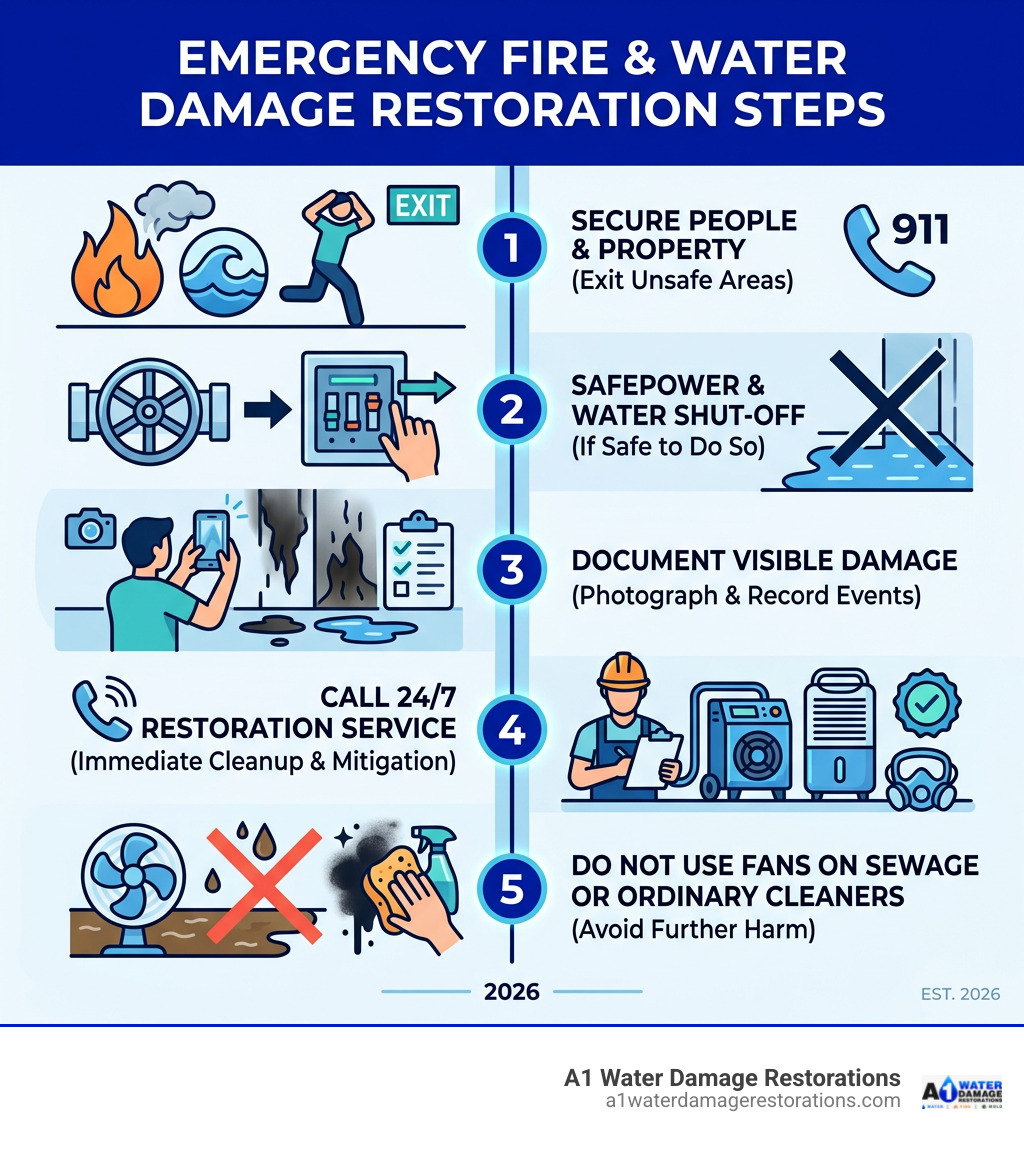
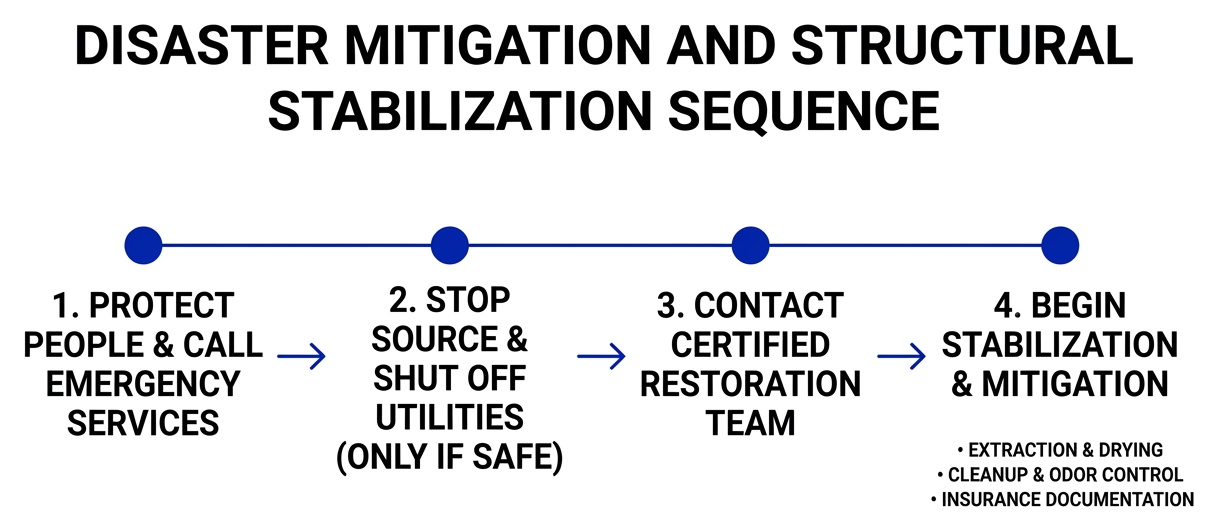
If your Denver-area home or business has fire, smoke, flooding, or a burst pipe, protect people first, stop the source if it is safe, and call a 24/7 fire and water damage restoration service immediately. Fast action limits standing water, soot spread, structural damage, and the risk of mold growth, which can begin within 24 to 48 hours after moisture exposure.
- Leave unsafe areas and call emergency services after a fire.
- Shut off the water supply or electricity only if you can do so safely.
- Photograph visible damage and save receipts for emergency expenses.
- Contact a certified restoration team for extraction, drying, cleanup, odor control, and insurance documentation.
- Do not use household fans on sewage-contaminated water or try to clean soot with ordinary cleaners.
Professional restoration is more than removing water or wiping smoke from walls. It includes stabilizing the property, finding hidden moisture, drying structural materials, safely handling contaminated water, cleaning soot and odors, protecting belongings, and planning repairs.
I am Cole Nudel, a disaster restoration professional with A1 Water Damage Restorations in the Denver area. My hands-on work in fire and water damage restoration service helps property owners understand what needs to happen first and how to move from emergency cleanup toward a safe recovery.
Basic fire and water damage restoration service glossary:
Understanding Common Causes and Immediate Hazards of Property Disasters
Property disasters rarely make an appointment before they show up. Across communities like Boulder, Golden, and Littleton, unexpected structural emergencies strike at any hour. The most frequent culprits behind residential and commercial destruction include sub-zero freezing temperatures that cause frozen pipes to burst, failing water heaters, appliance supply line leaks, severe weather events, cooking accidents, faulty electrical wiring, and unattended heating equipment.
When a fire occurs, the damage extends far beyond charred wood. Firefighters deploy thousands of gallons of water to extinguish the flames, leaving behind a complex, combined disaster where structural framing is waterlogged, soot is deeply embedded into porous surfaces, and corrosive smoke begins eating away at metals and finishes.
Understanding residential water damage dynamics is essential for safeguarding your investment. Water quickly travels the path of least resistance, pooling beneath flooring, soaking into drywall, compromising load-bearing wall studs, and saturating insulation. Meanwhile, airborne soot particles travel through HVAC ductwork to settle throughout rooms untouched by flames. If left unchecked, these intertwined hazards can destabilize your roof, weaken floors, destroy personal belongings, and trigger aggressive microbial growth.
Residential vs Commercial Property Damage Dynamics
While water and fire behave according to the laws of physics regardless of the building type, restoring a single-family home in Greenwood Village involves very different operational logistics than managing a multi-story commercial facility in downtown Denver.
Commercial disasters directly threaten business continuity, employee safety, tenant retention, and commercial revenue. Restoring commercial buildings requires specialized management of high-capacity mechanical systems, complex fire suppression sprinklers, compliance with strict municipal building codes, and phased reconstruction that allows unaffected sections of the facility to remain operational.
| Restoration Dynamic | Residential Properties | Commercial Properties |
|---|---|---|
| Primary Priority | Family safety, comfort, and personal contents | Life safety, business continuity, and liability reduction |
| Scale of Drying | Standard residential structural drying setups | High-capacity desiccant dehumidification and large power systems |
| Occupancy Impact | Temporary family displacement or localized containment | Business downtime, tenant relocation, and customer disruption |
| Building Codes | Standard residential building and energy codes | Commercial zoning, ADA compliance, and commercial life-safety standards |
| HVAC Complexity | Individual forced-air systems or heat pumps | Multi-zone commercial air handlers, chillers, and extensive ducting |
Biohazards, Contaminated Black Water, and Sewage Backups
Water losses are categorized into three distinct classes of contamination under industry standards. Clean water (Category 1) originates from sanitary sources like broken supply lines. Gray water (Category 2) carries chemical or biological contaminants from sources like washing machine overflows or sump pump failures. Black water (Category 3) represents the most severe hazard, containing raw sewage, harmful pathogens, heavy metals, toxic pesticides, and dangerous biological agents.
Sewage backups and black water flooding demand immediate, highly regulated containment. Homeowners should never attempt DIY cleanup with standard shop vacuums or household mops. Our technicians deploy complete personal protective equipment (PPE)—including full respirators, impermeable suits, and nitrile gloves—before establishing negative air pressure zones to prevent airborne contamination. We extract the raw biohazards, remove non-salvageable porous elements like contaminated carpet pads and drywall, and apply hospital-grade botanical and EPA-registered antimicrobials to thoroughly sanitize all structural framing.
Step-by-Step Emergency Water Mitigation and Moisture Control
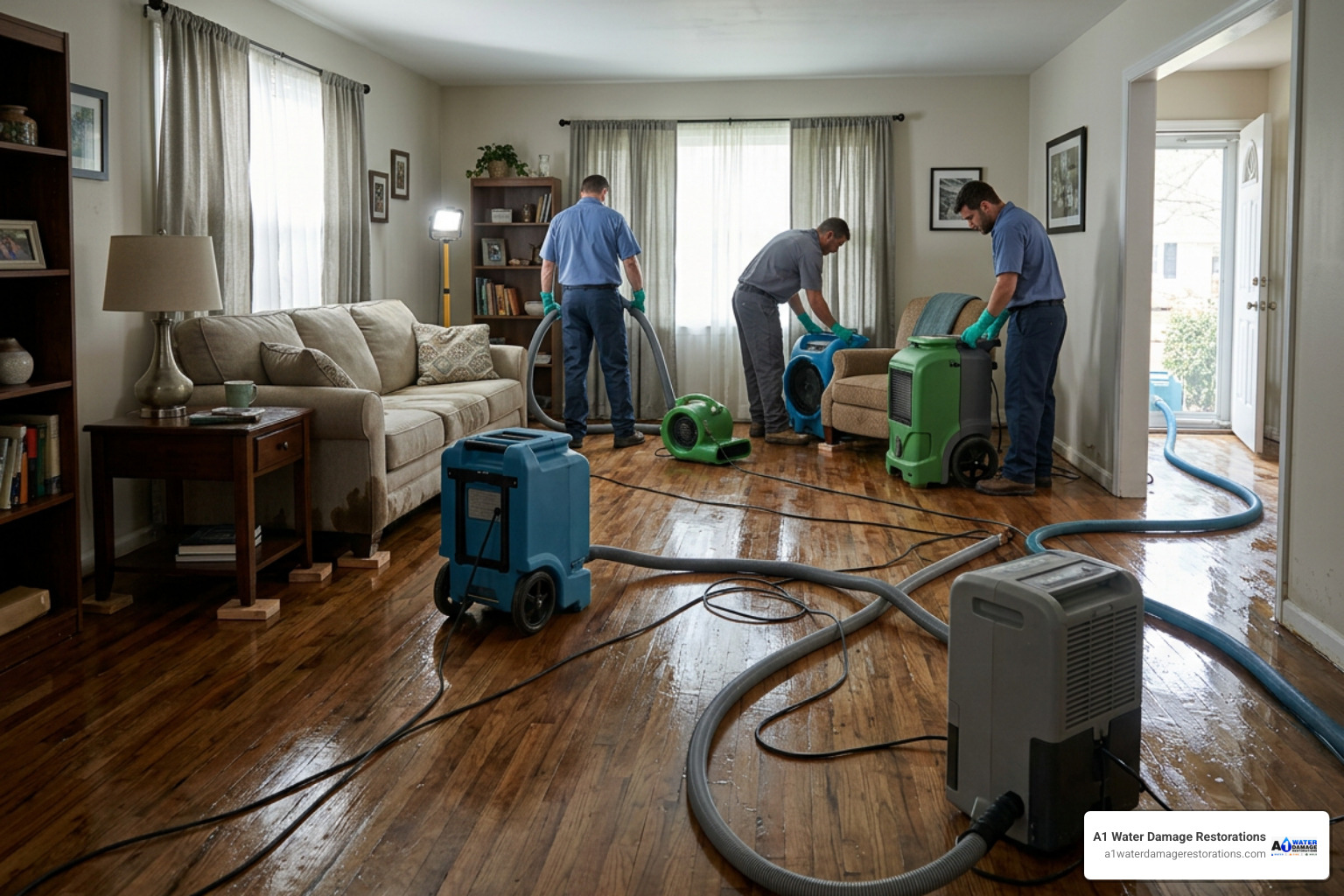
Effective moisture mitigation requires deep scientific precision known as psychrometrics—the science of drying air and materials through controlled temperature, airflow, and humidity. We begin every project by establishing comprehensive moisture maps using calibrated non-invasive moisture meters, penetrative pin probes, and advanced thermal imaging cameras. These infrared tools expose water trapped deep behind tile showers, beneath hardwood subfloors, and within insulation cavities that appear dry on the surface.
Our field-tested Denver water damage restoration process relies on strict data tracking, taking daily psychrometric readings to calculate specific humidity, vapor pressure, and drying progress until every building component reaches its target moisture baseline.
Steps Taken by a Fire and Water Damage Restoration Service During Extraction and Drying
When a restoration team arrives on site, time is the single most valuable resource. Quick physical extraction removes significantly more water per minute than evaporation alone.
- Safety Hazard Inspection: Technicians verify electrical safety, turn off compromised circuits, check for structural sagging, and inspect gas lines.
- Bulk Standing Water Removal: We deploy heavy-duty truck-mounted vacuum extractors and submersible pumps to eliminate hundreds of gallons of standing water from flooring and crawl spaces.
- Subfloor and Cavity Extraction: Specialized weighted extraction tools pull deep-set moisture out of carpet pads, underlayment, and subfloors without tearing apart salvageable materials prematurely.
- Targeted Structural Drying: High-velocity axial air movers are positioned at scientific 45-degree angles to direct rapid air movement across wet surfaces, transforming liquid water into vapor.
- Industrial Dehumidification: Low Grain Refrigerant (LGR) and commercial desiccant dehumidifiers capture vaporized air moisture and pump it safely outside, preventing secondary condensation damage.
- Continuous Moisture Monitoring: Every 24 hours, our crew recalibrates equipment, logs moisture curves, and adjusts airflow until structural drying meets certified dry standards.
For severe structural inundation, our professional water damage restoration protocols ensure that every hidden wall void and floor joist is completely dry before repair work begins.
Preventing Secondary Mold Growth Within 24 to 48 Hours
Microscopic mold spores exist naturally indoors and outdoors, but they require only three elements to flourish: moisture, organic food sources (like drywall paper, carpet backing, or wood framing), and temperatures between 68°F and 86°F. When high humidity goes unaddressed, active mold colonies germinate within 24 to 48 hours.
To stop mold in its tracks, we establish physical containment barriers using 6-mil polyethylene sheeting and industrial HEPA air scrubbers. These units filter 99.97% of airborne particulate matter down to 0.3 microns, pulling spores out of the indoor environment while drying proceeds. Learn more about how professional water damage remediation prevents long-term health risks and preserves your home’s structural framing.
The Comprehensive Fire, Soot, and Smoke Remediation Process
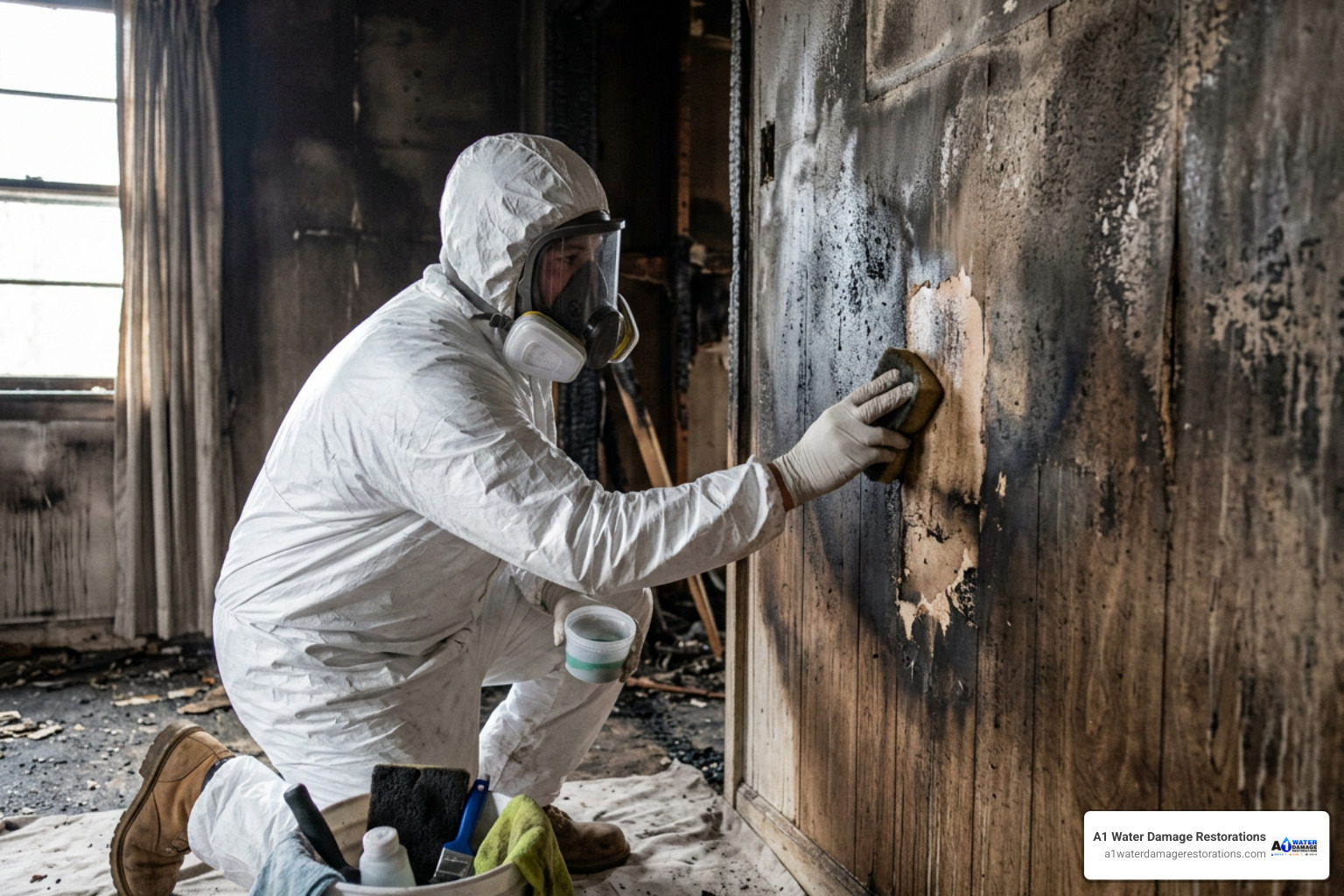
A fire leaves behind complex chemical residues. Soot is not simply ash; it is an acidic cocktail of synthetic plastics, chemical binders, building materials, and organic matter melted together under high heat. When soot comes in contact with ambient humidity, it forms corrosive acids that permanently etch glass, tarnish polished metals, and yellow porous fixtures within hours.
Different types of fires generate distinct residue patterns:
- Dry Smoke: High-temperature, fast-burning wood and paper fires leave behind powdery, dry, non-smeary soot deposits.
- Wet Smoke: Low-heat, oxygen-deprived smoldering fires produce sticky, pungent, rubbery residues that smear easily upon contact.
- Protein Residues: Kitchen fires involving cooking oils and animal fats create virtually invisible, highly pungent grease films that severely discolor surfaces over time.
- Fuel Oil Soot: Furnace puff-backs release oily soot deposits throughout the entirety of a property’s HVAC network.
Safely reversing this damage requires dedicated fire damage restoration techniques tailored to each specific soot type.
Structural Cleaning, Thermal Fogging, and Odor Neutralization
Masking smoke odors with aerosol sprays or scented oils does not resolve the problem; it only wastes valuable time. True smoke deodorization requires neutralizing volatile organic compounds (VOCs) and microscopic hydrocarbon chains at the molecular level.
Our multi-stage structural odor neutralization utilizes advanced atmospheric technology:
- HEPA Vacuuming and Chem-Sponge Cleaning: Technicians carefully lift dry surface soot using vulcanized rubber chemical sponges without grinding particles into painted surfaces or drywall.
- Thermal Fogging: We heat solvent-based deodorants into a fine mist that replicates the behavior of hot fire gases, penetrating deep into framing voids, wall cavities, and ceiling pores to permanently neutralize trapped odor molecules.
- Hydroxyl Generation and Ozone Chambering: For heavy smoke contamination, hydroxyl generators use UV light and atmospheric moisture to break down VOC molecules safely, even while technicians work inside the building.
- HVAC Decontamination and Encapsulation: Air ducts are mechanically brushed, vacuumed under negative pressure, sanitized, and coated with specialized odor-locking sealants to prevent old smoke odors from circulating when the furnace kicks on.
Contents Cleaning, Packout Services, and Secure Off-Site Storage
When property damage is widespread across areas like Arvada or Westminster, leaving personal belongings inside the home during structural reconstruction invites further cross-contamination. Our coordinated packout and contents restoration service safeguards your cherished possessions.
Our certified technicians document, photograph, and bar-code every item using computerized inventory software. Belongings are carefully wrapped and transported to our secure, climate-controlled facility.
Common restorable household contents include:
- Hardwood and upholstered furniture pieces
- Family heirlooms, photographs, and historical documents
- Clothing, draperies, and high-end linens (via specialized ultrasonic and dry-cleaning laundering)
- Collectibles, dishes, fine china, and kitchenware
- Consumer electronics, gaming systems, and computer hardware
- Artwork, sculptures, and framed wall hangings
At our processing facility, items undergo specialized treatments including ultrasonic bath immersion, precision hand-wiping, and dedicated deodorization chambers before being stored securely until your home is fully rebuilt.
How to Choose a Certified Fire and Water Damage Restoration Service
Experiencing property damage is overwhelming, which makes selecting the right restoration company a critical decision. You need an experienced team that provides complete, in-house recovery solutions rather than subbing out essential tasks to unknown third parties.
When evaluating restoration providers across the Denver Metro Area, look for:
- IICRC Certification: The Institute of Inspection, Cleaning and Restoration Certification is the industry’s premier non-profit certifying body. Ensure the business employs certified Water Damage Restoration (WRT), Applied Structural Drying (ASD), and Fire and Smoke Restoration (FSRT) technicians.
- Proper Licensing and Insurance: Verify full general liability, workers’ compensation, and specialized pollution liability insurance coverage.
- Transparent Hiring Practices: Review our comprehensive fire damage cleanup hiring checklist to ask the right technical questions during your initial phone consultation.
- Full-Service Reconstruction Capabilities: Companies that handle both emergency mitigation and complete structural rebuilding provide faster turnarounds, single-point communication, and seamless coordination.
- Authentic Local Reputation: Check independent customer reviews across Wheat Ridge, Broomfield, and surrounding communities to ensure a proven record of compassionate, high-quality service.
Why Fast 24/7 Action Matters for Fire and Water Damage Restoration Service
Disasters don’t stick to business hours. A pipe that bursts at 2:00 AM on a freezing Sunday morning will flood an entire basement by dawn if ignored. Immediate 24/7 emergency dispatch ensures technicians arrive rapidly to halt active water intrusion, board up fire-damaged windows, tarp damaged roofs, and secure property perimeters.
Arriving on-site quickly prevents secondary damage from escalating, keeping repair costs manageable and keeping your family safe.
Navigating the Insurance Claims and Documentation Process
Filing an extensive property insurance claim after a disaster can feel like a full-time job. Navigating complex deductibles, loss-of-use allowances, and adjusters requires careful attention to detail.
Our team coordinates directly with your insurance carrier from day one. We compile exhaustive documentation packages featuring digital 3D scans, daily psychrometric moisture logs, moisture migration maps, detailed photographic inventories of damaged contents, and itemized billing formatted using industry-standard pricing software. Reviewing the ultimate guide to fire and water damage mitigation costs will give you a clear look at how emergency insurance mitigation claims are scoped and approved.
Frequently Asked Questions About Fire and Water Restoration
How long does the professional restoration and drying process take?
Standard structural water mitigation and dehumidification typically takes between 3 and 5 days to reach certified dry baselines. Fire and smoke damage remediation timelines depend on the depth of soot penetration and structural damage. While soot cleanup and deodorization may take 4 to 7 days, complete structural reconstruction—such as rebuilding framing, hanging new drywall, installing cabinetry, and painting—can range from 2 weeks to a few months for severe losses.
Can personal belongings and furniture be salvaged after smoke and water exposure?
Yes. Modern restoration technologies salvage a substantial majority of damaged contents. Advanced ultrasonic cleaning uses microscopic cavitation bubbles to gently strip soot from intricate metal, glass, and ceramic objects without abrasive damage. Industrial drying chambers, freeze-drying for critical paper documents, and specialized chemical laundering systems regularly return smoke-soaked textiles, upholstery, and electronics to pre-loss condition. Items are only deemed non-salvageable when the cost of restoration exceeds their replacement value or when black-water contamination makes safe sanitization impossible.
Does homeowners insurance cover fire and water damage repairs?
Most standard homeowners insurance policies cover sudden and accidental property damage, such as electrical fires, kitchen blazes, burst plumbing pipes, and water heater ruptures. However, standard policies typically exclude long-term, unaddressed leaks, gradual rot, maintenance neglect, and external ground water flooding (which requires a separate flood insurance policy through the National Flood Insurance Program). We work side-by-side with your insurance claims adjuster to ensure all covered structural damage, mitigation tasks, and contents restoration scopes are documented and submitted properly.
Conclusion
Experiencing a major property disaster can turn your daily life upside down in an instant. However, working with a prompt, compassionate, and certified team helps you take back control, protect your loved ones, and restore your property to pristine condition. As a family-owned business, our team at A1 Water Damage Restorations is dedicated to delivering personal care, advanced technical expertise, and turnkey rebuilding solutions across the Denver Metro Area—including Boulder, Cherry Creek, Denver, Golden, Greenwood Village, Arvada, Westminster, Wheat Ridge, Broomfield, and Littleton.
Do not let standing water, soot, or smoke odors compromise your property’s safety and value. Explore our comprehensive disaster restoration services or call our 24/7 emergency dispatch team today to start restoring your home better than ever.