

The Best Way to Get Rid of Stale Smoke Smell
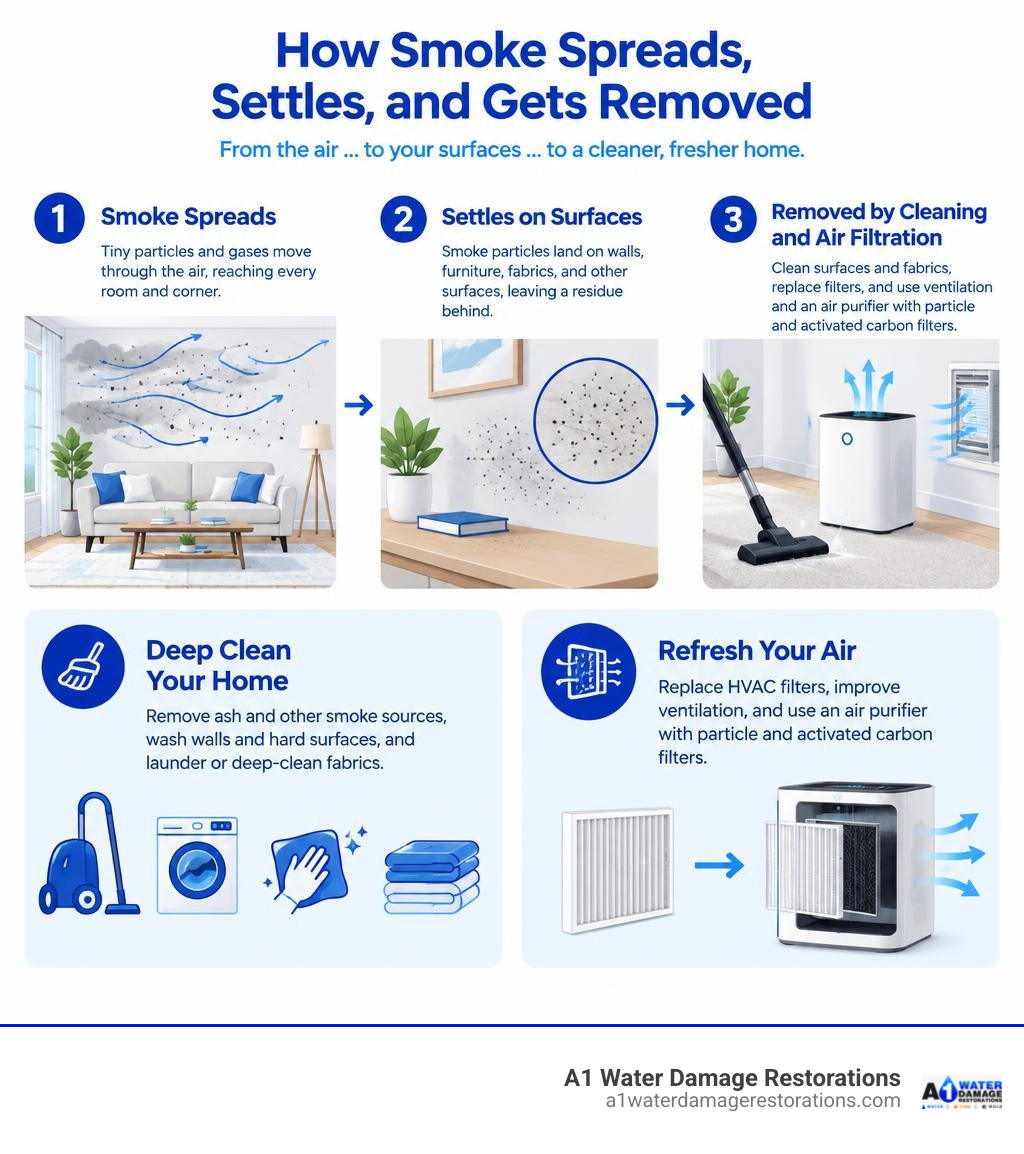
Remove the residue, not just the smell in the air. Take away ash and other smoke sources, wash walls and hard surfaces, and launder or deep-clean fabrics. Then replace HVAC filters and use ventilation and an air purifier with particle and activated carbon filters. If the smell returns, smoke may be trapped in carpet padding, walls, or ductwork and may need professional treatment.
Air fresheners can cover the odor for a while, but they leave the source behind.
I’m Cole Nudel, a disaster restoration professional with A1 Water Damage Restorations in the Denver area. My work helping property owners recover from damage informs this guide to the best way to get rid of stale smoke smell.
Easy best way to get rid of stale smoke smell glossary:
Why Stale Smoke Odor Clings to Homes and How Olfaction Detects It
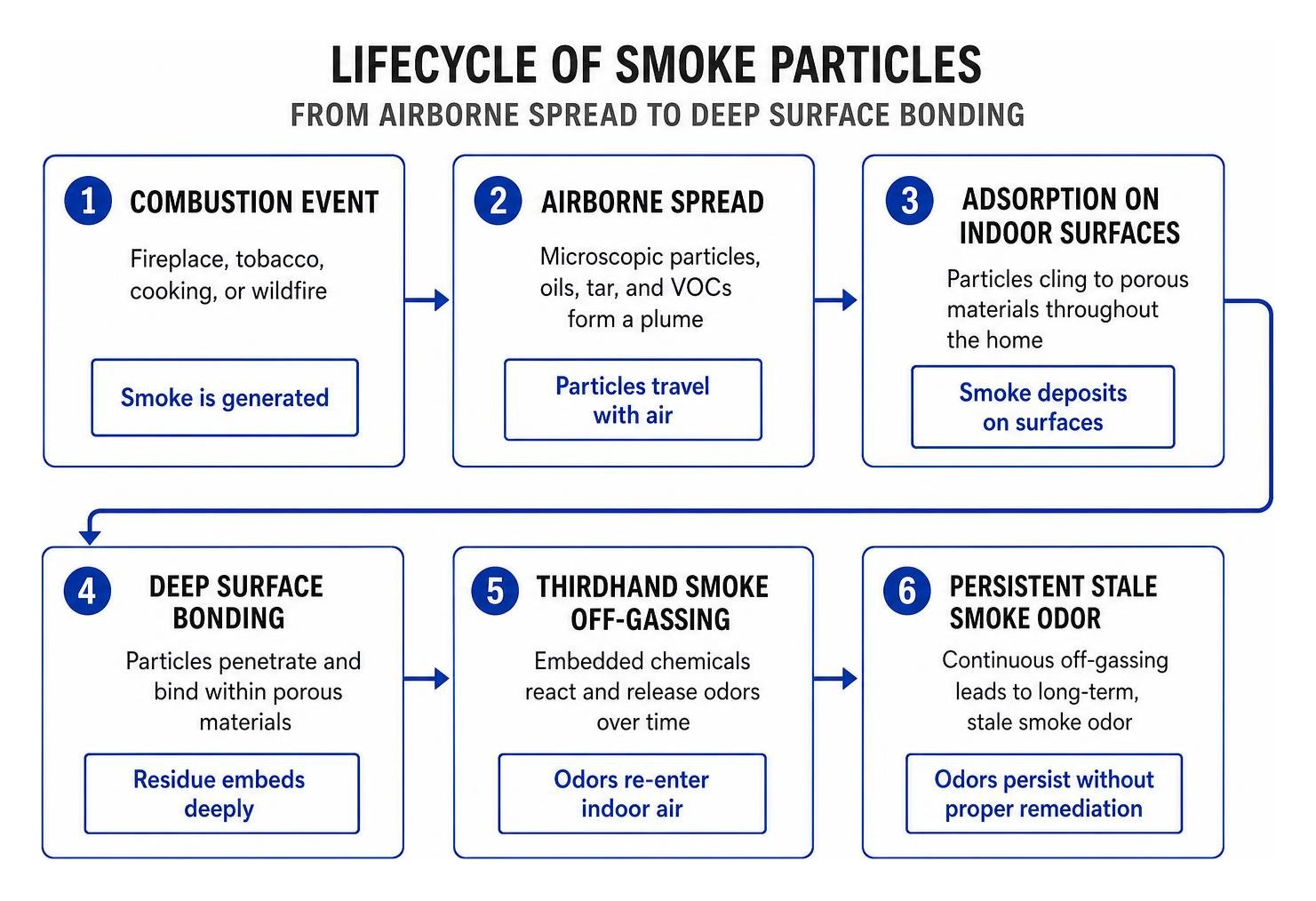
When a smoke event occurs—whether from years of indoor tobacco use, a persistent fireplace backdraft, cooking mishaps, or regional wildfires blowing across the Front Range—the odor doesn’t simply float around and vanish out an open door. Smoke is an aerosol cloud composed of microscopic particulate matter, aerosolized oils, tar, and volatile organic compounds (VOCs).
As hot air cools, these tiny particles undergo adsorption, clinging tightly to indoor materials. The definition of stale describes something that has lost freshness, but in environmental restoration, “stale” smoke represents an ongoing chemical breakdown. This lingering contamination is known as thirdhand smoke: the toxic, invisible residue that embeds itself into structural framing, drywall, carpets, and ductwork.
The Chemical Composition of Thirdhand Smoke Residue
Thirdhand smoke is notoriously difficult to neutralize because it is chemically dynamic. Smoke residue contains thousands of distinct chemicals, including polycyclic aromatic hydrocarbons (PAHs), formaldehyde, hydrogen cyanide, and heavy metals. When nicotine deposits onto surfaces, it reacts with ambient indoor air pollutants—such as nitrous acid—to form carcinogenic tobacco-specific nitrosamines (TSNAs).
Studies show that roughly 80% to 90% of airborne nicotine adsorbs directly into household surfaces within minutes. Unsealed drywall acts like a massive sponge, sucking in oily tars and volatile compounds. As indoor temperatures rise or humidity shifts, these materials continuously off-gas, releasing stubborn odors back into your living space. To tackle these entrenched odors at the molecular level, property owners often rely on the ultimate guide to cigarette smell removal from your home for structured remediation.
Human Olfactory Perception and Odor Sensitivity
Why does even a tiny trace of stale smoke trigger an immediate reaction? The answer lies in human biology (Sharma et al., 2019). The human nose contains approximately 10 cm² of specialized olfactory epithelium packed with around 50 million olfactory sensory neurons (OSNs). These sensory cells express functional G-protein-coupled receptors (GPCRs) encoded by nearly 400 functional olfactory receptor genes.
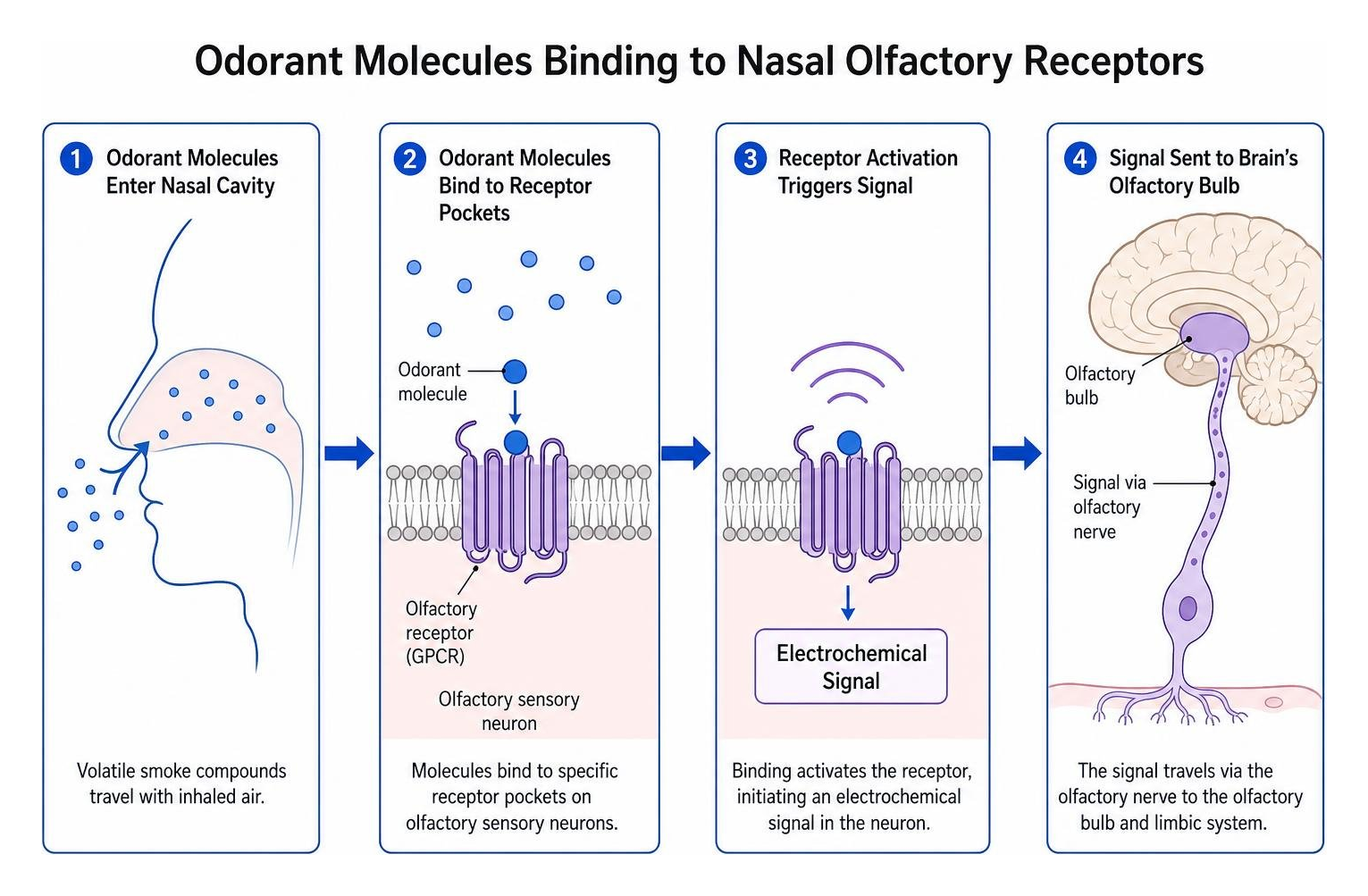
When volatile smoke compounds enter the nasal cavity, they bind to specific receptor pockets, triggering a rapid electrochemical cascade directly to the brain’s olfactory bulb and limbic system. Our olfactory system can detect specific smoky chemical moieties at concentrations of just a few parts per trillion. While our sensory receptors undergo neural adaptation—commonly known as olfactory fatigue, where you temporarily stop noticing an odor after prolonged exposure—visitors or prospective home buyers will detect the smell instantly. Furthermore, because olfactory neurons turnover approximately every 40 days, your sensitivity to lingering ambient contaminants continually resets.
The Best Way to Get Rid of Stale Smoke Smell from Household Surfaces
Eliminating embedded odors requires physical source removal. Spraying scents into the air while leaving nicotine films on surfaces is like putting a tiny bandage on a burst pipe. We must systematically strip away the oily residue before sealing or neutralizing the remaining substrate.

| Cleaning Agent | Primary Mechanism | Best Used On | Limitations & Notes |
|---|---|---|---|
| Trisodium Phosphate (TSP) | Heavy degreasing & saponification | Bare drywall, plaster, masonry | Requires PPE; must rinse thoroughly |
| White Vinegar Solution (1:1) | Mild acid neutralization of alkaline smoke | Sealed wood, glass, hard plastics | Cannot break down heavy petroleum soot |
| Enzymatic Cleaners | Biological degradation of organic bonds | Carpets, upholstery, subflooring | Requires dwell time; avoid over-wetting |
| Baking Soda / Carbon Paste | Adsorption of volatile acids | Fabric surfaces, localized spots | Surface-level action; must be vacuumed |
Deep Cleaning and Sealing Hard Surfaces and Walls
Hard surfaces, especially ceilings and upper walls where warm smoke collects, accumulate thick, yellowed coatings of tar. Deep cleaning these surfaces begins with an alkaline degreaser like Trisodium Phosphate (TSP) or an equivalent heavy-duty cleaner.
- Wash Down: Wipe ceilings and walls from bottom to top (to prevent uneven streaking) using a warm TSP solution, changing wash water frequently.
- Rinse and Dry: Wipe surfaces with clean, warm water and allow them to dry completely using dehumidifiers and air movers.
- Seal the Substrate: Standard latex paint will not trap volatile compounds; smoke tars will bleed through water-based coatings within weeks. Apply a dedicated shellac-based or heavy oil-based stain- and odor-blocking primer.
- Finish Coat: Once the primer fully cures and forms an impermeable barrier over the drywall pores, apply your topcoat paint.
If smoke has saturated wood cabinetry, trim, or banisters, consult our guide to getting cigarette smell out of wood furniture to safely strip oils without ruining delicate finishes.
Choosing the Best Way to Get Rid of Stale Smoke Smell in Soft Fabrics and Carpets
Porous soft goods hold an enormous volume of volatile smoke molecules. Drapes, area rugs, throw pillows, and upholstery require deep, multi-stage remediation:
- High-Efficiency HEPA Vacuuming: Slowly vacuum all soft surfaces using a vacuum equipped with a sealed HEPA filter to extract fine soot particulates without blowing them back into the room.
- Baking Soda Treatment: Liberally dust carpets with sodium bicarbonate, let it sit for a minimum of 24 hours to draw out volatile acids, and thoroughly extract.
- Hot Water Extraction: Use a professional-grade hot water extractor combined with an odor-neutralizing rinse. Avoid high heat on certain synthetic fibers that can melt or trap odors permanently.
- Padding Evaluation: In severe tobacco or fire scenarios, carpet padding acts as an irreparable odor reservoir. Often, the most cost-effective path is removing the carpet and pad, scrubbing the subfloor, and installing new flooring.
For a detailed walkthrough on salvaging treasured textiles and furniture, read our resource on saving your stuff after smoke damage.
Neutralizing Airborne Contaminants and Purifying Indoor Air
Once surfaces are thoroughly washed and treated, the next critical front is your indoor air volume. Lingering particulates and desorbing VOCs will continually recirculate unless pulled through high-efficiency mechanical filtration and carbon adsorption beds, a process detailed in standard testing guidelines for indoor smoke residue.
Evaluating the Best Way to Get Rid of Stale Smoke Smell from HVAC Systems and Indoor Air
Your heating and cooling system can quickly distribute smoke contamination throughout an entire house. When smoke is pulled into return vents, oily residues coat the interior ductwork, blower wheels, and evaporator coils.
Every time the furnace kicks on, heated air volatilizes those trapped oils, filling rooms with a fresh wave of stale odor. If you are dealing with structural or chimney issues, such as those covered in our guide on removing fireplace smoke smell, clean your mechanical systems promptly:
- Filter Upgrades: Replace standard fiberglass filters with high-efficiency MERV 13 filters rated to capture sub-micron smoke particles.
- Deep Coil Sanitization: Have a professional clean the A-coil and air handler cabinet with an approved antimicrobial degreaser.
- Duct Cleaning and Encapsulation: In severe cases, air ducts should be mechanically brushed under negative pressure and fogged with an EPA-registered odor sealant.
Active Ventilation, Activated Carbon, and Air Filtration
To purge airborne smoke compounds, combine mechanical air exchange with dedicated air scrubbers:
- Cross-Ventilation: Position high-velocity box fans in windows blowing outward to create negative pressure, while cracking opposite windows to pull in clean, outdoor air. Controlled studies demonstrate that vigorous cross-ventilation can drop indoor smoke VOC concentrations by up to 74%.
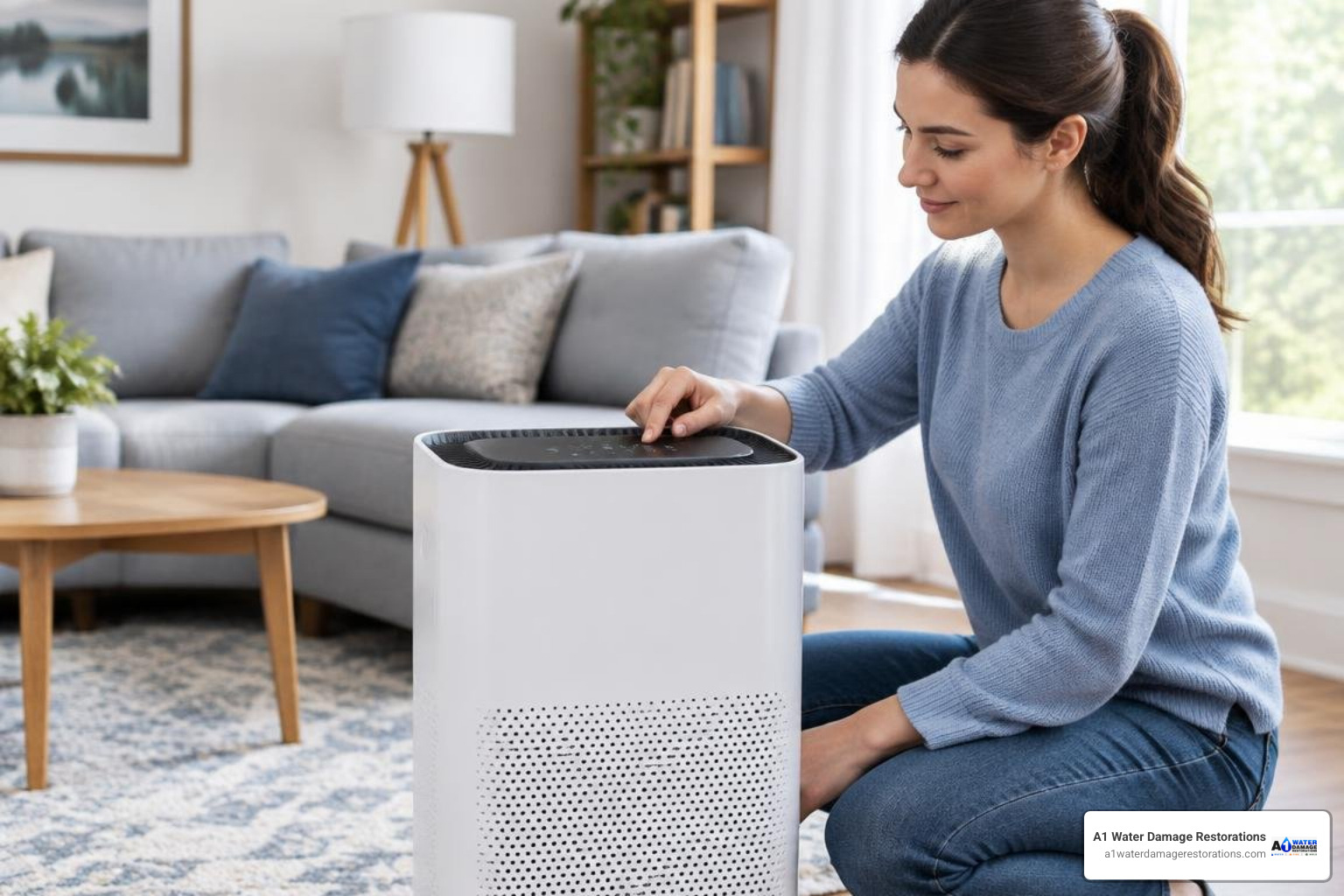
- True HEPA Filtration: HEPA filters trap 99.97% of airborne particles down to 0.3 microns, capturing the soot and ash fragments that carry odor.
- Substantial Activated Carbon Beds: HEPA filters cannot capture gaseous VOCs. You need true activated carbon filters containing several pounds of treated carbon media. The microporous carbon structure physically traps gaseous chemicals, providing a reliable cigarette smoke odor absorber for ongoing air purification.
Molecular Neutralization vs. Scent Masking
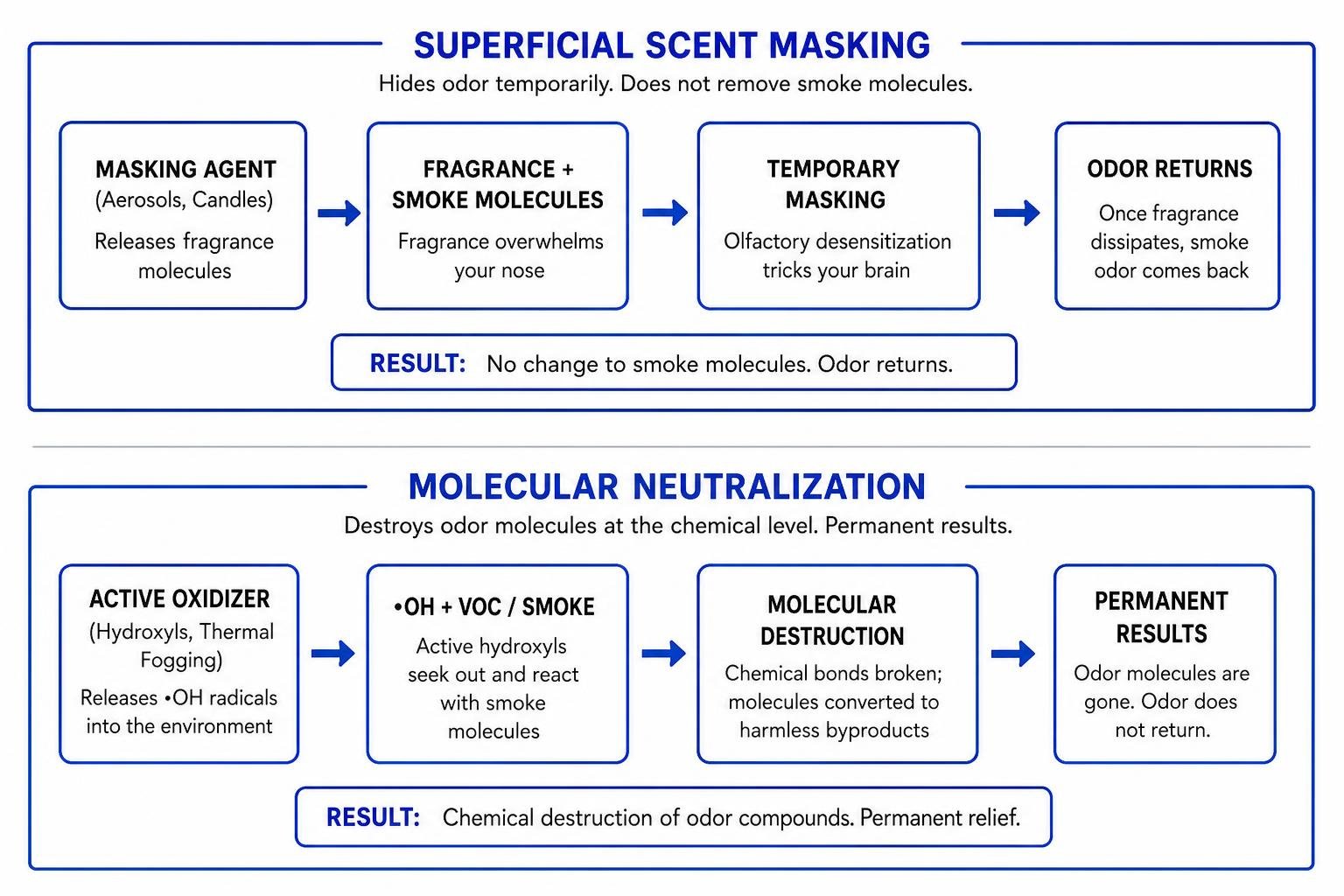
There is a fundamental scientific difference between covering up an unpleasant smell with perfume and destroying the offending molecule. True deodorization alters the chemical structure of the odorant so that it can no longer bind to human olfactory receptors, which is the cornerstone of how to remove smoke odor the right way.
Why Air Fresheners Fail Against Volatile Organic Compounds
Aerosol sprays, scented plug-ins, and scented candles rely on synthetic esters and heavy fragrances to overpower your nasal passages. These products provide temporary olfactory desensitization, tricking your brain into smelling vanilla or pine instead of stale smoke.
However, they do nothing to neutralize the underlying polycyclic aromatic hydrocarbons and volatile sulfur compounds embedded in your walls. Worse, burning candles or spraying aerosols introduces secondary VOCs and phthalates into your indoor environment, degrading air quality without addressing the root cause.
Professional Thermal Fogging and Hydroxyl Treatments
When standard cleaning is not enough for deeply embedded odors, professional restoration contractors deploy specialized molecular neutralization technologies:
- Thermal Fogging: Solvent-based deodorizers are heated and vaporized into a fine fog, mimicking the exact particle size (0.5 to 2 microns) and behavior of the original smoke plume. The fog penetrates deep into structural framing, drywall pores, and insulation, neutralizing embedded residues through direct contact.
- Hydroxyl Generators: These units use UV optics and ambient moisture to produce atmospheric hydroxyl radicals ($bullettext{OH}$). Hydroxyls safely break down organic VOCs, sulfur compounds, and nicotine molecules into harmless carbon dioxide and water vapor. Crucially, hydroxyl generators can run safely in occupied residential spaces.
- Controlled Ozone Protocols: Ozone ($O_3$) is a potent oxidizer that destroys smoke odor molecules. However, ozone is unsafe for occupied spaces. Certified restoration teams run high-output ozone generators exclusively in sealed, completely vacated structures, following strict safety protocols outlined in our step-by-step smoke damage restoration procedures.
Frequently Asked Questions About Smoke Odor Removal
How long does it take for stale smoke smell to dissipate completely?
Without active remediation, thirdhand smoke odor can persist for years. Because volatile compounds embed deeply into porous drywall, subflooring, and framing lumber, they off-gas indefinitely—especially during warm or humid summer months. With aggressive source cleaning, air scrubbing, and thermal or hydroxyl treatment, odors can be permanently resolved in as little as 24 to 72 hours.
Does painting over smoke-stained walls eliminate the odor?
No. Standard interior latex paint is water-based and porous. Applying latex paint directly over smoke residue allows yellow nicotine tars and odorous VOCs to bleed right through the fresh paint film within weeks. You must clean the walls thoroughly with a degreaser and seal them completely with an oil- or shellac-based odor-blocking primer before applying topcoat paint.
Can ozone generators safely eliminate smoke smell in an occupied home?
No. Ozone is a toxic lung irritant that can cause respiratory inflammation, chest pain, and shortness of breath at the concentrations needed to eliminate smoke odors. Furthermore, high concentrations of ozone can degrade natural rubber, carpet backings, and electrical wire insulation. Ozone machines must only be operated by trained professionals in completely unoccupied spaces with no humans, pets, or live plants present.
Conclusion
Reclaiming clean, fresh air from stubborn, stale smoke requires a methodical approach: eliminate the physical source, deeply wash and seal affected hard substrates, extract contaminated soft goods, and neutralize airborne molecules using high-capacity carbon filtration and advanced oxidation. Shortcuts like masking sprays will only leave you frustrated when the odor inevitably returns.
If you are dealing with persistent smoke contamination across Denver, Boulder, Cherry Creek, Golden, Greenwood Village, Arvada, Westminster, Wheat Ridge, Broomfield, or Littleton, our IICRC-certified, family-owned team is here to help 24/7. Contact A1 Water Damage Restorations today to schedule our comprehensive fire and smoke damage restoration services and restore your property’s indoor air quality for good.
References
Sharma A, Kumar R, Aier I, Semwal R, Tyagi P, Varadwaj P. “Sense of Smell: Structural, Functional, Mechanistic Advancements and Challenges in Human Olfactory Research..” Current neuropharmacology, 2019. PMCID PMC7052838.