

How to Clean Up After a Sewer Backup Safely
To clean up after sewer backup, first stay out of standing water until electricity and gas are safely shut off. Then wear waterproof boots, gloves, goggles, and an N95 respirator; remove sewage and debris; discard contaminated porous items; wash hard surfaces with detergent; disinfect them with an EPA-registered product or properly diluted bleach; and dry the space fully with fans and dehumidifiers.
Sewage is often called Category 3 water because it may carry bacteria, viruses, and parasites. But the first and greatest danger can be electrocution or a gas-related explosion. Do not touch outlets, appliances, fuse boxes, or gas equipment in a wet area. Keep children, pets, and anyone with a weakened immune system away until cleanup is complete.
Fast action matters. Wet drywall, carpet, insulation, furniture, and flooring can hold contamination and support mold growth within 24 to 48 hours. For a large backup, sewage that reached walls or HVAC equipment, or damage that cannot be dried promptly, professional remediation is the safer option.
I am Cole Nudel, a disaster restoration professional with A1 Water Damage Restorations in the Denver area. I help property owners understand how to clean up after sewer backup safely and make informed choices when damage calls for professional restoration.
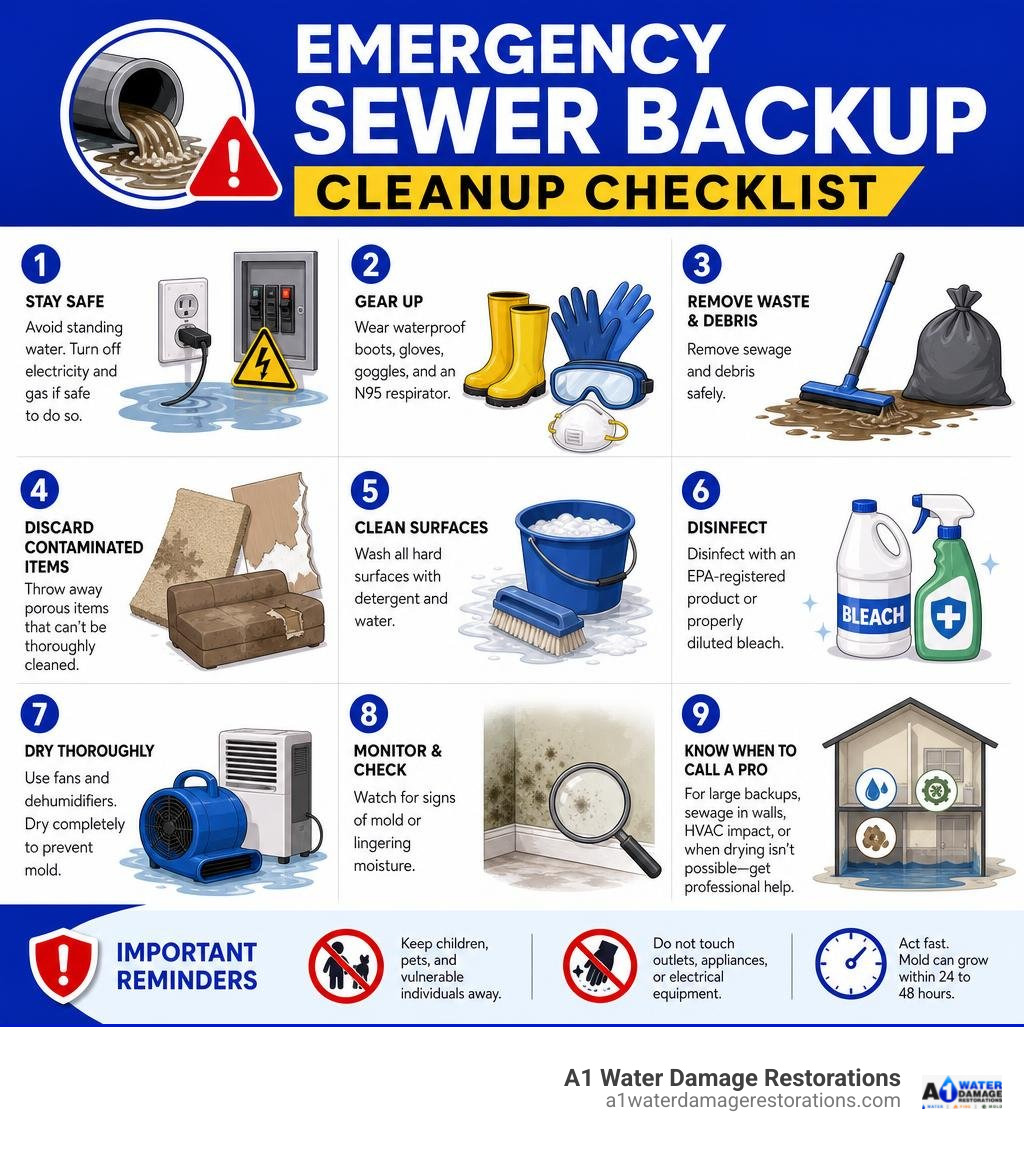
Important clean up after sewer backup terms:
Immediate Safety Measures Before You Clean Up After Sewer Backup
When blackwater bubbles up from a floor drain or toilet, our instinct is to grab a mop immediately. However, rushing into a flooded lower level can lead to severe injury or illness. Before taking a single step into the affected zone, you must assess environmental threats and isolate the room.
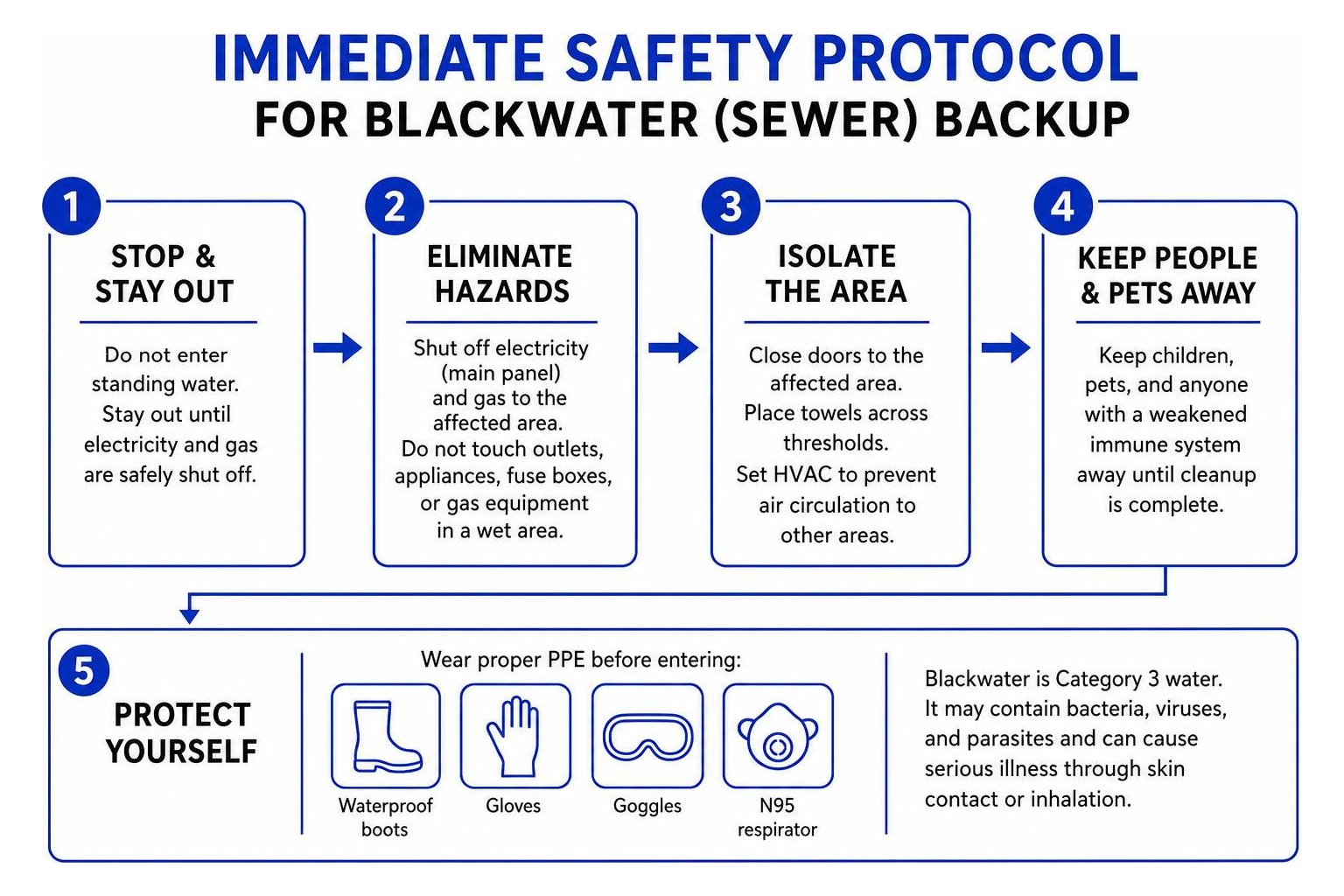
When dealing with a sanitary sewer backup in your basement, your immediate priority is creating a physical boundary. Shut the doors leading to the rest of your home, place old towels across door thresholds to block migrating moisture, and adjust your HVAC system so airborne contaminants do not circulate through your living quarters.
Personal Protective Equipment and Gas Safety
Category 3 blackwater carries pathogenic microbes such as E. coli, Salmonella, hepatitis A, and various parasitic protozoa. Skin contact with sewage water can infect small cuts, eyes, and mucous membranes. In addition, volatile organic compounds and aerosolized droplets pose serious respiratory threats.

You must assemble full personal protective equipment (PPE) before entering:
- Waterproof rubber boots: Heavy-duty boots with non-slip soles prevent punctured feet and skin absorption.
- Heavy nitrile gloves: Double-gloving is recommended when handling saturated debris.
- N95 or P100 respirator: A snug respirator prevents inhalation of aerosolized pathogens, mold spores, and airborne particulate.
- Protective safety goggles: Unvented eye protection guards against accidental splashing.
- Disposable coveralls (Tyvek): Full-body suits keep biohazards off your skin and daily clothing.
Reviewing public health guidelines for flood and sewer overflows reminds us to never touch the face, rub eyes, or smoke during remediation. Contaminated fingers can easily transfer dangerous microbes directly to the mouth.
Electrical Hazards and Safe Utility Shutoff
While bacteria get the most attention, electrocution and fuel-gas explosions are the single greatest physical dangers during any indoor flood event. Water conducts electrical current from submerged wall sockets, extension cords, and floor-level appliances directly to your body.
Understand why your sewer line is overflowing only after you have neutralized these critical threats:
- Locate your main electrical panel: If the panel is situated upstairs or away from the flooded room, switch off the individual breakers for the basement and lower level.
- Never enter standing water to reach a breaker: If your main panel is located in the flooded area, stay out and call your utility company immediately to cut power at the meter.
- Check for gas leaks: Sewer line damage or pressure surges can disrupt natural gas lines. If you smell rotten eggs or natural gas, evacuate your home immediately and call emergency services from outside. Do not strike a match or turn light switches on or off.
Step-by-Step Guide to Decontaminate and Restore Affected Areas
Restoring a home after a sanitary sewer failure requires a strict, methodical approach. Trying to sanitize surfaces before removing bulk waste or attempting to dry a room without proper disinfection will only spread contamination.
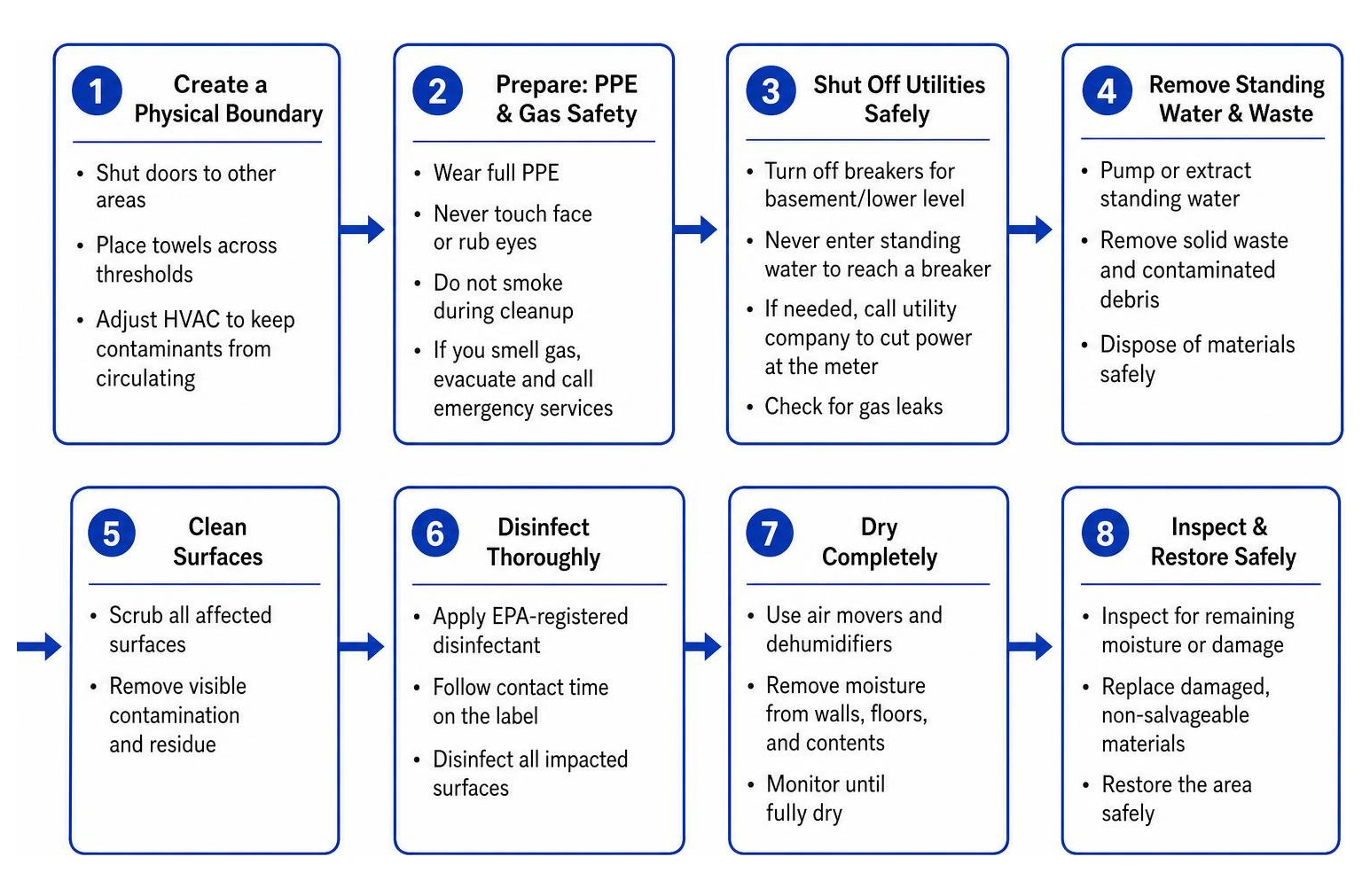
Executing a standard step-by-step sewage spill cleanup ensures you eliminate biohazards without re-contaminating pristine living spaces.
Essential Tools to Clean Up After Sewer Backup
Having the correct tools on hand makes the difference between successful remediation and secondary mold infestation.
Gather these essential tools:
- Submersible sump pump or heavy-duty wet/dry vacuum: For rapid extraction of standing blackwater.
- Heavy-duty plastic contractor bags (3-mil thickness): To contain biohazard materials for disposal.
- Low-suds household detergent: For washing physical grime from surfaces before sanitizing.
- EPA-registered hospital-grade disinfectant or unscented chlorine bleach: To neutralize remaining viral and bacterial threats.
- Stiff nylon bristle scrub brushes: For scouring non-porous subfloors and masonry.
- Dehumidifiers and high-velocity air movers: To pull deep moisture out of structural framing.
State agencies providing state health department cleanup guidance emphasize that bleach must be diluted properly—typically one-quarter cup to one cup of chlorine bleach per gallon of water—and never mixed with ammonia, as this creates hazardous chloramine gas.
Water Extraction and Surface Sanitization Sequence
Follow this sequence to ensure thorough sanitization:
- Extract Standing Sewage: Use a submersible trash pump or dedicated wet/dry shop vac to pull blackwater from the lowest points of the structure.
- Clear Gross Debris: Shovel and bag all solid waste directly into heavy contractor bags. Double-bag the contents to prevent leaks during transport.
- Wash with Warm Water and Low-Suds Detergent: Disinfectants cannot penetrate physical dirt. Scrub all structural framing, concrete slabs, and tile with detergent and warm water to strip organic residue.
- Clean Water Rinse: Rinse the scrubbed surfaces thoroughly with clean water, vacuuming up the rinse runoff to leave bare surfaces exposed.
- Apply Disinfectant: Apply an EPA-registered disinfectant or diluted household bleach solution (1 cup bleach per gallon of clean water). Ensure the surface remains visibly wet for a full 10 to 15 minutes of dwell time to guarantee pathogen inactivation.
- Final Rinse and Wipe: Wipe down the sanitized non-porous materials and begin active ventilation.
For detailed chemical ratios and timing, consult our disinfecting after a sewer backup breakdown.
What to Keep and What to Discard After Sewage Exposure
One of the hardest parts of coping with a sewer backup is deciding what items can be saved and what must be thrown away. Category 3 blackwater carries contaminants deep into porous cellular structures, making complete sanitization impossible for many household goods.
| Item Type | Material Classification | Recommendation | Primary Action |
|---|---|---|---|
| Wall-to-Wall Carpeting & Padding | Porous | Discard | Cut into manageable strips, bag in 3-mil plastic, and replace entirely. |
| Padded Upholstered Furniture & Mattresses | Porous | Discard | Cannot be fully sterilized; dispose of immediately. |
| Drywall, Baseboards & Fiberglass Insulation | Porous | Discard | Cut drywall minimum 12-24″ above flood line; remove wet insulation. |
| Concrete Slabs & Concrete Block Walls | Semi-Porous | Salvageable | Pressure-wash/scrub with detergent, apply disinfectant, dry thoroughly. |
| Solid Hardwood Flooring | Semi-Porous | Conditional | Salvageable only if exposure was minimal and wood is dried without warping. |
| Ceramic Tile, Porcelain & Metal Fixtures | Non-Porous | Salvageable | Wash thoroughly with warm soapy water and treat with EPA disinfectant. |
| Exposed Foods (Canned, Boxed, Bottled) | Foodstuff | Discard (Most) | Discard all cardboard/boxed food; disinfect intact commercial metal cans. |
Evaluating Structural Materials and Furnishings
Porous materials act like sponges when exposed to blackwater. Wall-to-wall carpeting, foam carpet padding, upholstered sofas, and foam-filled mattresses absorb contaminated water into areas that air and surface sprays cannot reach. Keeping these items creates severe health risks and chronic indoor air quality issues.
For walls, drywall wicks moisture upward rapidly. Following our Denver sewage flood mitigation guide, you should establish a demolition line at least 12 to 24 inches above the highest visible watermark. Remove drywall and wet insulation to expose wall cavities for direct cleaning, sanitization, and drying.
Food Safety and Contaminated Laundry Protocols
Contaminated food and porous textiles require immediate, strict handling:
- Food Safety Decisions: Discard all fresh produce, boxed goods, paper packaging, and screw-top containers touched by sewer water. Metal commercial canned foods may be salvaged only if labels are removed, the exterior is scrubbed with soap and water, and the entire can is submerged in a sanitizing bleach solution (1 tablespoon bleach per gallon of potable water) for 15 minutes before air drying.
- Refrigerated and Frozen Items: If power was cut during the backup, full freezers remain safe for roughly 48 hours (24 hours if half-full). Refrigerator items stay safe for only 4 to 6 hours without power; discard any food that sat above 45°F.
- Handling Laundry and Bedding: Contaminated clothing or washable linens should be discarded unless they are of high sentimental value. If salvaging, wash items separately in the hottest water cycle recommended by the manufacturer, using heavy-duty laundry detergent and color-safe bleach or chlorine bleach where appropriate. Dry items on high heat or in direct sunlight.
Professional Remediation vs. DIY Restoration
While small, localized spills on non-porous surfaces (such as a minor toilet overflow contained to a tiled bathroom floor) can sometimes be managed by homeowners, large backups present complex structural and health risks that require industrial solutions.
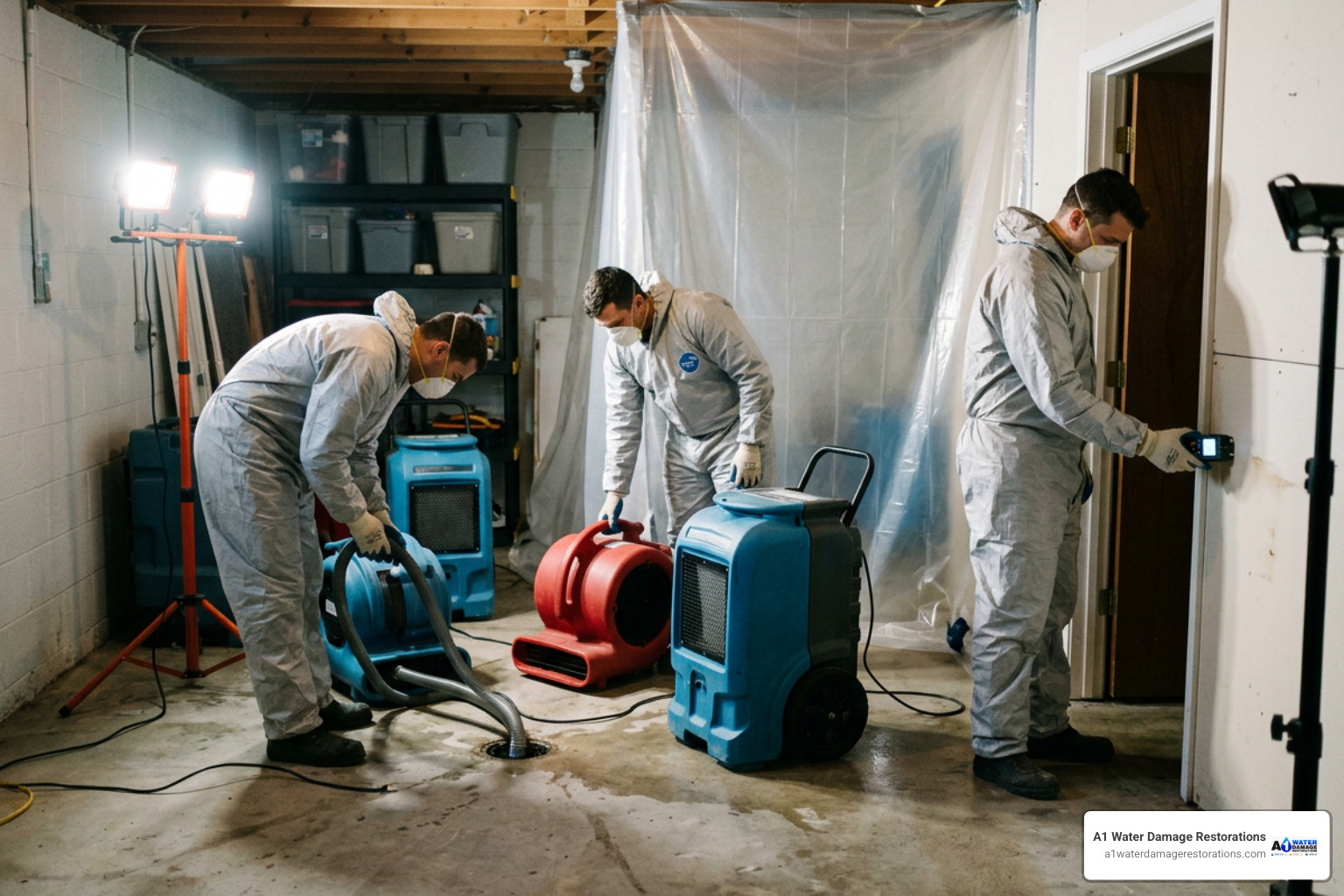
Municipalities continually invest in municipal sanitary sewer infrastructure maintenance to minimize mainline blockages, but localized blockages, tree root intrusions, and heavy storm surges still overwhelm residential lines. Knowing your limits prevents costly restoration errors.
When You Should Not Clean Up After Sewer Backup Without Professional Help
Homeowners should never attempt DIY blackwater cleanup under the following conditions:
- The contaminated area spans more than 100 square feet.
- Blackwater has entered HVAC ducts, return vents, or mechanical chases.
- Standing water has sat unaddressed for longer than 24 hours.
- Contamination has saturated subflooring, wall cavities, or structural load-bearing studs.
- Vulnerable occupants (infants, elderly family members, pregnant women, or immunocompromised individuals) live in the residence.
Certified restoration teams utilize negative air pressure containment chambers, industrial HEPA air scrubbers, and antimicrobial thermal fogging to eliminate biohazards without dispersing dangerous pathogens across clean living levels.
Advanced Structural Drying and Odor Remediation
Surface water removal is only half the battle. Porous structural framing, concrete foundation slabs, and floor joists retain significant amounts of moisture. Without professional-grade drying equipment, trapped moisture inevitably results in hidden mold colonization and long-term structural decay.
Certified technicians deploy penetrating and non-penetrating moisture meters along with thermal imaging cameras to map the precise path of migration. High-capacity LGR (low-grain refrigerant) dehumidifiers and axial air movers are positioned systematically to drive structural moisture content down to safe target levels (under 16% for framing lumber and under 4% for concrete).
Frequently Asked Questions About Sewer Backup Remediation
What is the greatest danger during a flood or sewage backup?
The greatest immediate danger is electrocution or an explosive gas leak. While blackwater carries bacteria, viruses, and parasites, live electrical currents running through standing water or damaged fuel lines present instant life-threatening hazards. Always ensure utility services are verified shut off before entering any flooded space.
Can contaminated carpeting or drywall be saved after a sewage spill?
In nearly all cases, no. Carpet padding, wall-to-wall carpeting, and drywall are porous materials that absorb sewage deep into their internal structure. These materials cannot be reliably disinfected according to IICRC S500 restoration standards. They must be removed, bagged, and disposed of to prevent long-term pathogen exposure and toxic mold blooms.
How long does it take for mold to grow after a sewer backup?
Mold spores germinate and begin active structural colonization within 24 to 48 hours of moisture exposure. Because raw sewage supplies organic nutrients along with high humidity, fungal growth accelerates rapidly. Immediate water extraction and continuous dehumidification are vital within the first day of an incident.
Conclusion
A sewer backup is one of the most stressful property emergencies a homeowner can face. By prioritizing utility safety, suiting up in proper protective gear, discarding porous items, and sanitizing non-porous surfaces with proven disinfectants, you can safeguard your living space and your family’s health.
Make sure to document every stage of property loss with time-stamped photographs and itemized lists before disposal to support your insurance claim.
If the sewage backup is extensive, has entered your wall cavities, or feels overwhelming to handle safely, do not take chances with your health. Our team at A1 Water Damage Restorations is available 24/7 across Denver, Boulder, Arvada, Golden, and surrounding communities to provide complete, IICRC-certified remediation. Reach out to our team today for professional sewage cleanup services and let our experienced restoration specialists return your home to pristine condition.