

How Do You Get Rid of Black Mold Permanently?
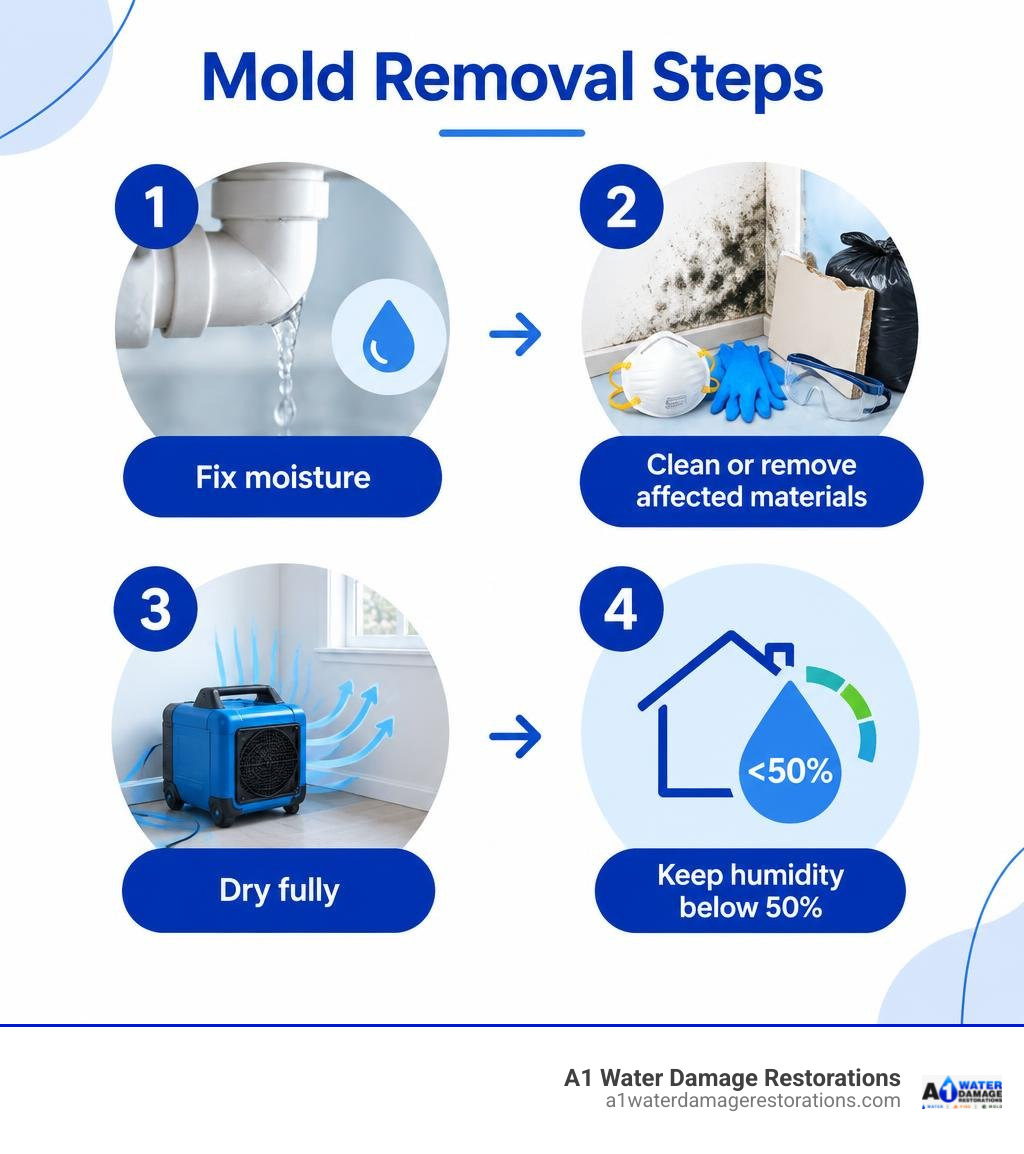
How do you get rid of black mold permanently? Fix the leak or dampness that feeds it. For a small patch on a hard surface, wear an N95 respirator, gloves, and goggles; scrub with detergent and water; then dry the area fully. Moldy drywall, carpet, and insulation may need to be removed rather than cleaned. Keep indoor humidity below 50% to help stop mold from returning.
The key is moisture control, not a stronger cleaner. Wet materials can develop mold within 24 to 48 hours, so act quickly. If the affected area is larger than about 10 square feet, or mold may be hidden in walls or HVAC equipment, call a mold remediation professional.
I’m Cole Nudel, and I work in disaster restoration with A1 Water Damage Restorations in the Denver area. My work helps me answer the question “how do you get rid of black mold permanently” with a focus on safe cleanup and fixing the water source.
Understanding Black Mold: Health Risks and Identification
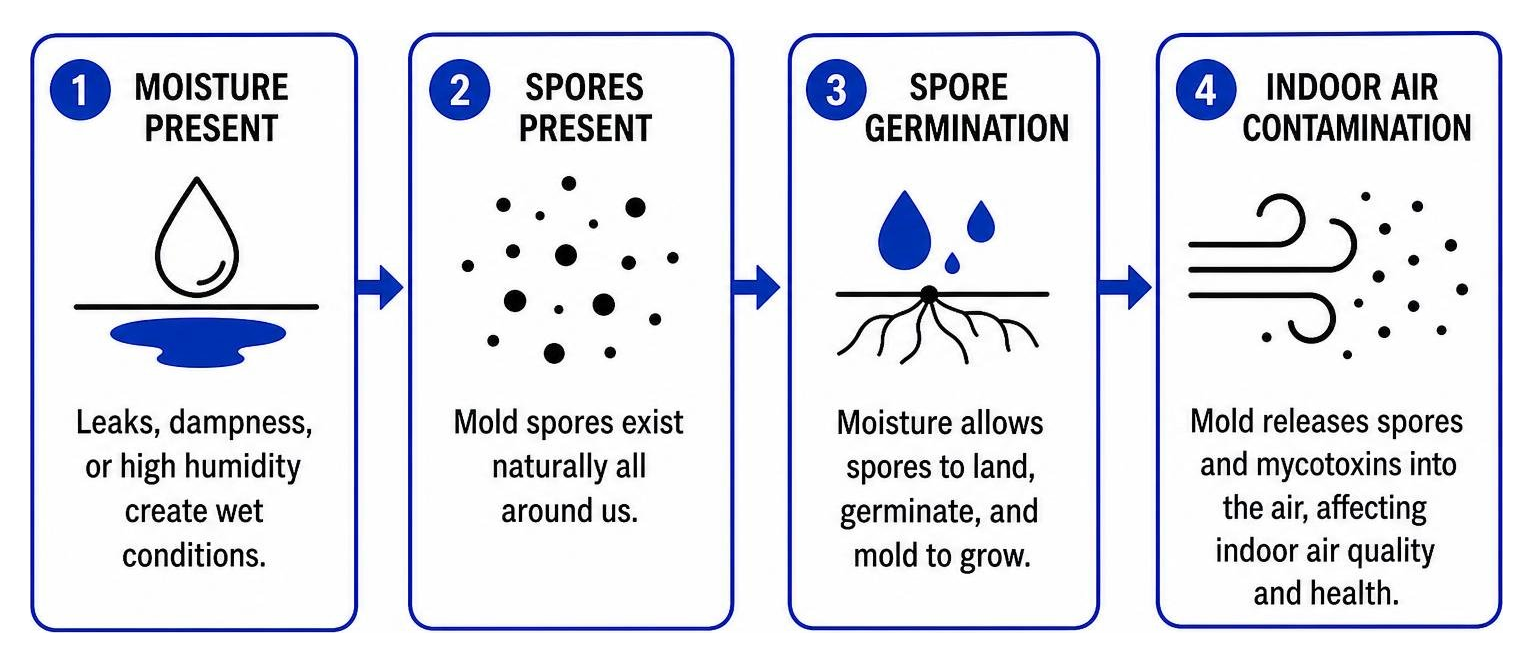
Mold spores exist naturally all around us, floating harmlessly outdoors until they find a dark, damp, and unventilated corner of your home. When people talk about toxic black mold, they are usually referring to Stachybotrys chartarum, a greenish-black fungus that thrives on materials rich in cellulose, such as drywall, cardboard, and wood, when continuous moisture is present.
Indoor mold is an unwelcome houseguest that poses genuine health hazards. Microscopic fungal spores and metabolic byproducts known as mycotoxins can irritate airways, trigger allergic reactions, and worsen existing respiratory conditions. According to the CCOHS indoor air quality guidance on moulds and fungi, all indoor molds warrant prompt remediation regardless of species because chronic exposure affects indoor air quality and overall well-being.
Vulnerable populations—including infants, the elderly, individuals with asthma, and those with compromised immune systems—face the highest risk of severe reactions. Common symptoms of exposure include:
- Persistent sneezing, coughing, and post-nasal drip
- Eye irritation, redness, and itching
- Skin rashes or hives
- Worsened asthma attacks and chest tightness
- Musty, earthy odors that linger even after routine housecleaning
Black Mold vs. Common Household Mildew
Homeowners often confuse common mildew with aggressive black mold infestations. Mildew is a surface-dwelling fungus that typically appears flat, powdery, and gray or white on damp shower curtains, tile grout, or window casings. In contrast, black mold burrows deeper, often appearing fuzzy, slimy, or soot-like, with dark green to deep black pigmentation.
| Characteristic | Common Mildew | Black Mold (Stachybotrys chartarum) |
|---|---|---|
| Visual Appearance | Flat, powdery, speckled | Raised, fuzzy, slimy, or soot-like |
| Color Profile | White, gray, yellow, light brown | Dark green, charcoal, or deep black |
| Depth of Growth | Surface level on non-porous areas | Deep root structures in porous materials |
| Moisture Demand | High ambient humidity | Standing water or chronic, persistent leaks |
| Structural Impact | Superficial discoloration | Can rot and compromise organic substrates |
| Typical Locations | Shower stalls, window tracks, tile grout | Wall cavities, subfloors, crawlspaces, ceilings |
Why Mold Colonizes Basements and Living Spaces
Mold requires only three ingredients to colonize your property: oxygen, an organic food source (like wood framing or paper-backed sheetrock), and moisture. Because basement walls are surrounded by earth, cool concrete creates an ideal condensation surface when warm, moist air enters from outside.
Across local communities from Boulder down to Littleton, rapid weather shifts and heavy spring snowmelt drive moisture against foundations. Poor yard grading, groundwater seepage, and inadequate sub-slab drainage turn basements into prime mold territory. When moisture sits unattended, dormant spores activate and begin colonizing building materials within just 24 to 48 hours.
Essential Safety Gear and Room Preparation
Cleaning mold without adequate safety gear risks spreading spores into clean living spaces or breathing in elevated concentrations of fungal toxins. Before disturbing any visible mold patch, you must gear up properly.
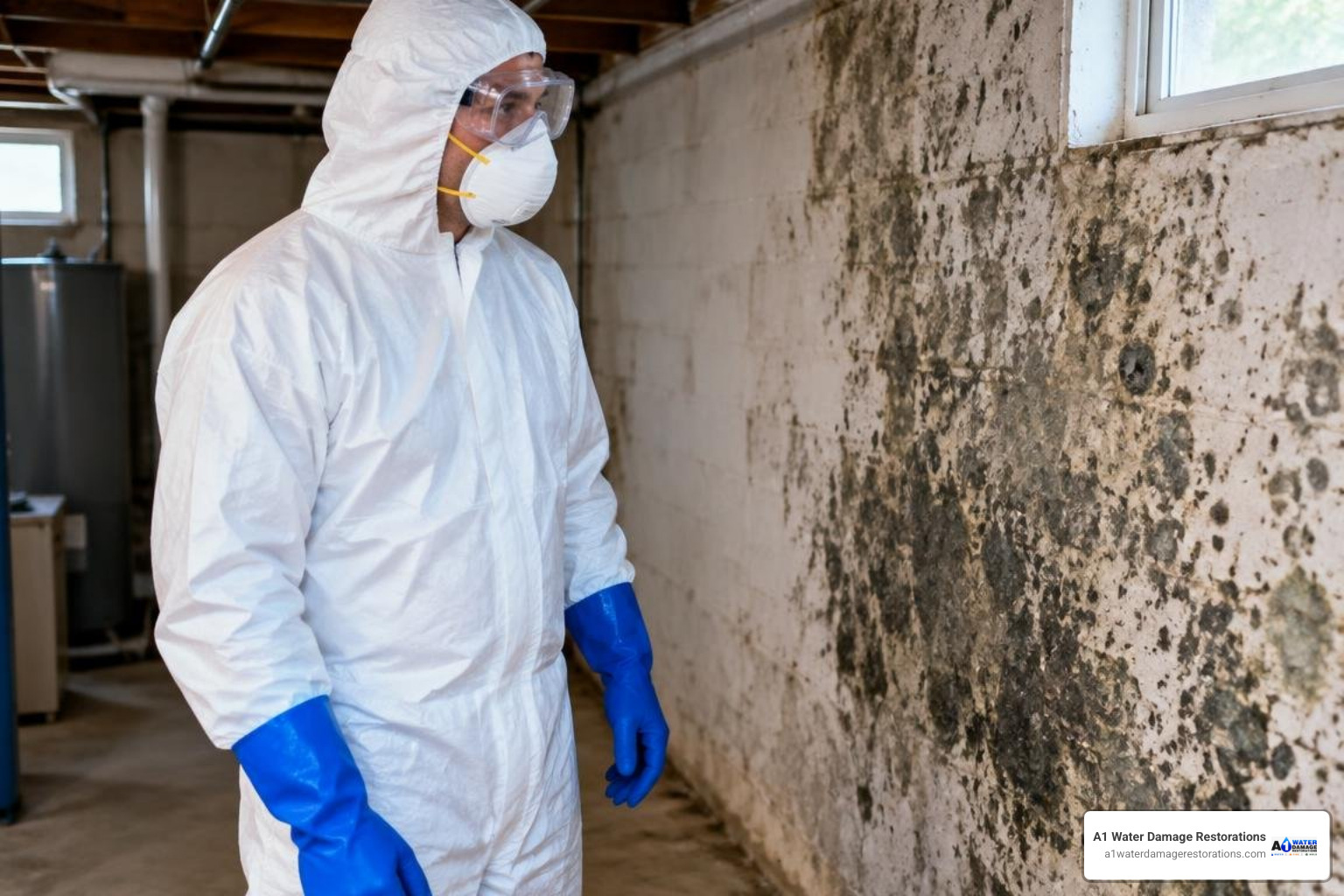
Following the Washington State Department of Health mold guidelines, your personal protective equipment (PPE) checklist should include:
- Respirator: A NIOSH-approved N95, N100, or half-face elastomeric respirator to filter airborne spores.
- Eye Protection: Unvented safety goggles to keep dislodged spores out of your eyes.
- Protective Gloves: Heavy-duty nitrile, neoprene, or thick rubber gloves extending past the wrists.
- Protective Clothing: Long-sleeved shirts, long pants, or disposable Tyvek coveralls that can be laundered immediately or discarded after cleanup.
Containing Mold Spores Before Cleaning
Disturbing a dry colony of mold releases millions of airborne spores. Containment prevents those spores from circulating through your home’s ductwork.
- Turn off HVAC units: Shut down heating and air conditioning systems entirely so air handlers do not redistribute contaminants.
- Seal doorways and registers: Hang heavy plastic sheeting (6-mil poly) across doorways leading to other rooms, securing the edges with painter’s tape. Cover return vents and supply registers.
- Establish exhaust ventilation: Place an exhaust fan in an exterior window facing outward to pull airborne spores directly outside, establishing gentle negative air pressure in your work area.
- Mist the surface lightly: If the moldy patch has dried out, lightly mist it with a spray bottle of clean water before scrubbing to minimize airborne spore travel.
How Do You Get Rid of Black Mold Permanently with Home Remedies?
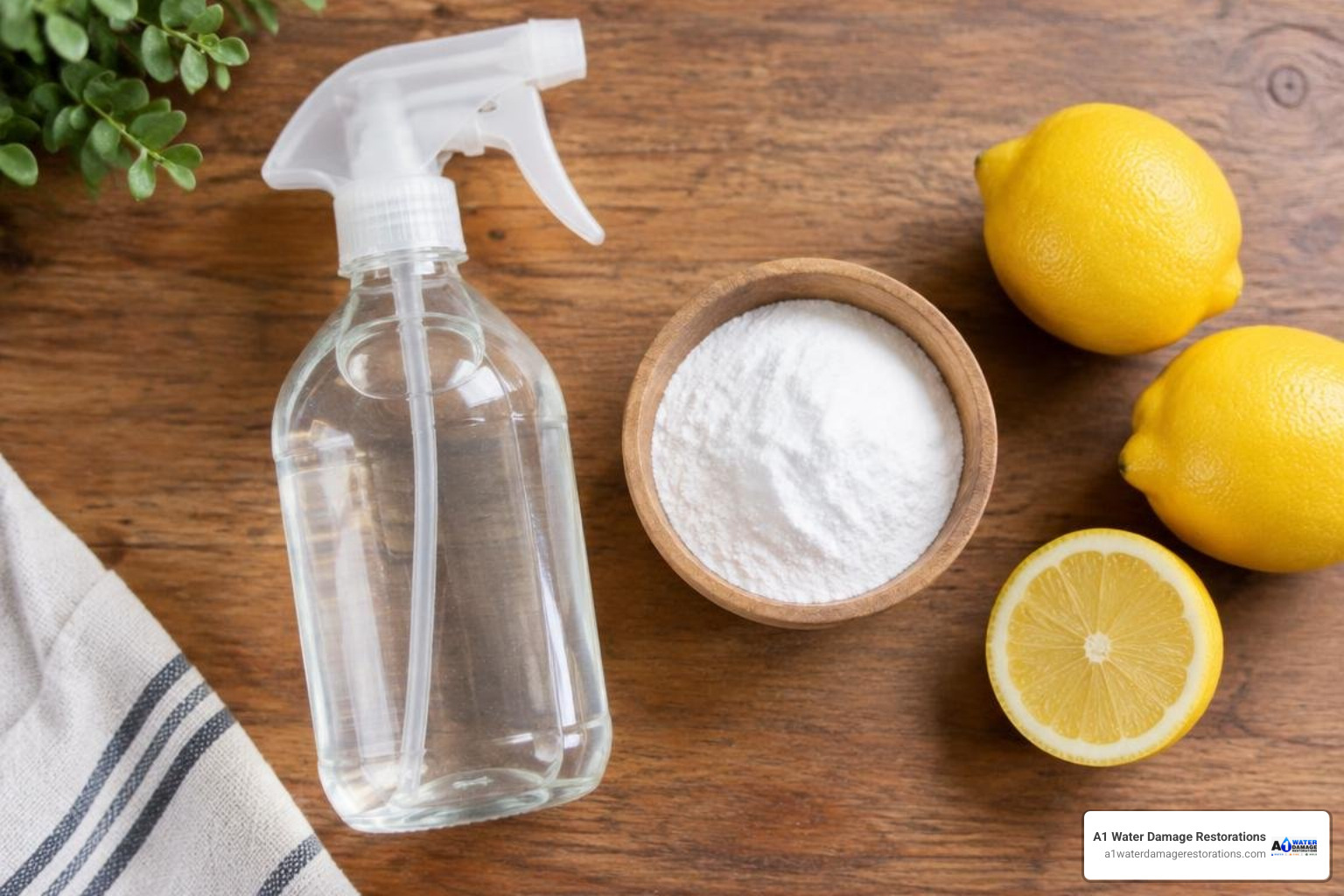
For small, localized mold patches under 10 square feet on non-porous or semi-porous surfaces, safe and inexpensive household remedies work well. While commercial antimicrobials are common, kitchen staples like distilled white vinegar and baking soda provide non-toxic alternatives that effectively neutralize fungal growth without harsh fumes.
When learning how to clean mold in house safely and effectively, surface cleaning alone is only half the battle—eliminating the underlying moisture is what keeps it away.
Cleaning Hard Surfaces: How Do You Get Rid of Black Mold Permanently?
Hard, non-porous surfaces like ceramic tile, sealed stone, porcelain, metal, and glass do not allow fungal roots (hyphae) to penetrate beneath the surface. This makes them relatively straightforward to clean and sanitize.
- Prepare the natural solution: Fill a clean spray bottle with undiluted distilled white vinegar (5% to 6% acidity). Vinegar contains acetic acid, which penetrates fungal membranes and kills the root system of most household mold species.
- Saturate and allow dwell time: Spray the vinegar liberally over the affected surface. Let it sit undisturbed for at least 60 minutes so the acid can break down the colony.
- Scrub thoroughly: Dip a stiff-bristled brush into a paste of baking soda and warm water. Scrub the surface firmly to lift residue, dislodge clinging spores, and eliminate lingering odors.
- Wipe and rinse: Wipe the area clean using disposable microfiber cloths or paper towels dampened with warm water.
- Dry the area completely: Use clean towels and set up a box fan or dehumidifier to dry the surface thoroughly. Moisture left behind will invite spores to settle right back in. For specialized wood frames or sill tracks, follow targeted steps for removing mold from window sills safely.
Handling Porous Materials: Drywall, Carpets, and Ceilings
Unlike tile or glass, porous materials contain microscopic channels that allow fungal hyphae to grow deep inside. Once black mold takes hold inside drywall backing, carpet padding, acoustic ceiling tiles, or fiberglass insulation, surface washing cannot reach the embedded roots.
Attempting to scrub mold off unsealed drywall merely dampens the gypsum core, accelerating internal rot. Proper remediation requires removing and safely bagging these materials.
- Drywall & Plaster: Cut out contaminated drywall at least 12 inches beyond visible mold patches. Double-bag the debris in heavy contractor bags before carrying it through your home. Check our detailed guide on dealing with black mold on drywall for safe cutting and disposal steps.
- Ceiling Materials: Overhead leaks frequently saturate insulation and ceiling sheetrock. Address the upper plumbing or roof leak before taking practical steps for ceiling mold removal.
- Carpets & Padding: If wall-to-wall carpeting or underlayment has stayed wet for more than 48 hours and developed black mold, discard it. It is nearly impossible to disinfect moldy carpet backing and pad fibers completely.
Eliminating Moisture to Stop Recurrence
Scrubbing away visible mold without fixing the water intrusion guarantees it will return. Mold does not grow on dry surfaces. To keep it away permanently, trace and eliminate every moisture pathway.
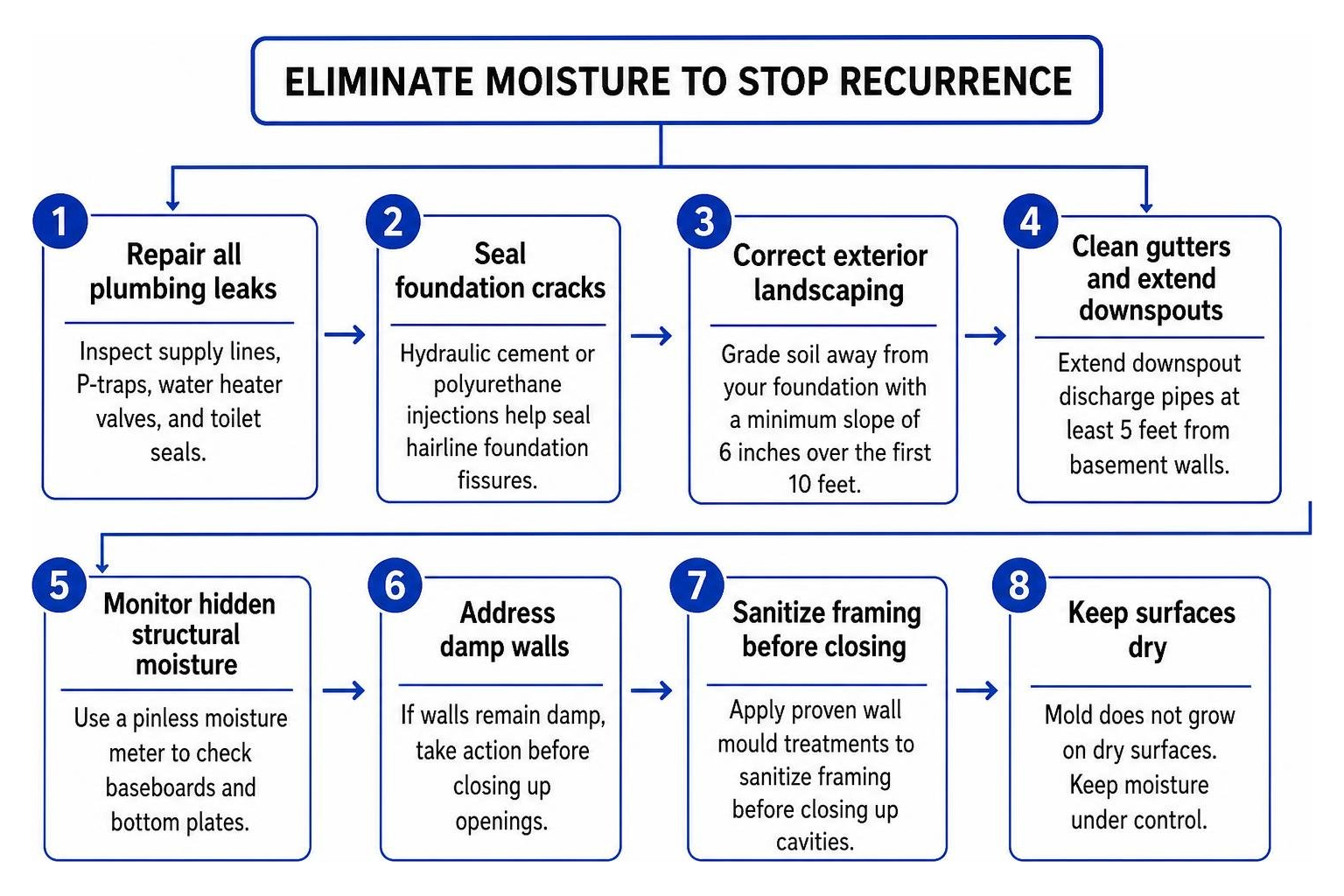
- Repair all plumbing leaks: Inspect supply lines, P-traps, water heater valves, and toilet seals in areas like Golden and Wheatridge where mineral buildup can stress plumbing fixtures.
- Seal foundation cracks: Hydraulic cement or polyurethane injections help seal hairline foundation fissures against groundwater seepage.
- Correct exterior landscaping: Grade soil away from your foundation with a minimum slope of 6 inches over the first 10 feet. Clean gutters regularly and extend downspout discharge pipes at least 5 feet from basement walls.
- Monitor hidden structural moisture: Use a pinless moisture meter to check baseboards and bottom plates. If walls remain damp, apply proven wall mould treatments to sanitize framing before closing up cavities.
Humidity Control: How Do You Get Rid of Black Mold Permanently?
Indoor relative humidity (RH) is the primary factor determining whether mold spores remain dormant or colonize your home. Both the EPA and health agencies advise keeping indoor relative humidity between 30% and 50%. Anything consistently above 55% creates a favorable environment for fungal germination.
- Deploy hygrometers: Place digital humidity gauges in moisture-prone rooms such as basements, crawlspaces, laundry rooms, and bathrooms.
- Run dedicated dehumidifiers: In finished or unfinished basements across Arvada, Broomfield, and Westminster, install an Energy Star-certified dehumidifier with continuous drain routing to keep ambient humidity below 50%.
- Vent moisture-generating activities: Always operate bathroom exhaust fans during showers and let them run for 20 minutes afterward. Ensure kitchen hoods vent outdoors and inspect clothes dryer ducting for lint clogs or disconnects.
- Address roof and attic ventilation: Ensure soffit, gable, and ridge vents maintain steady airflow to stop warm indoor air from condensing against cold roof decking. You can explore comprehensive strategies in our attic mold prevention and treatment walkthrough.
DIY vs. Professional Mold Remediation
While handy homeowners can address minor surface mold, knowing when to call certified professionals protects both your health and your property’s value.
EPA guidelines recommend hiring certified professionals under any of the following conditions:
- The contaminated area exceeds 10 square feet: Large colonies release massive spore loads when disturbed and demand full containment with commercial HEPA air scrubbers.
- The water source is contaminated: Flooding caused by sewage backups or contaminated groundwater requires professional antimicrobial extraction.
- HVAC system contamination: If you suspect mold inside ductwork or near the air handler, running your system spreads spores into every room.
- Hidden or structural mold: Musty odors without visible growth often signal mold deep within wall cavities, subfloors, or crawlspace insulation.
When DIY solutions are not enough, our family-owned team at A1 Water Damage Restorations delivers 24/7 IICRC-certified restoration throughout Denver, Cherry Creek, Greenwood Village, and neighboring areas. Our team uses negative air machines, industrial dehumidifiers, and botanical antimicrobials to restore properties safely. If you encounter extensive water damage, explore our specialized professional mold removal services to safeguard your living space.
Frequently Asked Questions About Black Mold Removal
Does bleach kill black mold permanently on porous surfaces?
No, chlorine bleach does not permanently eliminate black mold on porous substrates like wood, drywall, or concrete. The chemical structure of bleach prevents its chlorine molecules from penetrating porous materials, leaving them on the surface while the water component soaks in. This actually provides added moisture to the embedded fungal roots (hyphae).
As highlighted in the Louisiana Department of Health mold facts, bleach can also release harsh fumes and is unnecessary for routine household remediation. Mild detergents, distilled white vinegar, or physical removal of porous materials remain far safer and more effective.
How quickly does black mold start growing after water exposure?
Mold spores begin germinating on damp materials within 24 to 48 hours of water exposure. If wet carpets, drywall, or framing lumber are thoroughly dried within that initial 48-hour window, mold growth can generally be prevented entirely. Once colonization begins, visible patches and musty odors can develop in as little as 3 to 7 days.
Can you simply paint over black mold on internal walls?
Never paint or caulk directly over active black mold. Paint acts merely as a temporary cosmetic mask; the fungal colony will consume the organic resins in the paint and the drywall paper beneath it, causing bubbling, peeling, and mold bleed-through within weeks. The underlying moisture must be fixed, the wall sanitized, and porous sheets replaced. For step-by-step guidance on remediating painted drywall, see our practical advice on eradicating black mould from internal walls.
Conclusion
Getting rid of black mold permanently comes down to one fundamental principle: control the moisture, and you control the mold. By addressing plumbing leaks, improving exterior drainage, maintaining relative humidity between 30% and 50%, and properly cleaning or removing colonized materials, you can protect your living space and preserve your home’s indoor air quality.
For lingering odors, hidden moisture, or large infestations across the Denver Metro Area, our team at A1 Water Damage Restorations is here around the clock with IICRC-certified expertise. Take control of your home’s health today and discover how to clean up mold and black mold like a pro.