

Types of Storm Damage Addressed by Restoration Experts
When severe weather rolls through the Denver Metro Area—whether it is a summer hail storm in Boulder, driving rain in Cherry Creek, or heavy snow in Golden—it leaves a variety of structural challenges in its wake. Professional storm restoration services address both visible exterior destruction and hidden interior moisture issues.
Restoration experts typically manage several primary categories of storm damage:
- Hail Impacts: Hail can shatter roof shingles, dent gutters, puncture siding, and crack windows. Impact-rated roofing materials often need to replace destroyed surfaces to withstand future weather. If you’re dealing with roof damage, following a Roof Storm Damage Checklist: What to Do After a Disaster can help you take the right immediate steps.
- Wind Damage: High winds lift shingles, tear off fascia and soffit, and blow heavy debris against properties. Securing these envelope breaches quickly prevents secondary water intrusion.
- Roof Leaks and Water Extraction: Driving rain penetrates compromised roofs, leading to ceiling collapses, damaged insulation, and ruined drywall.
- Flood Mitigation: Rapidly melting snow or heavy cloudbursts can cause surface water to rush into basements and ground floors, requiring high-volume water extraction.
- Structural Drying and Dehumidification: Moisture trapped inside building cavities must be actively dried using industrial air movers and desiccant dehumidifiers to save structural framing.
- Mold Remediation: Mold spores can begin germinating within 24 to 48 hours in damp environments. Thorough drying and antimicrobial treatments eliminate health hazards before they start.
- Tree Damage and Debris Removal: Fallen branches or uprooted trees can crush rooflines, smash windows, and block property access, requiring emergency tree removal and structural support.
To learn more about comprehensive recovery options, explore our core Storm Damage Restoration Services page.
The Step-by-Step Restoration and Assessment Process
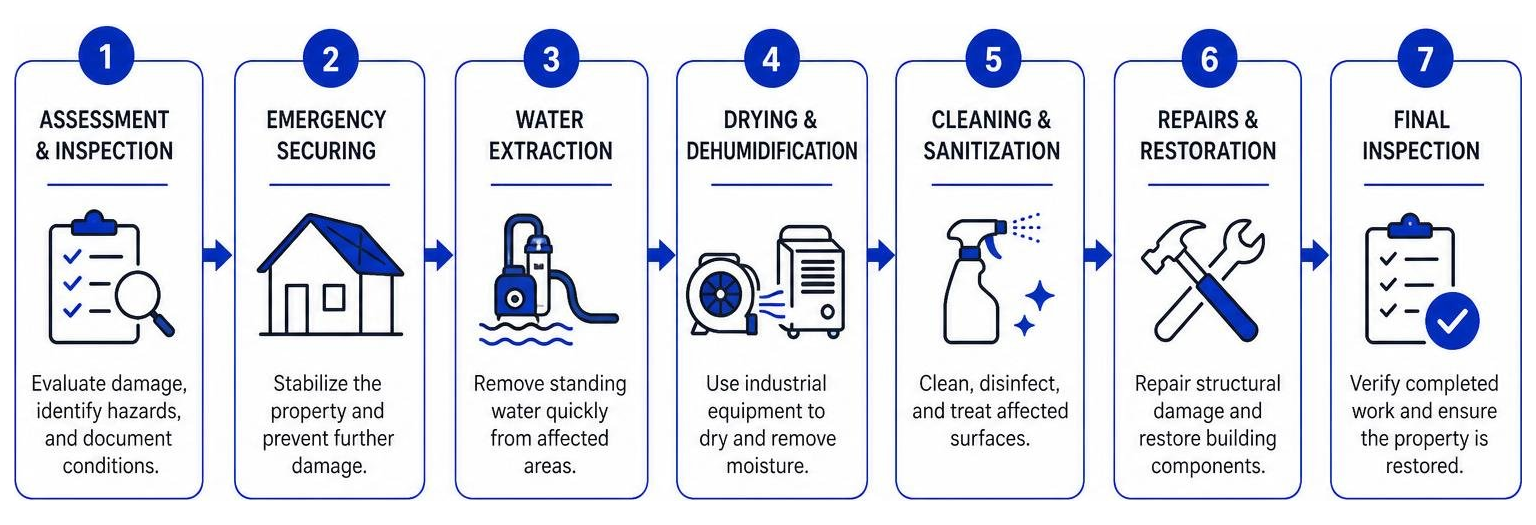
When disaster strikes, having a structured plan turns chaos into order. We maintain 24/7/365 emergency availability so our team can deploy immediately across Denver, Arvada, Westminster, Wheatridge, Broomfield, and Littleton.
Upon arrival, technicians establish containment barriers and complete a comprehensive hazard evaluation. We verify structural stability, identify step and touch electrical hazards, check for gas leaks, and assess environmental safety before work begins. For localized local recovery details, visit our page on Denver Storm Damage Restoration.
Steps in the Storm Restoration Services Process
Every property requires a tailored approach, but standard comprehensive storm restoration services follow a proven multi-step sequence:
- Initial Damage Inspection: Technicians conduct an end-to-end evaluation using moisture meters and thermal imaging cameras to locate hidden water pockets behind walls and beneath flooring.
- Board-Up Services & Roof Tarping: To secure the building envelope against rain, pest invasion, and unauthorized entry, exposed openings are boarded up and heavy-duty tarps are secured over damaged roofs.
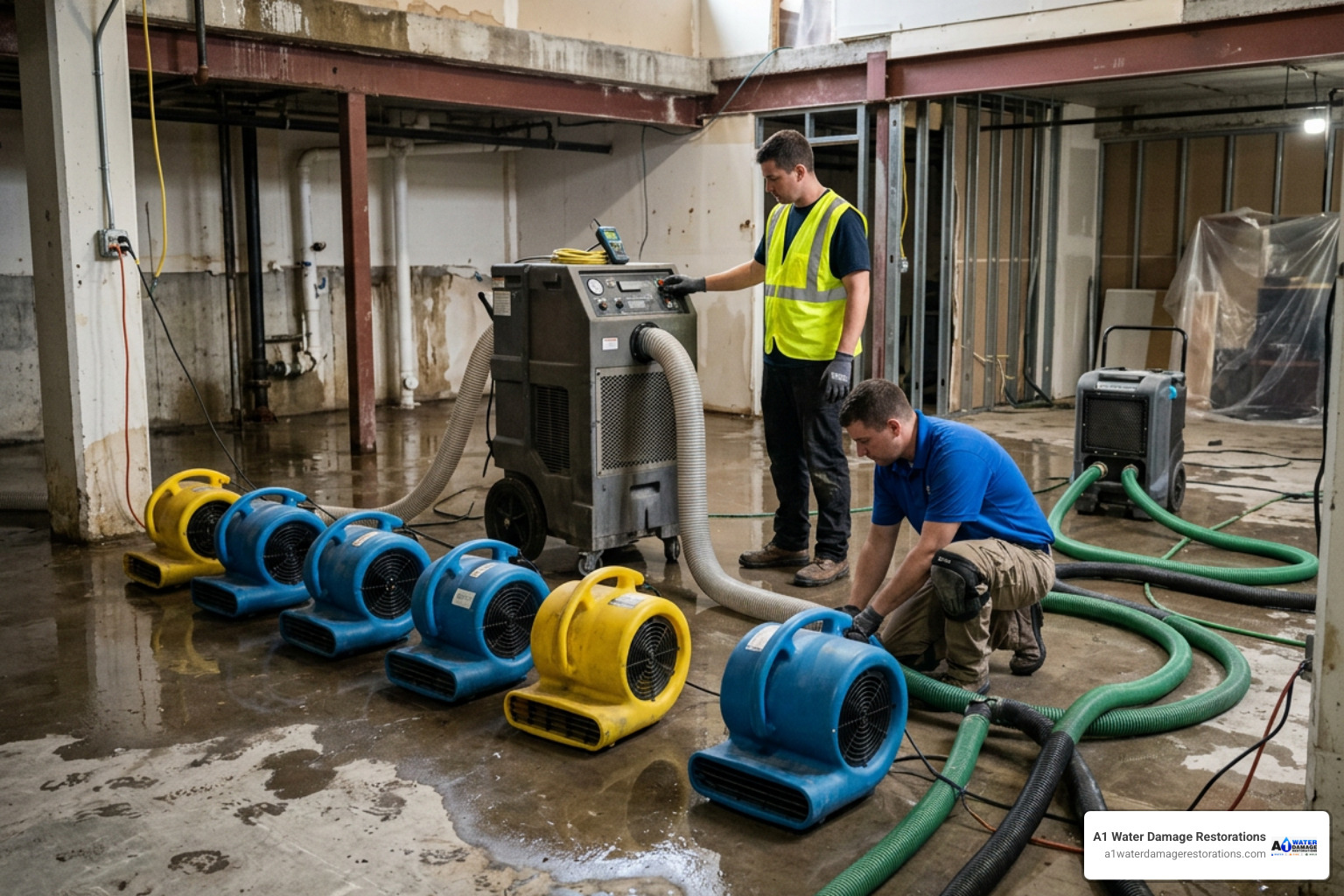
- Water Extraction: Specialized truck-mounted equipment and submersible pumps quickly remove standing water from basements and living spaces.
- Structural Drying & Dehumidification: Industrial-grade air movers and dehumidifiers pull moisture out of structural studs, concrete, drywall, and subflooring.
- Packout and Contents Inventory: Belongings threatened by standing water or structural collapse are carefully inventoried, packed, and transported to a secure, climate-controlled facility for off-site cleaning and storage.
- Disinfection and Antimicrobial Application: Affected surfaces are scrubbed, sanitized, and treated with EPA-registered antimicrobials to prevent mold growth and bacterial contamination.
- Reconstruction & Structural Repairs: From replacing drywall and flooring to rebuilding entire roof structures, the property is fully restored to its pre-loss condition—or better.
For a deeper dive into protecting your home during emergency recoveries, review these 10 Tips for Recovering from Storm Damage.
How Restoration Contractors Navigate Insurance Claims
Filing an insurance claim after a major storm can feel overwhelming, especially when adjusting low-ball initial offers or complex paperwork. Reliable storm restoration services extend beyond physical repairs—they act as your advocate throughout the claims process.
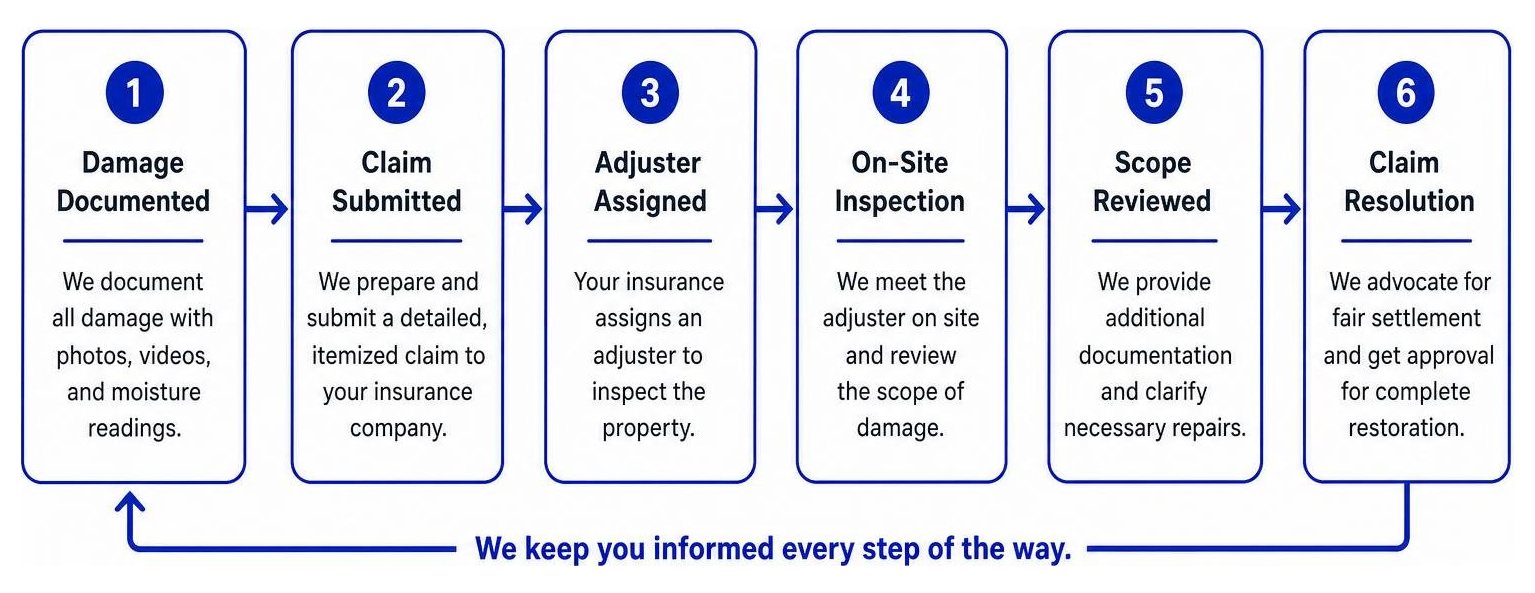
Insurance carriers frequently recommend minor spot patches for storm damage. However, experienced restoration contractors provide detailed, itemized documentation justifying full replacements when structural integrity is compromised.
Here is how a dedicated restoration partner simplifies the claim experience:
- Detailed Photo and Video Evidence: Technicians document every inch of damage immediately after arriving on-site, capturing high-resolution photos and infrared moisture readings.
- Itemized Xactimate Estimates: Restoration professionals use line-item pricing software recognized by major insurance carriers, ensuring all materials, labor, and safety protocols are accurately estimated.
- Direct Adjuster Coordination: On-site meetings with the insurance adjuster allow your contractor to point out hidden structural damage, attic moisture, or compromised underlayment that might otherwise be overlooked.
- Policy Scope Reviews: Contractors review policy allowances to verify that required code upgrades, ice and water shield installation, and proper ventilation adjustments are fully covered.
Protect yourself against unscrupulous out-of-state “storm chasers” by reading The Homeowner’s Guide to Hail Damage and Insurance Scams. To evaluate your repair options thoroughly, check out What Are the Best Storm Damage Repair Solutions?.
What to Look for in Professional Storm Restoration Services
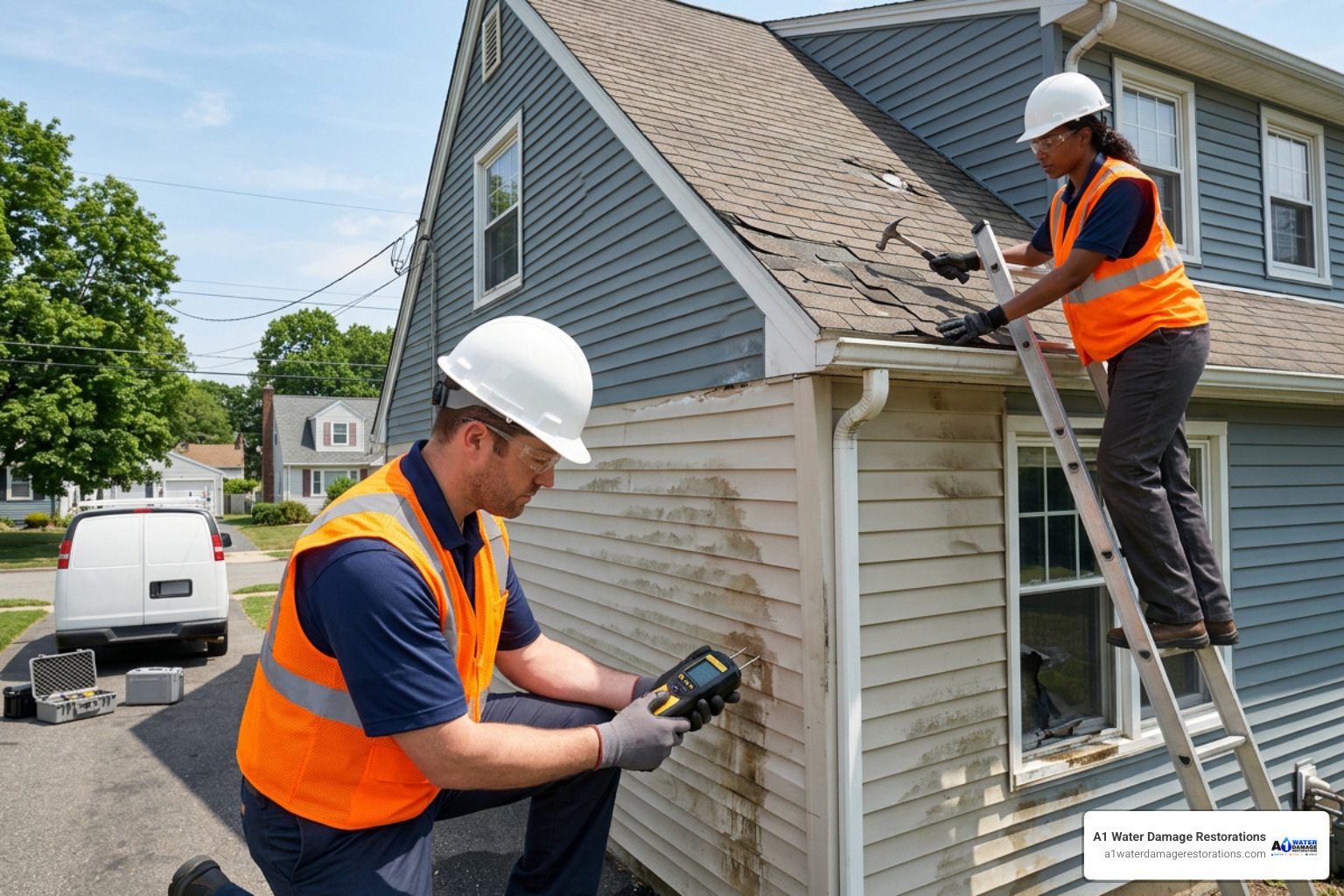
Selecting the right contractor is crucial to ensure your building is safely restored and compliant with building codes. When vetting restoration providers in Colorado, prioritize these essential qualifications:
- IICRC Certification: The Institute of Inspection, Cleaning and Restoration Certification (IICRC) sets the gold standard for water damage restoration, structural drying, and mold remediation. Ensure firm technicians hold active credentials.
- Valid Licensing and Bonding: Contractors must hold state and local general contracting licenses (and roofing licenses where applicable). Check directory ratings and state licensing boards before signing contracts.
- OSHA and DOT Compliance: A reputable business maintains strict compliance with Occupational Safety and Health Administration (OSHA) rules and Department of Transportation (DOT) fleet requirements to ensure jobsite safety.
- Safety Track Record (EMR < 1.0): An Experience Modification Rate (EMR) below 1.0 indicates that a company maintains a workplace safety record superior to the industry average.
- Background Checks & Vetted Staff: Trustworthy companies perform drug screens and background checks on all field personnel entering your private residence or business.
- Comprehensive Logistics: Restoration teams should maintain well-equipped mobile units and robust supply chains to procure necessary lumber, roofing shingles, and drying equipment during regional material shortages.
Property vs. Power Grid: Understanding Restoration Sectors
When severe weather strikes, different sectors require specialized restoration operations. While residential and commercial properties focus on interior drying and building repair, public infrastructure requires high-voltage power grid recovery.
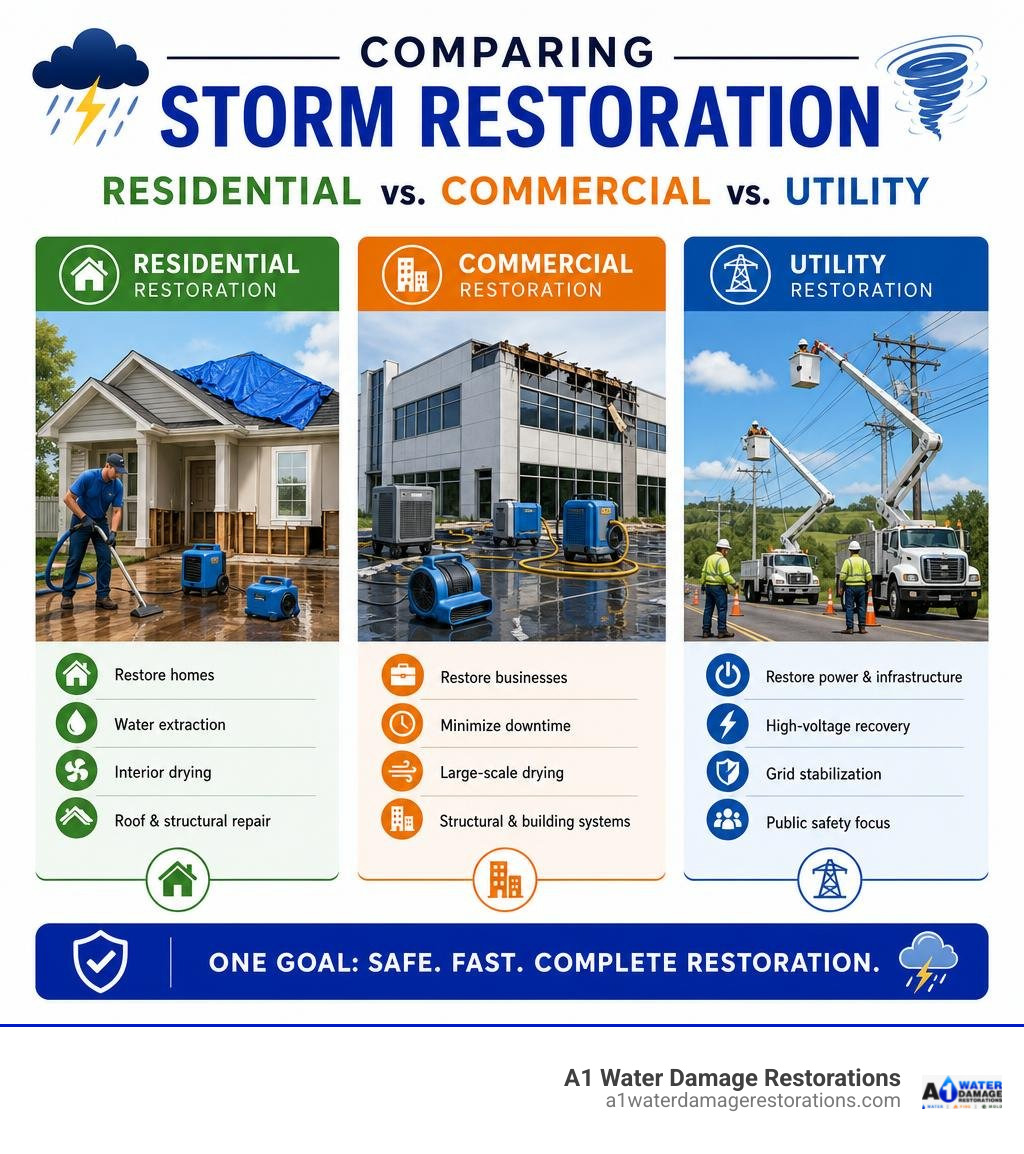
Comparing Residential, Commercial, and Utility Storm Restoration Services
| Restoration Sector | Key Objectives | Specialized Equipment & Tactics | Primary Focus Area |
|---|---|---|---|
| Residential Restoration | Restoring single-family homes, townhomes, and apartments. | Truck mounts, dehumidifiers, roof tarps, antimicrobial sprays. | Water extraction, interior drying, contents packout, roof repair. |
| Commercial Restoration | Rapid turnkey recovery to minimize business interruption and loss of revenue. | Large desiccant dehumidifiers, temporary generators, containment zones. | Structural drying, mold control, office/retail rebuilding, safety compliance. |
| Utility Infrastructure | Restoring high-voltage electrical grids, substation assets, and power lines. | Bucket trucks, wire guard teams, drone sweeps, automated line testing. | Re-energizing power lines, replacing utility poles, clearing rights-of-way. |
While residential and commercial restoration companies focus on saving structures, contents, and indoor air quality, utility grid teams deploy specialized linemen and wire guard safety units to secure fallen power cables across public streets. Both sectors share a commitment to 24/7 rapid mobilization and safety compliance.
Frequently Asked Questions About Storm Recovery
How quickly can storm restoration crews respond to an emergency?
In emergency restoration, speed is critical. Professional storm restoration services maintain 24/7/365 emergency dispatch capabilities. Local crews typically arrive on-site within 60 to 90 minutes across local service areas like Greenwood Village, Boulder, and Denver. Rapid response stops active water leaks, secures open roof structures, and prevents secondary water damage and mold growth.
What certifications should a storm damage contractor hold?
A reputable storm restoration firm should employ technicians certified by the IICRC in Water Damage Restoration (WRT), Fire and Smoke Restoration (FSRT), and Applied Microbial Remediation (AMRT). Additionally, the company should hold local general contractor licenses, carry full commercial general liability and workers’ compensation insurance, maintain an EMR rating below 1.0, and comply fully with OSHA safety standards.
How do restoration contractors help with insurance claims?
Restoration contractors assist by providing comprehensive, objective evidence of storm damage. They perform initial thermal moisture inspections, capture high-resolution photographic documentation, write line-item estimates using standard insurance pricing software (Xactimate), and meet directly with your insurance adjuster on-site. This ensures all necessary repairs, structural drying, and safety measures are accounted for in your carrier’s payout.
Conclusion: Rebuilding and Protecting Your Property
Severe weather can disrupt your life in an instant, but recovering from storm damage does not have to be an overwhelming process. By taking immediate action, securing your property’s exterior, and partnering with experienced professionals, you can restore your home or business quickly, safely, and thoroughly.
At A1 Water Damage Restorations, we take pride in serving the Denver Metro Area—including Boulder, Cherry Creek, Denver, Golden, Greenwood Village, Arvada, Westminster, Wheatridge, Broomfield, and Littleton. As a family-owned business, our 24/7 IICRC-certified team brings a personal touch to every project. We provide end-to-end, in-house solutions for water extraction, structural drying, mold control, roof tarping, and complete reconstruction, restoring your property better than ever before.
If your property has suffered storm damage, don’t wait for hidden moisture to turn into structural decay or mold growth. Contact our 24/7 emergency response team today or visit our Storm Damage Restoration Services page to get expert help right away!