

Why Tracking Hail in Colorado Today Could Save Your Home
Hail in Colorado today is a real and urgent concern — especially if you live along the Front Range or eastern plains. Here’s a quick snapshot of what you need to know right now:
Quick Reference: Colorado Hail Today
| What to Check | Where to Find It |
|---|---|
| Active hail reports | National Weather Service Boulder |
| Denver metro hail map | Interactive Hail Maps – Denver |
| Recent storm reports | StormSite Colorado Reports |
| Emergency damage help | A1 Water Damage Restorations |
Colorado’s storm season moves fast. On June 1, 2026 alone, golf ball to two-inch hail was reported across the Denver metro. On June 8, 2026, a single storm dropped 4-inch grapefruit-sized hail in Bethune and left damage from Arvada to the eastern plains. Over the past 12 months, Denver recorded 210 on-the-ground hail reports from trained spotters — that’s not rare weather, that’s a pattern.
If a storm just passed over your neighborhood, the clock is already ticking. Hail can bruise shingles, crack flashing, and open your roof to moisture — and mold can begin forming in your attic within 24 to 48 hours.
I’m Cole Nudel, a disaster restoration professional with A1 Water Damage Restorations in Denver, and I’ve worked with property owners dealing with the aftermath of hail in Colorado today and the hidden damage it leaves behind. In this guide, I’ll walk you through exactly how to track active storms, assess damage fast, and take the right next steps to protect your home.
Tracking Hail in Colorado Today: Real-Time Maps and Reports
When severe weather strikes the Front Range, staying informed is your first line of defense. Real-time storm tracking allows you to anticipate structural impacts, protect your vehicles, and prepare for immediate recovery steps.

How to Check for Active Hail in Colorado Today
To protect your property, you need reliable, real-time data. We recommend starting with official meteorological updates. The National Weather Service Boulder County updates provide immediate weather alerts, severe thunderstorm warnings, and live radar feeds specifically tailored to our local geography.
During an active storm, Doppler radar measures the reflectivity of precipitation. High reflectivity values (often shown in bright pinks and purples on radar screens) indicate the presence of large hailstones suspended in storm updrafts. To see where these storms have actually dropped ice on the ground, check the Denver interactive hail map.
By combining radar-detected hail indicators with on-the-ground spotter reports, we can pinpoint exactly which neighborhoods have been hit. Over the past year, Doppler radar has detected hail near Denver on 180 occasions, proving that localized tracking is essential for modern homeowners.
Interactive Local Hail Maps for the Front Range
A common question we hear is: How do these hail maps get created?
Generally, interactive hail maps are generated for metro regions when approximately 500 or more homes are impacted by hailstones measuring at least 1 inch (quarter-sized) or larger. These maps use a specialized Hail Damage Scale that factors in both the size of the hail and the density of the population impacted. This makes it easier for insurers and restoration professionals to identify high-risk damage zones.
If you live in one of our core Front Range communities, you can track localized storm paths using these dedicated interactive maps:
- Cherry Creek: View the Cherry Creek hail map to see how recent storms impacted this highly populated Denver neighborhood.
- Golden: Foothill storms often drop large ice before reaching the plains. Track these events on the Golden hail map.
- Greenwood Village: Keep an eye on South Metro storm tracks using the Greenwood Village hail map.
- Arvada: Arvada frequently finds itself directly in the path of severe weather coming off the foothills. Check the Arvada hail map.
- Westminster: Track north metro storm cells with the Westminster hail map.
- Wheat Ridge: Locate localized damage swaths on the Wheat Ridge hail map.
Anatomy of Colorado’s ‘Hail Alley’ and Recent Storm Activity
Colorado is famous for its bluebird skies, but it also holds a more turbulent title: the heart of North America’s “Hail Alley.” The eastern plains and the Front Range of Colorado experience an astonishing 20 to 30 hailstorms every single year.
Meteorological Factors Behind Front Range Hail
Why is our region so uniquely vulnerable to severe hail? It all comes down to a perfect storm of elevation and topography.
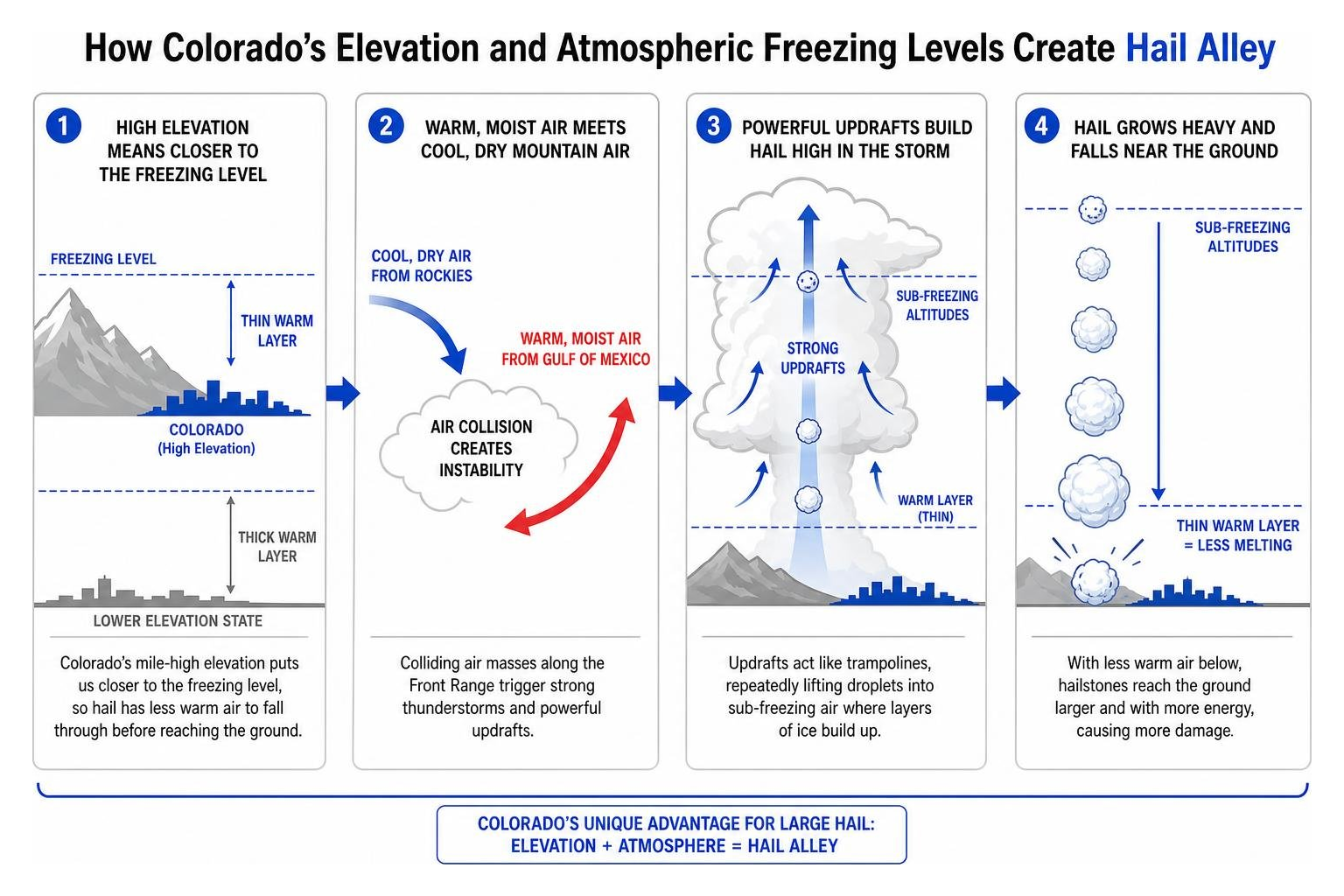
Because our cities sit at a mile high or higher, the ground is physically closer to the freezing level of the atmosphere. In lower-elevation states, hailstones that form high in the clouds have thousands of feet of warm air to fall through, often melting into rain before they reach the ground. In Colorado, that warm air cushion is much thinner.
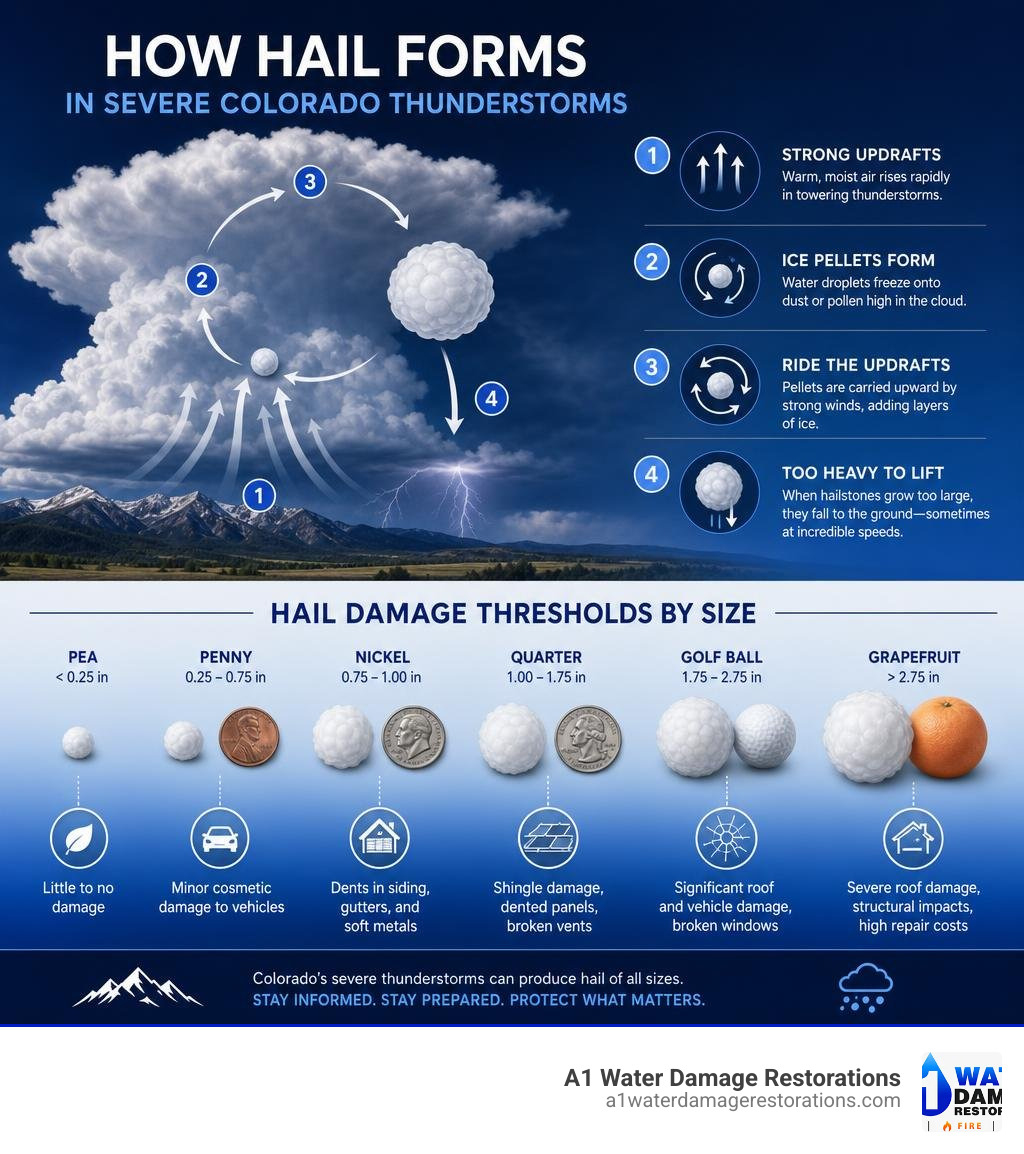
Additionally, as cool, dry air rolls off the Rocky Mountains, it collides with warm, moist air pushing up from the Gulf of Mexico. This collision creates violent updrafts. These updrafts act like atmospheric trampolines, throwing water droplets back up into sub-freezing altitudes over and over again. Each trip upward adds a new layer of ice to the stone until it becomes too heavy for the updraft to support, sending it crashing down onto our roofs.
Recent Severe Hail Events in 2026
The summer of 2026 has already brought historic storm activity to the Front Range and surrounding plains.
- June 1, 2026: This stands as the top recent hail date for the Denver metro area. Multiple supercells swept through, dropping a mixture of golf ball to two-inch hail that dented vehicles and shattered skylights across several neighborhoods.
- June 8, 2026: A massive weather system produced a staggering 49 verified hail reports across the region. You can review the complete data set on the June 8 2026 storm reports. During this event, Front Range cities like Arvada, Wheat Ridge, Lakewood, and Golden were battered by stones ranging from 1 to 1.5 inches in diameter. You can view the visual evidence of this storm in these Front Range quarter-sized hail photos.
- Regional Extremes: While the metro area dealt with 1.5-inch stones, the outer edges of the storm system produced truly monstrous ice. A verified Colorado 2.75-inch hail report came out of Simla in Elbert County, while Bethune recorded grapefruit-sized hail reaching 4.0 inches. The sudden, violent nature of this system was captured vividly in Denver giant hail footage, which showed ice slamming into city streets and catching residents completely off guard.
Assessing Property Damage and Recovery Steps
When a storm clears, the immediate temptation is to sigh with relief and move on. However, failing to properly assess property damage can lead to incredibly costly repairs down the road.
| Hail Size (Diameter) | Common Object Comparison | Typical Property Damage Caused |
|---|---|---|
| 1.00 Inch | Quarter | Threshold for asphalt shingle damage; dents soft metals (gutters, vents). |
| 1.25 – 1.50 Inches | Half Dollar / Ping Pong Ball | Siding damage; cracks older shingles; severe gutter and downspout dents. |
| 1.75 Inches | Golf Ball | Shingles fractured; vinyl siding cracked; vehicle windshields shattered. |
| 2.00+ Inches | Hen’s Egg to Grapefruit | Penetrates roof decking; breaks windows; destroys commercial roofing systems. |
Why Tracking Hail in Colorado Today Matters for Homeowners
Many homeowners believe that if they don’t see shingles missing from their roof, they don’t have damage. Unfortunately, hail damage is often invisible from the ground.
When a hailstone strikes an asphalt shingle, it creates a “bruise.” This impact knocks loose the protective mineral granules on the shingle’s surface, exposing the underlying fiberglass mat to solar UV rays. Over the next several months, the sun degrades this exposed mat, causing it to crack.
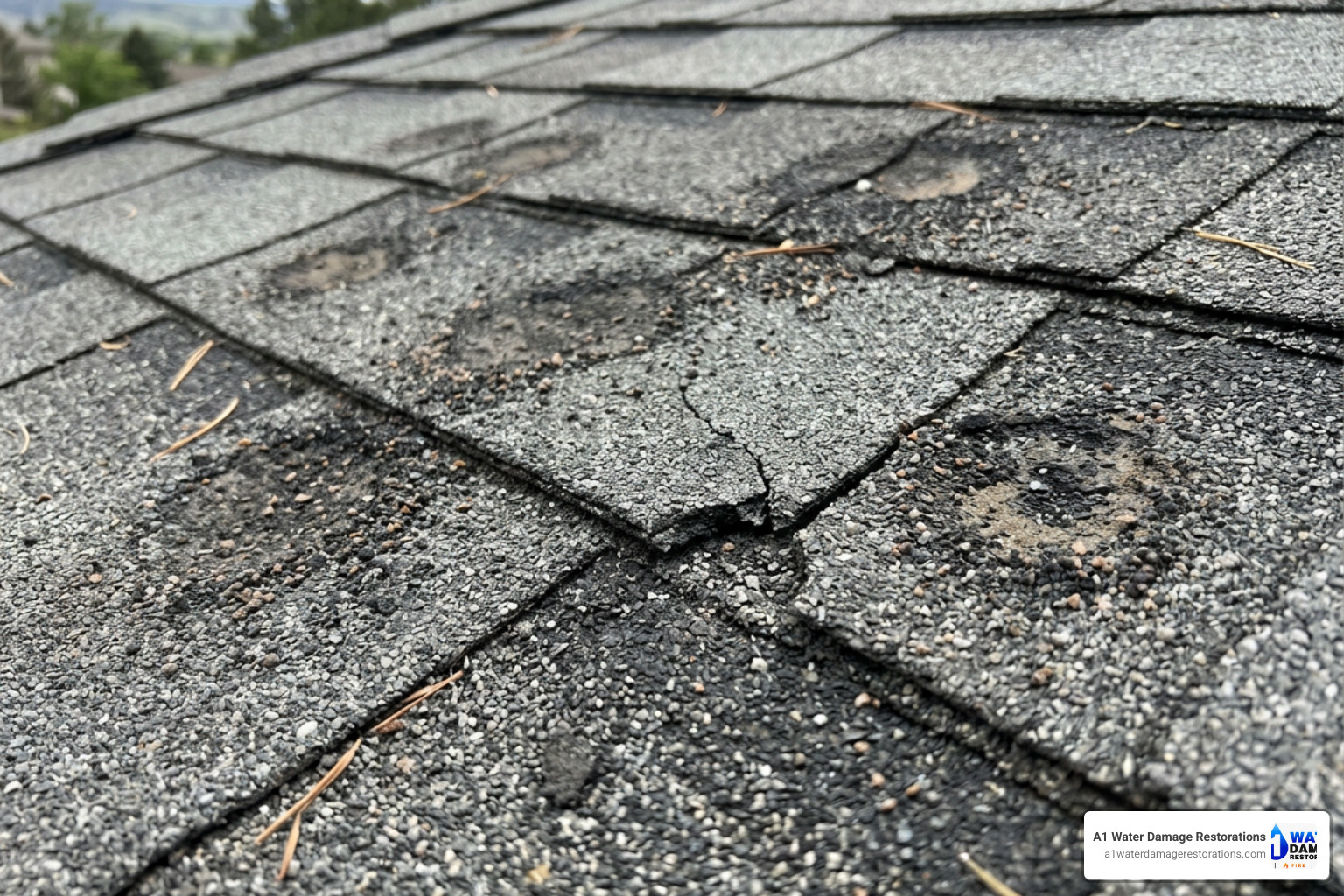
When autumn rains and winter snows arrive, moisture slowly seeps through these micro-cracks. Because attics have limited airflow and trap rising household heat, they become perfect incubators for mold. Within just 24 to 48 hours of water intrusion, toxic mold can begin multiplying in your insulation and wood framing.
To prevent this hidden decay, we highly recommend utilizing a structured post-disaster roof storm damage checklist immediately after any major storm. Taking proactive steps and preparing your home for Colorado storm season can save you thousands of dollars in mold remediation and structural repairs.
Navigating Repairs and Insurance Claims
The period immediately following a hailstorm can be chaotic, making homeowners prime targets for “storm chasers” and fraudulent contractors. To protect your investment, we recommend keeping these key steps in mind:
- Understand Your Coverage: Know the difference between Replacement Cost Value (RCV) and Actual Cash Value (ACV). RCV covers the actual cost to repair or replace the damage at today’s prices, while ACV only pays out the depreciated value of your roof based on its age.
- Avoid Scams: Never pay a large deposit upfront, and always work with local, licensed, and insured professionals. Read our comprehensive homeowner guide to hail damage and insurance scams to learn how to spot red flags.
- Choose the Right Partners: When selecting a team to restore your home, use our guide to choosing hail damage roofing contractors to ensure you are getting quality craftsmanship.
- Know Your Limits: While we love a good weekend project, attempting a DIY guide to fixing damaged shingles can be incredibly dangerous and may even void your existing roof warranty if performed incorrectly.
- Commercial Considerations: If you own a commercial property, the stakes are even higher. Large flat roofs require specialized inspection methods to detect membrane punctures. Explore the dynamics of this sector in our guide to the commercial roofing hail damage business.
Frequently Asked Questions about Colorado Hail
What is the threshold size for hail to cause roof damage?
For standard asphalt shingles, 1 inch (quarter-sized) is generally considered the threshold where physical damage begins. At this size, the kinetic energy of the falling stone is sufficient to bruise the shingle and shed its protective granules. However, thinner soft metals—such as aluminum gutters, downspouts, and box vents—can sustain cosmetic and functional denting from stones as small as 0.75 inches.
Why does eastern Colorado experience so much severe hail?
Eastern Colorado sits in the heart of “Hail Alley” due to its high elevation and proximity to the Rocky Mountains. The elevated terrain means freezing levels in the atmosphere are much closer to the ground, allowing hailstones less time to melt as they fall. Additionally, cold mountain air frequently collides with warm, humid air from the south, creating the intense, updraft-heavy thunderstorms necessary to breed large ice.
How quickly can mold develop after a hailstorm?
If a hailstorm compromises your roof’s integrity and allows water to enter your attic, mold can begin to germinate within 24 to 48 hours. Because attics are warm, dark, and often poorly ventilated, they provide the ideal environment for mold spores to colonize damp drywall, insulation, and wood rafters.
Conclusion
When hail in Colorado today leaves your property vulnerable, you don’t have to navigate the recovery process alone. At A1 Water Damage Restorations, we provide 24/7 IICRC-certified water, fire, and mold restoration across the entire Denver Metro Area.
As a family-owned business, our unique promise is to provide comprehensive, in-house services with a personal touch. We don’t just clean up the mess — we ensure swift action to restore your property better than ever. We proudly serve homeowners and businesses throughout Boulder, Cherry Creek, Denver, Golden, Greenwood Village, Arvada, Westminster, Wheat Ridge, Broomfield, and Littleton.
If you suspect a recent hailstorm has allowed water to enter your home or attic, don’t wait for mold to take over. Contact us today to access our professional storm damage restoration services and let our family take care of yours.