

What to Do First When Your Basement Drain Backs Up
Stop using water in the house. Keep people and pets away from the backup, especially if it smells like sewage. If water is near outlets or appliances, do not enter it; turn off power only if you can reach the breaker safely from a dry area. Take photos, then call a plumber if water is rising or more than one drain is affected. A drain in basement backing up is a plumbing emergency that calls for quick, careful action to limit damage.
I’m Cole Nudel, a Denver-area disaster restoration professional with A1 Water Damage Restorations. Dealing with a drain in basement backing up requires swift action to avoid severe contamination, and my work helping property owners recover from water damage informs the steps in this guide.
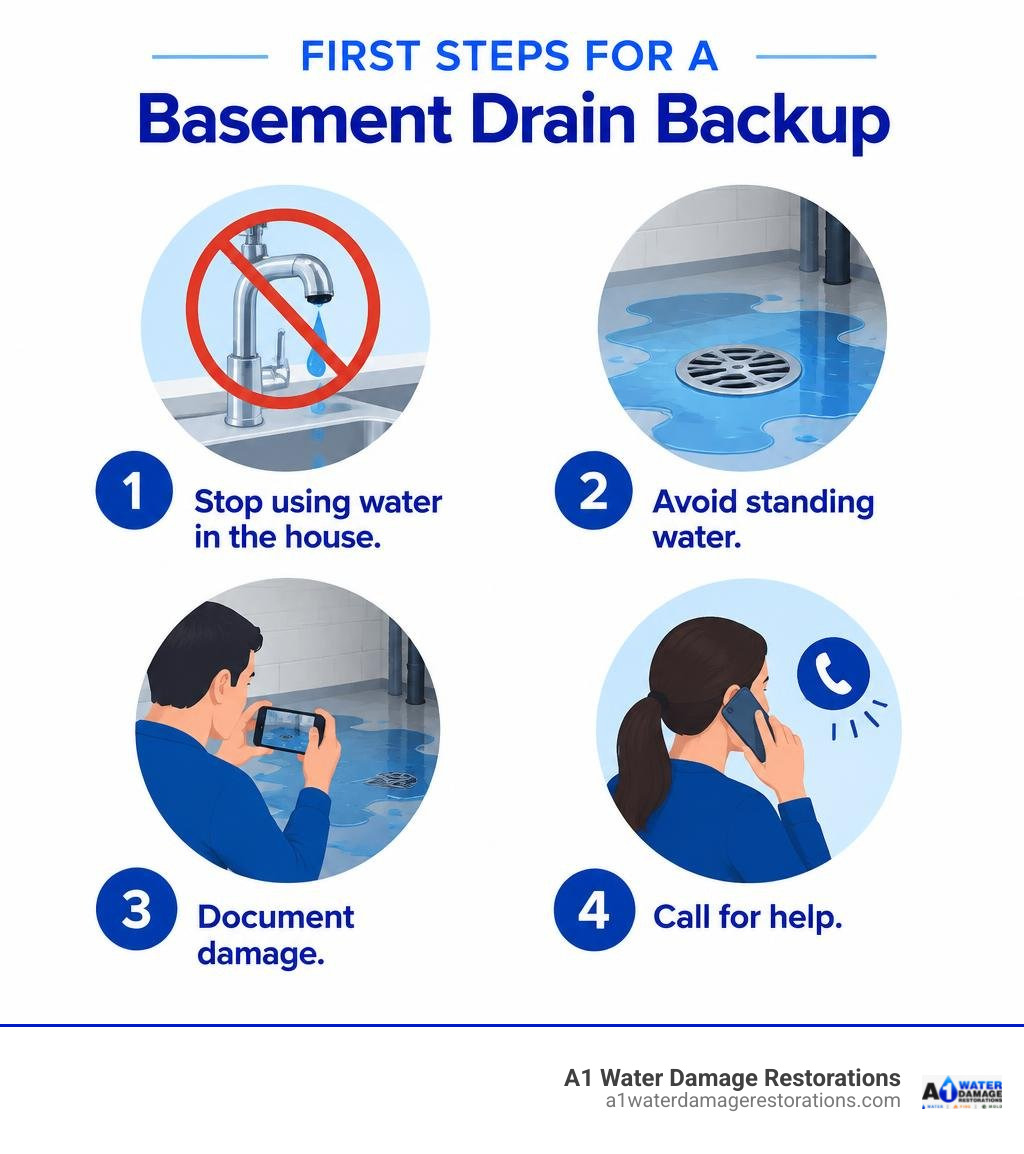
Immediate Steps When You Notice a Drain in Basement Backing Up

Discovering pooling water, sludge, or dark liquid bubbling up from your floor drain can trigger immediate panic. Your basement floor drain is the lowest plumbing fixture in your entire home. It acts as an emergency relief valve: when wastewater cannot exit through your lateral line toward the municipal main, physics forces it straight up through the lowest available opening.
Taking the right sequence of actions within the first thirty minutes can mean the difference between a simple drain cleanout and tens of thousands of dollars in structural water damage. Before you reach for a mop or run downstream to inspect the mess, follow our homeowners emergency guide for backed-up sewer lines to protect your health and your living space.
Step 1: Halt All Water Usage and Cut Power
The moment you see liquid bubbling around the drain perimeter, institute an immediate household water moratorium. Every single drop of water sent down any drain upstairs—whether someone is taking a shower on the second floor, running the dishwasher in the kitchen, or cycling a load of laundry—has nowhere else to go except directly onto your basement floor.
- Inform everyone in the household to cease flushing toilets, running taps, or using appliances.
- Locate your main electrical panel. If the standing water is anywhere near electrical outlets, baseboard heaters, water heaters, or washing machines, do not step into the water.
- If the electrical panel is safely accessible from a dry area, switch off the circuit breakers controlling the basement rooms. If you must step into standing water to reach the electrical panel, do not attempt it—call your local utility provider or an emergency technician immediately.
Step 2: Equip PPE and Contain Contamination
Wastewater from a floor drain must always be treated with extreme caution. It often contains Category 3 “black water,” which harbors dangerous biological contaminants.
- Put on heavy-duty rubber boots, thick waterproof gloves (such as nitrile or heavy rubber work gloves), eye protection, and an N95 respirator mask before stepping near the affected area.
- Block off the basement entry door or stairwell to keep children and family pets away from the contaminated zone.
- Avoid tracking moisture into unaffected carpeted or hardwood areas by setting down clean plastic sheeting or heavy towels at the entry boundary.
Step 3: Document Damage and Review Insurance Policies
Before any significant cleanup, water extraction, or disposal takes place, thorough documentation is essential for your insurance claims adjuster.
- Capture clear photos and video footage of the standing water depth, the point of origin at the floor drain, and every damaged item (such as furniture, drywall, baseboards, boxes, and mechanical equipment).
- Note the exact time you noticed the backup and what plumbing fixtures were in use upstream.
- Locate your homeowners insurance policy. Standard home insurance policies frequently exclude drain and sewer backups unless you have added an optional sewer backup rider or endorsement.
Root Causes: Why Is Water Coming Up from the Floor Drain?
Every basement floor drain incorporates a P-trap—a curved section of pipe beneath the floor designed to hold a standing barrier of water. This water seal stops foul sewer gases from entering your living area. When everything functions normally, gravity carries water past the trap, through your branch lines, down your home’s main sewer lateral, and into the municipal system.
When a downstream obstruction occurs, the system backs up at the lowest point.
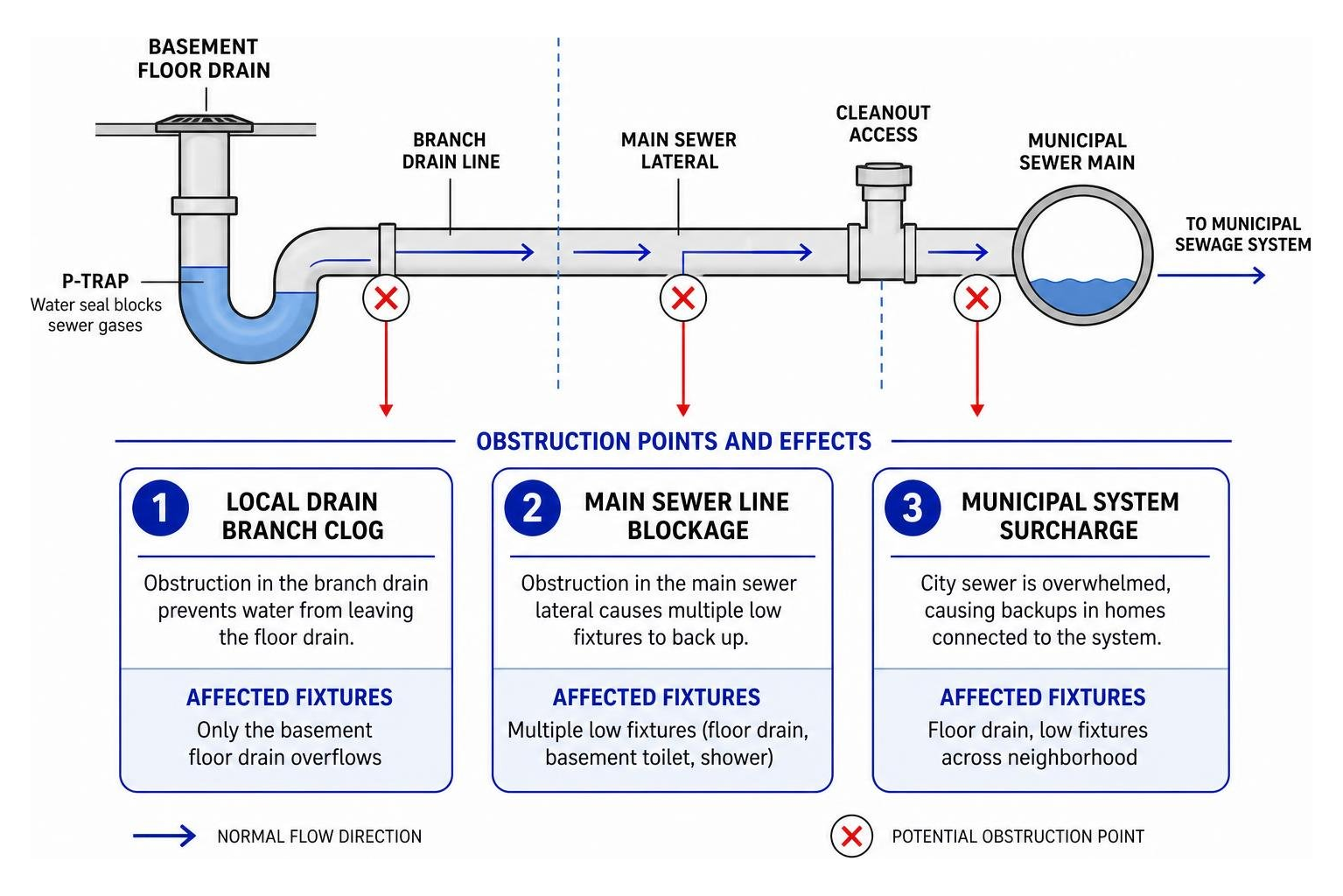
To diagnose the underlying issue, compare the symptoms of local branch clogs against main sewer line blockages:
| Diagnostic Clue | Local Drain Branch Clog | Main Sewer Line Blockage | Municipal System Surcharge |
|---|---|---|---|
| Affected Fixtures | Only the basement floor drain overflows | Multiple low fixtures (floor drain, basement toilet, shower) | Floor drain, low fixtures across neighborhood |
| Trigger Event | Direct pouring into floor drain or nearby sink | Running laundry, showers, or flushing toilets upstairs | Heavy regional rainfall or municipal main collapse |
| Water Characteristics | Usually gray water, soap scum, or silt | Murky water, toilet paper residue, raw sewage | Stormwater mix, dirty surge water, sudden volume |
| Odor Level | Mildly stale or musty | Strong sulfur or sewage odor | Earthy or foul municipal sewage smell |
| Action Required | Snaking local trap; mechanical plunging | Professional main line cabling or hydro-jetting | Backwater valve check; call municipal utilities |
Local Blockage vs. Main Sewer Line Obstruction
A simple diagnostic test can help pinpoint the clog’s location. If the floor drain only backs up when water is poured directly into it, but your upstairs toilets flush smoothly and your washing machine drains without incident, the blockage is isolated to the floor drain’s local trap or branch line. Dust, dried laundry lint, and workshop sediment often accumulate in the trap over time.
However, if running the washing machine upstairs causes the basement floor drain to gurgle, bubble, and overflow, the clog sits in your main sewer lateral. The high-volume discharge from modern appliances quickly fills the pipe capacity downstream, forcing dirty wastewater to erupt from the lowest relief opening in the house.
Tree Root Infiltration and Aging Pipe Materials
In established neighborhoods throughout the Denver Metro area—including historic sections of Denver, Boulder, Golden, and Littleton—older residential plumbing systems frequently feature clay tile or cast-iron piping installed prior to the 1970s.
- Over decades, clay pipes crack under ground shifts, and cast-iron lines develop internal corrosion and scaling that catches debris.
- Mature tree roots naturally seek out moisture and nutrients, penetrating microscopic joint fractures in your lateral line.
- As roots expand inside the pipe, they create a dense, web-like net that traps toilet paper, oils, and solid waste. This results in recurring sewer backups until the line is mechanically cleared or lined.
Why Heavy Rain Triggers a Drain in Basement Backing Up
When a drain in basement backing up coincides with severe storms or rapid spring snowmelt, the cause is frequently external. Heavy precipitation saturates surrounding soils, creating intense hydrostatic pressure against basement foundations and infrastructure.
During intense downpours, municipal combined sewer and stormwater systems can reach total capacity. When the city main fills completely, it creates a hydraulic surcharge that pushes sewage backward through residential lateral pipes toward private homes.
Furthermore, if your home relies on a sump pump that shares an undersized discharge line, or if perimeter foundation drain tiles are tied directly into an aging sewer tie-in, stormwater can overload the floor drain branch, resulting in sudden basement flooding. To understand how regional infrastructure influences these events, see Water 101: Sewer Backups for insights on municipal surcharge dynamics.
Safe DIY Troubleshooting vs. When to Call a Professional
Homeowners can safely tackle minor, isolated surface clogs with standard tools, but deeper sewer obstructions demand professional intervention. Attempting the wrong DIY fix can damage fragile, aging pipes or worsen the contamination.
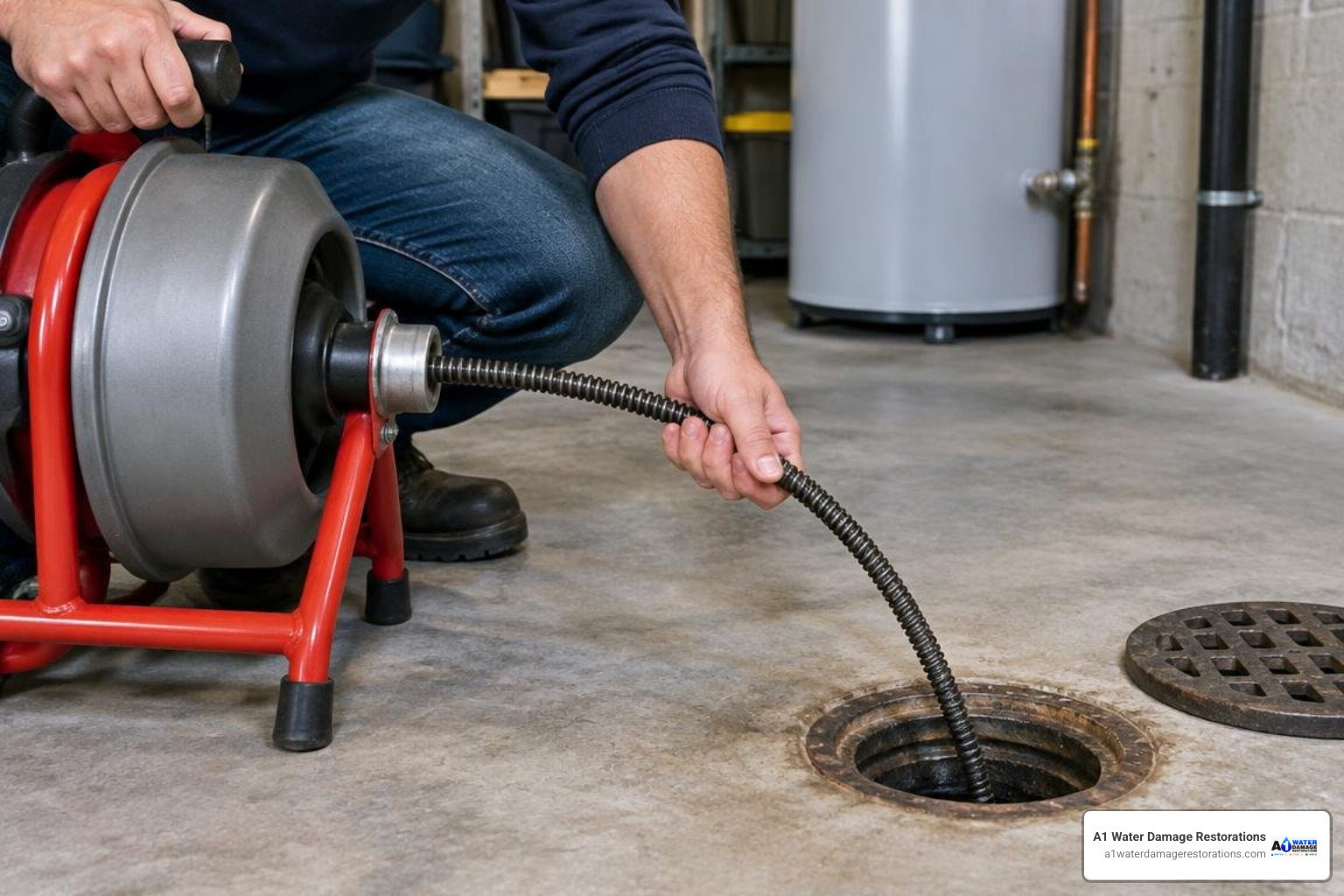
Before attempting hands-on fixes, understand the boundary between manageable local maintenance and situations requiring professional equipment. For a clear perspective on equipment, labor, and safety balances, review our guide on professional versus DIY basement flood cleanup costs.
Safe Mechanical Unclogging Methods
If you are confident the issue is confined to an isolated, non-sewage clog in the floor drain trap:
- Remove the Grate: Unscrew or pry off the floor drain strainer grate. Clean away hair, lint, and surface debris clinging to the underside.
- Use a Heavy-Duty Drain Plunger: Position a large cup plunger completely over the drain opening to establish an airtight seal. Deliver rapid, vigorous vertical thrusts. The hydraulic pressure can dislodge localized sediment plugs.
- Run a Hand or Drum Auger: Insert a 1/4-inch or 3/8-inch manual drain snake directly into the drain opening or through the cleanout plug located adjacent to the trap. Feed the cable 10 to 25 feet while rotating the crank handle clockwise to hook and retrieve compacted hair or lint clusters.
- Flush with Warm Water: If the auger breaks through the resistance, flush the drain with several gallons of warm water to carry leftover silt downstream.
Why Chemical Drain Cleaners Should Be Avoided
We strongly caution homeowners against pouring liquid chemical drain openers into backed-up basement drains.
- Corrosive Damage: Caustic chemicals (such as sodium hydroxide or sulfuric acid) generate heat and eat away at cast-iron joints, rubber seals, and older clay pipes.
- Standing Water Dilution: When a drain is backed up, chemical cleaners sit suspended in standing water without reaching the actual clog 30 feet down the line.
- Safety Hazards: If a professional plumber or restoration specialist later opens the line or cleanout, trapped caustic chemicals can splash onto skin and eyes, creating severe chemical burn risks.
Signs You Need Professional Drain Clearing
Certain scenarios require advanced machinery, diagnostic cameras, and specialized drain specialists. Call a professional if:
- Raw Sewage Is Present: Visible fecal matter, dark black wastewater, or intense sewage odors are present.
- Multiple Fixtures Are Overflowing: The basement toilet, shower base, and floor drain are backing up simultaneously.
- DIY Snaking Fails: A hand snake hits an impenetrable obstruction (such as tree root masses, pipe collapses, or heavy grease calcification).
- Backups Recur Frequently: Recurring backups often point to a “bellied” sewer pipe (a sagging section where heavy waste pools) or broken joints requiring professional camera diagnostics and motorized cabling.
Health Hazards and Restoration of Contaminated Basements
Wastewater backups from a sewer line fall under Category 3 water damage—commonly known as black water. This liquid is grossly contaminated and poses severe, immediate health risks to building occupants.
Dangerous Pathogens in Sewage Backups
Raw sewage contains millions of live microscopic pathogens, parasites, and toxic compounds that aerosolize or transfer via touch:
- Bacterial Infections: Pathogens such as Escherichia coli (E. coli), Salmonella, and Shigella (which causes severe Dysentery).
- Viral Hazards: Exposure risks include Hepatitis A, rotavirus, and adenoviruses.
- Parasites: Organisms like Giardia lamblia and Cryptosporidium can thrive in moisture.
- Toxic Gases: Decomposing organic matter releases hydrogen sulfide and methane gases, which can cause headaches, dizziness, and respiratory irritation in enclosed basements.
Extraction, Porous Material Disposal, and Structural Drying
Microbial growth begins rapidly; mold can develop on damp drywall, wood framing, and organic residues within 24 to 48 hours following a backup. Effective mitigation requires strict adherence to IICRC S500 standards.
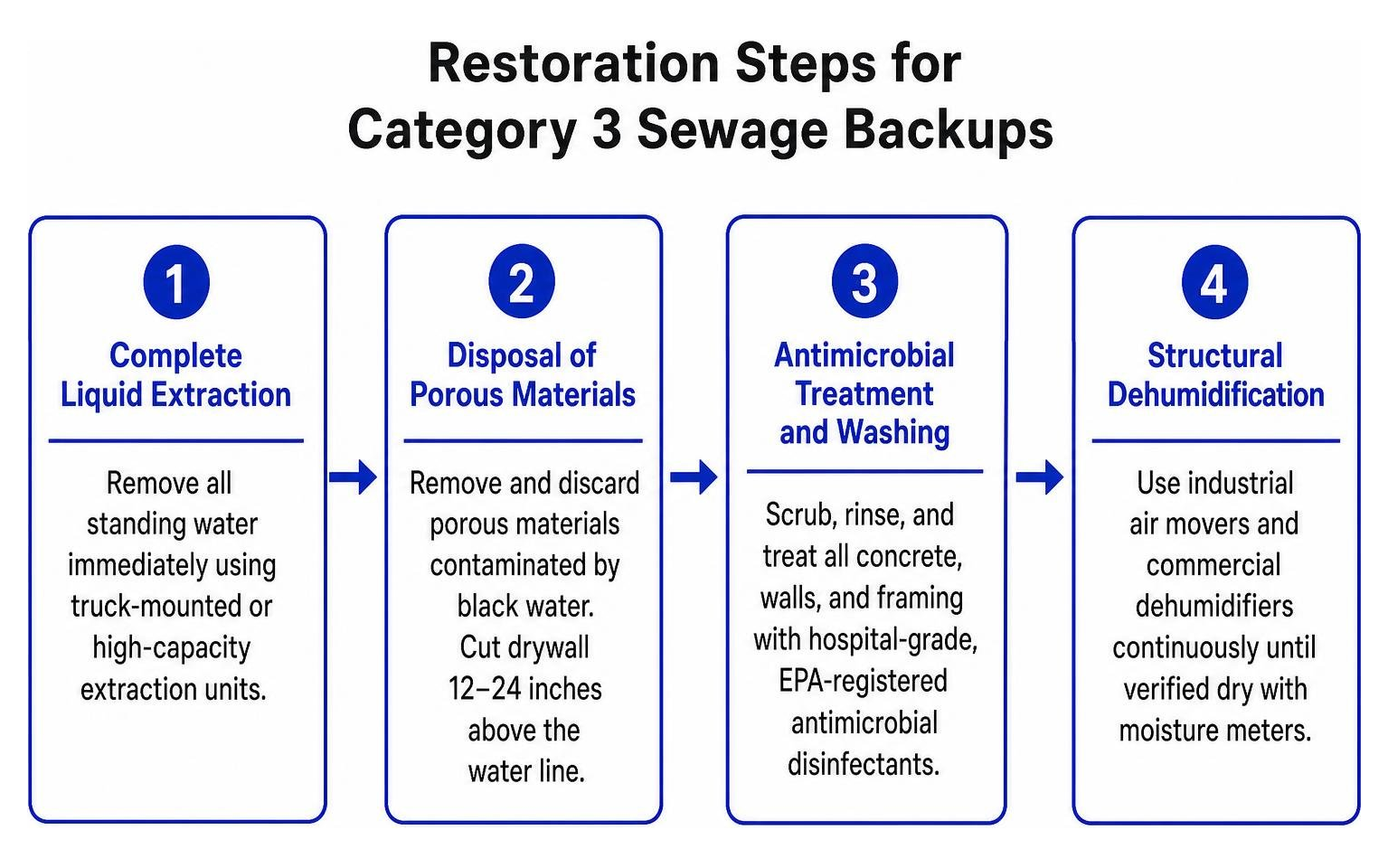
- Complete Liquid Extraction: Specialized truck-mounted or high-capacity extraction units must remove all standing water immediately. Explore our methods on effective extraction to get rid of basement water to prevent deeper subfloor saturation.
- Disposal of Porous Materials: Any porous material contaminated by Category 3 black water cannot be completely sanitized. Carpet, carpet padding, upholstered furnishings, cardboard storage boxes, and drywall cut 12 to 24 inches above the water line must be removed and safely discarded.
- Antimicrobial Treatment and Washing: All concrete slabs, foundation walls, and structural framing must be scrubbed, rinsed, and treated with hospital-grade, EPA-registered antimicrobial disinfectants. Follow our tips to safely disinfect after a sewer backup for detailed sanitization practices.
- Structural Dehumidification: Industrial air movers and commercial desiccant or LGR (low-grain refrigerant) dehumidifiers must run continuously to pull trapped moisture out of the air and concrete until verified dry by digital moisture meters. For a comprehensive walkthrough of the full remediation process, consult our ultimate guide to flooded basement cleanup.
Long-Term Infrastructure and Prevention Strategies
Preventing future basement drain overflows requires addressing vulnerabilities in both your home’s plumbing infrastructure and your ongoing maintenance habits.
How to Prevent a Drain in Basement Backing Up in the Future
Long-term protection combines mechanical barrier installations and disciplined landscaping choices:
- Install an Automatic Backwater Valve: A backwater valve is a mechanical fitting installed directly on your main sewer lateral beneath the basement floor. It features an internal flapper that allows home wastewater to exit under normal conditions, but automatically seals shut if water from the city main reverses direction, blocking surcharge waters from entering your basement.
- Upgrade to a Dual-Pump Sump System: If your basement manages heavy ground moisture, install a heavy-duty primary sump pump paired with an independent, battery-powered backup pump to safeguard your foundation during storm-related power outages.
- Extend Exterior Downspouts: Route roof gutter downspouts at least 6 to 10 feet away from your foundation walls to minimize saturated soil and hydrostatic pressure around basement piping.
- Schedule Periodic Video Camera Inspections: For homes over 30 years old, hire an IICRC-certified specialist or master plumber to scope your main sewer lateral every two years to identify tree root intrusion or pipe scale before complete blockage strikes. For complex situations, understand why homeowners need professional basement flood restoration experts early to protect property value.
Routine Floor Drain Maintenance
A few basic maintenance habits will keep your floor drain operating reliably:
- Keep the P-Trap Filled: Infrequently used basement floor drains lose their water seal through natural evaporation, allowing sewer odors to seep into your home. Pour a half-gallon of water down the floor drain every month to maintain the barrier.
- Install Removable Mesh Strainers: Place a fine-mesh stainless steel drain screen beneath the floor grate to catch hair, lint, and dry sweeping dust before it enters the trap.
- Practice Strict Kitchen and Laundry Disposal Rules: Never pour cooking fats, oils, or grease (FOG) down any household sink. They solidify inside cold underground lateral pipes, creating blockages that trigger basement backups.
Frequently Asked Questions about Basement Drain Backups
Is water backing up into my basement floor drain always sewage?
No, not every backup consists of raw sewage. If the water is clear and odorless, it may be clean groundwater forced upward by severe hydrostatic pressure or an overflowing foundation drain.
However, if the backup occurs when plumbing fixtures (like toilets, sinks, or washing machines) are running upstream, or if the water has a foul sulfur smell and contains murky debris, it is Category 3 black water that must be treated as hazardous sewage.
Can heavy rain alone cause a basement drain to back up without a clog?
Yes. Intense rainfall can overwhelm older municipal sewer systems, causing storm runoff to infiltrate sanitary sewer mains. When the city mains reach complete hydraulic capacity, the excess volume is forced backward into residential lateral pipes.
In this scenario, your home’s private plumbing pipes may be completely clean, yet water still erupts from your basement floor drain because the city system cannot accept additional volume.
Will homeowners insurance cover damage from a backed-up basement drain?
Standard homeowners insurance policies typically exclude damage caused by sewer or drain backups unless the policyholder has purchased an optional “Water Backup and Sump Discharge or Overflow” endorsement rider.
Standard flood insurance (such as FEMA policies) also operates differently, generally covering surface overland flooding rather than plumbing line backups. Review your insurance declarations page with your provider to verify that you carry dedicated sewer backup coverage.
Conclusion
A backed-up basement floor drain is a serious property emergency that demands swift, decisive action. Stopping water usage immediately, cutting off electrical hazards safely, avoiding biohazardous black water, and securing prompt professional intervention are the most reliable ways to protect your home’s structural integrity and your family’s health.
At A1 Water Damage Restorations, we provide 24/7 IICRC-certified water, fire, and mold restoration across the entire Denver Metro Area—including Denver, Boulder, Cherry Creek, Arvada, Golden, Greenwood Village, Westminster, Wheat Ridge, Broomfield, and Littleton. As a family-owned restoration team, our mission is to deliver comprehensive, in-house extraction, sanitization, and structural drying with a personal touch, restoring your property safely and thoroughly.
If you are facing an emergency drainage overflow, read our dedicated guide on dealing with a sanitary sewer backup in your basement and contact our certified restoration professionals for fast, dependable help.