

Fire Restoration in Wheat Ridge, Colorado Starts With Safety and Fast Action
After a fire, do not re-enter your home until the fire department says it is safe. Start fire restoration in Wheat Ridge, Colorado by contacting your insurer, taking photos of visible damage from a safe location, and arranging professional board-up, water removal, and smoke cleanup as soon as possible. Fast mitigation helps limit corrosion from soot, smoke odor, mold growth from firefighting water, and further weather damage.
A professional restoration team can assess structural and smoke damage, protect the property, clean salvageable contents, remove odors, and rebuild damaged areas. This matters across the Front Range, where wildfire exposure, dry conditions, and older housing can make fire recovery more complex. The Marshall Fire’s destruction of more than 1,000 homes in nearby Boulder County is a lasting reminder that recovery requires both an immediate plan and patient, documented work.
I am Cole Nudel, a disaster restoration professional with A1 Water Damage Restorations in the Denver area. I help property owners understand the next steps in fire restoration Wheat Ridge Colorado, from emergency mitigation through the insurance and rebuilding process.
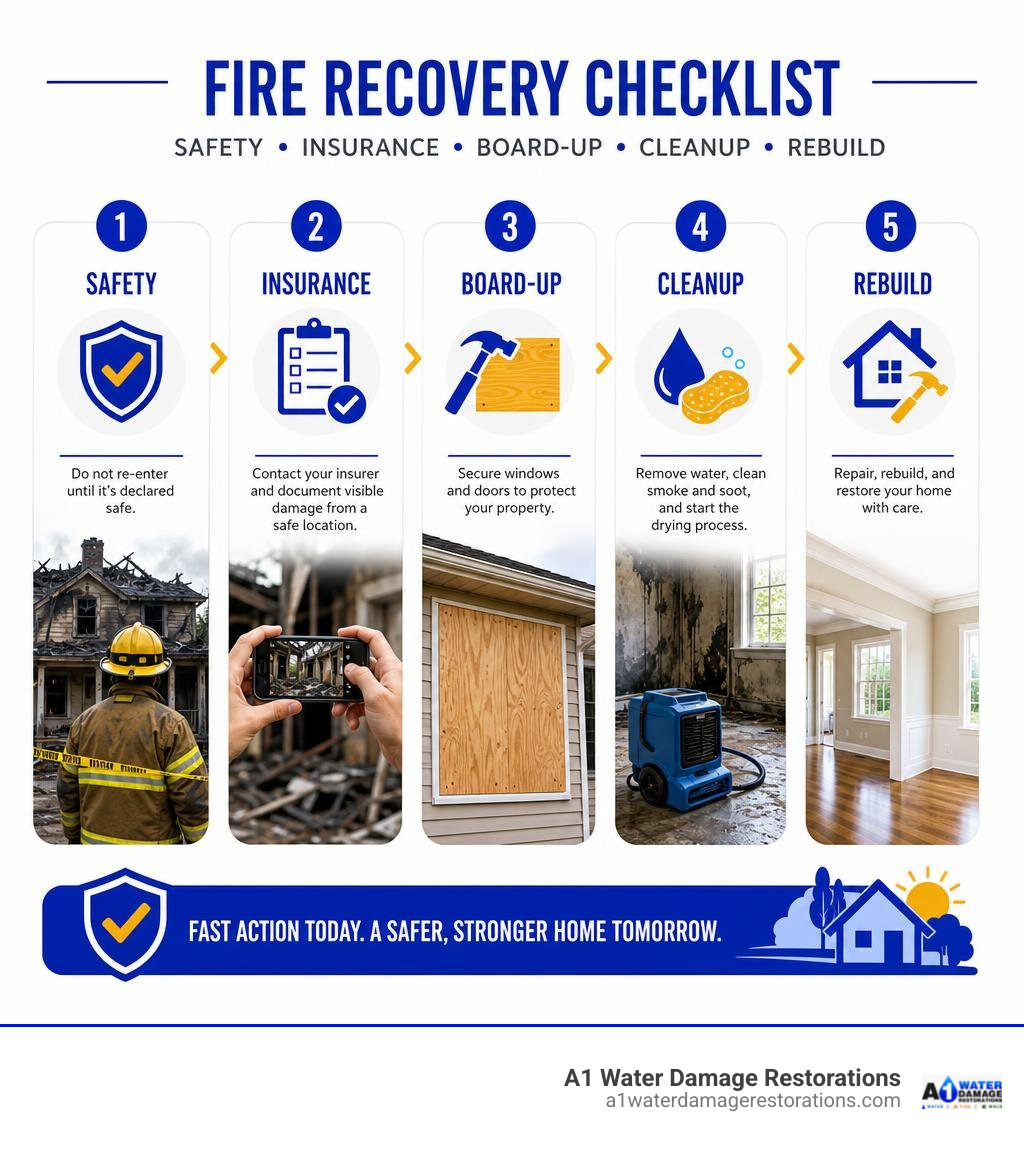
Immediate Actions and Safety Protocols Following a Home Fire
When the flames are out and emergency crews wrap up their hoses, the reality of what just happened sets in. It is completely normal to feel overwhelmed, but the first 24 to 48 hours dictate how smoothly your recovery will go. Fire leaves behind a chaotic mix of burned materials, acidic residues, structural instability, and thousands of gallons of firefighting water.
Before you touch anything or step past the yellow caution tape, your priority must remain physical safety. Even when a fire appears completely extinguished, hidden hazards linger within walls, ceilings, and crawlspaces.

Here is a checklist of critical safety precautions before entering or handling a fire-damaged structure:
- Wait for official clearance: Never cross the threshold until the incident commander or local building official confirms the building is structurally stable.
- Mind the utilities: Ensure gas, electricity, and water meters are shut off. Damaged wiring combined with standing firefighting water creates a severe electrocution risk.
- Wear personal protective equipment (PPE): If briefly retrieving vital items, wear an N95 or P100 respirator, heavy work boots with puncture-resistant soles, safety glasses, and durable gloves. Soot contains microscopic carcinogens that easily penetrate lung tissue and skin.
- Watch your step and overhead space: Sagging ceilings holding trapped water can collapse without warning. Charred floor joists may give way under human weight.
- Do not consume food or medicine: Any food, canned goods, beverages, or prescription medications exposed to heat, smoke, or firefighting chemicals must be discarded immediately.
- Secure the premises: Exposed windows, missing doors, and breached roofs invite weather intrusion, wildlife, and unauthorized trespassers. Emergency board-up and tarping services should take place immediately.
Critical Steps in Fire Restoration Wheatridge Colorado Homeowners Must Take
Once initial safety is verified, the detailed mitigation phase begins. For homeowners coordinating fire restoration Wheatridge Colorado projects, timing is everything. Soot is chemically corrosive. Within hours, it begins yellowing plastic appliances, permanently etching glass, tarnishing metals, and staining porous surfaces like tile grout and natural stone.
First, notify your insurance carrier to initiate your claim. Request an immediate advance on your policy’s Loss of Use (Additional Living Expenses) coverage so you can secure temporary housing, food, and basic necessities for your family.
Next, document everything before any debris is moved. Take clear, well-lit photos and high-resolution videos of every damaged room, scorched structural elements, and ruined belongings. Do not throw anything away until your adjuster has inspected it or given written approval.
As you catalog your personal property, our guide on saving your stuff after smoke damage provides vital strategies for identifying high-priority, salvageable heirlooms and electronics before irreversible corrosion sets in.
Local Emergency and Relief Resources in Jefferson County
You do not have to walk through a disaster alone. Wheat Ridge residents have access to dependable local and regional organizations that step in during emergencies:
- Arvada Fire Protection District & West Metro Fire Rescue: These responding agencies protect parts of Wheat Ridge and adjacent Jefferson County communities, handling emergency scene stabilization and initial fire origin reports.
- American Red Cross Mile High Chapter: Provides urgent emergency assistance, including temporary hotel vouchers, immediate funds for clothing and food, prescription replacement, and mental health counseling.
- Jefferson County Human Services: Offers emergency housing assistance, food support programs, and family relief resources for displaced residents.
- Wheat Ridge Building Division: Located at City Hall, this office oversees safety inspections, condemnation notices, and required building permits when structural repair begins.
The Professional Process for Fire Restoration Wheatridge Colorado
Restoring a fire-damaged home requires a structured, multi-phase engineering and cleaning approach. Professional remediation goes far beyond wiping down walls with soap and water. When you partner with us for services, our certified teams follow established industry protocols designed to return your structure to safe, pre-loss condition.
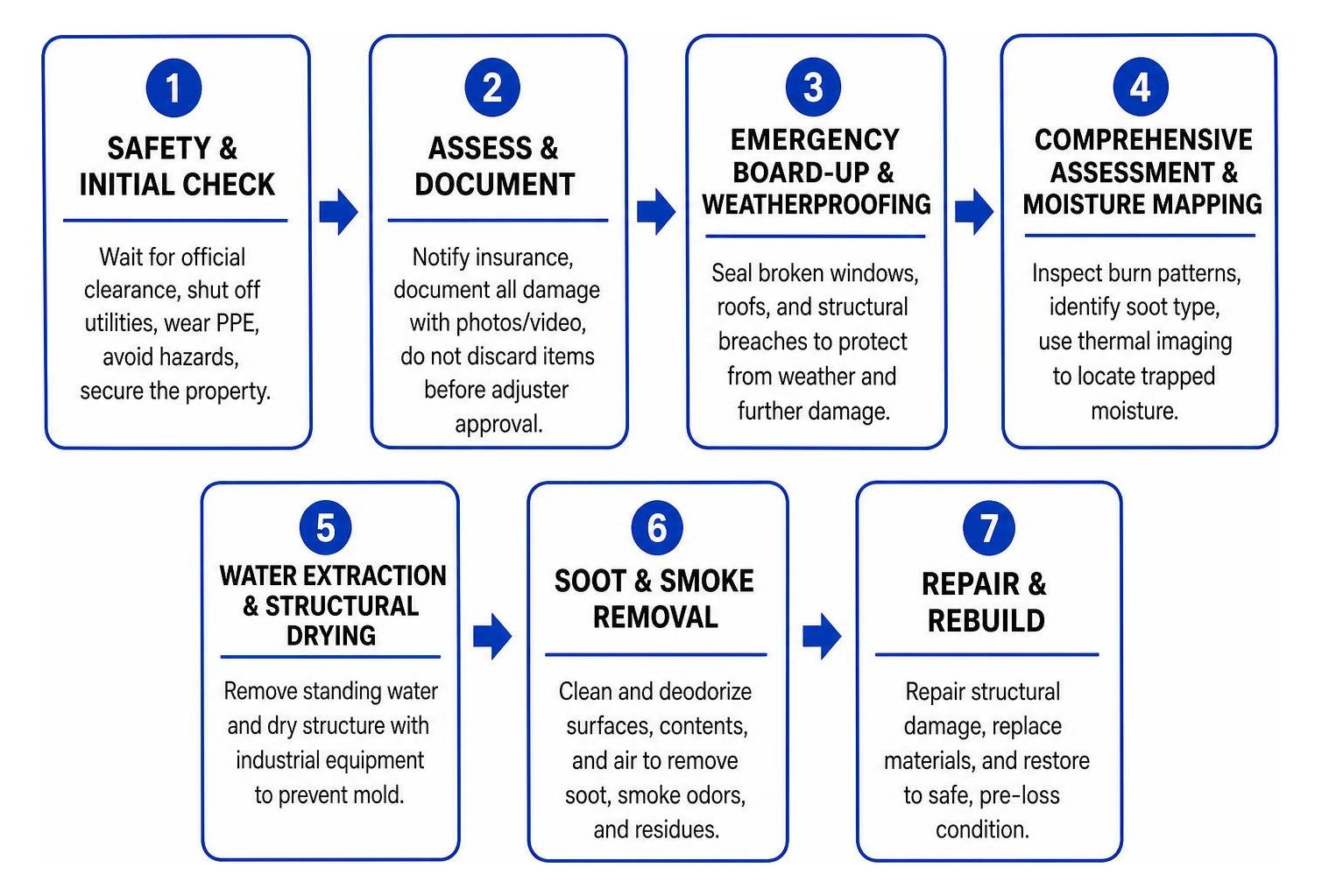
The restoration journey follows these distinct stages:
- Emergency Structural Board-Up & Weatherproofing: Sealing broken windows, compromised roofs, and structural breaches against Colorado storms.
- Comprehensive Assessment & Moisture Mapping: Inspecting the burn patterns, identifying soot chemistry (dry, wet, protein, or fuel oil), and using thermal imaging cameras to locate trapped firefighting water behind baseboards and subfloors.
- Water Extraction & Structural Drying: Removing standing water using industrial extractors, commercial dehumidifiers, and high-velocity air movers to prevent secondary mold colonization.
- Controlled Demolition & Soot Removal: Stripping out non-salvageable drywall, insulation, and charred framing, followed by specialized abrasive cleaning.
- Thermal Deodorization & Air Scrubbing: Neutralizing volatile organic compounds (VOCs) and smoke odors at the molecular level.
- Reconstruction & Final Finishes: Rebuilding structural framing, installing new drywall, painting, laying flooring, and restoring your home to pristine condition through our full services/fire damage division.
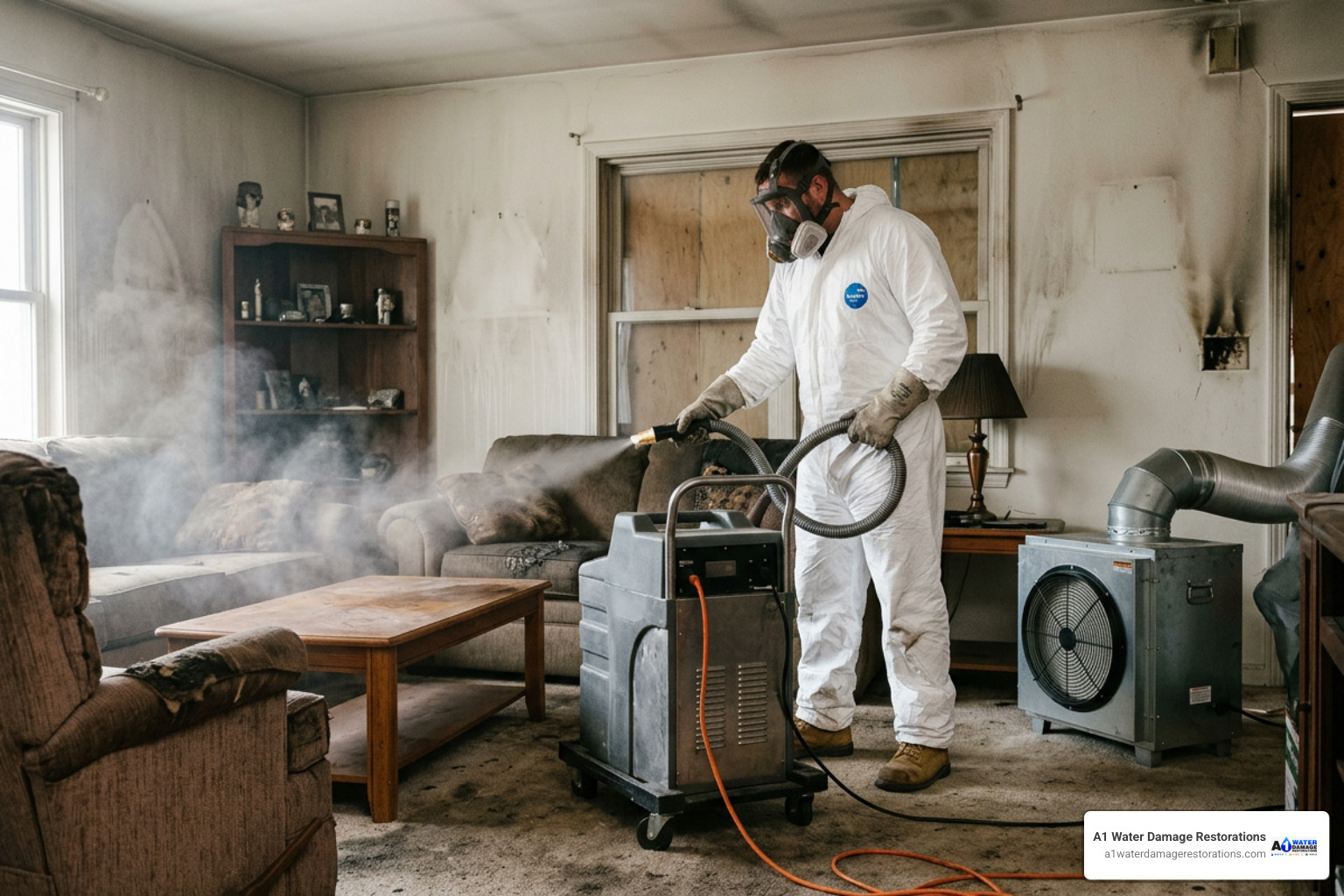
Smoke, Soot, and Odor Neutralization Techniques
Smoke particles measure between 0.1 to 4 microns, allowing them to penetrate deep into structural lumber, masonry, and wall cavities. Merely painting over soot will cause staining and pungent odors to bleed through within weeks.
Our technicians apply specialized cleaning methodologies based on the specific soot type:
- Dry Chem Sponges & Vacuuming: Using HEPA vacuums and specialized vulcanized rubber sponges to lift loose, powdery soot from surfaces without rubbing it deeper into drywall pores.
- Hydroxyl Generators: Utilizing UV light and ambient moisture to produce naturally occurring hydroxyl radicals that safely break down odor molecules while people and pets remain inside.
- Thermal Fogging & Ozone Treatments: Recreating the pressurized conditions of the original fire using heated deodorizing solvents that penetrate the identical microscopic pores the smoke entered. For comprehensive insights into this phase, explore our step-by-step guide to smoke damage restoration and discover our proven methodologies for how to remove smoke odor the right way.
- HVAC Decontamination: Air conditioning and heating ducts circulate smoke residues throughout unaffected rooms. We seal, sanitize, and treat your entire ventilation network to ensure you breathe clean air when you return home.
Structural Rebuilding and Contents Restoration
Fire restoration is a dual effort: repairing the real property (the house) and recovering the personal property (your possessions).
On the structural side, damaged studs and roof trusses are either reinforced, sistered, or replaced in compliance with regional codes. Charred wood that remains structurally sound is soda-blasted or dry-ice blasted to remove carbonization, then sealed with antimicrobial, odor-blocking encapsulation coatings.
Simultaneously, personal belongings undergo off-site pack-out and processing. We document, box, and transport salvageable items to our secure facility for ultrasonic cleaning, specialized textile laundering, and ozone chambers. Learn how advanced restorative science brings cherished items back from the brink in our guide from fire to fresh the magic of contents restoration.
Navigating Wheat Ridge Building Codes, Permits, and Insurance Claims
Rebuilding after a fire involves municipal oversight. The City of Wheat Ridge enforces strict building standards based on the International Building Code (IBC) and International Residential Code (IRC), with specific regional amendments.
Whenever a fire restoration project alters structural components, modifies electrical panels, replaces HVAC ductwork, or requires plumbing rough-ins, permits from the Wheat Ridge Building Division are legally mandatory. Skipping permits can halt construction, result in municipal fines, and potentially void your property insurance coverage.
Working with an experienced team makes insurance claims significantly smoother. Restoration professionals use Xactimate, the standardized estimating software favored by major insurance carriers. By matching line-item scopes, building code requirements, and local labor rates, we help ensure your adjuster approves the necessary funds without contentious disputes. You can review detailed budget variables in the ultimate guide to fire and water damage mitigation costs.
Overcoming Wheat Ridge Climate and Historic Home Challenges
Restoring properties in Wheat Ridge presents unique localized challenges that out-of-area contractors often overlook:
- Semi-Arid Climate and Low Humidity: Front Range air dries moisture rapidly on the surface, but water trapped deep in subflooring can cause rapid warpage. Furthermore, shifting seasonal temperatures cause building materials to expand and contract, which can re-release trapped odors if not fully neutralized.
- Historic and Mid-Century Architecture: Many beloved Wheat Ridge neighborhoods feature classic mid-20th-century brick ranches, historic farmhouses, and mid-century bungalows. These homes often contain vintage framing, unique lath-and-plaster walls, and outdated electrical systems like knob-and-tube or ungrounded wiring that require careful code upgrades during restoration.
- Hazardous Materials (Lead and Asbestos): Homes built before 1978 commonly contain lead-based paint, while those built prior to the mid-1980s may feature asbestos in drywall mud, acoustic ceiling textures (popcorn ceilings), vinyl floor tiles, or duct insulation. Demolition during fire recovery requires certified environmental testing and licensed abatement under Colorado Department of Public Health and Environment (CDPHE) regulations.
Selecting an IICRC-Certified Local Restoration Specialist
When disaster strikes, choosing the right contractor determines the speed, quality, and safety of your home’s recovery. You should never settle for an uncertified general handyman when dealing with hazardous smoke residues and structural integrity.
Look for a company holding certifications from the Institute of Inspection, Cleaning and Restoration Certification (IICRC), such as Fire and Smoke Restoration Technician (FSRT) and Applied Structural Drying (ASD). These credentials ensure the technicians working inside your home understand the chemical science of fire recovery.
For a thorough vetting framework, consult the ultimate checklist for hiring a fire damage cleanup repair service as well as our expert breakdown on how to choose the best fire restoration company in Denver.
Costs, Timelines, and Long-Term Prevention Strategies
Understanding the financial and scheduling scope of fire restoration helps you plan your life during a challenging transition.
According to regional data, the average cost of fire damage restoration in Colorado ranges from $3,000 for minor smoke and localized grease cleanup to upwards of $30,000 to $100,000+ for major structural rebuilds. Furthermore, Restoration Industry Association estimates show that utilizing professional fire restoration teams can reduce the total time to fully restore a home by up to 50% compared to uncoordinated DIY methods.
| Damage Severity | Typical Scope of Work | Estimated Timeline | Average Cost Range |
|---|---|---|---|
| Minor Damage | Localized soot cleanup (kitchen/furnace puffback), deodorization, duct cleaning, light paint touch-ups. | 3 to 7 Days | $2,500 – $6,000 |
| Moderate Damage | Single room burn, heavy soot throughout multiple rooms, firefighting water extraction, drywall removal, thermal fogging. | 2 to 5 Weeks | $7,000 – $28,000 |
| Severe Damage | Multi-room structural fire, framing replacement, roof rebuilding, complete rewiring, extensive contents pack-out and reconstruction. | 2 to 6+ Months | $35,000 – $100,000+ |
Estimating Costs for Fire Restoration Wheatridge Colorado Properties
Several distinct variables influence the final estimate of your restoration project:
- Square Footage and Extent of Smoke Penetration: A small fire contained to an oven can still push fine soot particles through your entire heating system, requiring whole-house cleaning.
- Water Damage Mitigation: Water pumped into ceilings and walls to extinguish flames must be extracted and dried with commercial equipment to prevent toxic mold outbreaks within 48 to 72 hours.
- Code Upgrade Requirements: If substantial portions of your home are rebuilt, Wheat Ridge building inspectors may require updating plumbing, insulation R-values, and electrical panels to meet modern safety codes.
- Deductible and Policy Caps: Your out-of-pocket financial liability is typically limited to your insurance policy deductible, provided your coverage limits sufficiently match your home’s replacement value. For an in-depth breakdown of pricing factors across the Denver metro area, see our fire restoration Denver buyers guide for 2026.
Defensible Space and Fire Prevention for Front Range Homes
In Jefferson County, residential structure fires and encroaching wildland-urban interface (WUI) blazes present ongoing risks. Homeowners should take proactive maintenance measures to harden their properties against future fires.
Protect your property with these proven wildfire and structural safety practices:
- Establish Defensible Space Zones: Keep the immediate 0 to 5 feet around your foundation clear of combustible mulch, dry shrubs, and firewood stacks. Maintain lean, clean, and green landscaping in the 5 to 30-foot perimeter.
- Install Ember-Resistant Vents: Upgrade attic and foundation vents with 1/8-inch non-combustible corrosion-resistant metal mesh to block airborne embers from blowing into your attic.
- Upgrade to Class A Fire-Rated Roofing: Ensure your asphalt shingles or metal roofing materials carry the highest fire-resistance rating. Keep gutters entirely free of dry pine needles and leaves.
- Maintain Smoke Detectors: Test smoke and carbon monoxide detectors on every floor monthly, replacing batteries annually and replacing the units entirely every 10 years.
- Create an Emergency Escape Plan: Establish two exit paths from every room, designate an outside meeting spot, and maintain an emergency “go-bag” with essential documents and supplies.
Frequently Asked Questions About Fire Restoration
How quickly should fire restoration begin after the fire department leaves?
Restoration mitigation should begin immediately, ideally within 24 to 48 hours. Soot contains highly acidic byproducts that permanently stain and corrode synthetic surfaces, porcelain, marble, and metals if left untreated. Additionally, water used during firefighting efforts will quickly trigger mold growth behind wet drywall and under flooring within 48 hours in warm indoor environments.
Does homeowner insurance in Wheat Ridge cover all fire and smoke restoration costs?
Most standard HO-3 homeowner insurance policies cover fire, smoke, and associated firefighting water damage up to your selected policy limits. This includes Dwelling Coverage (Structure), Personal Property Coverage (Contents), and Loss of Use / ALE (temporary housing costs). You are responsible for paying your policy deductible. It is essential to work with a restoration contractor who coordinates directly with your adjuster to ensure all necessary line items are documented and covered.
How long does a full home fire restoration project take in Jefferson County?
The restoration timeline depends on the severity of the damage. Minor smoke and soot cleanup projects typically take 3 to 7 business days. Moderate fire incidents requiring partial demolition and drying require 2 to 5 weeks. Severe structural losses that require architectural plans, municipal permitting from the Wheat Ridge Building Division, structural framing, and complete rebuilds typically take between 2 and 6 months or longer.
Conclusion
Experiencing a home fire is one of the most emotionally challenging events a homeowner can endure. While the physical damage, persistent odor, and disruption to your daily routine can seem insurmountable in the immediate aftermath, following a structured recovery plan makes all the difference. Prompt mitigation prevents secondary damage, safeguards your family’s health, and ensures your insurance claim covers the full scope of your loss.
At A1 Water Damage Restorations, we treat every home we enter with the same care and dedication we would provide our own families. As an IICRC-certified, locally operated team serving Wheat Ridge, Golden, Arvada, Denver, and across the Front Range, we manage every phase of the recovery process under one roof—from 24/7 emergency board-up and soot decontamination to complete structural reconstruction.
If your property has suffered fire or smoke damage, do not wait for corrosion and water damage to escalate. Contact our dedicated recovery specialists today through our services page to schedule an immediate inspection and take the first confident step toward bringing your home back to life.