

When the Ceiling Leaks, Who’s Responsible? What Denver Tenants Need to Know First
Apartment water damage is one of the most stressful situations a renter can face — and one of the most legally complicated.
Here’s a quick answer to the most common questions:
| Situation | Who Is Typically Responsible |
|---|---|
| Burst pipe inside a wall | Landlord |
| Overflowing tub you left running | Tenant |
| Leak from upstairs neighbor | Neighbor (or their renters insurance) |
| Roof or structural leak | Landlord |
| Your appliance malfunctioned | Tenant’s renters insurance |
| Landlord ignored your repair request | Landlord |
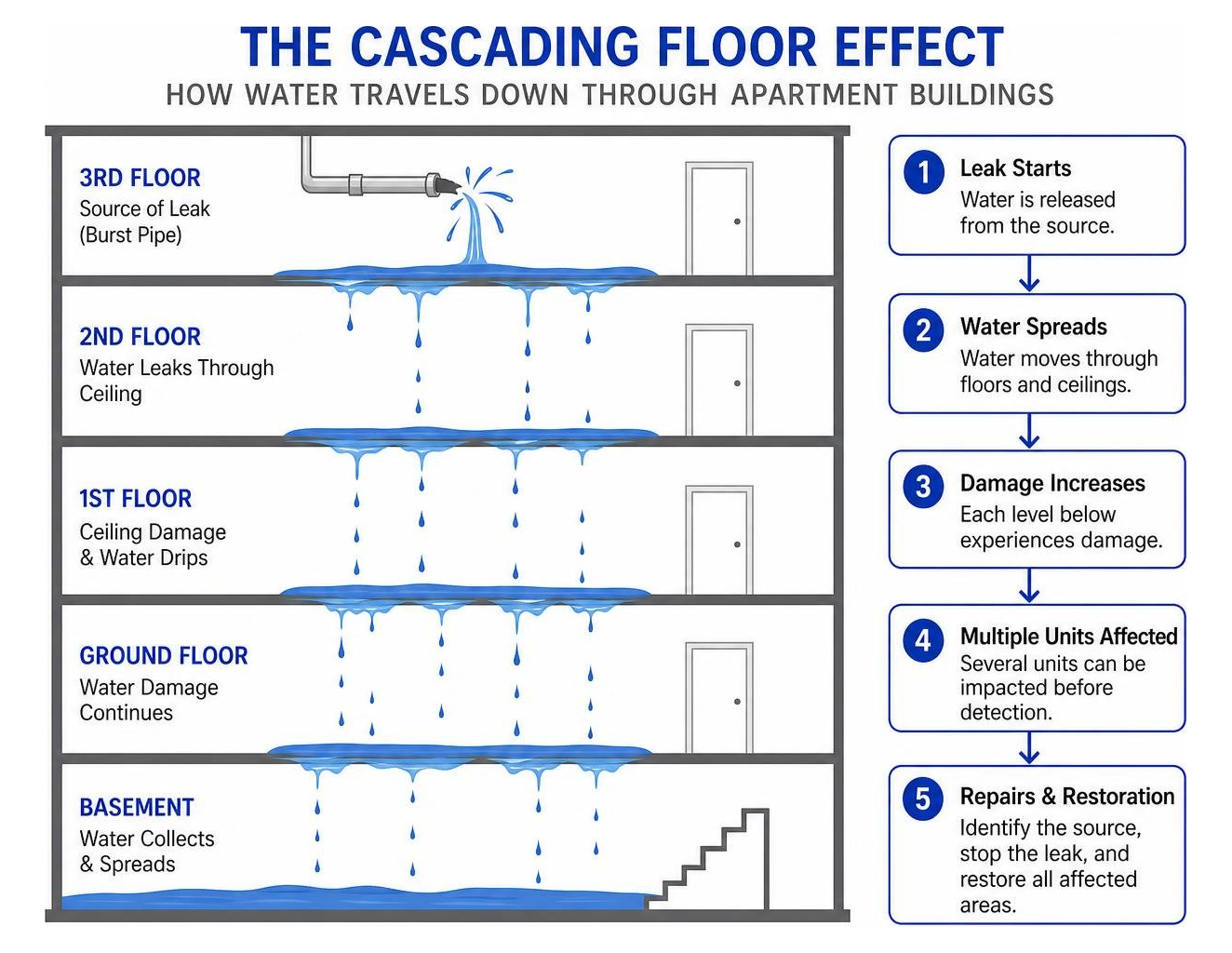
Unlike a single-family home, apartments present a unique problem: water travels between units. A burst pipe on the third floor can flood five units below it before anyone notices. That makes pinning down the source — and the liability — much harder.
And time is not on your side. Water can penetrate drywall, flooring, and structural materials within hours. Mold can begin growing in as little as 24 to 48 hours. The decisions you make in the first day matter enormously — both for your health and your legal rights.
I’m Cole Nudel, a disaster restoration professional with A1 Water Damage Restorations in the Denver Metro Area, and I’ve worked directly with tenants and property owners navigating the aftermath of apartment water damage. In this guide, I’ll walk you through exactly what to do, who pays, and how to protect yourself.
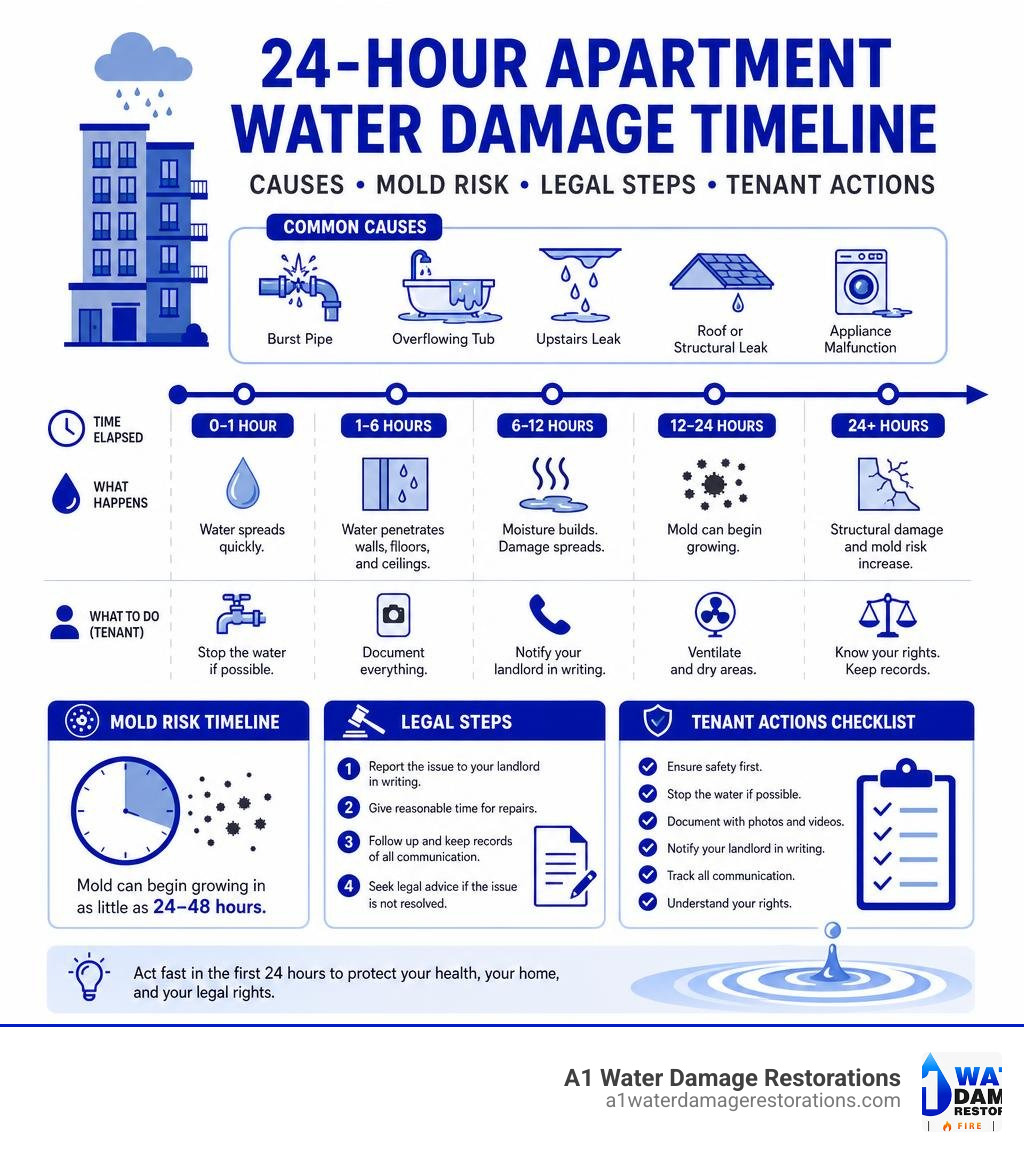
Easy apartment water damage word list:
Understanding the Causes of Apartment Water Damage
To solve any water issue, we first have to understand where the moisture is coming from. Because multi-family buildings share walls, utility shafts, and concrete subfloors, a leak in one corner of a building can easily travel down and outward. This is known in the restoration industry as the cascading-floor effect.
Water behaves like a silent, unwelcome guest: it always takes the path of least resistance. It travels down gravity lines, pooling on drywall ceilings until the weight causes a sudden, messy collapse.
Plumbing Failures and Burst Pipes
Plumbing failures are the leading cause of water losses in Colorado apartments. This is especially true during our freezing winters in places like Boulder, Westminster, and Golden, where rapid freeze-thaw cycles put immense stress on water lines.
When water freezes inside a pipe, it expands. This expansion blocks the flow and increases water pressure downstream to dangerous levels—often exceeding 60 psi. Eventually, the pipe ruptures. When the ice thaws, hundreds of gallons of pressurized water pour directly into wall cavities and ceilings. To learn more about how to handle these sudden winter disasters, read our guide on burst pipes and bathroom floods.
Appliance Malfunctions
Modern conveniences are wonderful right up until they turn on you. Washing machines, dishwashers, and refrigerators with built-in ice makers rely on flexible supply hoses that are constantly under pressure. Over time, plastic or rubber hoses degrade, crack, or slip off their connections.
A ruptured washing machine line can release up to 10 to 12 gallons of water per minute. If this occurs while a tenant is at work or asleep, the resulting structural damage can easily cost tens of thousands of dollars. For a step-by-step breakdown of how to handle a rogue kitchen or laundry appliance, check out our guide on appliance water damage.
Neighbor Negligence and Multi-Unit Leaks
Sometimes, the call is coming from above the house. We frequently see situations where an upstairs neighbor falls asleep while running a bath, or fails to report a slowly dripping toilet supply line. Because concrete floor slabs are porous and full of utility penetrations, that water will quickly find its way into your living room or kitchen ceiling.
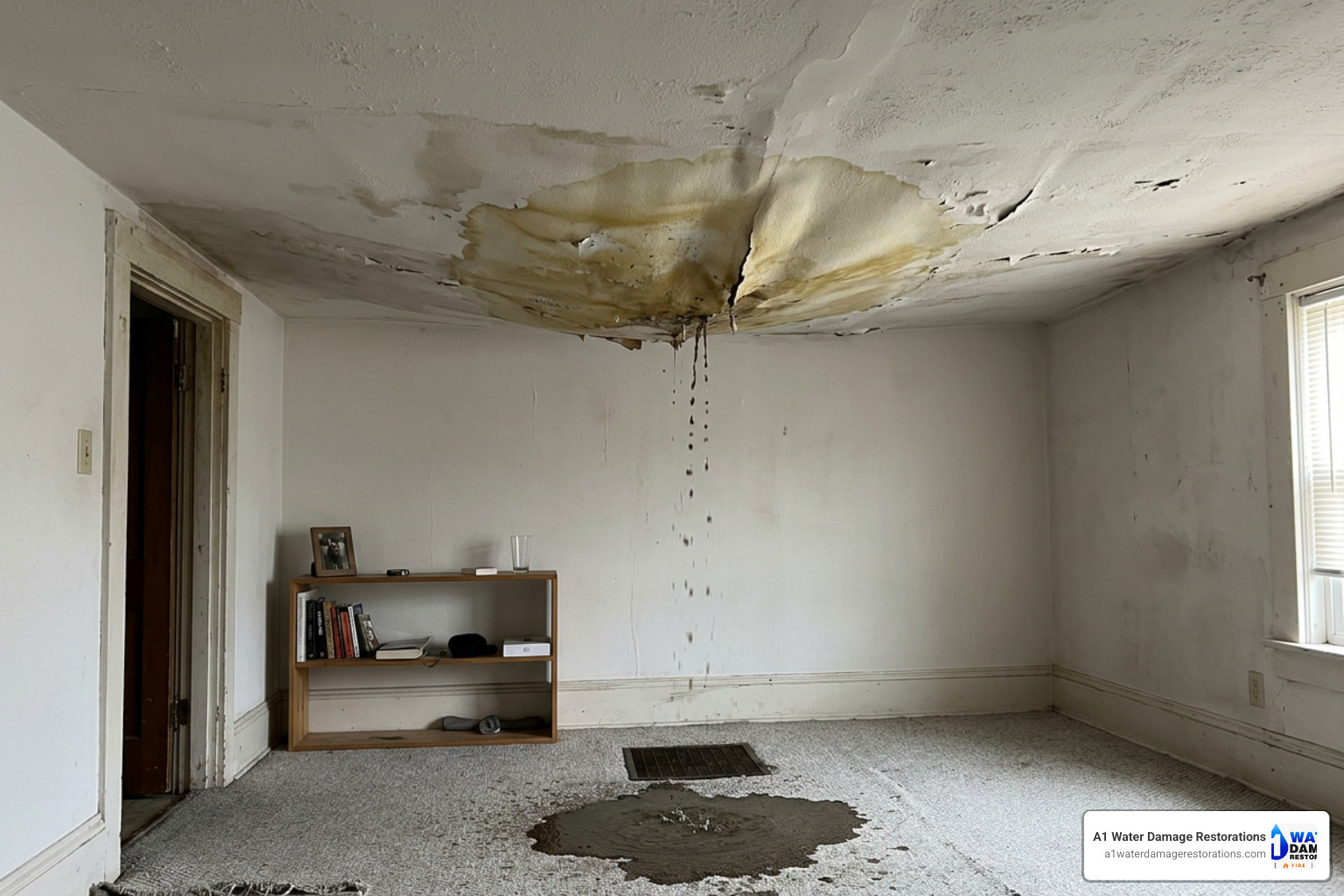
When water attacks from above, it leaves behind telltale yellow or brown circular stains, sagging plaster, and peeling paint. If you notice these warning signs, it is crucial to act before the drywall gives way entirely. Dive deeper into our article on ceiling water damage to protect your space from a ceiling collapse.
Who is Liable for Water Damage in an Apartment?
When water ruins your furniture, electronics, and peace of mind, the immediate question is: Who is going to pay for this?
Determining liability for apartment water damage comes down to one core concept: negligence. Legally, the party whose failure to act, poor maintenance, or direct mistake caused the leak is responsible for the damages. Let’s look at how this breaks down in real-world scenarios:
| Cause of Water Intrusion | Who Pays for Building Repairs? | Who Pays for Your Personal Items? |
|---|---|---|
| Main building pipe burst inside wall | Landlord / Building Owner | Tenant’s Renters Insurance |
| Overflowing bathtub from unit above | Upstairs Neighbor’s Insurance | Upstairs Neighbor’s Insurance |
| Tenant forgot to shut off sink faucet | Tenant (or their Renters Insurance) | Tenant’s Renters Insurance |
| Leaking roof during a heavy rainstorm | Landlord / Building Owner | Tenant’s Renters Insurance |
| Slow leak reported to landlord but ignored | Landlord / Building Owner | Landlord / Building Owner |
Landlord Responsibilities and the Implied Warranty of Habitability
Under Colorado law (specifically the Warranty of Habitability, CRS 38-12-503), landlords are legally obligated to provide a safe, clean, and livable environment. This includes ensuring the building has a weatherproof roof, intact windows, functioning plumbing, and dry structural components.
If a water leak is caused by a building-wide maintenance failure—such as an aging main line, a failing water heater provided by the building, or a roof that hasn’t been repaired—the landlord is financially responsible for restoring the building’s structure.
In local municipalities like Boulder, local tenant protections are highly robust. The Boulder Colorado Landlord-Tenant Handbook outlines strict local rules regarding how quickly landlords must respond to habitability hazards. Furthermore, commercial building owners face complex insurance rules when filing claims for these multi-unit disasters. To understand the landlord’s side of the equation, read this detailed Apartment Building Water Damage Claim Playbook.
Tenant Responsibilities and Negligence
While landlords must maintain the building, tenants have a duty of “reasonable care.” This means you must use appliances correctly, keep the unit clean, and—most importantly—report leaks immediately.
If you notice a damp spot under your bathroom vanity but ignore it for three months until the subfloor rots out, you could be held liable for the repair costs due to your failure to report the issue. Similarly, if you overload your washing machine or leave a faucet running, the financial fallout falls squarely on your shoulders. In these cases, landlords can legally deduct repair costs from your security deposit or sue for damages. If you are facing ruined laminate or wood flooring due to a spill, check out our guide on floor water damage to understand what can be saved.
How Renters Insurance Covers Apartment Water Damage
One of the biggest misconceptions renters have is believing that their landlord’s commercial property insurance covers their personal belongings. It does not.
A landlord’s policy only covers the physical building structure (walls, floors, shared pipes). To protect your clothes, furniture, and electronics, you must have a active renters insurance policy. Standard renters insurance covers:
- Personal Property: Reimburses you for items ruined by “sudden and accidental” water events (like a burst pipe).
- Loss of Use: Pays for hotel stays, restaurant meals, and relocation costs if your apartment is deemed legally uninhabitable.
- Liability Coverage: Protects you if your negligence (like an overflowing tub) causes water damage to neighboring units.
Important Limitation: Standard renters insurance does not cover damage caused by rising outdoor floodwaters (such as a creek overflowing in Boulder or Golden). For that, you need a separate flood insurance endorsement. Additionally, loss-of-use coverage often operates on a reimbursement basis, which can create a tough cash-flow barrier for tenants who don’t have the upfront funds to book a hotel out-of-pocket while waiting for an insurance check.
Immediate Response and Tenant Rights After a Leak
If you wake up to the sound of splashing water or see a steady drip coming from your ceiling, your actions in the first hour will shape both the physical recovery of your home and your legal standing.
Step-by-Step Emergency Response
- Safety First: Do not walk through standing water if it has reached electrical outlets or baseboard heaters. Turn off the breaker to the affected room if you can safely access your electrical panel.
- Stop the Water Source: If the leak is coming from a toilet, sink, or washing machine inside your unit, turn the local shut-off valve clockwise to stop the flow. If it’s a main line burst, contact emergency maintenance immediately to shut off the building’s main water riser.
- Call the Pros: If standing water is spreading across your carpets or into your walls, waiting for building maintenance can result in permanent damage. You can call us for professional water extraction to get the water out fast and prevent mold from taking root.
- Protect Your Belongings: Move electronics, documents, and high-value items to a dry room. Elevate furniture legs off wet carpets using aluminum foil or plastic wrap.
Documenting Apartment Water Damage for Claims
Before you or the building maintenance crew start cleaning up, you must build a bulletproof paper trail. This documentation is your shield against security deposit disputes and insurance claim denials.
- Take Photos and Videos: Capture wide shots of the flooded rooms and close-ups of the water’s source (e.g., the leaking pipe or ceiling drip). Enable timestamps on your phone camera.
- Inventory Damaged Items: Write down a detailed list of every personal item touched by water, including brand, model number, age, and approximate replacement cost. Do not throw anything away until an insurance adjuster has inspected it.
- Keep a Communication Log: Write down the date, time, and summary of every conversation you have with your landlord, property manager, and neighbors. Follow up every phone call with a written email or text message to create a permanent record.
For a sobering look at how chaotic these situations can become when proper documentation and communication break down, read this news report on high-rise water damage where tenants faced ongoing power outages and displacement.
Rent Withholding and Lease Termination
Under Colorado’s Warranty of Habitability, if water damage makes your apartment unsafe or unsanitary (for example, if there is active sewage back-up, no running water, or widespread toxic mold), you have specific legal rights.
If your landlord fails to make necessary repairs after receiving written notice, you may have the right to:
- Terminate the Lease: Move out and break your lease without financial penalty.
- Rent Credits: Receive a reduction in rent for the days your unit was unusable.
- Repair and Deduct: Pay for minor repairs yourself and deduct the cost from your next rent check (though you must follow strict statutory procedures first).
Warning: Unilaterally withholding rent without following Colorado’s strict written notice laws is highly risky and can lead to eviction proceedings. Always consult a local tenant advocacy group or attorney before withholding a rent check. If your basement or garden-level unit has taken on water, check out our flooded basement guide to learn how to keep your head above water.
Frequently Asked Questions About Apartment Water Damage
How long does a landlord have to fix water damage?
Under Colorado law, response timelines depend on the severity of the issue:
- Emergency Repairs (Habitability Hazards): If the water damage creates an immediate risk to life, health, or safety (such as active flooding, electrical hazards, or lack of clean water), the landlord must begin remedial action within 24 to 72 hours of receiving written notice.
- Non-Emergency Repairs: For cosmetic issues, minor dampness, or slow leaks that do not threaten tenant safety, landlords typically have 7 to 30 days to complete repairs.
Does renters insurance cover temporary housing?
Yes, if your apartment is deemed uninhabitable due to a covered water loss (like a burst pipe), the Loss of Use (or Additional Living Expenses) portion of your renters insurance will cover reasonable temporary housing costs. This includes hotel stays, short-term rentals, and even the extra cost of dining out if your temporary home lacks a kitchen. That these policies typically operate on a reimbursement basis, so you will need to keep all receipts.
Can I withhold rent if my landlord ignores a leak?
In Colorado, you cannot simply stop paying rent because there is a leak. To legally withhold rent or use rent money to pay for repairs, you must first send your landlord a formal, written notice detailing the breach of habitability. If they fail to respond or begin repairs within the legally required window, you must follow specific court escrow procedures. Unilateral rent withholding without these steps is a lease violation and can result in eviction.
Conclusion
Apartment water damage is a race against the clock. Whether you are dealing with a sagging ceiling in Cherry Creek, a burst pipe in Boulder, or a flooded kitchen in Westminster, quick action is the key to protecting your health, your belongings, and your wallet.
At A1 Water Damage Restorations, we provide 24/7 IICRC-certified water, fire, and mold restoration across the entire Denver Metro Area. As a family-owned business, we pride ourselves on providing comprehensive, in-house services with a warm, personal touch. We don’t just dry out drywalls; we help you navigate the complex world of landlord communications and insurance claims, ensuring your property is restored better than ever.
If you are facing a water emergency right now, don’t wait for mold to start growing. Contact us today for our professional water damage restoration services and let us get your home back to normal.