

How to Remove Mold from Furniture Safely
For a small patch on sealed wood, put on an N95 respirator, gloves, and goggles. Wipe the mold with a cloth lightly dampened with mild soapy water. Do not dry-brush it or soak the wood. Dry the piece fully, then fix the leak or humidity problem that caused the growth.
A musty smell or new fuzzy spots can be an early warning. Wet furniture can develop mold within 24 to 48 hours, and cleaning visible spots alone will not stop it from returning. If mold reaches cushion foam, the wood feels soft, or the affected area is large, pause DIY cleaning and seek professional help.
I’m Cole Nudel, a disaster restoration professional with A1 Water Damage Restorations in the Denver area. My work with property damage informs this guide to mold removal from furniture, starting with how to tell what you can safely clean.
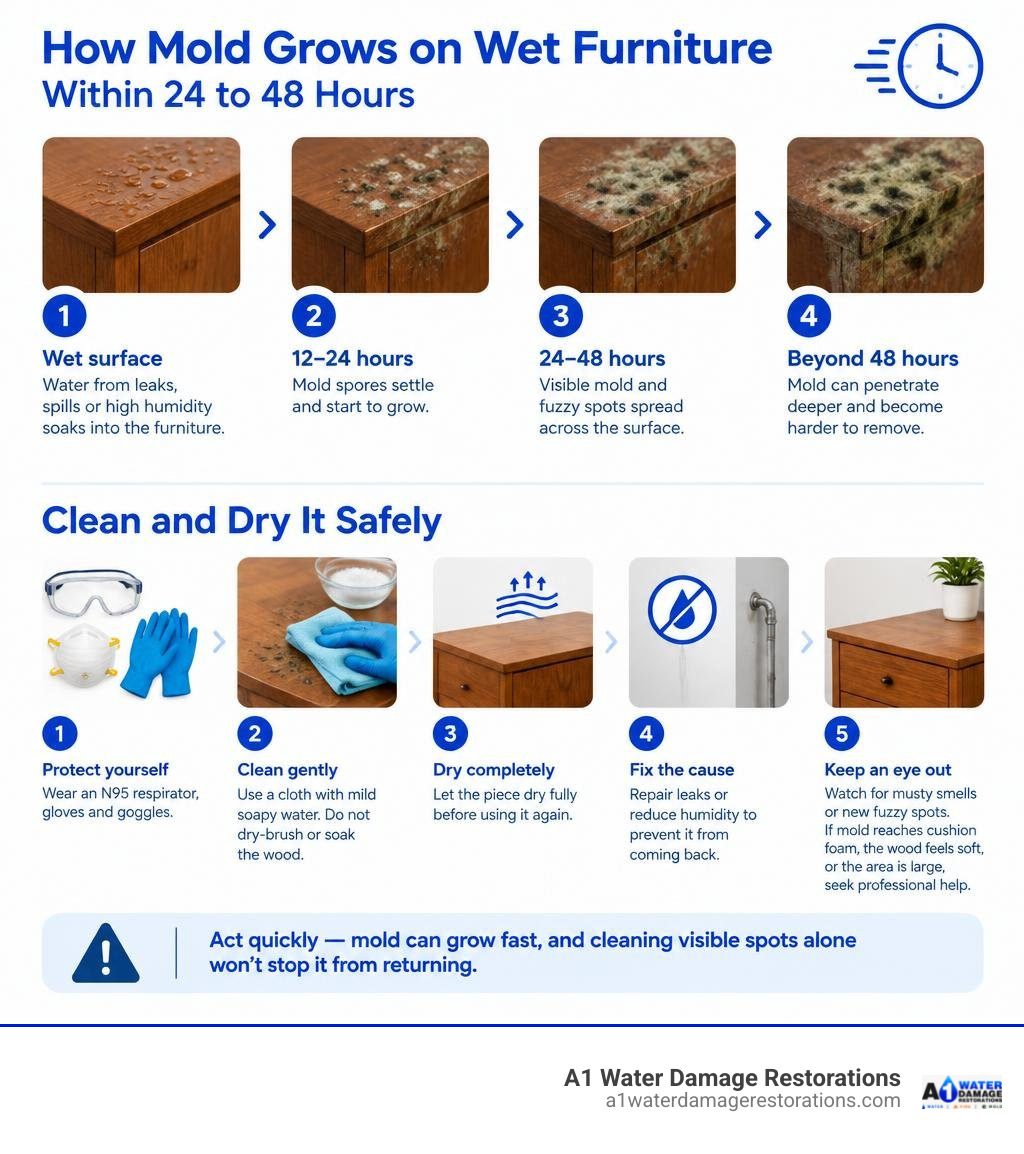
Mold removal from furniture vocab to learn:
Identifying Mold vs. Stains and Assessing Salvageability
Before grabbing cleaning supplies, you need to understand what you are looking at. Not every dark mark on a credenza or sofa is a living fungal colony. Distinguishing between harmless cosmetic discoloration, surface mildew, and active fungal rot prevents unnecessary damage to delicate finishes and helps you determine whether a piece can be saved.
Fungi thrive on organic nutrients found in wood finishes, natural fibers, and accumulated household dust. When relative humidity spikes or an unaddressed leak occurs, dormant spores germinate. Stains from minerals or old spills remain inert, while mold actively expands, alters texture, and produces a distinct earthy odor.
| Characteristic | Surface Mildew | Embedded Wood Mold | Non-Fungal Water Stain |
|---|---|---|---|
| Visual Appearance | Powdery white, grey, or yellow dusting; easily wiped | Speckled black, green, or dark brown patches | Ringed, flat watermark; dark brown or white halo |
| Texture | Dry, chalky, or velvety surface layer | Raised, fuzzy, slimy, or rooted into wood grain | Smooth, level with surrounding finish |
| Odor | Mild, damp basement scent | Strong, persistent musty smell | Completely odorless when dry |
| Structural Impact | None; rests atop the clear coat or paint | Can break down wood fibers and soften material | None; purely a cosmetic finish issue |
| Smear Test | Wipes away readily on a damp cloth | Partially wipes off, leaving dark root hyphae | Does not transfer pigment when wiped |
To confirm fungal growth, use the smear test: gently wipe an inconspicuous spot with a damp cotton swab. If the discoloration transfers as powdery or fuzzy residue, it is biological growth. If the color remains locked in the substrate and feels smooth, you are dealing with a chemical water mark or tannin bleed. In accordance with scientific guidance on cleaning household items, assessing the material composition and moisture level is the first step toward successful restoration.
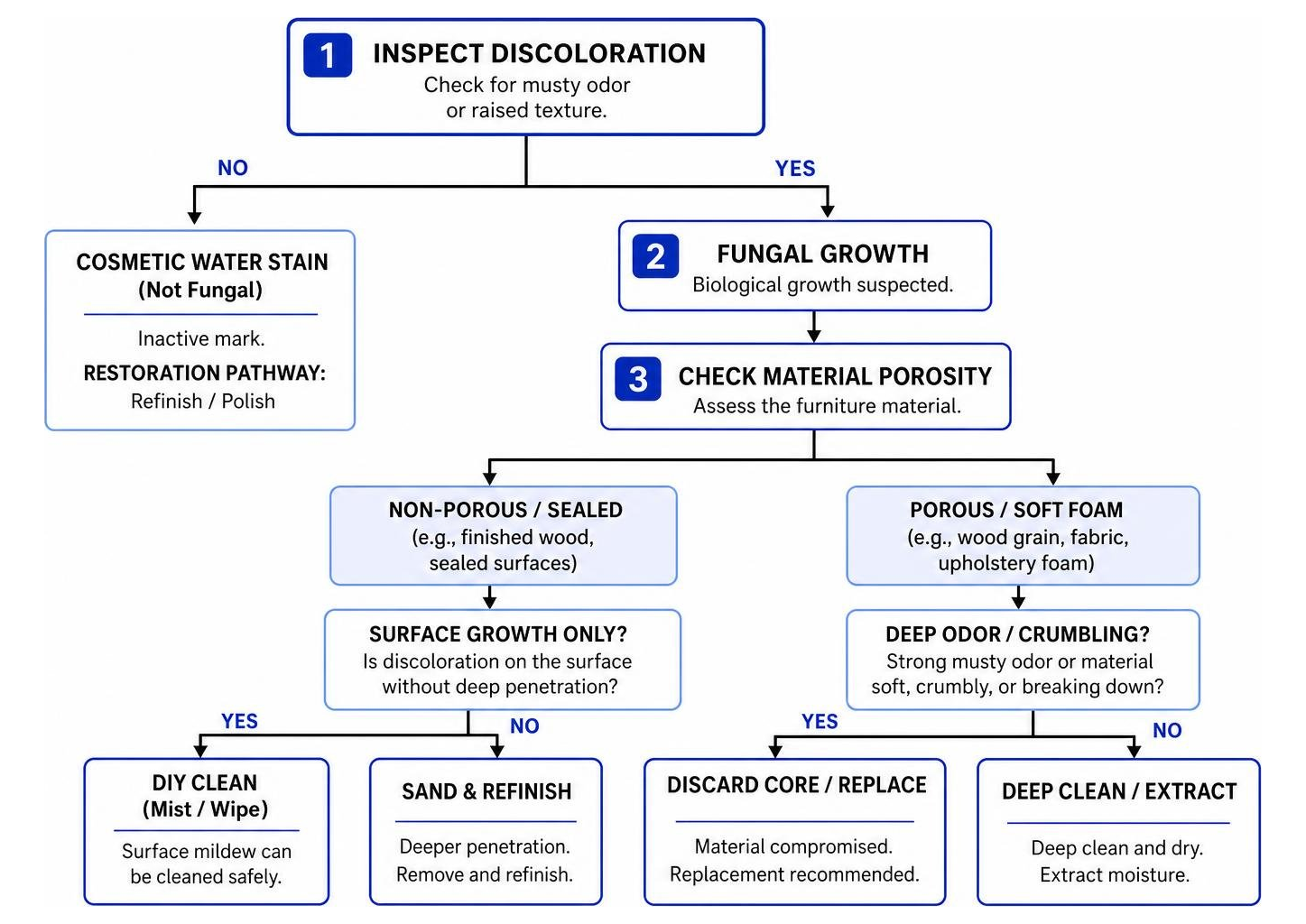
Surface Mildew vs. Deep Mold Growth
Surface mildew represents the earliest stage of fungal colonization. It typically appears as a flat, powdery film sitting directly atop clear coats, varnish, or polished synthetic leather. Because it has not penetrated the protective topcoat, it can usually be cleaned without compromising structural integrity.
Deep mold growth occurs when moisture lingers, allowing fungal root structures (hyphae) to penetrate cellular wood pores, joint seams, or upholstery batting. Wood becomes vulnerable when internal moisture exceeds 20%, creating an ideal environment for wood-decay fungi. If the wood beneath the finish feels spongey, shows checking (cracking along the grain), or retains a deep dark stain after the surface is wiped clean, the fungal network has taken root within the wood fibers.
Assessing Wood, Upholstery, and MDF Porosity
A material’s porosity determines whether DIY restoration is viable or if disposal is the safer choice:
- Solid Hardwood: Oak, maple, walnut, and cherry possess dense grain structures. When treated with clear lacquers or polyurethane, mold stays on the exterior finish. These pieces are highly salvageable through cleaning, light spot-sanding, and refinishing.
- Wood Veneer: Thin sheets of decorative wood bonded to substrate cores can be saved if caught early. However, excessive moisture can dissolve the underlying glues, causing bubbling, delamination, and deep fungal penetration that makes repair uneconomical.
- Medium-Density Fiberboard (MDF) and Particleboard: Composite woods use binding resins that break down rapidly when exposed to moisture. When waterlogged, MDF swells, loses its structural strength, and traps spores throughout its core. In most cases, water-damaged composite furniture should be replaced.
- Upholstery and Foam Cores: While surface fabrics like polyester, treated cotton, and top-grain leather can be cleaned, deep foam cushions act like giant filters. If musty odors persist after fabric cleaning, the open-cell foam core is likely contaminated and should be discarded to avoid airborne exposure. Review our guidance on comprehensive mold remediation for insights into handling heavily contaminated porous structures.
Essential Preparation and Safety Protocols for Mold Remediation
Remediating moldy furniture without proper preparation can quickly spread millions of microscopic spores into your living area, contaminating carpets, drapery, and HVAC ductwork.
Whenever possible, transport affected furniture outside to a covered patio, driveway, or garage. Choose a calm, dry day to avoid wind blowing spores back toward open doors or windows. If moving heavy furniture outside is impractical, isolate the room by closing interior doors, sealing supply and return HVAC vents with plastic sheeting and painter’s tape, and opening an exterior window. Setting up a box fan pointing outward creates slight negative air pressure, helping exhaust loose spores outdoors during cleaning.
Before disturbing any fungal growth, read our safe indoor mold cleanup techniques to protect adjacent living areas.
Personal Protective Equipment and Work Area Setup
Never begin cleaning mold without proper protective gear. Disturbing dry colonies can increase local spore concentrations by thousands of times within seconds.
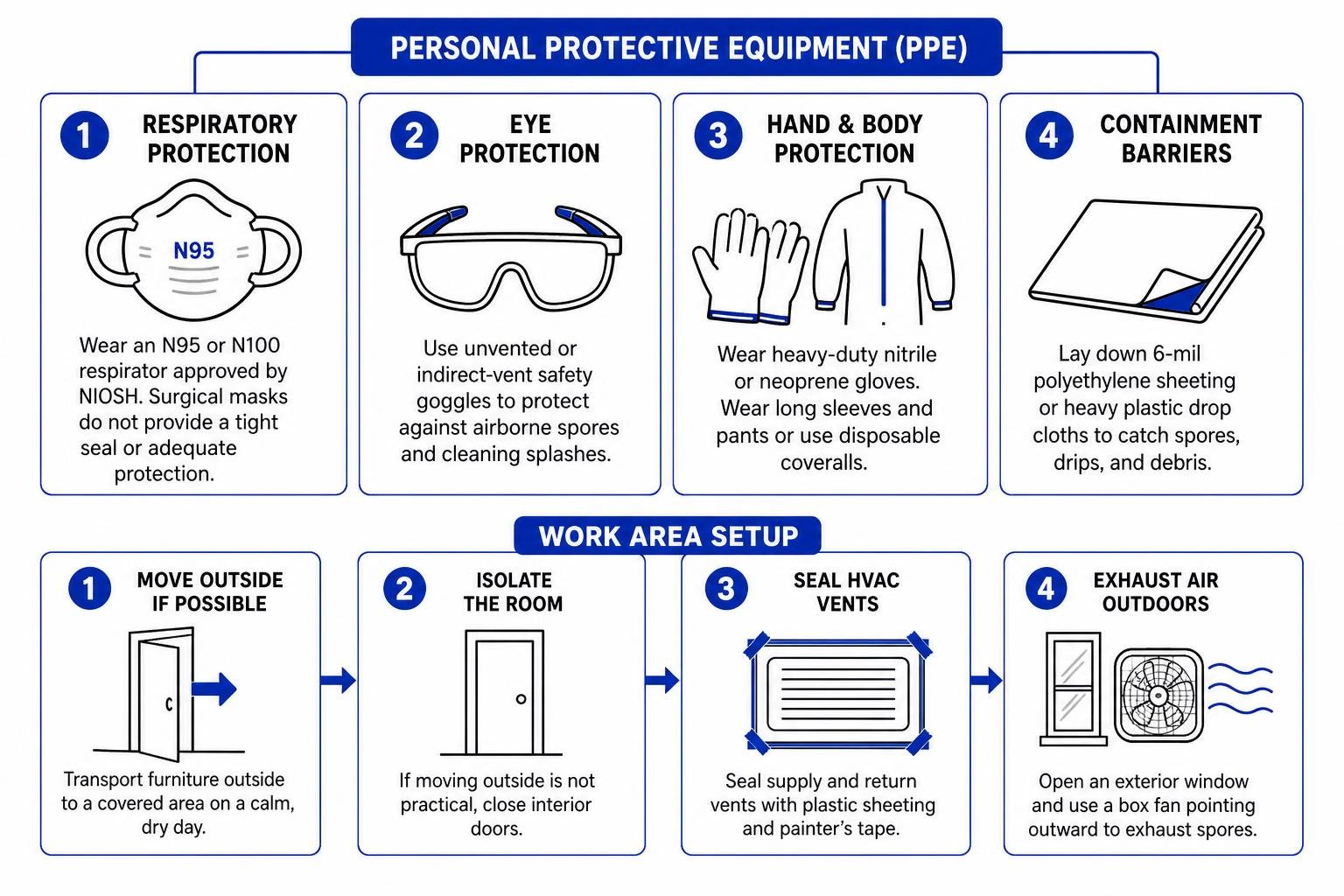
- Respiratory Protection: Wear an N95 or N100 half-mask particulate respirator approved by NIOSH. Simple surgical dust masks do not create a tight facial seal and allow microscopic spores (0.3 to 5 microns) to bypass the filter.
- Eye Protection: Use unvented or indirect-vent safety goggles to shield your eyes from airborne spores and cleaning splashes.
- Hand & Body Protection: Wear heavy-duty nitrile or neoprene gloves. Wear long sleeves and pants that can be laundered immediately in hot water, or use disposable coveralls for extensive projects.
- Containment Barriers: Lay down 6-mil polyethylene sheeting or heavy plastic drop cloths beneath the furniture piece. This catches any dislodged spores, cleaning drips, and sanding debris for safe disposal.
Local agencies emphasize minimizing exposure to fungal particles during remediation; check local health guidelines on mold exposure for regional environmental safety standards.
Step-by-Step Guide to Mold Removal from Furniture
To clean mold off furniture safely without spreading spores or ruining the finish, follow this methodical, material-specific cleaning process.
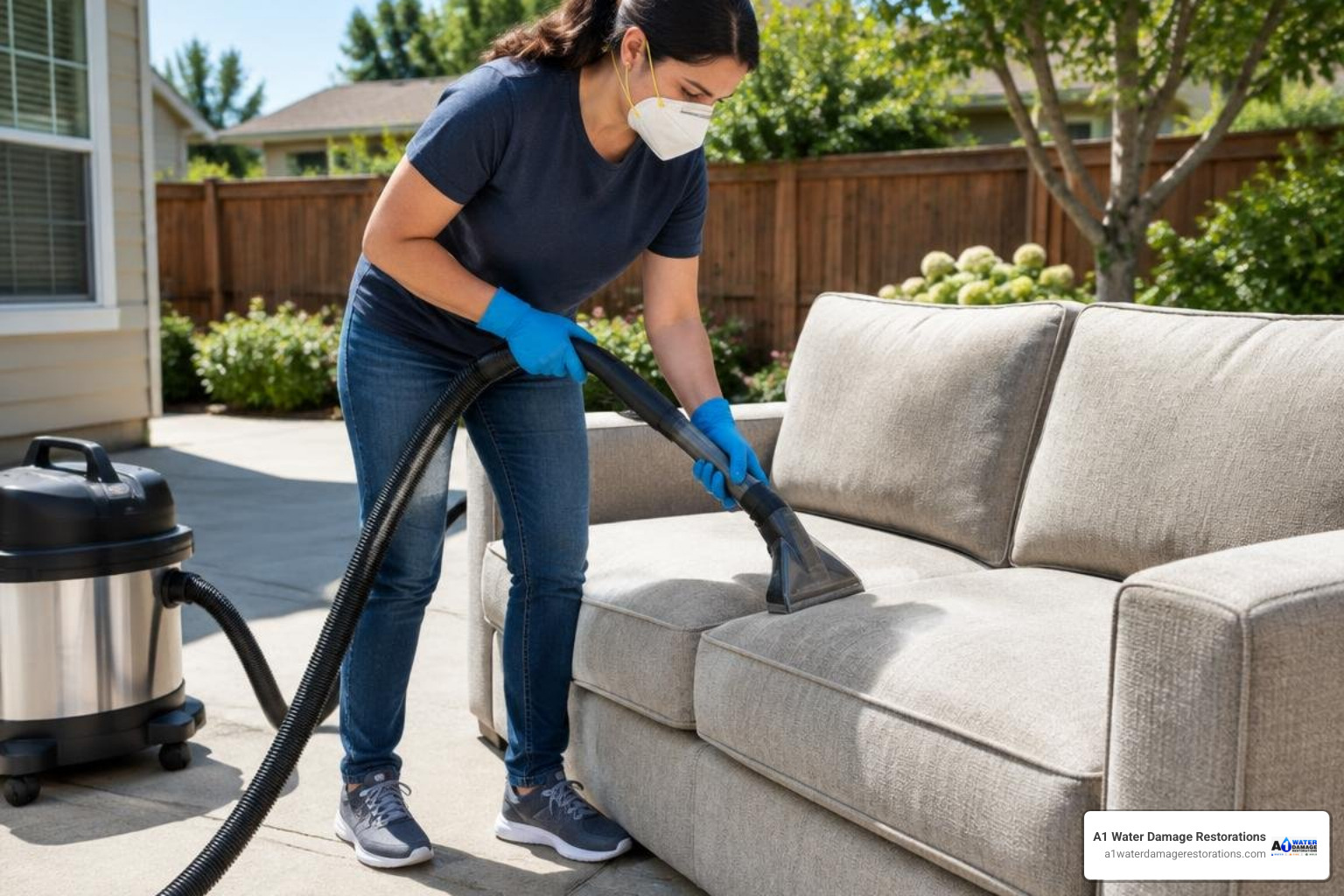
Mold Removal from Furniture Made of Solid Wood and Veneer
Wood requires a balanced cleaning approach: you need to neutralize the fungal colonies while avoiding over-saturating the wood grain.
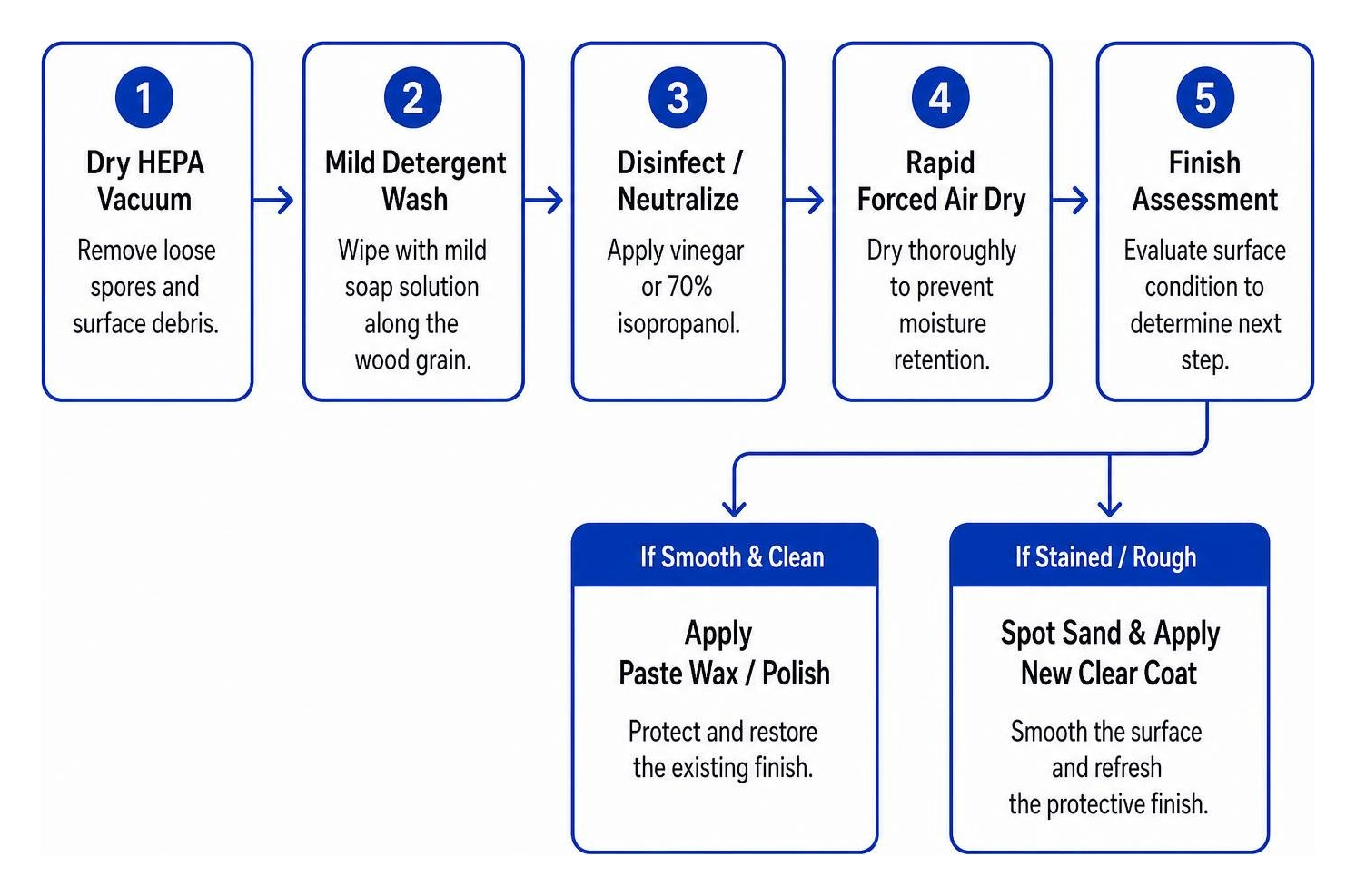
Step 1: Initial Dry Vacuuming
Take the piece outdoors or onto your containment tarp. Using a vacuum equipped with a genuine HEPA filter and a soft-bristle brush attachment, slowly vacuum all exterior surfaces, carvings, joints, and drawer slides. This captures loose spores without dispersing them into the air.
Step 2: Gentle Detergent Cleaning
Mix two tablespoons of mild liquid dish soap into a bucket of warm water. Dip a microfiber cloth into the suds and wring it out until it is barely damp. Wipe the entire wooden surface along the direction of the wood grain. The surfactants in the soap break surface tension, lifting fungal hyphae, dirt, and organic oils. Immediately wipe the area with a second cloth dampened with clean water, then dry thoroughly with a clean towel.
Step 3: Targeted Disinfection
For stubborn growth or unsealed wood:
- Lightly mist undiluted distilled white vinegar (5% acetic acid) over the affected area.
- Let it sit undisturbed for 60 minutes to penetrate the wood’s pores and neutralize fungal roots.
- Wipe away any residue with a damp cloth and dry completely.
- Alternatively, for modern factory polyurethane finishes, wipe with a 70% isopropyl alcohol solution, which evaporates quickly without leaving residual moisture.
Step 4: Remedying Lingering Stains (Sanding & Refinishing)
If dark spots remain beneath the clear coat after drying, the mold has discolored the wood fibers:
- Allow the wood to dry completely for 24 hours.
- Using 180-grit to 220-grit fine sandpaper, gently sand the affected spot in the direction of the wood grain until the discolored layer is removed.
- Wipe away sanding dust with a tack cloth.
- Apply a matching stain, followed by an oil, lacquer, or polyurethane topcoat to reseal the wood against future moisture.
Safe Mold Removal from Furniture Upholstery and Fabrics
Fabric upholstery requires careful attention to avoid driving moisture deep into the underlying cushion padding.
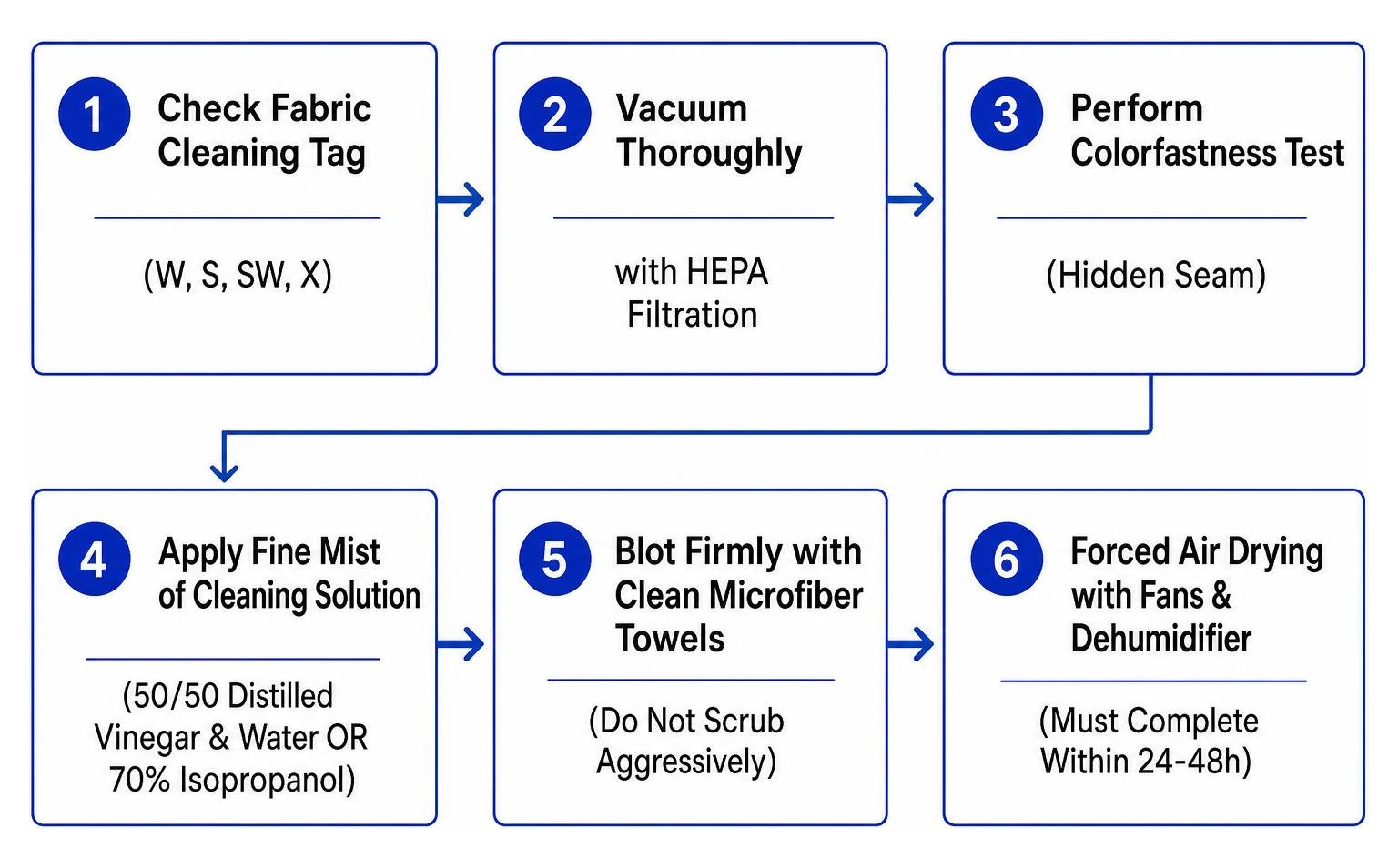
Step 1: Verify the Fabric Care Tag
Inspect the manufacturer’s care label:
- W: Water-based cleaners are safe (distilled water, mild upholstery shampoo).
- S: Solvents only (use 70% isopropyl alcohol; water will cause water rings).
- S/W: Either mild water-based or mild solvent-based cleaners are acceptable.
- X: Vacuum only; do not apply liquid solutions (requires professional dry-cleaning restoration).
Step 2: The Colorfastness Patch Test
Mix equal parts distilled white vinegar and warm water (or 70% isopropanol for ‘S’ fabrics). Moisten a white cotton cloth with the mixture and press it firmly against a hidden seam or the underside of a cushion for 30 seconds. If any dye transfers to your cloth or the fabric changes color, discontinue use immediately.
Step 3: Low-Moisture Extraction & Blotting
- Vacuum the upholstery thoroughly using a HEPA-filtered vacuum with an upholstery tool.
- Using a spray bottle adjusted to a fine atomizing mist, lightly spray the surface of the fabric. Do not soak the fabric or allow liquids to saturate the foam core.
- Gently agitate the surface with a soft-bristled horsehair brush to work the solution into the weave.
- Firmly blot the fabric using dry, white microfiber towels to draw out moisture and suspended spores. Rotate the towel frequently to clean sections.
- Set up high-velocity air movers or box fans pointing directly across the cushions. Run a dehumidifier in the room to pull out evaporated moisture. Ensure the fabric dries fully within 8 to 12 hours. For severe fabric issues, review these professional black mold cleanup strategies.
Cleaning Leather, Cane, and Hard Synthetic Surfaces
- Finished & Semi-Aniline Leather: Leather is porous and sensitive to pH extremes. Mix a 50/50 solution of 70% isopropyl alcohol and distilled water. Lightly dampen a soft cloth and wipe the leather gently. Follow immediately with a dedicated pH-balanced leather cleaner, wipe dry, and apply a high-grade leather conditioner to restore natural oils lost during cleaning. Never dry leather in direct sunlight or with hot blow-dryers, as this causes premature cracking.
- Cane, Wicker, and Rattan: These woven pieces feature countless crevices that harbor spores. Vacuum thoroughly with a brush attachment, then use an old soft toothbrush dipped in mild soapy water to scrub the woven joints. Rinse with a damp cloth and dry immediately in front of an air mover.
- Laminates, Acrylics, and Metals: Non-porous hard surfaces can be cleaned with standard household detergents or an EPA-registered disinfectant spray. Spray the cleaner, maintain the recommended contact time on the product label, and wipe completely clean.
Choosing Safe Cleaners and Products to Avoid
Using the right cleaner protects your furniture’s finish while effectively treating fungal growth.
| Cleaning Agent | Suitable Materials | Application Method | Mechanism of Action | Risks / Cautions |
|---|---|---|---|---|
| Mild Dish Soap & Water | Sealed hardwood, paint, laminate, vinyl | Damp microfiber cloth | Breaks surface tension; lifts spores and organic soils | Over-wetting unsealed wood can cause swelling |
| Distilled White Vinegar (5%) | Hardwood, cane, colorfast ‘W’ fabrics | Mist spray; 60-minute contact time | Acetic acid disrupts fungal cellular metabolism | May dull high-gloss lacquers; test first |
| 70% Isopropyl Alcohol | ‘S’ code fabrics, leather, sealed wood | Light wipe with damp cloth | Rapidly dissolves fungal cell membranes; dries fast | Flammable; can strip certain oil-based finishes |
| 3% Hydrogen Peroxide | Light-colored unsealed wood, white fabrics | Spot dab with cotton swab | Mild oxidation breaks down fungal walls | Natural bleaching agent; discolors dark surfaces |
| Chlorine Bleach | Non-porous plastic, metal only | Direct application (1:10 dilution) | Surface sanitization only | Dampens porous cores, fades dyes, damages wood |
Effective Solutions: Soap, Vinegar, and Isopropyl Alcohol
Household cleaning staples can be very effective when used properly:
- Mild Dish Soap (Surfactant Action): In many cases, a simple surfactant is all that is required for sealed, non-porous surfaces. It safely lifts mold without chemically altering delicate clear coats.
- Distilled White Vinegar (5% Acetic Acid): Acetic acid penetrates the microscopic pores of natural materials, helping neutralize fungal mycelium below the immediate surface.
- 70% Isopropyl Alcohol: This concentration contains enough water to slow evaporation just long enough for the alcohol to cross microbial membranes, making it an excellent choice for solvent-safe fabrics and modern finishes.
The Dangers of Chlorine Bleach on Porous Materials
Household bleach (sodium hypochlorite) is often mistaken for a universal mold remedy, but it can cause several problems when applied to furniture:
- Inability to Penetrate Wood and Foam: Chlorine molecules have a high surface tension, remaining on the exterior of porous materials while water soaks deeper into the wood or cushion core. This provides added moisture that can accelerate fungal growth once the chlorine dissipates.
- Chemical Damage to Finishes and Fibers: Bleach strips natural wood tannins, discolors fabric dyes, and can corrode hardware and structural fasteners.
- Toxic Off-Gassing: Mixing bleach with acidic cleaners (like vinegar) or ammonia produces hazardous chlorine or chloramine gases.
Preventing Recurrence: Moisture Control, Airflow, and Humidity
Removing visible mold is only half the battle. Fungal spores naturally exist in indoor air; they only colonize and multiply when moisture conditions allow it.
Managing Relative Humidity and Air Circulation
The Environmental Protection Agency (EPA) and ASHRAE recommend maintaining indoor relative humidity (RH) between 30% and 50% (never exceeding 60%). In regions like Colorado, winter heating can drop indoor RH significantly, while summer monsoons, bathroom steam, or localized plumbing leaks can quickly elevate indoor moisture above critical thresholds.
- Monitor Microclimates: Place an inexpensive digital hygrometer near valuable wood pieces, inside basements, or near exterior-facing walls.
- Maintain Airflow Gaps: Never push substantial wood furniture or sofas flush against exterior walls. Leave an air gap of 2 to 4 inches behind dressers, armoires, and headboards. Exterior walls are often cooler, which can cause moisture condensation behind large furniture.
- Ensure Good Ventilation: Run exhaust fans in kitchens and bathrooms for at least 20 minutes after use. Keep interior doors slightly ajar to encourage continuous whole-home air circulation.
- Seasonal Storage Tips: Never store heirloom wooden furniture or mattresses wrapped in non-breathable plastic film inside damp basements, attics, or non-climate-controlled storage units. Trapped condensation can lead to severe mold growth within weeks.
When to Call Professionals for Severe Contamination
While small surface spots can often be handled at home, certain situations require professional remediation:
- Contamination Area Exceeds 10 Square Feet: The EPA advises professional remediation when the affected area is larger than roughly 10 square feet.
- Deep Cushion Foam Contamination: If a sofa or mattress has been wet for more than 48 hours and developed a deep, persistent musty smell, the core is likely compromised.
- Sewage, Floodwaters, or Category 3 Water: Any furniture exposed to contaminated floodwaters cannot be safely cleaned using DIY methods.
- Health and Respiratory Vulnerabilities: If anyone in your home suffers from chronic asthma, mold allergies, or compromised immunity, DIY cleanup risks triggering health symptoms. Review our guide on understanding mold remediation costs to help plan professional restoration work.
Frequently Asked Questions About Mold on Furniture
How can I tell if mold has permanently damaged my wooden furniture?
Inspect the underlying structure after cleaning away surface growth. If the wood grain yields easily to light fingernail pressure, shows extensive cracking across the grain (dry rot), has warped out of square, or continues to release a pungent musty odor weeks after drying, the structural lignin has broken down. Surface discoloration alone can usually be sanded out, but soft, crumbling wood indicates permanent structural damage.
Does distilled white vinegar kill mold down to the roots on wood?
Yes. Undiluted distilled white vinegar contains approximately 5% acetic acid, which can penetrate porous materials like unsealed wood, wicker, and natural fibers to reach the root structure (hyphae). Unlike chlorine bleach, which remains on the surface, vinegar’s low surface tension allows it to reach and help neutralize deeper mycelial networks.
Is it safe to sleep on a couch after cleaning off mold?
It is safe only if the mold was confined to the surface, the piece was completely dried within 24 to 48 hours, and no residual musty odor remains. If the cushion foam core absorbed moisture and grew mold internally, resting your body weight on the couch will pump microscopic spores and mycotoxins directly into your breathing zone. In that scenario, replacing the inner foam cushion is the safest option.
Conclusion
Finding mold on your favorite furniture can be stressful, but catching it early and using the right cleaning methods makes all the difference. By correctly identifying the material, working with appropriate safety gear, avoiding harsh chemicals like bleach, and keeping indoor humidity between 30% and 50%, you can restore and protect your furniture for years to come.
When water damage is widespread, mold returns repeatedly, or valuable furniture needs deep restoration, our family-owned team is here to help. At A1 Water Damage Restorations, our IICRC-certified technicians provide 24/7 restoration throughout the Denver Metro Area—including Boulder, Golden, Greenwood Village, Cherry Creek, Littleton, Broomfield, Westminster, Arvada, and Wheat Ridge. Reach out to our team for professional mold removal services to restore your home and furnishings safely.